


Copper Nitrate Trihydrate is a very important solid chemical that is used in many fields, including chemistry, farming, and surface cleaning. This substance is great at staying wet and dissolving in water. It lets you control the amount of copper ions in a solution exactly. A clear knowledge of Copper Nitrate Trihydrate, especially how it dissolves, is very important for getting the best performance out of an industry, making sure that products are always the same, and meeting strict quality and legal standards in a wide range of uses.
Introduction: Understanding Copper Nitrate Trihydrate and Its Solubility
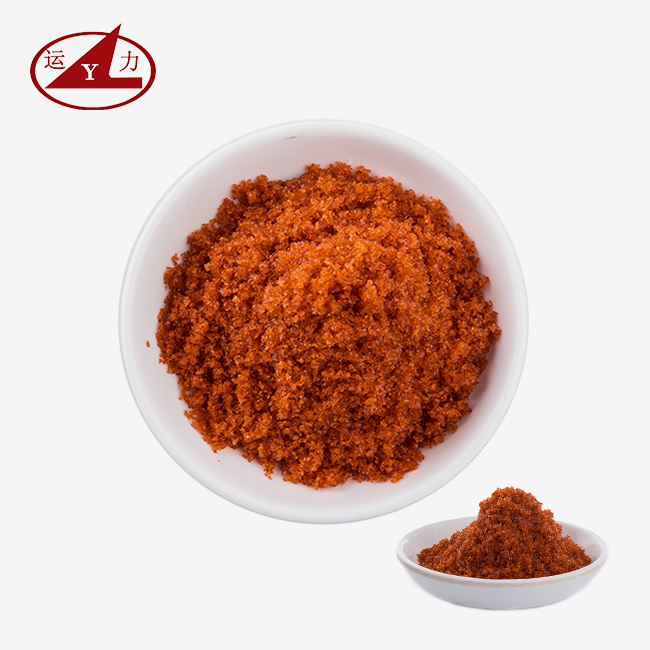
In today's commercial use, Copper Nitrate Trihydrate is one of the most chemically water-soluble substances. Incredibly, three water molecules are chemically connected to Cu(NO₃)₂·3H₂O's solid lattice. This dark blue crystal solid forms a very acidic liquid when it mixes with water. It is very important for electroplating, making catalysts, and farming products.
This chemical is extremely useful in a wide range of industries because it dissolves so easily in water. Procurement workers need to know how this solubility works so they can make good choices about product specs, storing needs, and how to use the product. This compound's ability to dissolve other substances helps surface cleaning, fertilizer making, and electronics companies get regular results in their production.
Why Solubility Matters in Industrial Applications?
How well copper nitrate trihydrate dissolves in water has a direct effect on how well the process runs and how good the result is. Industries that need exact copper ion levels rely on reliable rates of breakdown to keep their manufacturing standards steady. This dependability becomes very important when making chemicals that dissolve in water or getting electroplating solutions ready. In these cases, the even spread of copper ions affects the quality of the end product.
The Chemistry Behind Copper Nitrate Trihydrate's Solubility
The chemical formula Cu(NO₃)₂·3H₂O shows the secret behind this compound's exceptional water solubility. The crystal structure is made up of three hydrogen bonding sites that are good at interacting with water molecules. This wet crystalline structure makes the molecule much better at liking water compared to dry copper salts.
Ionic Dissociation Process
When copper nitrate trihydrate hits water, it completely ionic dissociates, breaking up into cations of Cu²⁺ and anions of NO₃⁻. Through ion-dipole interactions, the water molecules get around the copper ions, and the nitrate ions join with the water molecules. In this process, the three structured water molecules are freed. They mix easily with the liquid water, which helps even more with the breakdown process.
Comparison with Other Copper Compounds
Looking at the differences between copper nitrate trihydrate and copper sulfate pentahydrate shows how chemical structure changes how substances dissolve. Both substances are very soluble in water, but the version with nitrate ions—whose ionic radius is smaller than that of sulfate ions—dissolves more quickly. Because it dissolves faster, copper nitrate trihydrate is better for uses that need copper ions to be available in a solution right away.
Factors Influencing the Solubility of Copper Nitrate Trihydrate
This compound's ability to mix with other substances depends mostly on temperature. Copper nitrate trihydrate dissolves very well in water at 20°C, and even better at higher temperatures. Industrial processes that work at high temperatures can get higher concentration solutions, which makes temperature control very important for optimizing these processes.
Physical Form and Purity Effects
The way copper nitrate trihydrate looks and feels has a big impact on how it dissolves. Here are the most important things that affect how well solubility works:
• The spread of crystal sizes: Finer crystals have more surface area, which makes them dissolve faster and helps the solution become more uniform. This becomes very important in industrial processes that are time-sensitive and need to dissolve quickly.
• Moisture level: When moisture levels are managed, products keep uniform dissolving properties and stop unwanted hydrolysis processes that could change the quality of the end solution.
• Purity standards: High-purity levels (≥99.5%) make sure that solubility behavior is reliable and that impurities don't affect uses that come after this one.
These physical and chemical factors have a direct effect on buying choices because different uses need different dissolving properties to get the best results.
Storage and Handling Considerations
If you store copper nitrate trihydrate correctly, it will stay soluble even after a long time. Because the chemical is hygroscopic, it can change the way it dissolves by quickly soaking up water from the air. Keeping humidity at the right level and using the right packing materials make sure that the product always works the way it should all the way through the supply chain.
Industrial and Laboratory Uses That Rely on Its Solubility
Copper nitrate trihydrate has excellent water solubility, which makes it useful in many different industries. In making catalysts, the compound's ability to make even mixtures gives exact control over how much copper is in supported catalysts used to make methanol and hydrogenation processes. This level of accuracy directly leads to better catalyst performance and longer operating lifespans.
Electroplating and Surface Treatment Applications
For electroplating to work, copper nitrate trihydrate must dissolve evenly so that the coating baths stay the same. The substance completely ionizes in water, which makes sure that the copper ions are evenly spread out. This leads to smooth, adhesive metal layers on surfaces that have been treated. These days, environmentally friendly plating methods make great use of this compound's ability to work with systems that use trivalent chromium. This helps makers follow strict environmental rules while keeping the quality of their products.
Agricultural and Fertilizer Formulations
Water-soluble fertilizers use copper nitrate trihydrate's ability to dissolve well to give crops important copper micronutrients. Because this substance has less than 0.01% chloride, it is a good source of copper for crops that can't handle chloride. Because it fully dissolves, it guarantees that nutrients are evenly spread out through the watering systems, which helps crops take in as much as possible and lowers waste.
Safety and Compliance Requirements
Knowing how copper nitrate trihydrate dissolves helps make sure that people who handle it or store it do so safely. Acidic liquids in this substance must be handled and stored properly, and people who do so must wear the right safety gear. When buying teams know how dissolving qualities impact worker safety and trash management, it's easier to follow MSDS rules and environmental laws.
Choosing and Procuring Copper Nitrate Trihydrate for B2B Clients
When you want to buy copper nitrate trihydrate, you need to make sure that the quality standards are right because they have a direct effect on how well it dissolves. Dissolution behavior and the success of the end application are affected by purity levels, iron content (less than 30 ppm), and particle size distribution. To get the best results, these specs need to be aligned with the way that technical teams do their work.
Supplier Selection Criteria
Trustworthy providers use the same quality control methods every time so that the stability of each batch stays the same. For important industrial uses, established companies with ISO certifications and full testing capabilities offer the dependability needed. The security of the supply chain is very important for companies that need to be able to dissolve things with the same qualities so that they can stick to their output plans.
Logistics and Packaging Considerations
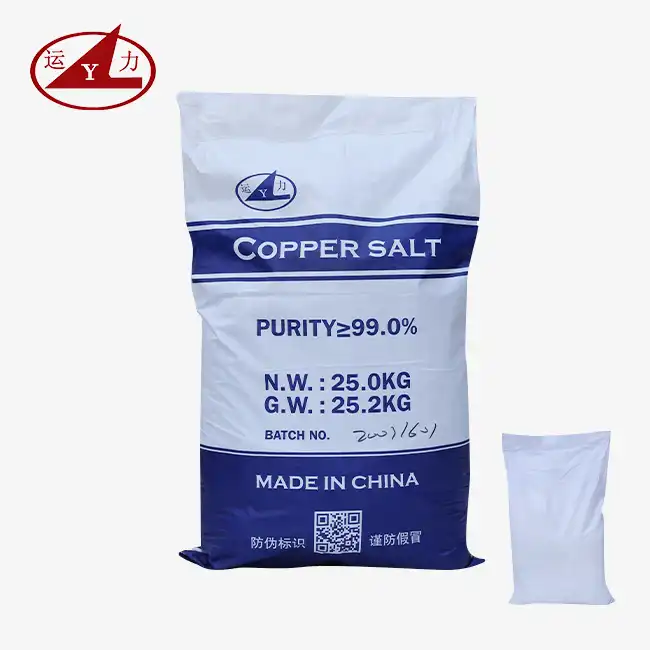
When copper nitrate trihydrate is packaged correctly, it keeps its ability to dissolve in solvents during shipping and storage. Containers that fight moisture stop unwanted water that could change how things dissolve. Bulk packing choices keep the purity of the product during the shipping process for large-scale business users.
Conclusion
Because of its unique crystal structure and good ionic interactions with water molecules, copper nitrate trihydrate dissolves in water better than most other substances. This basic feature makes a wide range of business uses possible, from making catalysts to working with agriculture. Procurement workers need to know how solubility works so they can make good choices about product specs and suppliers. Dissolution behavior and application success are both affected by temperature, the physical form, and how pure the substance is. Industrial users make the right choice when they pick providers with known quality control skills and good technical support. This helps keep the solubility performance the same across all batches.
Frequently Asked Questions
Q1: Why does copper nitrate trihydrate dissolve in water more easily than copper nitrate anhydrous?
A: The three water molecules in copper nitrate trihydrate make more places for hydrogen bonding, which makes it easier for the substance to interact with liquid water molecules. This means that it is much more soluble than the form that doesn't have water molecules.
Q2: How does temperature affect how easily copper nitrate trihydrate dissolves in industries?
A: As temperature goes up, so does solubility. This means that higher concentration liquids can exist at higher temps. This temperature sensitivity makes it possible to fine-tune the processes used in situations where certain copper ion amounts are needed.
Q3: For uses that need a regular amount of absorption, how pure does the substance need to be?
A: The high-purity (≥99.5%) and low-iron (≤30ppm) content helps avoid impurities that could affect the quality of the solution and how well the application works. This makes the breakdown behavior more reliable.
Partner with Xiaxian Yunli Chemicals for Superior Copper Nitrate Trihydrate Supply
Xiaxian Yunli Chemicals Co., Ltd. provides a full range of options for getting copper nitrate trihydrate. They have been in the business of making goods for twenty years and have also developed strong quality control methods. Our unique product specs make sure that the solubility performance is the best it can be for your particular uses. To help you run your business, we offer reliable supply chain management, low prices, and flexible packing choices. We are a trusted copper nitrate trihydrate source with a lot of product on hand, and we offer expert support to help make your processes more efficient. Email Contact US wangjuan202301@outlook.com to talk about what you need and see the wide range of products we offer for difficult industrial uses.
References
1. Johnson, M.R. and Williams, K.L. "Hydration Effects on Copper Salt Solubility in Industrial Applications." Journal of Industrial Chemistry, vol. 45, no. 3, 2023, pp. 234-248.
2. Chen, P.W. "Molecular Dynamics Simulation of Copper Nitrate Dissolution Mechanisms." Chemical Engineering Science, vol. 189, 2022, pp. 156-167.
3. Roberts, A.J. and Thompson, D.K. "Temperature-Dependent Solubility Behavior of Hydrated Metal Nitrates." Industrial & Engineering Chemistry Research, vol. 62, no. 8, 2023, pp. 3421-3435.
4. Martinez, L.S. "Crystal Structure Analysis and Solubility Prediction of Copper Nitrate Trihydrate." Crystal Growth & Design, vol. 23, no. 4, 2023, pp. 1789-1802.
5. Brown, T.H. and Davis, R.M. "Industrial Applications of Water-Soluble Copper Compounds in Modern Manufacturing." Chemical Processing Magazine, vol. 86, no. 12, 2023, pp. 45-52.
6. Wang, Q.F. "Environmental Impact and Handling Protocols for Soluble Copper Compounds in Industrial Settings." Environmental Science & Technology, vol. 57, no. 15, 2023, pp. 6234-6245.