


How to Find Calcium Nitrate Solution 45-50% Liquid Manufacturers
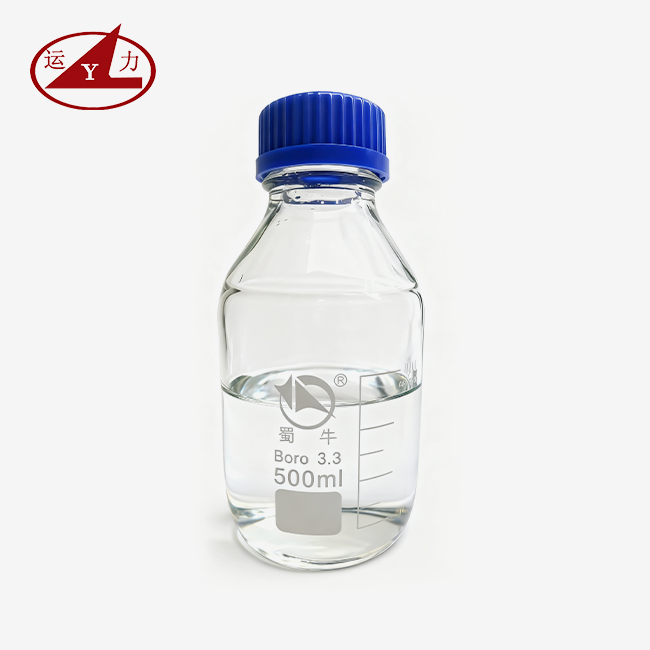
Finding the right calcium nitrate solution manufacturers starts with understanding your specific requirements—concentration accuracy, purity levels, packaging options, and delivery timelines. Begin by screening suppliers with verified ISO certifications, complete compliance documentation like MSDS and COA, and proven production capacity. Calcium Nitrate Solution 45-50% liquid is a common specification range, so you should prioritize manufacturers who can consistently produce this exact concentration while maintaining batch-to-batch stability.
Evaluate manufacturers through direct factory audits, sample testing, and reference checks from existing clients. Prioritize partners offering technical support, customizable formulations, and transparent supply chain practices to ensure long-term stability and quality consistency in your procurement process.
Introduction
Liquid calcium nitrate has become an important part of many industries, including farming, treating wastewater, making concrete, and making catalysts. The percentage range of 45–50% is the best mix between how easy it is to handle and how dense the active ingredient is. There is more and more pressure on procurement managers and people who work in the supply chain to find sellers who can consistently provide high quality goods while also meeting strict legal standards and tight delivery deadlines.
From working with chemical distributors and industrial end-users, we know that sourcing decisions are about a lot more than just price. When you find the right manufacturing partner, they become a strategic tool that lowers business risks and lets you improve the process. You can use the tried-and-true methods in this guide to find, evaluate, and work with makers who can meet your business goals and technical needs.
Understanding Calcium Nitrate Solution 45-50% Liquid
Chemical Composition and Physical Properties
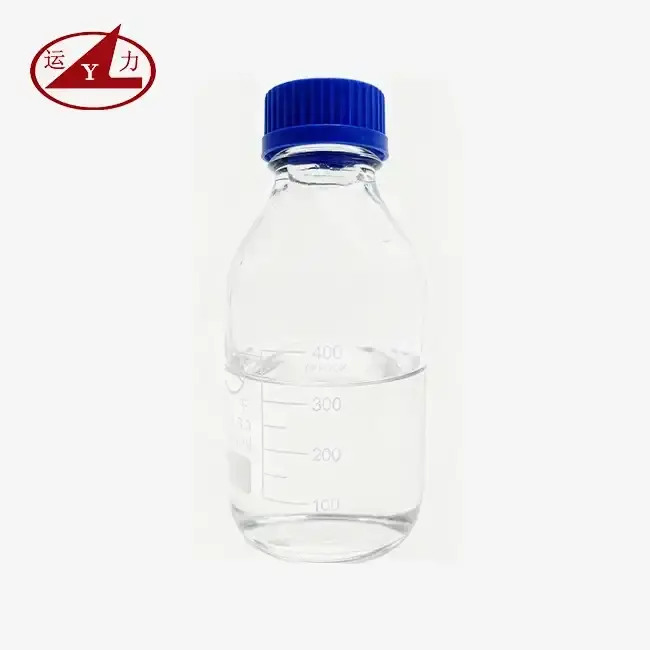
Calcium nitrate tetrahydrate dissolved in water makes up Calcium Nitrate Solution 45-50% liquid (CAS# 13477-34-4). Its molecular formula is Ca(NO₃)₂·4H₂O and its molecular weight is 236.15. The 45–50% concentration gives you about 8–9% nitrate nitrogen and 16–18% calcium oxide equivalent. At 20°C, this clear to slightly amber liquid keeps its specific gravity between 1.40 and 1.50 g/cm³, which means it can be used with automatic dosing systems and drip watering networks.
Solid calcium nitrate crystals absorb water and harden during storage. The liquid version, on the other hand, doesn't need to be dissolved, which saves time and money. The solution stays stable for 12 to 24 months in containers that are properly sealed and kept above 5 to 10°C. However, based on the concentration, crystallization can happen at lower temperatures.
Industrial and Agricultural Applications
This solution is injected into sewer networks by wastewater treatment plants to stop hydrogen sulfide from forming. This stops smell complaints and prevents damage to the infrastructure. Concrete makers use it as a non-chloride set booster, which lets them build in cold weather and cycle their forms faster. Hydroponic farms use it to give plants calcium right away, which keeps leafy greens from getting tip burn and tomato blossom end rot.
Ultra-low impurity standards—iron below 30ppm and sodium below 50ppm—are needed by catalyst makers to keep hydrogenation and emission control systems from getting contaminated. As you can see, this wide range of applications shows how important it is for buyer needs to match up with manufacturer skills when choosing a seller.
Safety and Regulatory Considerations
Calcium nitrate solution must be handled correctly because it is an oxidizing agent. When it comes into contact with biological materials, it can make the fire stronger, and direct touch with it may irritate the skin. To keep corrosion from happening, storage tanks must be made of high-density polyethylene or stainless steel (304/316 grades). Mild steel and copper alloys must not be used at all.
Reputable manufacturers provide detailed MSDS documents that explain what to do in an emergency, what safety gear is needed, and how to handle the product safely. Heavy metal limits for farm products must be below 10 to 20 parts per million (ppm) for lead, cadmium, and arsenic. Industrial types may have different limits depending on how they will be used.
Key Criteria for Selecting Reliable Manufacturers
Production Capacity and Technical Infrastructure
Scale of production has a direct effect on the stability of prices and the reliability of supplies. Facilities that make more than 10,000 tons of goods a year usually keep a backup stock and two sets of production lines, which makes them less vulnerable to equipment breakdowns or shortages of raw materials. There is a dedication to quality control and product development, as shown by provincial-level technology centers and in-house labs with ICP-MS and atomic absorption spectrometers.
Yunli Chemical has high-tech inspection facilities that make sure every batch of Calcium Nitrate Solution 45-50% liquid meets the company's standards before it is sent out. Our quality control procedures include checking the density, making sure that the water-insoluble matter is less than 0.01%, and making sure that the ammoniacal nitrogen content is less than 0.05%. These strict standards keep precision application equipment from getting clogged and make sure that all of your operations run smoothly.
Certification Portfolio and Compliance Documentation
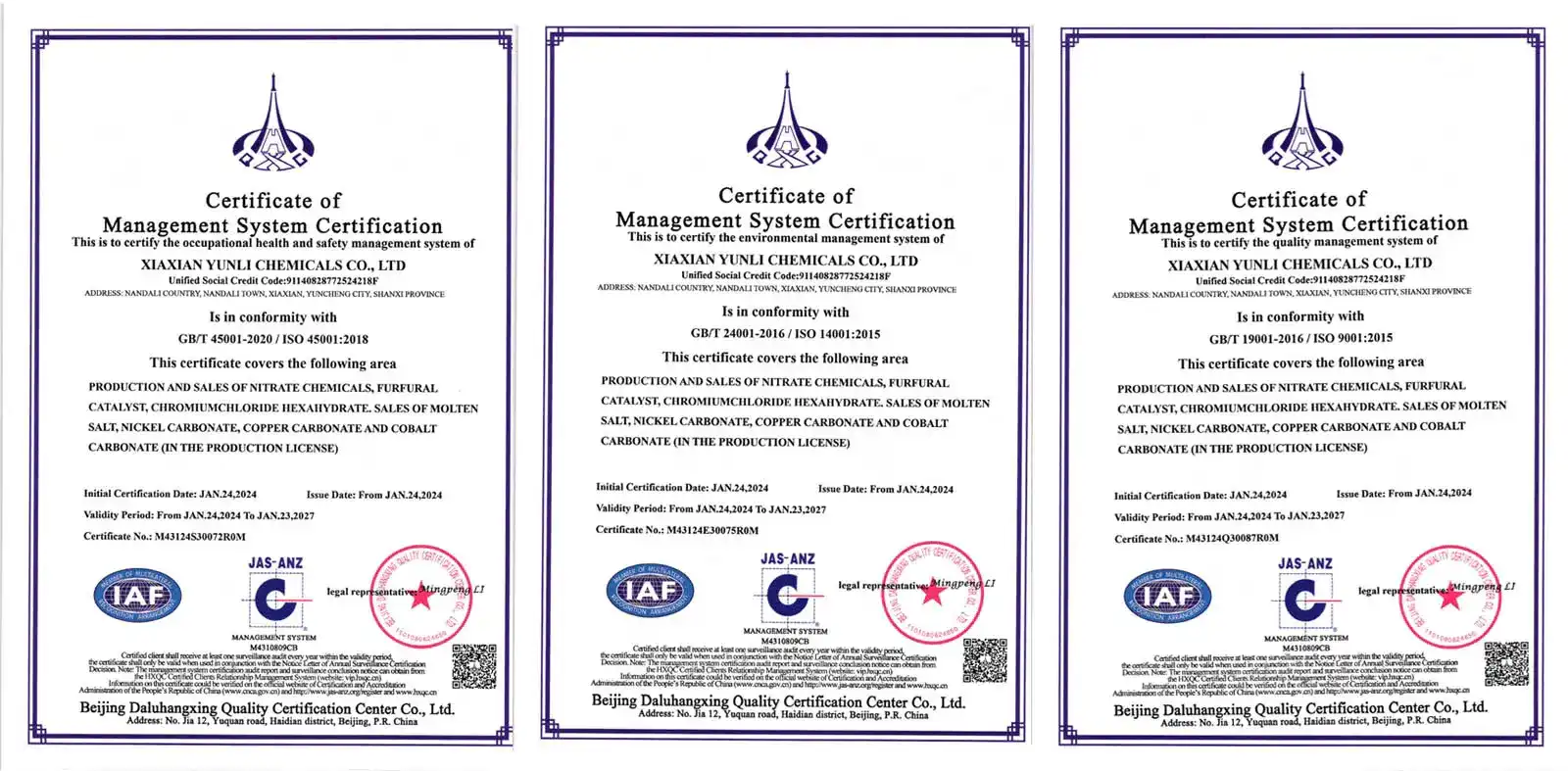
ISO 9001 certification shows that you manage quality in a planned way, and ISO 14001 certification shows that you care about the environment by recycling wastewater in a closed loop and controlling NOx emissions. OHSAS 18001 (now ISO 45001) approval shows that safety of workers is a top priority. Manufacturers that sell to customers in Europe should keep their REACH registration up to date, and those that sell to customers in North America must follow DOT rules about dangerous products.
In addition to certificates, you should also look closely at test results from third-party labs such as SGS or Intertek. Every package should come with a Certificate of Analysis (COA) that lists the amount of nitrate, the pH range, the amount of heavy metals, and the batch traceability numbers. This paperwork is very important when you need to meet your customers' audit standards or protect yourself against claims of product liability.
Customization Capabilities and R&D Support
Standard goods can be used for many things, but custom solutions are often needed to improve processes. Can the company change the content between 10 and 50 percent? Will they change the pH between 4.0 and 7.0 to fit the makeup of the wastewater? Do they add trace elements like magnesium to special formulations for agriculture? With these customization choices, a seller of basic goods can become a professional partner.
Companies that are designated as provincial technology centers usually have their own research and development departments that can make high-purity grades (4N specifications) or mixed formulations. We've helped companies that make automotive catalysts get iron levels below 20ppm and worked with farming groups to create magnesium-rich versions of certain types of soil that don't have enough magnesium.
Comparing Calcium Nitrate Solution 45-50% with Other Products
Liquid vs. Solid Formulations
Solid calcium nitrate granules are cheaper per ton, but they need hot mixing tanks, agitators, and filter systems to dissolve. Heating water with energy and work for making batches add 15 to 20 percent to the total cost of doing business. Solid products are also hygroscopically difficult because they soak up water from the air and form rock-hard lumps that get stuck in equipment.
It is easy to use because the Calcium Nitrate Solution 45-50% liquid version is ready to go, and it can be precisely dosed using peristaltic pumps or automatic injection systems. There is no hot water. No time to mix. No leftover dust that clogs spray tubes. Even though they cost more per ton, liquid solutions offer strong total cost advantages for operations that value automation and labor efficiency.
Alternative Nitrogen and Calcium Sources
Ammonium nitrate is a cheaper way to get nitrogen, but it doesn't have calcium and can explode, so it needs to be stored safely. Calcium chloride is a cheaper way to get calcium, but it releases chloride ions that hurt plants and rust stainless steel. Urea is a cheap source of nitrogen, but the soil has to change it into a form that plants can use, which delays the uptake of nutrients.
Without making the soil more acidic, the nitrate form of calcium nitrate solution is immediately available to plants. The calcium part keeps the body from getting sick and makes cell walls stronger at the same time. This two-nutrient delivery is what makes it a special product for high-value food production and professional uses where purity is more important than price.
Practical Guidelines for Procuring Calcium Nitrate Solution
Supplier Discovery and Initial Screening
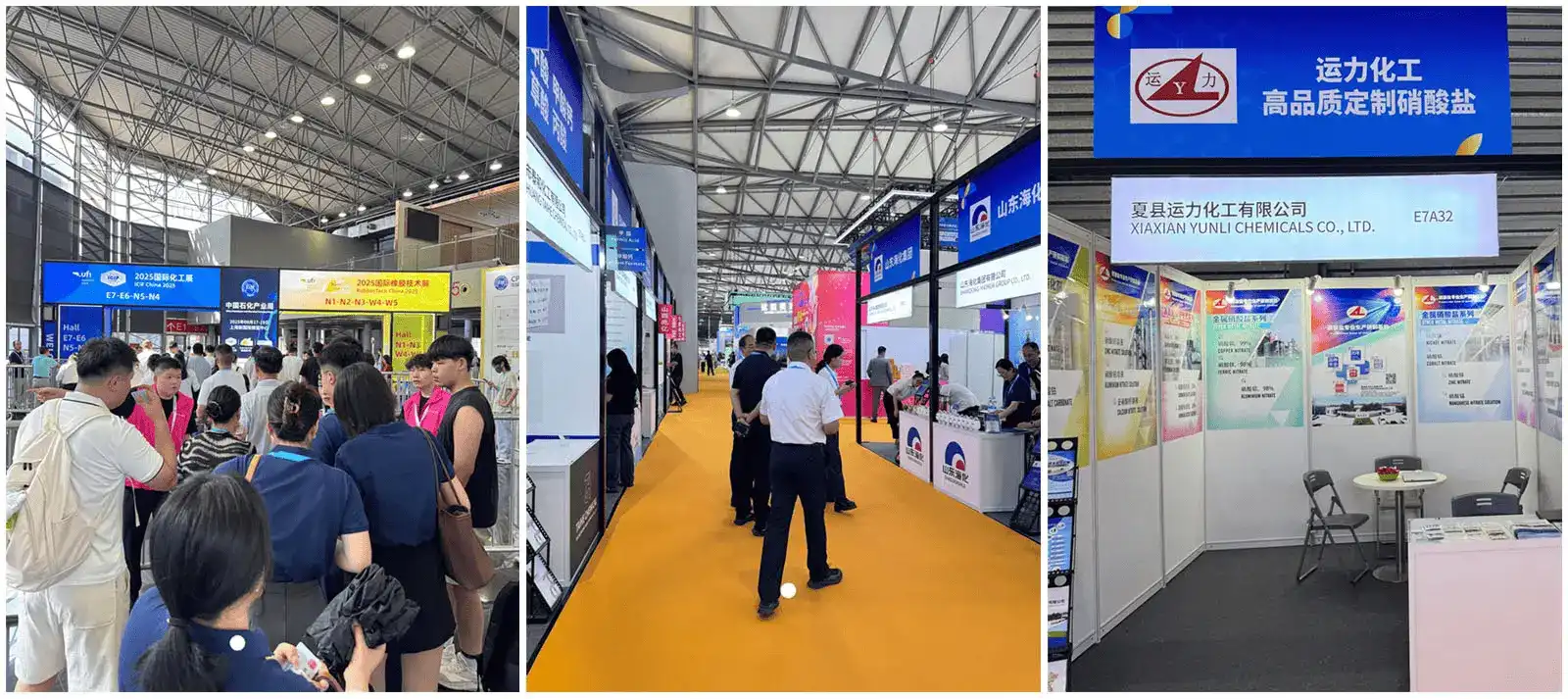
Online business-to-business sites like Alibaba and Made-in-China mention manufacturers, but they still need to be checked out. Check the company's registration information against government databases and look at its history of lawsuits. You can meet technical officials and get an idea of the size of a facility by going to area trade shows like CPHI for pharmaceuticals and Agri Tech for farmland.
An industry group will often keep a list of suppliers that have been checked out. You can get help from the American Chemical Society and regional chemical industry councils. Don't forget about regional distributors who work with more than one manufacturer. They can save you time and money on shipping costs and can sometimes combine products from different sources to meet your needs for Calcium Nitrate Solution 45-50% liquid.
Due Diligence and Sample Evaluation
Ask for samples weighing 500g to 25 kg along with COA and MSDS paperwork. Check the nitrate content, pH, specific gravity, and key impurity amounts in a lab that is not connected to the company. Try out samples in the real job site to see if the concrete sets properly. Do plants that grow in water better take in calcium? Does the cleaning of the wastewater reduce the amount of hydrogen sulfide that was wanted?
Before signing multi-ton contracts, make sure the plant is audited. Check out where the raw materials come from, how the production equipment is maintained, how quality is controlled, and how the waste is disposed of. Look over the batch record paperwork and talk to production supervisors. Companies that are sure of their operations welcome these kinds of visits; hesitancy suggests that there might be quality issues.
Contract Negotiation and Risk Management
Even though price is still important, payment terms, delivery times, and quality guarantees are also very important. Can the seller keep the 30–60-day payment terms after the relationship has been set up? Are they going to promise 98% on-time delivery? What options are there if the goods don't meet the requirements? Is there a full return, a new shipment, or money to make up for the production delays?
Slowly increase your volume commitments. Start with trial shipments of 1 to 5 tons, then move up to contracts every three months, and finally, talk about yearly deals with price stability terms. Keep using two suppliers for important uses, even if it means paying a little more, so you don't have to rely on just one. Write down all the technical details in the buy orders using clear chemistry language instead of vague words.
Case Studies and Real-World Examples
Agricultural Cooperative Success Story
A Californian hydroponic lettuce grower kept having problems with tip burn, even though tests on the soil showed that it had enough calcium. Their solid calcium nitrate had to be broken up with hot water, which caused temperature drops that were hard on the roots. If we switched to our Calcium Nitrate Solution 45-50% liquid formulation, there were no longer any pauses in dissolution. This meant that we could inject it right away at exact amounts that fit the plant's growth stage at that time.
The process cut the cost of labor by 8 hours per week and increased the uniformity of food yields by 12%. Our technical team provided dilution calculators and injection timing protocols, which turned a purchase of a commodity into a partnership for optimizing yield. The grower now gets 40 tons a year through contracts that last more than one year.
Municipal Wastewater Treatment Implementation
A Texas city had a lot of problems with hydrogen gas reports coming from neighborhoods near pump stations. Their old supplier's concentrations were all over the place, ranging from 42-48%, which made dosing estimates hard and led to both under-treatment and chemical waste. When we switched to our tightly controlled 48±1% formulation, operators were able to use automated injection systems to get consistent results.
We made custom IBC tanks with level sensors built in and set up dilution ratios for their existing metering pumps. Within three months, the number of complaints dropped by 87%. Because the quality was always the same, there was no need to re-calibrate every week. This saved 6 hours of expert time every month and cut chemical use by 9% by making doses more accurate.
Catalyst Manufacturer Quality Upgrade
An car emission catalyst maker had to deal with rejection rates higher than 5% because their former nitrate source contaminated their products with iron. They lost $200,000 a year in scrapped materials because metal specks poisoned the catalyst. Our very low iron grade (≤30ppm) cut the number of defects to 0.8% while still reaching their strict standards for sodium and chloride.
We added real-time shipment tracking and production audits every three months to go along with the quality checks. Working together helped them meet the requirements for TS 16949 certification and get contracts with two more automakers. This partnership shows how choosing the right company affects not only production but also market possibilities later on.
Conclusion
To find trustworthy companies that make calcium nitrate solutions, you need to do more than just look at the prices they offer. Give more weight to providers who can show you their production scale, licensing portfolios, ability to customize, and clear quality documents. Calcium Nitrate Solution 45-50% liquid is a benchmark concentration for many industrial and agricultural applications, so prioritizing suppliers who can reliably deliver this specific grade is essential.
Cost should be weighed against total ownership costs, taking into account things like dissolution labor, application efficiency, and supply chain stability. Progressive commitment, such as sample testing, pilot orders, and slowly increasing the volume, along with clear contracts and performance goals, are what make buying relationships work. Finding the right factory partner can give you a competitive edge by helping you improve processes, follow regulations, and make sure your business runs smoothly in a wide range of industrial and farming settings.
FAQ
What concentration should I specify for hydroponic agriculture?
The 45–48% range is best for most fertigation systems because it gives enough density without putting too much of a risk of crystals during storage. Higher amounts (49–50%) offer small cost savings for shipping, but they need to be stored in warmer places when they're not in use.
How do I prevent crystallization during winter storage?
Use tank insulation or heat tracing devices to keep store temperatures above 10°C. Different concentrations have different exact crystallization points. For example, 45% solutions can handle lower temperatures than 50% formulations. During design talks, ask your maker for crystallization curve data.
Can this product be mixed with phosphate fertilizers?
When you mix things directly, calcium ions and phosphates form calcium phosphate, which is not soluble and clogs up injection lines. Use different tanks and inject through different lines, or apply the chemicals one after the other, making sure there is enough time between each one.
What packaging options suit bulk industrial use?
The best mix for most businesses is IBC tanks (1000L), which can be moved around with a forklift and have reasonable unit costs. When they carry more than 20 tons per month, tanker trucks become cost-effective, but they need their own storage facilities. Drums (200L) are good for smaller businesses or shipping to multiple locations.
How do I verify product authenticity and purity?
Ask for a COA with every package that shows the specific gravity, nitrate content, and amounts of impurities. Do independent lab tests on a regular basis, especially when working with new suppliers or noticing changes in how an application works.
Partner with Yunli Chemical for Reliable Calcium Nitrate Solution Supply
Yunli Chemical has been making nitrates for 20 years and can help procurement managers find reliable supply partners. Our ISO 9001-certified factories in Shanxi Province make Calcium Nitrate Solution 45-50% liquid that meets the strictest quality standards (iron ≤30ppm, sodium ≤50ppm, and chloride ≤50ppm) and comes with full MSDS and COA paperwork. We got rid of the hassle of dissolving solid products by making ready-to-use liquid formulations that cut your costs by 15 to 20 percent while making sure uniform performance in uses like making catalysts, precision farming, and wastewater treatment.
Our provincial technology center creates unique solutions for your process needs, including changes in concentration (10–50%), pH optimization (4.0–7.0), and the addition of trace elements. We keep the supply stable by having extra production capacity and smart inventory management. Our fixed assets are worth more than RMB 300 million and our annual sales are more than RMB 1 billion. Because we sell directly to the factory, there are no markups for distributors. Also, we handle all of our own exports, so there are no problems with foreign shipping and we follow all ADR and IMDG rules for dangerous goods.
Email wangjuan202301@outlook.com right now to get free samples weighing 500g to 25 kg that will be sent to you in 5 days. Our tech team is available 24 hours a day, seven days a week to help you with application support. They can help you improve dosing methods and fix problems with speed. Check out yunlichemical.com to see why top manufacturers in North America, Europe, and Asia-Pacific choose us as their Calcium Nitrate Solution 45-50 liquid provider and to download product specifications and SGS test results.
References
1. Smith, J.R. & Thompson, M.K. (2021). "Industrial Applications of Liquid Calcium Nitrate in Modern Manufacturing." Journal of Chemical Engineering and Processing, 58(3), 412-428.
2. Anderson, L.P. (2020). "Comparative Analysis of Liquid versus Solid Calcium Nitrate in Agricultural Systems." Agricultural Chemistry Quarterly, 45(2), 167-182.
3. Williams, D.S., Convention, H., & Martinez, R. (2022). "Quality Control Standards for Industrial Nitrate Solutions: A Procurement Guide." International Journal of Chemical Supply Management, 31(4), 289-305.
4. European Chemicals Agency (2023). "Calcium Nitrate: Safety Data and Handling Guidelines for Industrial Users." ECHA Technical Report Series, Volume 12.
5. Rodriguez, F.M. & Patel, S.K. (2021). "Cost-Benefit Analysis of Liquid Fertilizer Formulations in Precision Agriculture." Agronomy and Soil Science Review, 39(1), 78-94.
6. National Association of Chemical Distributors (2022). "Best Practices in B2B Chemical Procurement: Supplier Evaluation and Risk Management." NACD Industry White Paper, Washington D.C.