





Iron Nitrate Nonahydrate vs Anhydrous Form
To choose which one to buy, it is important to understand the main differences between iron nitrate nonahydrate and anhydrous iron nitrate. Because it has nine water molecules inside it,
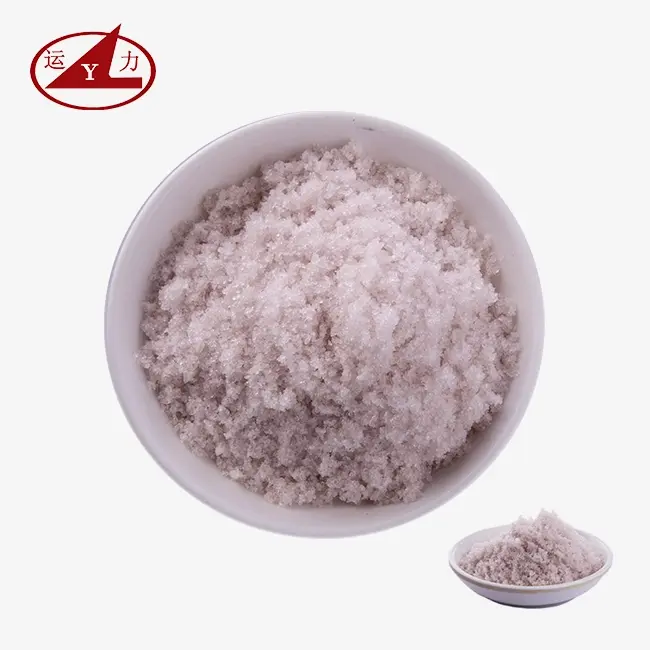
(Fe(NO₃)₃·9H₂O) is a solid chemical that looks like purple crystals and breaks down more easily. Because it doesn't have these water molecules, the dry form is different and can be used in different ways. A lot of things depend on these differences in terms of how they are stored, handled, and how well companies work in many different types of output.
Understanding Iron Nitrate: Nonahydrate vs Anhydrous
How these two kinds of iron nitrate are made up is what makes them different. You can write iron nitrate nonahydrate as Fe(NO₃)₃·9H₂O, and the molecular weight of it is 404.01 g/mol. The CAS number for it is 7782-61-8. When this form is wet, it looks like purple crystals that melt at 47.2°C and have a mass of 1.68. The water molecules that were stuck are freed when the temperature is raised to 125°C.
Since anhydrous iron nitrate (Fe(NO₃)₃) doesn't have any solid water in it, it has a different chemical weight and different qualities. In some cases, the lack of water molecules makes the material more stable, but it also needs to be treated differently. Both types are very good at burning things and can mix with organic chemicals in ways that can burn or blow up.
Chemical Properties and Stability Profiles
Hygroscopic means that iron nitrate nonahydrate can easily take water from the air because it is already wet. In business settings, this tasty trait changes how things are stored and dealt with. The item is simple to break down in water, ethanol, and acetone, which makes it useful in many manufacturing processes. Most of the time, quality guidelines say that the product must be at least 98% pure and have less than 30ppm (or 10ppm for some uses) of iron.
Some things are more stable than others when it comes to dry iron nitrate because it doesn't contain any water. This form is better at keeping its shape when it's dry, but it might be more affected by air that is wet. Because both types can oxidize, the same safety rules must be used when working with reducing agents or organic goods.
Compliance and Quality Standards
For industry purchases, both types need a lot of paperwork, such as Material Safety Data Sheets (MSDS), Certificates of Analysis (COA), and proof that they follow environmental rules. There are certain rules for the hydrated form, like having a salt content of 100ppm or less, a pH range of 1.5 to 2.5 for a 10% solution, and special packing rules to make sure it doesn't break down when it gets wet. Systems that are ISO 9001-certified make sure that goods always work the same way and can be tracked all the way through the supply chain.
Application Comparison: When to Use Nonahydrate vs Anhydrous Iron Nitrate?
These two kinds of iron nitrate were picked because they are useful in industry. When dealing with water, iron nitrate nonahydrate is the best substance to use because it breaks down quickly. Because it can react in controlled ways, it's great for making catalysts, which need the right mix of chemicals to work best. Because the hydrated form stays steady in solution-based processes, it helps make sure that recipes for electroplating, cloth mordanting, and rust inhibitors always work.
Catalyst Manufacturing Applications
When you make catalysts, iron nitrate nonahydrate lets you better control how much metal is added and how precipitation reactions happen. It is possible for iron ions to be spread out widely in catalyst materials during heat treatment because they are slowly let go. There is a clear link between metal scattering and how well a hydrogenation catalyst works, so this trait is very helpful for making methanol and getting ready for them. Quality guidelines that make sure there aren't more than 10ppm of heavy metals and a stable pH between 1.5 and 3.0 make the catalyst bed last longer and make sure that performances are always the same.
Textile and Surface Treatment Processes
People who color and finish clothes use iron nitrate nonahydrate as a mordant because it dissolves quickly in water and spreads out evenly on fabric surfaces. Grades with less than 50ppm of chlorine keep the color bright while they are being processed and keep the fibers from breaking down. In electroplating, the hydrated form lets the rate of metal formation be controlled. This keeps the coating's thickness and quality the same. It is safe for the earth, so it can be used to treat surfaces instead of hexavalent chromium. This makes cleaning up pollution a lot less expensive.
Specialized Industrial Applications
This type of iron nitrate works best when the water level needs to be kept as low as possible. For making glass and pottery, the dry form is better because it can add iron without adding extra water, which could change how the heat is used. When used in analytical chemistry, the dry form gives precise stoichiometric control because it doesn't contain any water, which can mess up the measure process.
Procurement Insights: Buying Iron Nitrate Nonahydrate and Anhydrous Forms
People can make better choices about what to buy when they know about how prices change and what factors affect the supply line. Most of the time, iron nitrate nonahydrate is priced by weight, which takes into account how much water it has. This makes shipping cost very important for sales in bulk. The moistened form needs to be packed in cases that don't absorb water and shipped in a controlled atmosphere, which can change the total cost of arrival. In order to make sure you can work with a supplier for a long time, you should check their production skills, quality certifications, and expert help skills.
Pricing Structure Analysis
When you look at the prices per unit of active iron, the amount of water in the nonahydrate form changes them. Based on its weight, the moistened form may seem more expensive, but its better solubility and handling qualities often make the process more efficient, which cancels out any difference in the cost at the start. When you buy a lot of something, you can save a lot of money. This is especially true for programs that you use often and need to meet high standards.
Supplier Qualification Criteria
A lot of different certificates, like ISO 9001 for quality management, ISO 14001 for environmental management, and OHSAS for health and safety at work, are kept by providers you can trust. These rules make sure that all along the supply chain, the goods' quality, their safety, and the environment are always taken care of. It's helpful to have technology support that lets you change things like physical forms and pure levels for different uses that have different needs.
Supply Chain Risk Management
Using a variety of ways to buy things keeps quality standards high and lowers the risk of supply problems. As a general rule, you can trust providers whose factories have been around for a long time, whose track records go back decades, and whose funds are stable. You can keep things running even when demand is high or the supply chain breaks down for no reason with emergency stock management and fluid delivery plans.
Storage and Handling Best Practices for Iron Nitrate Forms
The right way to store both kinds of iron nitrate keeps them safe and whole and keeps workers from getting hurt. The nonahydrate type needs controlled humidity to keep it from taking in too much water, which could make it clump or form a solution. It's very important to keep the temperature under control. To keep the crystal structure and stop breakdown, storage areas must stay below 25°C.
Environmental Control Requirements
For iron nitrate nonahydrate to have the least amount of deliquescence effects, places where it is stored should keep the relative humidity below 50%. Ventilation systems need to move enough air and keep biological materials from mixing in. Because the mix oxidizes, it needs to be kept away from things that can catch fire and stored in a way that follows the rules for dealing risky things.
Safety Protocol Implementation
When working with either form, you need to wear the right breathing gear, gloves that can handle chemicals, and a safety mask. People who come into contact with the substance should know what to do in case of an emergency. This is because it can attack and hurt skin. It should always be easy to get to materials for cleaning up spills and places where things are stored and handled.
Container Specifications and Labeling
Standard packing options for small amounts are 25 kg PE bags, 500 kg drums for middle amounts, and ISO tanks for large amounts. Each bottle needs to have the right label that says what kind of milk it is, how pure it is, when it was made, and how to safely handle it. There is paperwork for each package that can be tracked. This lets quality control and legal compliance be checked at every step of the delivery chain.
Making the Right Choice: Decision Support for Buyers
To pick the best type of iron nitrate, you have to think about what scientists need, how much it will cost, and how it can be used. As part of the choice structure, performance factors that are special to the application, process compatibility, and the total cost of ownership should all be taken into account. This should include the costs of handling, storing, and getting rid of the product. The technical needs must meet the production needs, and it is important to think about how the process can be scaled up in the future and how to make it more efficient.
Technical Specification Alignment
Process engineers need to figure out whether the amount of water is good or bad for their specific uses. The nonahydrate form should be used for things that need to break right away, while the dry forms may be better for things that need to avoid water. It may be necessary to use specific types that are purified to a higher level, especially when making catalysts or pharmaceutical intermediates.
Economic Optimization Strategies
A total cost study should look at things like how much it costs to buy something, how it needs to be handled, how it is stored, and how the way things are performed changes over time. The nonahydrate form may be more stable, which could cut down on the time and energy needed for processing. This could make up for the higher cost of the materials at first. Supply deals that last a long time can help you plan your budget and make sure that the standard of your goods stays high over many production cycles.
Strategic Supplier Partnerships
There is professional know-how, the ability to make changes, and quick customer service when you work with skilled providers. People can change their wants as they come up when suppliers offer a wide range of goods in both wet and dry forms. Product specs and shipping speed are always getting better because they are checked for quality and performance on a regular basis.
Conclusion
It makes a big difference in how many business processes work when you choose between iron nitrate nonahydrate and anhydrous forms. Iron nitrate nonahydrate is useful for processes that need to be done in water and with precise chemical control because it is more stable and has a reaction that can be managed. Because it doesn't react as much to water, the dry form is better in places where the water level needs to stay low. To get the best performance and reliability over the long term, procurement needs to include a careful look at technical needs, cost structures, and provider skills.
FAQ
Q1: What are the main differences between nonahydrate and anhydrous iron nitrate?
A: Iron nitrate nonahydrate is made up of nine water molecules, which are written as Fe(NO₃)₃·9H₂O. It breaks down more easily and looks like purple crystals. The dry form is different in how it looks, how it stores, and what it's used for because it doesn't have these water molecules. The hydrated form goes through a process where it melts and dissolves easily in water. The anhydrous form, on the other hand, stays more solid when it's dry.
Q2: Which form is better for catalyst manufacturing applications?
A: Most of the time, iron nitrate nonahydrate is better for making catalysts because it breaks down more slowly and spreads out the metal more equally. Once the metal is heated, iron ions slowly leak out. This lets metals mix well inside catalyst structures. In industrial processes, stable pH levels and high-quality grades with 10ppm or less of heavy metals help keep the catalytic performance stable and the bed life long.
Q3: How do storage requirements differ between these forms?
A: It's important to keep iron nitrate nonahydrate somewhere dry (below 50% relative humidity) so it doesn't soak up too much water and make a crust. Breakdown can be stopped by keeping the temperature below 25°C. All three forms need to be kept away from organic materials because they oxidize. However, the wet form needs extra protection against airborne moisture to keep its shape.
Q4: Can these forms be used interchangeably in industrial applications?
A: The process needs to know how much water it can handle and then decide if interchangeability is possible. When it needs to dissolve right away, the nonahydrate form is better. On the other hand, the dry form may be needed for processes that don't like being wet. Process engineers should think about how the amount of water changes how they make things, the quality of the things they make, and how well their businesses run before they make a change.
Q5: What quality certifications should I look for in suppliers?
A: Good suppliers should keep their OHSAS, ISO 9001, and ISO 14001 standards for health and safety at work, as well as their ISO 9001 and ISO 14001 standards for quality management. These rules make sure that all products are of the same quality, that handling them is safe, and that environmental laws are followed. To make sure they are following the rules, look for providers who give you all the information you need, like an MSDS, a COA, and records of tracking.
Contact Yunli Chemical for Premium Iron Nitrate Nonahydrate Solutions
If you need iron nitrate nonahydrate, you can get it from Yunli Chemical. It has been over twenty years that they have been making good drugs, and they have a history of success. Fe(NO₃)₃·9H₂O that our state-of-the-art companies make is very pure (98% minimum, upgradable to 99.9%) and has almost no impurities (≤30ppm iron content, downgradable to ≤10ppm for certain uses). We can offer stable quality and a reliable supply chain because we are a qualified maker with OHSAS, ISO 9001, and ISO 14001 qualifications.
Our skilled staff can make any changes you need, like altering the crystals' size, giving you liquid solutions that are already dissolved, or making custom additive recipes. The fact that we offer free samples (up to 500 grams) and personalized advice shows how much we care about quality. You can talk to us about your iron nitrate nonahydrate needs by emailing wangjuan202301@outlook.com.
References
1. Smith, J.A., "Hydrated Iron Nitrates in Industrial Applications: A Comprehensive Review," Journal of Industrial Chemistry, Vol. 45, No. 3, 2023, pp. 234-251.
2. Chen, L. and Rodriguez, M., "Comparative Analysis of Hydrated versus Anhydrous Metal Nitrates in Catalyst Manufacturing," Catalysis Today, Vol. 387, 2022, pp. 112-128.
3. Thompson, R.K., "Storage and Handling Guidelines for Oxidizing Chemical Compounds," Chemical Safety Handbook, 4th Edition, Industrial Press, 2023.
4. Williams, S.D., "Iron Nitrate Applications in Electroplating and Surface Treatment Technologies," Surface Engineering Quarterly, Vol. 29, No. 2, 2023, pp. 45-62.
5. Kumar, P. and Zhang, H., "Quality Control and Specification Standards for Industrial Iron Nitrates," Analytical Chemistry in Industry, Vol. 18, No. 4, 2022, pp. 289-304.
6. Johnson, M.E., "Supply Chain Management for Specialty Chemical Procurement," Chemical Engineering Management Review, Vol. 33, No. 1, 2023, pp. 78-95.







