


Is aluminium nitrate soluble or insoluble?
In particular, Aluminium Nitrate nonahydrate (Al(NO₃)₃·9H₂O, CAS No. 7784-27-2) is highly soluble in water. This material breaks down in 100 mL of water at 25°C, which is 64 grams. That makes it one of the aluminium salts that goes away the fastest in water. It is very easy to dissolve, so aluminium nitrate is the best choice for businesses that need to make solutions quickly and evenly. For example, when making catalysts, dyeing fabrics, or tanned leather, chemicals need to be spread out evenly to make sure the quality of the end result is good.
Understanding Aluminium Nitrate and Its Properties
Chemical Structure and Physical Characteristics
Aluminium Nitrate nonahydrate is a solid, white salt that dissolves in water. It has a molecular weight of 375.13 g/mol and no smell. The unique way the combination behaves physically is partly because of the way the nine water molecules are arranged in its crystal structure. At 73.9°C, it melts. At about 150°C, it starts to break down thermally, letting out nitrogen oxides and then making aluminium oxide. The chemical is hygroscopic, which means it can rapidly take water from the air. The people in charge of buying should think about this when they decide how to store it and how long it should last.
How well it dissolves is directly related to how the chemicals are arranged. Strong electric bonds form between the nitrate anions (NO₃⁻) and the water molecules around the aluminium ion in the middle. This makes solvation happen quickly. This is not the same as aluminium salts with bigger or smaller polar anions, which usually don't mix well with water.
Solubility Behavior in Different Solvents
It is easy for aluminium nitrate to dissolve in water, but it reacts differently with other fluids. It is hard for the material to dissolve in alcohols like methanol and ethanol, and it's even harder for it to dissolve in ethylene glycol. Chemical engineers can use these differences to make ways for separating and cleaning that work with this pattern of selective solubility. The water that breaks down the aluminium ion makes an acidic solution with a pH that stays between 2.5 and 4.0 depending on how much there is. In some cases, like when mordanting clothes, this acidity is helpful because it changes how well the dye sticks to the fibers.
Temperature and Concentration Effects
Temperature plays a big role in how quickly and how much aluminium nitrate needs to be broken down in order for the solution to become saturated. When the temperature goes up, solubility goes up a lot. This means that highly concentrated working solutions can be made for industrial processes. Experts in the field can use this link to their advantage when they are looking for the best settings for intermittent or batch reactors. The rate of breakdown speeds up as the temperature rises. This means that mixing takes less time and the process produces more. But high temperatures also make it more likely that things will break down quickly. Plus, it's even more important above 100°C, when the material might start to give off acidic gases. To keep these things in balance, you need to carefully plan the process and use correct info on solubility to help you.
Aluminium Nitrate Solubility: Scientific Insights and Practical Implications
Quantitative Solubility Data and Comparisons
You can tell the difference between famous aluminium salts by comparing how they dissolve. This will help you choose which one to buy. It takes 64 g/100 mL of Aluminium Nitrate nonahydrate to dissolve at 25°C, which is more than the 36.4 g/100 mL of aluminium sulfate (Al₂(SO₄)₃) that dissolves in the same conditions. Even more aluminium chloride hexahydrate (AlCl₃·6H₂O) can dissolve in water, at about 69.9 g/100 mL. It does, however, add chloride ions that can harm stainless steel tools and poison catalysts used in some industrial processes.
The way things work is changed by these changes in numbers. More solubility means fewer dissolving tanks, smaller processing volumes, and lower shipping costs for the same amount of aluminium to be sent to reaction zones. When buying managers look at different chemicals, they should think about the total cost of ownership, which should include the unit price as well as the savings in efficiency.
Industrial Relevance Across Key Sectors
Because aluminium nitrate is very easy to dissolve, it can be used in many important industrial processes where other materials don't work well. At high temperatures, the chemical breaks down completely into gamma-alumina. It doesn't leave behind any sulfate or chloride, which would usually stop precious metal catalysts from working. In the process of purifying oil, this is done during the catalyst support synthesis for hydrodesulfurization units. Sol-gel methods make sure that the aluminium is spread out widely because it breaks down quickly. This stops concentration differences in some areas that could damage the structure of advanced ceramic materials.
It is used as a mordant to connect the dye molecules to the threads of the fabric when it is being stained. If the mordant doesn't dissolve completely, it can leave lines or uneven coloring on the cloth. But if it does dissolve completely, it covers all of the cloth evenly. In the same way, uniform solution chemistry helps tanner processes get even damage to the hide and changes in its structure that meet quality standards for use in furniture and cars.
Reaction Kinetics and Formulation Chemistry
There is a direct link between solubility and how quickly events happen in systems with more than one phase. This is because aluminium nitrate speeds up processes further down the line by getting rid of hurdles that slow them down. This is very helpful in constant stirred-tank reactors where chemicals need to be ready quickly because they can't stay put for long. It can be used in controlled oxidation processes in organic synthesis because it dissolves in water and can change other things into oxygen. Adding the fuel slowly stops exotherms that get out of hand.
Formulation scientists who make special films, glues, or seals like being able to make aluminium nitrate stock solutions that have a high content. These can be carefully measured out and added to mixes that need to crosslink aluminium or keep the pH level. Not having any extra insoluble materials makes the filter steps easier and keeps equipment from getting clogged, which lowers maintenance costs and boosts production.
Comparison with Alternative Chemicals and Decision Making for Procurement
Performance Analysis: Aluminium Nitrate vs. Common Alternatives
You need to know how aluminium sulfate, aluminium chloride, and Aluminium Nitrate work in different scenarios in order to compare them. You can treat a lot of water and make paper with aluminium sulfate instead of sulfate ions, which are more expensive. Even though it's not as soluble, these uses still go ahead, and the fact that it's easy to get keeps prices low. Sulfate leftovers, on the other hand, make it impossible to make catalysts and cause equipment to scale up in high-purity settings. Because of this, it can't be used to make pharmaceutical chemicals or materials for electronics.
Aluminium chloride has the most aluminium per unit mass of any common salt. This makes it a good choice when buying things but money is tight for shipping costs. But it is hard to work with because it soaks up a lot of water. Also, chloride ions make metals like stainless steel and nickel, which are used a lot in chemical processing equipment, rust faster. Aluminium nitrate is a good middle ground because it breaks down quickly and doesn't rust or leave behind problems that make other choices impossible. The nitrate anion fully breaks down into nitrogen oxides when heated. This leaves behind pure alumina goods that meet very high standards for purity.
Assessing Strengths, Limitations, and Risks
The best things about aluminium nitrate are that it is simple to dissolve, breaks down cleanly, and can be used in danger zones. Because of these advantages, the price is higher than bulk choices. To explain this, purchasing managers have to look at the total cost of ownership, which includes things like higher returns, less trash handling, and longer equipment life.
It needs to be kept away from biological materials, reducing agents, and things that can catch fire because it oxidizes very quickly. They need to be kept in climate-controlled areas and packed in a way that keeps water out because they absorb it. This makes moving things around harder than when the chemicals are more solid. When the temperature goes above 135°C, it gets too hot to use directly, but this doesn't happen often in solution-phase chemistry, where it's most common.
Decision Criteria for Strategic Procurement
When deciding between aluminium salts, people who work in procurement should keep a few key points in mind. To make electronic materials, pharmaceuticals, and specialty catalysts, you need aluminium nitrate with low heavy metal content (usually Fe < 0.01%, and electronic grades need Fe < 0.005%). Only top aluminium nitrate providers can safely provide this. Application chemistry figures out whether chloride or sulfate ions make it hard for things to connect in ways that are more important than price. Following the rules changes how transportation is planned and how warehouses work, especially when it comes to labeling oxidizers and limiting their movement.
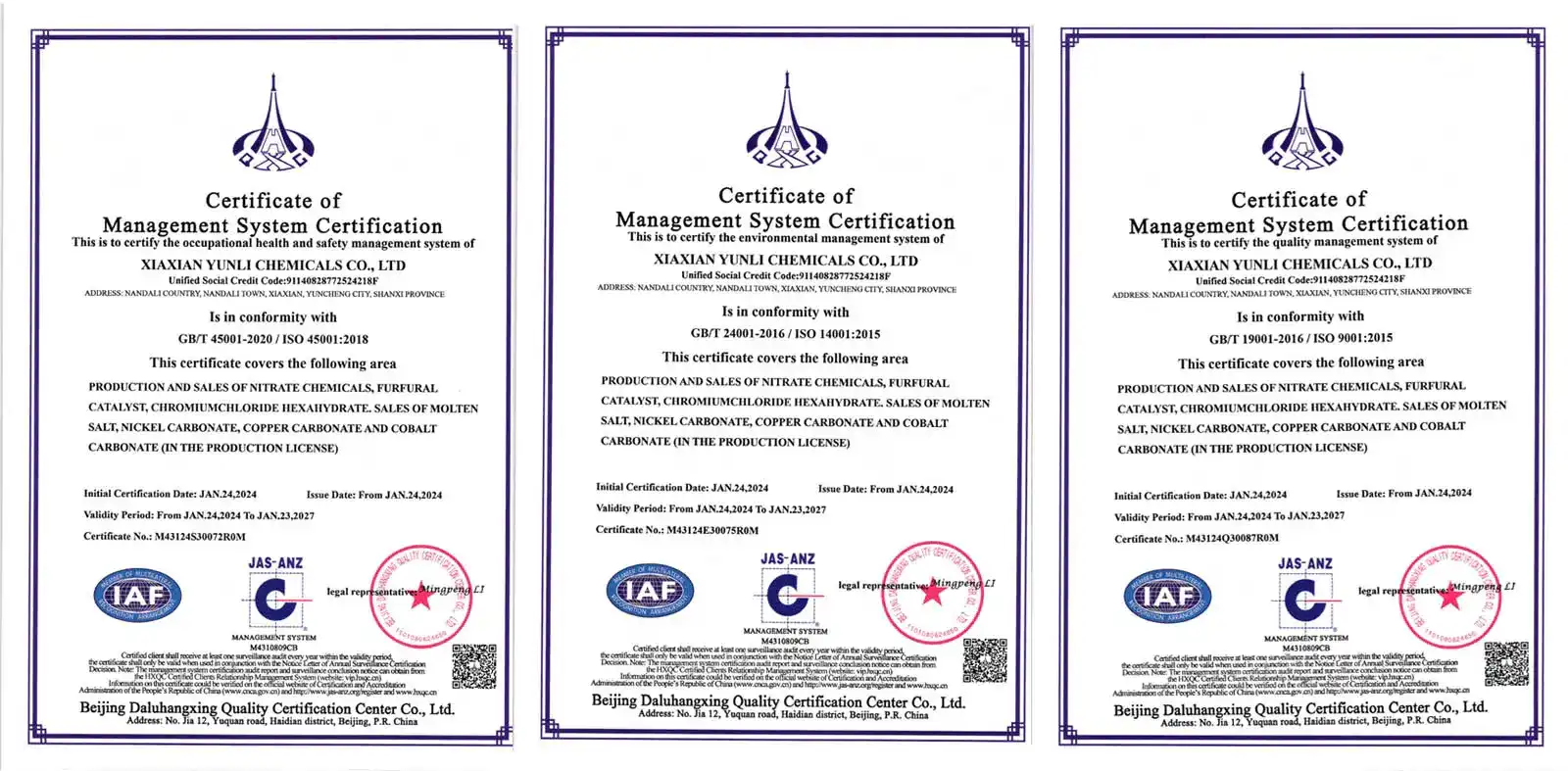
It is important to pay close attention to how stable the supply line is. It is much safer to buy from suppliers who have a past of working with big companies, strong quality management systems (ISO 9001, 14001), and the ability to combine production skills. This is in contrast to traders who only look for opportunities. It's worth a lot more than the price of the product to be able to get technical help from people like application experts who know how to make processes work best and how to control pH and solubility.
Procurement Considerations for Aluminium Nitrate
Supplier Evaluation and Quality Assurance
To find reliable Aluminium Nitrate providers, you need to look for a number of signs that they are reliable. For example, ISO 9001 is for quality management, ISO 14001 is for environmental compliance, and OHSAS is for workplace safety standards. These certifications show that the process is managed in a way that makes sure the end result always meets the standards. When a supplier is known as a local or national technology center, they have the research and development (R&D) skills to help with unique formulas and purity changes as an application's needs change.
A lot of what you buy depends on how long a company has been making chemicals. For producers who have been in business for more than 20 years, government changes, problems getting raw materials, and economic cycles that wiped out less durable competitors are just a few of the things that they have seen. A business that has been around for this long is likely to be financially stable, have a solid source of raw materials, and have learned things about the process that newer companies don't have. More than $150 million USD in sales every year and fixed assets worth more than $45 million USD show economies of scale that help keep prices and sources stable.
Packaging, Logistics, and Storage Requirements
Because aluminium nitrate soaks up water, it needs to be packed in a certain way, which should be made clear in the buying information. Plastic bags or drums lined with polyethylene that don't let water in keep them dry while they're being moved or kept. ISO tank containers with nitrogen blanketing are the safest and easiest way to ship large amounts of goods. Different packing sizes, from 25 kg bags for samples to 1000 kg super boxes for high-volume users, change how much it costs to handle and keep track of supplies.
The material is a Class 5.1 oxidizer according to UN 1438, so supply teams must follow certain rules when delivering it. Things are more difficult because of rules about marking, staying away from materials that don't go together (like flammables and reducing agents), and training for drivers. However, skilled chemical sellers deal with these issues all the time. Stored goods should be kept below 30°C, dry, and well-ventilated to keep them fresh and avoid caking. When you figure out how much building space you need, you should include the space for separating things and the temperature control gear.
Pricing Structures and Commercial Terms
The price of aluminium nitrate changes based on how pure it is, how much is bought, how it is packaged, and how it is shipped. At the base level, the price is set for industrial-grade material that is at least 98.0% pure. Electronic grades with strict heavy metal limits and a purity level of 99.9% or higher cost 30–50% more because they need more steps to be cleaned and lab proof costs. When you make big purchases, you can often get tiered prices. When you compare annual contracts to getting things on the spot, they can save you 10 to 15 percent. They also promise a steady supply, which helps you plan your production.
Minimum orders vary on what kind of goods the seller sells and how big they are. Big integrated manufacturers may need minimums of 20 tons for standard grades, but they can be flexible when it comes to unique goods because their technology centers make those goods stand out. For new customers, you usually use letters of credit. For customers who have been with you for a while and have always paid on time, you use net-30 or net-60 day terms. Procurement teams can get better terms of business if they show they know what they're doing and want to work together for a long time, not just when they need to.
Conclusion
Because it is very soluble and flexible, Aluminium Nitrate is an important industrial chemical that is used to make catalysts, process fabrics and leather, and make specialty chemicals. It's different from other aluminium sources used in tough scientific situations because it dissolves quickly and completely in water, making solutions that are all the same and leaving no waste. You need to think about more than just unit price when you decide what to buy. You need to think about the total cost, the quality standards, the source's dependability, and the needs of logistics. Working with well-known manufacturers who have the right licenses, strong quality systems, and technical support skills is one way for purchasing managers to make sure that supply chains support goals for consistent production and high-quality products. If you buy the product properly and from reputable sources that are committed to quality and service excellence, its better solubility will directly lead to better operations.
FAQ
How does temperature affect aluminium nitrate solubility?
Solubility goes up a lot as the temperature rises, which means that concentrated solutions can be made at high temperatures. In this way, process engineers can find the breakdown rates and working ratios that work best for each business. But temperatures above 100°C could break down the material too quickly, so it's important to keep an eye on the temperature to find the best balance between better solubility and a stable result.
What storage conditions prevent aluminium nitrate degradation?
A locked bag that stays cool (below 30°C), dry, and well-ventilated is the best way to store Aluminium Nitrate. Because it absorbs water, it needs to be kept in a very dry environment to avoid deliquescence and caking. As an oxidizer, it is safe as long as it is kept away from burning substances, organic molecules, and reducing agents. Things last longer and still meet the standards if you store them the right way.
Can I verify aluminium nitrate quality before large purchases?
Reliable suppliers give certificates of analysis (COA) for each batch of their products that show how pure they are, how much heavy metal they contain, and how well they dissolve. Asking for free sample samples (usually 500 grams), an outside lab can check the product and see how useful it is before committing to big orders. When you're looking at new sellers or grade changes, this trial method makes it less likely that you'll buy something.
Partner with Yunli Chemical for Reliable Aluminium Nitrate Supply
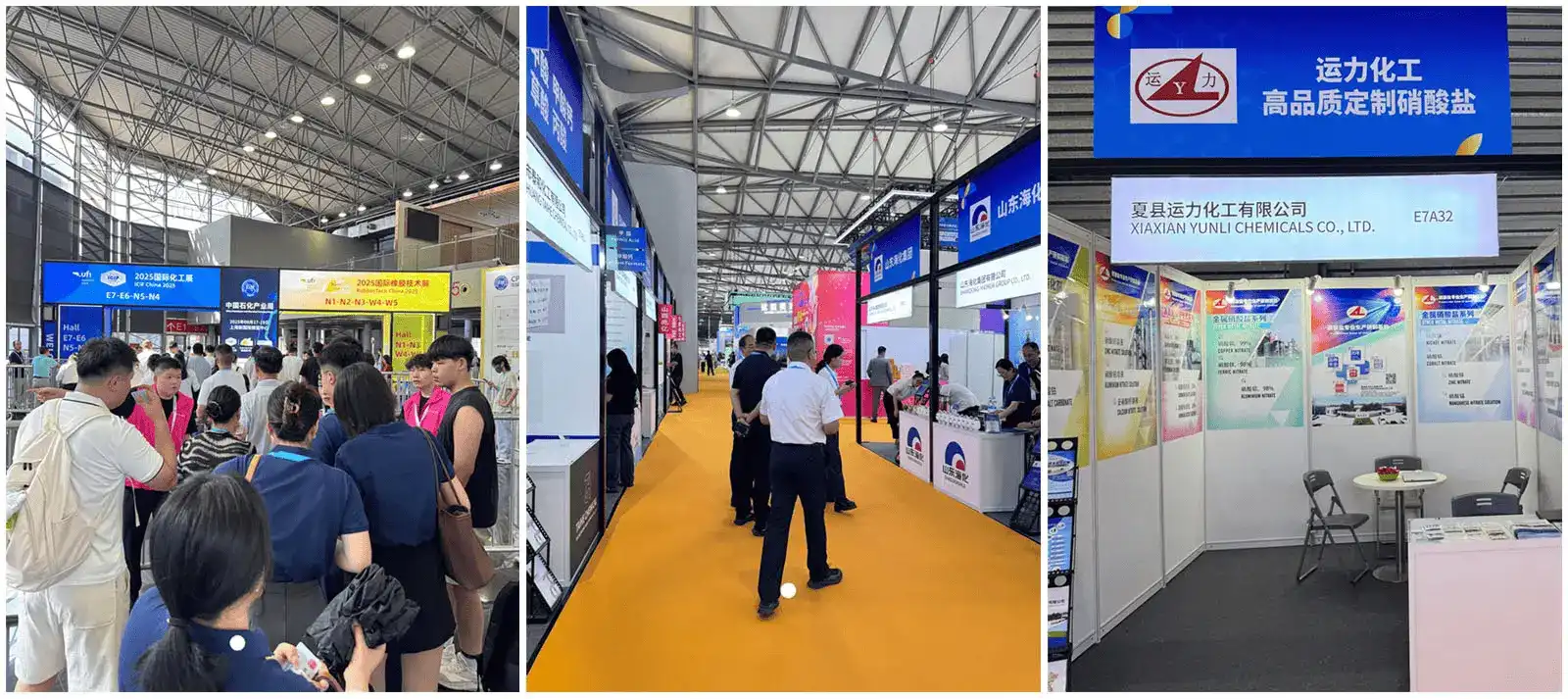
Yunli Chemical has been making things for more than twenty years, so they can help you with your buying plan when your processes need quality products delivered on time. We are a well-known company that sells Aluminium Nitrate. We have more than $150 million in sales every year and are certified in ISO 9001, ISO 14001, and OHSAS. We keep an eye on every part of the production process to make sure you get the steadiness and cleanliness your processes need. At the regional level, our technology center makes one-of-a-kind mixes and ultra-pure grades (up to 4N standard) that are used in crafting electronics, making specialty chemicals, and making catalysts.
We don't use brokers because we sell straight from the plant and handle our own exports. We have low prices and easy terms, like not having a minimum order size and giving away free samples of up to 500 grams. Our high-tech quality control lab, which has atomic absorption spectrometry and ICP-MS, makes sure that there are no flaws at all. You can also pick from a number of customizable concentration and packing options to make your work easy. For aluminium nitrate needs, you can email our team at wangjuan202301@outlook.com to talk about it and find out how our expert help and reliable supply can help you stay ahead of the competition.

References
1. Greenwood, Norman N., and Earnshaw, A. (1997). Chemistry of the Elements (2nd ed.). Butterworth-Heinemann, Oxford. Chapter on Aluminium and Group 13 compounds.
2. Perry, Robert H., and Green, Don W. (2008). Perry's Chemical Engineers' Handbook (8th ed.). McGraw-Hill, New York. Section on inorganic salt solubility data.
3. Patnaik, Pradyot (2003). Handbook of Inorganic Chemicals. McGraw-Hill Professional, New York. Entry on aluminium nitrate physical and chemical properties.
4. Lide, David R. (2004). CRC Handbook of Chemistry and Physics (85th ed.). CRC Press, Boca Raton. Solubility tables for inorganic compounds.
5. Kirk-Othmer (2007). Encyclopedia of Chemical Technology (5th ed.). John Wiley & Sons, New Jersey. Volume on aluminium compounds and industrial applications.
6. Seidell, Atherton, and Linke, William F. (1965). Solubilities of Inorganic and Metal-Organic Compounds (4th ed.). American Chemical Society, Washington D.C. Comprehensive aluminium salt solubility data.