


Is zinc nitrate corrosive
It is important to know how dangerous an industrial product is before using it so that tools last longer, workers stay safe, and rules are followed. Zinc Nitrate, whose chemical formula is Zn(NO₂)₂·6H₂O, has issues that purchasing managers and technical experts need to resolve. A weak corrosive mix, especially in concentrated water solutions where its acidic pH (usually 3.5–4.5) and strong oxidizing qualities make metals break down faster.
This hexahydrate form of zinc is not neutral like zinc solutions; when it dissolves, it makes nitric acid, which makes it more reactive with aluminum and ferrous metals. Even though Zinc Nitrate solutions aren't as harsh as pure mineral acids, they still need to be treated carefully so that they don't damage equipment and the product stays clean all the way through the supply chain.
Understanding Zinc Nitrate and Its Corrosive Nature
Chemical Properties and Molecular Characteristics
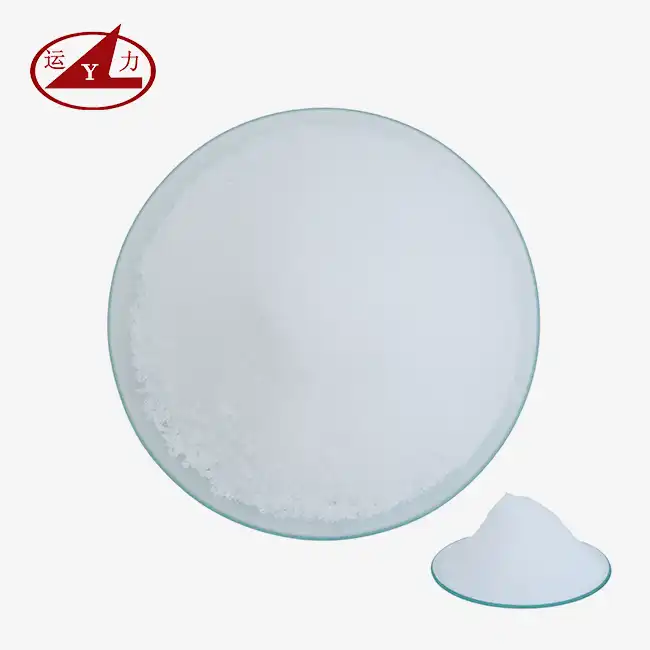
The molecular weight of Zinc Nitrate Hexahydrate (CAS# 10196-18-6) is 297.47 g/mol, and it has the shape of white tetragonal crystals and a specific density of 2.065. The chemical is hygroscopic, which means it takes in water from the air very easily. At 36.4°C, it melts, and at 37°C, it turns back into a solid. When mixed with water or alcohol, zinc cations and nitrate anions break down, making the mixture acidic. Because it is acidic, it is more likely to rust things, especially if it is moved or kept in a way that lets it touch weak materials for a long time.
How Zinc Nitrate Causes Corrosion
Zinc Nitrate is dangerous because it can cause many different problems at the same time. There is a type of oxidizer that speeds up the rust process on metal surfaces, especially those made of iron, steel, and aluminum. Ions of hydrogen are more likely to attack metal oxides and base metals because its pH is acidic. Nitrate ions, on the other hand, are strong oxidizers that get rid of oxide layers that protect things.
It's very important how concentrated the solution is. Formulas that are less concentrated rust much less quickly than solutions that are more than 40% w/w. The effect is bigger as the temperature goes up; reaction rates almost double for every 10℃ rise. How long something is exposed to something is also important. Even slightly corrosive solutions can get through protection layers if they are exposed to them for a long time. In the long run, this can make the system less strong.
Comparative Corrosiveness with Related Zinc Compounds
You can pick the best products and methods if you know how Zinc Nitrate stacks up against other zinc salts. When mixed with water, zinc sulfate heptahydrate has a pH that is very close to zero. So it's not as bad for most metals, but sulfate ions can still rust stainless steel over time and make pits in it. Zinc oxide doesn't corrode much because it is neutral and doesn't dissolve in water. It doesn't rust, but instead works as a protective color.
Zinc chloride, on the other hand, is just as dangerous as Zinc Nitrate. It makes liquids that are very acidic and really hurt most metals. The person who does the buying is different because they know what the program needs. The fact that Zinc Nitrate is acidic is a fair price to pay for the fact that it works better when oxidizing properties are needed for synthesis or catalysis. If you don't need to oxidize the fertilizer or coating, switching to sulfate or oxide forms cuts down on machine maintenance costs by a lot.
Zinc Nitrate Safety and Handling for Industrial Use
Health Hazards and Protective Measures
It is called an oxidizer (UN 1514, Class 5.1) on the Safety Data Sheets, but it's not very dangerous. Because it is acidic, touching it directly can hurt or even burn. It can be bad for your lungs to breathe in dust or mist. The chemical can hurt the lens badly if it gets into the eyes, so people need to quickly flush their eyes.
Chemical-resistant aprons, full-face masks, and rubber or neoprene gloves must be worn by industrial workers who move concentrated solutions. PVC hands break down after long-term contact. When there isn't enough air flow or when moving a lot of stuff, which makes dust, you need to wear respiratory protection. It is better to use engineering controls, such as sealed transfer systems and local waste air, to lower exposure risks than to just wear safety gear.
Storage Conditions to Prevent Corrosion and Degradation
Both the quality and safety of a product are directly affected by how it is stored. Zinc Nitrate Hexahydrate needs to be kept below 30°C in dry places (ideally below 50% RH) so it doesn't dissolve and break down quickly. The hygroscopic crystals melt when they take in water from the air. This makes concentrated acidic solutions that damage packages and contaminate nearby items. For solids, plastic bags sealed with polyethylene are best.
For liquids, you need high-density polyethylene (HDPE) containers or stainless steel 316 tanks with the right vents to let out gases that break down. Zinc Nitrate should never be kept near things that can catch fire, organic solvents, or reducing agents. This is because when it breaks down at high temperatures, it releases oxygen that makes burns worse. OSHA and EPA rules are followed by having separate storage places with clear warning signs and extra barriers like spill barrels or berms. Along with that, this lowers the risk of being responsible.
Disposal and Thermal Decomposition Considerations
Zinc Nitrate turns into zinc oxide, nitrogen oxides (NOₓ), and air when heated above 105℃. Before these nitrogen oxides can be burnt, they need to be cleaned up or neutralized because they are strong gases that warm things up and chemicals that irritate the skin. You can reduce small amounts of lab waste with calcium hydroxide or sodium carbonate to make zinc carbonate precipitate. After that, you can throw the waste away.
The oxidizer can then be thrown away because it is now a stable material. For large amounts used in industry, you need trained workers who know how to deal with dangerous waste and oxidizers. Environmental rules in the US (RCRA) and the EU (REACH) say that things must be properly labeled and have paper tracks to avoid fines. Companies like Yunli Chemical offer thorough MSDS documents and directions on how to properly dispose of waste that are made to fit the rules in each area. This makes it simpler for teams that buy to follow the rules.
Industrial Applications Where Zinc Nitrate's Corrosiveness Matters
Chemical Synthesis and Catalysis
To make active zinc oxide phases, ultra-pure Zinc Nitrate Hexahydrate is used. This is especially true for making methanol and hydrogenation processes. One problem with corrosiveness is that it can hurt alumina or silica catalyst supports if pH control doesn't work. Another problem is that it helps spread zinc species evenly through porous structures.
For the preparation steps, equipment builders choose glass-lined reactors or Hastelloy metal tanks, even if it costs more up front. This is because iron pollution is bad for catalysts even at sub-ppm levels. The ultra-pure grade from Yunli Chemical has less than 30 parts per million (ppm) of iron. This is important for uses where expensive noble metal co-catalysts can't work because of small amounts of metal flaws.
Metal Surface Treatment and Electroplating
Zinc Nitrate is added in small amounts to electroplating baths and phosphating solutions for car steel to make layers that protect against rust. The acidic properties that make workers nervous are actually good for these jobs. Etching the metal surface a little rough makes it easier for the covering to stick and spread out evenly. But process tanks and pumps break down faster if they aren't made of steel that has been covered with rubber or a plastic that doesn't rust.
One major automaker in the U.S. said that tanks last from 18 months to over five years longer when they are made of fiber-reinforced plastic (FRP) instead of mild steel. The change cost money up front, but it got rid of shutdowns that happened out of the blue and coating issues that happened when iron got into plating baths. As this case shows, engineers can save money, make better products, and keep their businesses running smoothly when they know how rust works.
Battery Manufacturing and Pharmaceutical Synthesis
This form of Zinc Nitrate is good for batteries because it has less than 0.5% water in it. It helps build the cathode active materials in zinc-air and alkaline cells. Controlling wetness is important because extra water speeds up the rusting of cell parts inside during assembly and use, which shortens the life of the cycle.
To make pharmaceutical intermediates, you also need to be able to work with glass or stainless steel 316L processors to keep heavy metals out of the mix and very high purity (arsenic levels must be below 3 ppm according to USP standards). Putting money into high-purity grades is a good idea because they keep costly batch rejects and regulatory compliance failures from happening. Buyers who check the whole cost of ownership instead of just the unit price know this to be true.
Procurement Considerations for Zinc Nitrate: Ensuring Product Quality and Safety
Identifying Reliable Suppliers and Quality Indicators
While picking a provider, the first thing that should be looked at is certifications that show consistent quality and following the law. A company with ISO 9001 certification has strict process control, and a company with ISO 14001 certification takes care of the environment well. Both of these licenses make it less likely that there will be problems in the supply line. Zinc Nitrate sellers should give you Certificates of Analysis (COAs) that show how pure the product is, what heavy metals are in it, and how much of it doesn't dissolve in water.
Yunli Chemical and other well-known companies have technology centers at the local level that have ICP-MS and atomic absorption spectrometers. So, they can keep track of batches from one to the next and make sure they meet certain pure standards up to 4N grade (99.99%). Suppliers who are open about how they make things, like how they treat trash and control emissions, show that they can keep working with customers for a long time, even as rules about the environment get tighter.
Find out how quickly the seller responds to requests for changes when you check them out or talk at an expert level. For example, can they change the pH levels, make liquids that work best with a certain quantity, or lower the amount of impurities that are present for your use? People who make things for a living are often more flexible than sellers who repackage basic grades. Check with present clients who work in the same field as you for recommendations.
Repeat business over a number of years is a sign of trust that goes beyond what the ads say. The price of a good should match its quality. If a quote seems too low, it's likely that the product has flaws that aren't listed in the specs or that the supplier isn't dependable. This means that the product will cost more in the long run because of production problems and bad quality.
Packaging Options That Minimize Corrosion Risks
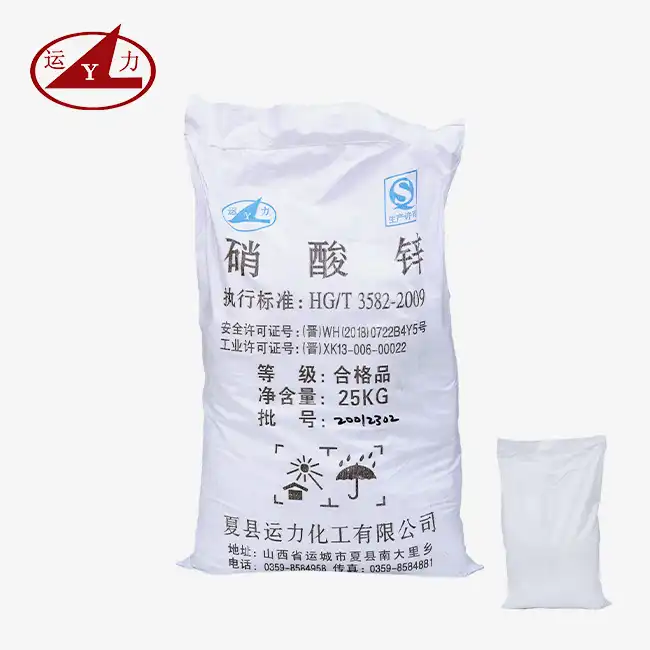
The way something is packed affects its quality when it is shipped or stored. It is generally sent in 25 kg multi-wall paper bags with plastic covers for Zinc Nitrate Hexahydrate. These bags keep wetness out well enough that they can be kept in a controlled setting for a short time. The best way to keep things safe and make moving them easier is to use HDPE intermediate bulk containers (IBCs).
This is especially true for places that get a lot of rain or receive large orders. When you have liquid mixtures that are 40–50% w/w, you need special trucks made of stainless steel 304 or 316 that have nitrogen blanketing systems to keep out moisture and stop rusting. Bigger amounts of liquid are stored in HDPE drums with sealed lids and clear warning signs that follow DOT (U.S.) or ADR (Europe) rules for dangerous goods.
For some uses, being able to customise is important. Others like stainless steel drums that can be returned for closed-loop processes that cut down on waste, while others need vacuum-sealed packages to keep food fresh longer in warm places. There is no minimum order size that Yunli Chemical can't meet for a wide range of packing needs.
They can send both small samples to help make new goods and big shipments to support production lines that are already up and running. This gives buying teams more freedom when they are working on multiple projects at once. This cuts down on the cost of having goods on hand and speeds up time-to-market.
Critical Ordering Parameters and Documentation
The CAS number (10196-18-6) must be included along with the grade (industrial ≥98% or high-purity ≥99%), the physical form (hexahydrate crystals or water solution concentration), and the way the product will be packed when making a buy order. To get proper MSDS sheets that meet GHS standards and tell you how to move the material, what to do in an emergency, and how to properly get rid of it in your area please ask.
Along with each batch, there should be a certificate of analysis (COA) that lists the tests that were done on zinc, nitrate, pH, heavy metals (Pb, Cd, As, Fe), water insolubles, and moisture. Extra forms may be needed for controlled areas like drugs or food-grade uses. These may include non-GMO approvals, allergen statements, or proof that the product has not been tried on animals. Make sure you know these things ahead of time so that shipping doesn't get held up.
Prices vary depending on where and how many you buy. Zinc Nitrate Hexahydrate for business use costs around $800 to $1200 per metric tonne FOB China. Types with a lot of clarity cost 20 to 40 percent more. U.S. local companies usually charge 15–25% more, but they can send things faster and make things easier for you. Never just look at the FOB price.
You should also look at the total landing cost, which includes fees, goods and the cost of keeping the goods. When companies agree to buy a lot of something over a long period of time, they can get better prices and be the first to know when sources run out. This helps businesses plan ahead if they know how much they will need.
Best Practices to Minimize Corrosive Effects in Handling and Use
Environmental Controls and Compatible Materials Selection
The temperature and humidity in a building should be kept in check to keep people and things safe. Store things in places that are less than 25°C and use dehumidifiers to keep the humidity below 40%. This will keep Zinc Nitrate crystals from melting on their own. Put down flooring that won't rust, like epoxy-coated concrete or acid-proof tiles, in places where spills are likely to happen.
This will keep the building from getting hurt and make cleanup easy. Tanks, lines, and valves that hold Zinc Nitrate solutions can be made of glass-lined steel, stainless steel 316L, or high-density polyethylene. Iron, aluminum, brass, and light steel will rust fast, even in water, so don't use them. Not nitrile rubber, but PTFE, EPDM, or Viton elastomers should be used for gaskets and seals instead, since nitrile rubber breaks down after months of use.
Corrosion-Resistant Equipment and Maintenance Protocols
Do not buy rusty pumps. Instead, get magnetic drive or diaphragm pumps with wet parts made of polypropylene, PVDF, or stainless steel 316. Centrifugal pumps with mechanical seals wear out faster in corrosive fluids, so they need to be checked often and new seals put on them. Tank and pipe walls that are getting thinner should be checked often with ultrasonic thickness gauges so that they don't break.
Set times for routine maintenance based on the actual rates of rust that have been recorded for the way you work. Don't just believe what the maker says, even if it was made in a lab where everything was perfect. Cathodic protection systems or sacrificial anodes can help steel parts last longer, but the best and most cost-effective way to avoid damage is to use the right material in the first place.
Emergency Response and Spill Containment
A lot of care is taken, but spills still happen. Make emergency plans for each site that include neutralizers (such as sodium carbonate or bicarbonate), absorbents (such as vermiculite or sand), and clearly marked areas where Zinc Nitrate leaks can be stopped. People should be taught what to do right away: get out of the area non-essential staff, put on safety gear, cover the spill with absorbents, and neutralize it with carbonate solutions until the pH level is between 6 and 8.
Don't just use water to clean up; it makes the mess spread out and breaks down things faster. Put neutralized materials in sealed containers marked as dangerous waste, and then call a company that is licensed to get rid of waste. As the law says, you must work together with your neighborhood fire services and environmental groups. If you talk to people during events, you can avoid fees and damage to your reputation.
Conclusion
Zinc Nitrate isn't very dangerous, but it is harmful, so be careful when you buy it and when you touch it. If you know how the substance combines with air, how acidic it is, and how it changes with concentration, you can pick the right materials, make good safety rules, and deal with buyers in a technical way. For people who work in buying, the most important thing to know is the total cost of ownership.
Getting high-purity grades from trusted companies like Yunli Chemical cuts down on the need for machine maintenance, lowers the risk of contamination, and makes sure that rules are followed. You can get the most out of Zinc Nitrate in catalysis, surface treatment, and speciality chemical uses as long as you keep your workers and your bottom line safe. The key is to find the right mix between the costs and benefits of rust management.
FAQ
Why does Zinc Nitrate solution rust tools so quickly?
When Zinc Nitrate is used, it keeps the pH level between 3.5 and 4.5, which quickly wears away the protective oxide layers on ferrous metals. The nitrate ions speed up the processes that turn solid iron into ferrous and ferric ions that can dissolve in water. They do this by oxidizing the iron. It's much faster than just rusting in the air when this two-step process is used, especially when temperatures are high or solutions are concentrated above 40% w/w.
Can we store Zinc Nitrate hexahydrate in standard steel drums?
When filled with Zinc Nitrate, regular mild steel drums will break down quickly, especially in damp places where the hygroscopic crystals soak up water and create acidic solutions. It is hard for rust to form on stainless steel 316 high-density polyethylene (HDPE) drums or barrels. Mild steel should only be used for a short time. The epoxy coats should stay in place, and the steel should be looked at once a month to see if the coatings are wearing off.
How does Zinc Nitrate compare to copper nitrate regarding equipment damage?
When mixed with acidic liquids, both of these chemicals turn into oxidizers. Because its pH level is not as high, copper nitrate is generally a little less dangerous. Copper nitrate solutions have a pH range of 4.0 to 5.5, and Zinc Nitrate solutions have a pH range of 3.5 to 4.5. The tools still needs the same things. Vessels made of glass, HDPE, or stainless steel 316 are all fine. Most of the time, how they work is more important than how they will respond to rust because the difference isn't that big in real life.
Partner with a Trusted Zinc Nitrate Supplier for Quality and Reliability
For more than 18 years, Yunli Chemical has been improving the way Zinc Nitrate hexahydrate is made to meet the exact needs of electroplating, making catalysts, and making speciality chemicals. Our plant in Shanxi Province, which is ISO 9001-certified, does research and development at the local level and has strict quality control. It has industrial grades that are at least 99% pure and high-purity formulations that can be changed to fit special uses.
There is full COA paperwork and GHS-compliant MSDS sheets for each batch. This makes sure that all the rules in both North America and Europe are obeyed. We have a low minimum order size and can pack in a variety of ways, from 25 kg bags to trucks full of liquid. You can also get free samples of up to 500 grams to make sure the goods work together before you buy tonnes of them.
Our scientists work directly with your engineers to make sure that the standards are met, whether you need crystals for batteries that have a fixed amount of water or liquid solutions that have a certain concentration of water. Contact our buying managers at wangjuan202301@outlook.com to talk about your Zinc Nitrate needs and find out how buying directly from a well-known manufacturer can save you money and make sure your products are always the same.

References
1. Pourbaix, Marcel. Atlas of Electrochemical Equilibria in Aqueous Solutions. National Association of Corrosion Engineers, 1974.
2. Schweitzer, Philip A. Metallic Materials: Physical, Mechanical, and Corrosion Properties. CRC Press, 2003.
3. American Chemical Society. Chemical Safety for Oxidizing Agents in Research Laboratories. ACS Publications, 2018.
4. European Chemicals Agency. Guidance on Safe Use of Chemicals: Zinc Compounds. ECHA, 2021.
5. National Institute for Occupational Safety and Health. NIOSH Pocket Guide to Chemical Hazards: Zinc Nitrate. DHHS Publication, 2020.
6. Corrosion Technology Laboratory. Material Selection Guide for Chemical Process Industries. Materials Performance Institute, 2019.