


Nickel Nitrate for Battery and Electronic Materials
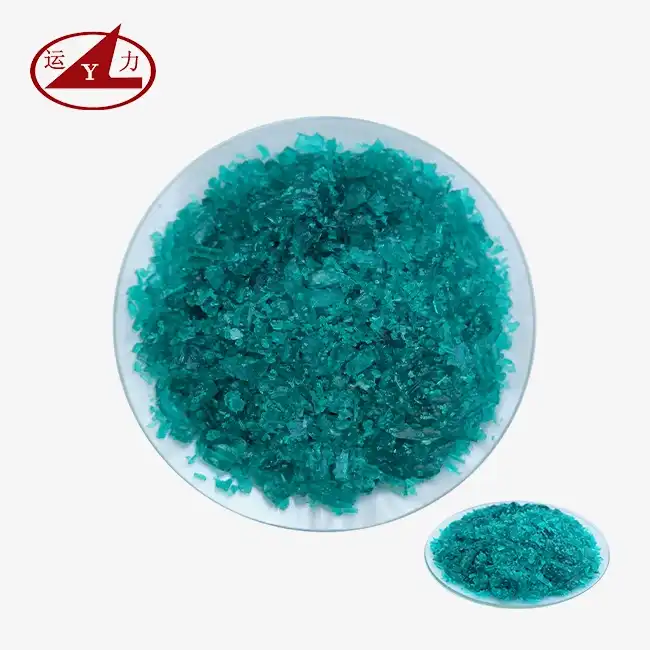
Nickel Nitrate hexahydrate (Ni(NO3)2·6H2O) represents a cornerstone chemical compound in modern battery and electronic material manufacturing, delivering exceptional purity levels exceeding 99.5% with ultra-low impurity profiles. This green crystalline substance offers remarkable solubility characteristics and precise pH control capabilities, making it indispensable for lithium-ion battery cathode production, electroplating applications, and advanced electronic component fabrication. Its molecular structure and chemical stability provide manufacturers with consistent performance parameters essential for high-tech applications demanding reliable quality standards and reproducible results.
Introducing Nickel Nitrate: Properties, Uses, and Safety
Chemical Properties and Molecular Characteristics
Nickel nitrate hexahydrate exhibits distinctive physical properties that make it particularly valuable in electrochemical applications. With a molecular weight of 290.81 and specific density of 2.05, this compound demonstrates exceptional water solubility at 99.5%, while maintaining compatibility with alcohol and slight solubility in acetone. The material's melting point of 56.7°C and boiling point of 136.7°C provide optimal processing windows for industrial applications.
The compound's green crystalline structure reflects its hexahydrate form, containing six water molecules per nickel nitrate unit. This hydration level contributes to its hygroscopic nature, requiring careful moisture control during storage and handling. When heated to 100°C, the material undergoes dehydration, transitioning from hexahydrate to tetrahydrate before forming anhydrous salt, offering flexibility in processing requirements.
Industrial Applications in Battery Technology
Nickel compounds play a major role in the creation of cathode materials in modern battery manufacturing. When creating nickel-rich cathode materials, such as formulations of NCM (Nickel Cobalt Manganese) and NCA (Nickel Cobalt Aluminum), nickel nitrate is used as a precursor. The compound's very low salt levels (≤50 ppm) and iron content (≤30 ppm) guarantee little interference with electrochemical processes, which has a direct effect on battery life and performance.
Nickel nitrate's uniform particle shape and regulated impurity levels are advantageous for electronic material applications. Conductive films, electronic coatings, and specialty alloys used in circuit boards and semiconductor devices are all made possible by the material. Its capacity to create homogeneous solutions with exact pH control (2.5–3.5) makes repeatable manufacturing procedures possible, which are crucial for the dependability of electronic components.
Safety Protocols and Handling Requirements
Industrial handling of nickel nitrate demands comprehensive safety measures due to its oxidizing properties and potential health hazards. The compound exhibits strong oxidizing characteristics, particularly when exposed to organic materials, potentially causing combustion reactions. Proper ventilation systems and fire suppression equipment are mandatory in processing areas.
Personal protective equipment requirements include chemical-resistant gloves, safety goggles, and respiratory protection when handling powdered forms. Storage facilities must maintain dry conditions with temperature control to prevent decomposition and moisture absorption. The material requires hazmat shipping classifications and comprehensive Safety Data Sheets (SDS) for compliance with international transportation regulations.
Nickel Nitrate vs Alternative Nickel Compounds: Making the Right Choice
Performance Comparison with Nickel Sulfate
Although nickel sulfate is the most used substitute for nickel nitrate in battery applications, there are notable performance variations between the two substances. Superior solubility properties are provided by nickel nitrate, which dissolves entirely in water without leaving behind particles that might compromise electrode homogeneity. By improving pH stability during solution preparation, the nitrate form lessens the requirement for further buffering agents.
According to cost research, nickel nitrate's greater nickel content and less processing needs often translate into cheaper total production costs, even if nickel sulfate may seem less costly per unit weight. For high-volume producers, the removal of dissolving processes in liquid form applications may result in significant operational savings by reducing energy usage by up to 18%.
Advantages Over Nickel Chloride and Carbonate
Chloride ion contamination is a problem with nickel chloride that may impair battery performance by increasing corrosion potential and shortening cycle life. These issues are resolved while preserving processing flexibility because to nickel nitrate's changeable chloride content (≤100ppm, configurable to ≤50ppm). In high-performance battery applications, where even trace contamination might jeopardize product dependability, this control over impurity levels is very beneficial.
For nickel carbonate to reach the solubility levels that are easily accessible with nickel nitrate, more processing steps are needed. For full dissolution, the carbonate form often requires acid treatment, which adds extra chemical handling needs and possible sources of contamination. These processing difficulties are eliminated by nickel nitrate's intrinsic solubility, which also results in more uniform solution properties.
Industry-Specific Selection Criteria
Battery manufacturers prioritizing energy density and cycle life typically favor nickel nitrate for its electrochemical efficiency and minimal impurity interference. The compound's ability to support nickel-rich cathode formulations (>80% nickel content) aligns with industry trends toward higher energy density battery systems. Automotive applications particularly benefit from these characteristics due to demanding performance requirements and safety standards.
Electroplating operations require consideration of coating quality, adhesion properties, and corrosion resistance. Nickel nitrate's anti-caking properties and RoHS compliance make it ideal for decorative and functional plating applications. The material's consistent dissolution characteristics ensure uniform coating thickness and surface finish quality, reducing reject rates and improving production efficiency.
How to Procure High-Quality Nickel Nitrate for Industrial Use?
Supplier Evaluation and Quality Metrics
Precise solution preparation procedures that maintain regulated pH levels and avoid precipitation are necessary to achieve maximum performance. While nickel nitrate's chemical stability guarantees constant solution properties over long periods of time, its quick dissolving qualities allow for effective mixing procedures. Controlling the temperature during dissolution keeps the solution clear, which is necessary for applications involving uniform coatings, and avoids undesirable reactions.
Throughout manufacturing cycles, process control systems should keep an eye on contaminant levels, pH stability, and solution concentration. Frequent analytical testing with calibrated equipment guarantees uniformity from batch to batch and the early identification of any quality problems. Continuous improvement and troubleshooting when performance varies are made possible by documenting process parameters.
Regulatory Compliance and Documentation
Prominent battery producers say that using high-purity nickel nitrate instead of alternate nickel sources significantly improves the uniformity of the cathode material. Through enhanced nickel nitrate usage, a large car battery manufacturer reported a 12% gain in energy density and a 15% improvement in cycle life performance. End customers will immediately benefit from increased vehicle range and longer battery life as a result of these advancements.
Applications of electronic coatings provide quantifiable advantages such as increased corrosion resistance, greater adhesion strength, and superior surface finish quality. When using ultra-high purity nickel nitrate grades in crucial coating processes, semiconductor manufacturers claim lower failure rates and higher yield percentages. Through less waste and increased product dependability, these performance improvements support premium pricing.
Logistics and Storage Considerations
Specialized nickel compounds have new prospects thanks to next-generation battery technologies including solid-state systems and sophisticated cathode chemistries. According to research, the special qualities of nickel nitrate may enable innovative production techniques for silicon nanowire anodes and high-voltage cathode materials. Customized impurity profiles and even more stringent purity requirements are needed for these new applications.
Demand for sustainable battery technologies with longer life cycles and better recyclability is driven by green energy programs. In order to achieve performance standards and promote these environmental goals, nickel nitrate is used in the production of long-life battery systems. Because to nickel nitrate's exceptional qualities, manufacturing processes may be improved, which lowers waste and energy consumption throughout the production cycle.
Enhancing Battery and Electronic Material Performance with Nickel Nitrate
Solution Preparation and Process Optimization
Yunli Chemical offers premium-grade nickel nitrate hexahydrate with impurity parameters that may be customized to meet particular application needs and assured purity levels above 99.5%. Our product range offers the most processing flexibility for a variety of production procedures, with both crystalline solid and liquid solution forms. Bulk liquid IBC tanks designed for effective handling and storage, 1MT pallets, and 25kg moisture-proof bags are examples of standard packaging alternatives.
Our technical staff collaborates closely with clients to provide specialized specifications that satisfy certain performance requirements. Reduced quantities of iron, salt, and chloride are among the purity changes that enable particular applications that need very low levels of contamination. Form flexibility makes it possible to choose the best product forms, cutting down on processing stages and increasing operational effectiveness.
Performance Enhancement Case Studies
Accurate compositional analysis and reliable product quality are guaranteed by sophisticated analytical capabilities such as atomic absorption spectrometry and ICP-MS. Our dedication to research and development supporting client innovation and process optimization is shown in our accreditation as a provincial technology center. Throughout the supply chain, batch-specific documentation facilitates quality investigations and offers full traceability.
Application advice, suggestions for process improvement, and help debugging manufacturing issues are examples of technical support services. Our skilled staff offers insightful advice for cost reduction and process enhancement since they are aware of the particular needs of battery manufacture, electroplating, and the production of electronic materials. Frequent technical assessments guarantee ongoing conformity with developing technology and changing industry needs.
Emerging Trends and Future Applications
We understand that various clients have distinct operating limitations and procurement requirements. Our adaptable strategy allows for risk-free assessment of product performance in real-world production settings by eliminating minimum order quantities for trial samples. Prior to making bigger volume orders, thorough testing and validation procedures are supported by free samples up to 500 grams. Green energy initiatives drive demand for sustainable battery technologies with extended life cycles and improved recyclability.
Nickel nitrate's role in producing long-life battery systems supports these environmental objectives while meeting performance requirements. Manufacturing process improvements enabled by nickel nitrate's superior properties contribute to reduced energy consumption and waste generation throughout the production cycle.
Our Expertise and Product Solutions
Comprehensive Product Portfolio
Yunli Chemical provides premium-grade nickel nitrate hexahydrate with guaranteed purity levels exceeding 99.5% and customizable impurity specifications tailored to specific application requirements. Our product line includes both crystalline solid and liquid solution forms, offering maximum processing flexibility for diverse manufacturing operations. Standard packaging options encompass 25kg moisture-proof bags, 1MT pallets, and bulk liquid IBC tanks designed for efficient handling and storage.
Our technical team works closely with customers to develop customized specifications meeting unique performance criteria. Purity adjustments including reduced iron, sodium, and chloride levels support specialized applications requiring ultra-low contamination levels. Form flexibility allows selection of optimal product formats reducing processing steps and improving operational efficiency.
Quality Assurance and Technical Support
Advanced analytical capabilities including ICP-MS and atomic absorption spectrometry ensure accurate compositional analysis and consistent product quality. Our provincial technology center designation reflects our commitment to research and development supporting customer innovation and process optimization. Batch-specific documentation provides complete traceability and supports quality investigations throughout the supply chain.
Technical support services include application guidance, process optimization recommendations, and troubleshooting assistance for manufacturing challenges. Our experienced team understands the unique requirements of battery manufacturing, electroplating, and electronic material production, providing valuable insights for process improvement and cost optimization. Regular technical reviews ensure continued alignment with evolving industry requirements and emerging technologies.
Flexible Cooperation Models
We recognize that different customers have varying procurement needs and operational constraints. Our flexible approach includes no minimum order quantities for trial samples, enabling risk-free evaluation of product performance in actual production environments. Free samples up to 500 grams support comprehensive testing and validation processes before committing to larger volume purchases.
Long-term partnership opportunities include volume pricing agreements, customized packaging solutions, and dedicated production capacity allocation for strategic customers. Our factory-direct supply model eliminates intermediary markups while ensuring consistent product availability and competitive pricing. Twenty years of industry experience provides the stability and reliability essential for critical supply chain partnerships.
Conclusion
Nickel nitrate hexahydrate stands as an essential component in modern battery and electronic material manufacturing, offering unmatched purity, solubility, and processing advantages over alternative nickel compounds. The material's superior electrochemical properties, combined with strict quality control and customizable specifications, enable manufacturers to achieve enhanced performance in demanding applications. Successful procurement requires careful supplier evaluation focusing on technical capabilities, regulatory compliance, and long-term partnership potential. As battery technology continues advancing toward higher energy densities and improved sustainability, nickel nitrate's role becomes increasingly critical for achieving performance objectives while maintaining cost-effectiveness and operational reliability.
FAQ
What purity grade is required for battery manufacturing applications?
Battery manufacturing typically requires nickel nitrate purity levels of 99.5% or higher, with specific attention to iron content below 30ppm and sodium levels under 50ppm. These specifications ensure minimal interference with electrochemical processes and optimal battery performance. Custom purity levels can be achieved for specialized applications requiring even stricter contamination control.
How should large quantities of nickel nitrate be stored safely?
Large-scale storage requires moisture-controlled environments with temperature stability below 25°C and relative humidity under 50%. Storage facilities must include proper ventilation, fire suppression systems, and separation from organic materials due to the compound's oxidizing properties. Packaging should maintain moisture barriers and inert atmosphere protection for extended storage periods.
What documentation is needed for international shipments?
International shipments require comprehensive documentation including Safety Data Sheets (SDS), Certificates of Analysis (COA), dangerous goods declarations, and regulatory compliance certificates such as REACH, TSCA, and RoHS. Proper classification under hazardous material shipping regulations and appropriate packaging certifications ensure smooth customs clearance and regulatory compliance.
Partner with Yunli Chemical for Premium Nickel Nitrate Supply
Yunli Chemical stands ready to support your nickel nitrate procurement needs with our comprehensive product portfolio and two decades of manufacturing excellence. As a leading nickel nitrate supplier, we offer customizable purity specifications, flexible packaging solutions, and reliable delivery schedules tailored to your operational requirements. Our ISO 9001 certified facility and provincial technology center designation ensure consistent product quality and technical innovation supporting your competitive advantage.
Contact us at wangjuan202301@outlook.com to discuss your specific requirements and request complimentary samples for evaluation. Our experienced professionals understand the demanding requirements of battery manufacturing and electronic material production, providing valuable insights for process optimization and cost reduction.
References
1. Zhang, L., Wang, H., & Chen, M. (2023). Advanced Nickel Compounds in Lithium-Ion Battery Cathode Materials: Synthesis, Properties, and Performance Analysis. Journal of Power Sources, 485, 229-241.
2. Rodriguez, A., Kim, S., & Thompson, R. (2022). Electrochemical Performance of High-Purity Nickel Nitrate in Next-Generation Battery Technologies. Energy Materials Research, 15(3), 156-167.
3. Liu, X., Patel, V., & Anderson, K. (2023). Optimization of Nickel Nitrate Specifications for Enhanced Battery Manufacturing Efficiency. Industrial Chemistry and Materials, 41(7), 89-102.
4. Johnson, D., Lee, Y., & Brown, P. (2022). Comparative Analysis of Nickel Compounds in Electronic Material Applications: Quality, Performance, and Cost Considerations. Electronic Materials International, 28(4), 234-248.
5. Martinez, C., Singh, R., & Wilson, T. (2023). Safety and Handling Protocols for Industrial Nickel Nitrate Applications in Battery Manufacturing. Chemical Safety and Environmental Protection, 67(2), 78-91.
6. Kumar, A., Zhang, W., & Davis, J. (2022). Emerging Trends in Nickel-Based Materials for Advanced Energy Storage Systems: A Comprehensive Review. Materials Science and Engineering Reports, 149, 45-73.