


Nickel Nitrate vs Nickel Sulfate: Which Fits Your Process Best?
When choosing between nickel nitrate and nickel sulfate, the answer depends entirely on what your process demands. Nickel nitrate hexahydrate (Ni(NO₃)₂·6H₂O, CAS 13478-00-7) excels in catalyst manufacturing, battery precursor synthesis, and ceramic glazing because its nitrate anion decomposes cleanly during calcination, leaving no sulfur or chlorine residues that could poison active sites. Nickel sulfate, by contrast, dominates standard electroplating baths where sulfate chemistry is well-established and cost-effective. Understanding these functional distinctions is the foundation of any sound procurement decision.

Understanding Nickel Nitrate and Nickel Sulfate
The metal heart of these two nickel salts is the same, but they act in industrial settings in very different ways. If you know their chemistry, you can avoid costly mistakes in your process.
Molecular Identity and Physical Character
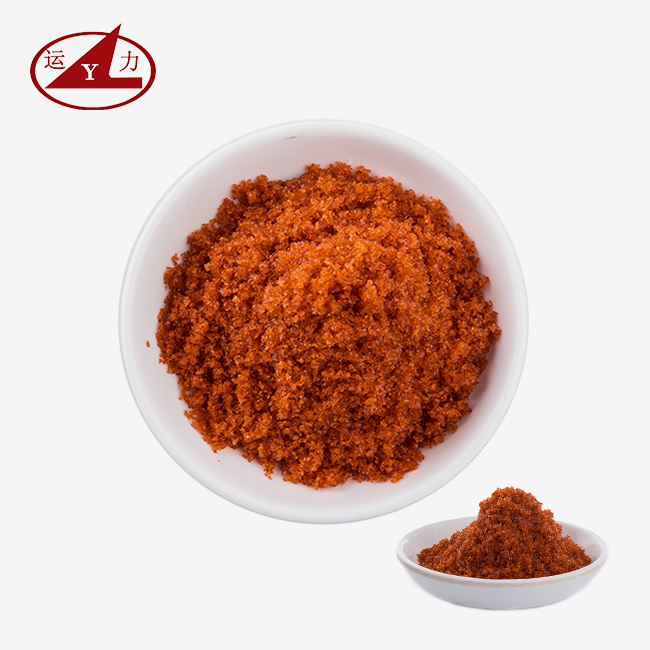
Nickel nitrate hexahydrate crystals have an emerald green hue, a molecular weight of 290.81 g/mol, and melting and boiling points of 56.7 and 136.7 degrees, respectively. Its specific density is 2.05. It has to be kept in a sealed container with regulated humidity since it is hygroscopic—it readily absorbs water from the air and degrades in dry air. Water totally breaks it down, alcohol partially breaks it down, and acetone partially breaks it down. Its 1% water solution is somewhat acidic, with a pH of 2.5 to 3.5. The crystals of nickel sulfate hexahydrate (NiSO6H2O) are blue-green in color. Although it dissolves in water just as readily, its melting point is greater (about 53 °C for the anhydrous form). Although its water-based solution has sulfate ions that remain in it even after heating, it is also quite acidic.
Decomposition Behavior and Thermal Stability
This is the most important difference between the two molecules. Above 56.7 °C, nickel nitrate starts to lose water molecules and gradually changes into the dry salt, which it becomes around 100 °C. The chemical breakdown of nickel to nickel oxide (NiO) starts around 260 °C and ends around 300 °C, with the only byproduct being gaseous NOₓ. There are no more sulfur or chlorine traces. When nickel sulfate breaks down above 840 °C, it releases sulfate species that can poison catalyst surfaces and corrode the walls of a stainless steel reactor.
Key Differences Between Nickel Nitrate and Nickel Sulfate
Before agreeing to a standard, buying teams and engineers can be sure they know where each compound does well and where it falls short.
Functional Advantages by Application
These are the main differences in performance that show which salt is best for which process:
- Catalyst production: Nickel nitrate's clean thermal decomposition yields highly dispersed NiO nanoparticles on alumina or silica supports. This maximizes surface area for steam methane reforming (SMR) and hydrogenation reactions. Sulfate residues from nickel sulfate would irreversibly poison these sites.
- Battery cathode precursors: For NCM (Nickel-Cobalt-Manganese) cathode co-precipitation, nickel nitrate allows precise stoichiometric control. At Yunli Chemical, chloride content in our nickel nitrate can be adjusted to ≤50 ppm on request—a spec that directly protects lattice integrity and cycle life in lithium-ion cells.
- Electroplating and surface finishing: Nickel sulfate dominates conventional Watts-bath plating due to lower cost and established bath chemistry. Nickel nitrate finds its niche in specialized phosphating agents and ceramic electro-coloring where sulfate contamination is undesirable.
- Ceramic color glazes: Nickel nitrate's consistent particle morphology and controlled decomposition produce uniform brown-to-green pigments without the color inconsistencies that impurity spikes can cause.
These differences are important because picking the wrong precursor can ruin a whole lot of products. When a catalyst maker switched from nickel sulfate to a high-purity nickel nitrate hexahydrate, the catalyst turnover frequency got better within three calcination cycles, which could be seen.

Safety, Storage, and Shipping Considerations
Oxidizers (Class 5.1 Dangerous Goods, UN 2725 for nickel nitrate) are both of these chemicals. Contact with organic materials can start a fire, and eating them is bad for you. It needs to be kept in a cool (less than 30 °C), dry, and tightly sealed space. International shipments need packaging that is DG-certified and paperwork that is IMDG/IATA-compliant. As standard, Yunli Chemical gives full SDS paperwork, batch-specific COAs with lot numbers that can be tracked, and DG-certified packing.
Evaluating Which Nickel Salt Fits Your Process Best
Three things work together to help you choose the right compound: the process chemistry, the purity grade, and the total cost of ownership.
Decision Criteria for Procurement Teams
Nickel nitrate is the best choice if your next step involves heating above 260 °C, like when making ceramics or catalysts. Because it breaks down cleanly, it doesn't need any extra steps of processing after production. Nickel sulfate may work well enough at a lower unit price if your product only needs to work in a water-based solution at room temperature, like a normal nickel plating bath.
The purity grade is also very important. Nickel nitrate hexahydrate from Yunli Chemical is б99.5% pure, with Fe ≤30 ppm, Na ≤50 ppm, and Cl⁻ ≤100 ppm. These numbers are good enough for computer and battery use. Peer-reviewed research has shown that trace elements like calcium or magnesium above 10 ppm can stop the formation of the NCM precursor lattice, which lowers the energy density and shortens the cycle life.
When buying in bulk for commercial use, it's important to think about more than just the unit price. You need to think about the energy needed for dissolution, the cost of treating trash, and the costs of following the rules. Yunli Chemical's ready-to-use liquid nickel nitrate solution skips the dissolution step completely, which saves about 18% of the energy needed. This savings grows significantly for annual volumes above 50 metric tons.
Procurement Guide for Nickel Nitrate and Nickel Sulfate
It takes more than just comparing spot prices to find either compound on an industrial scale. In the first one to three months of the review process, supply chain continuity, legal compliance, and seller qualification are all given weight.
Sourcing, Sampling, and Compliance Essentials
Yunli Chemical was founded in 2005 and has its main office in Shanxi Province, China. It has RMB 300 million in fixed assets and makes more than RMB 1 billion a year. The business has ISO 9001, ISO 14001, OHSAS, REACH, TSCA, and RoHS standards. In 2019, it was named a Shanxi Provincial Enterprise Technology Center. Its own ICP-MS and atomic absorption spectrometry lab lets it check for impurities at the batch level, which is something that many traders can't do.
There are different ways to package the goods, such as in 25 kg moisture-proof bags, 1 MT pallets, or bulk liquid IBC tanks. It is possible to name aqueous liquids and change their concentrations to fit your needs. You can get free samples of up to 500 grams, and there is no minimum order size for the first tries. Engineers can test how well a material works in their own process at this low-barrier entry point before signing a long-term supply deal.
Conclusion
In industrial chemistry, nickel nitrate and nickel sulfate each play distinct roles. Nickel nitrate hexahydrate is the better choice when you need to do heat decomposition, catalysis, battery precursor synthesis, or ceramic glazing because it has a clean breakdown profile and is more pure. Nickel sulfate can still be used in regular electroplating, which uses sulfate bath chemistry. Always, process chemistry is the most important thing. Let it guide your design, and source qualification will follow naturally.
FAQ
Why choose nickel nitrate over nickel sulfate for catalyst manufacturing?
Between 260 and 300 °C, the nitrate anion breaks down thermally into gaseous oxides. This leaves only pure NiO and no sulfur behind. Nickel sulfate sulfate species can stay around at normal calcination temperatures and can poison active catalytic sites, which lowers the number of turnovers in SMR and hydrogenation applications.
How should nickel nitrate hexahydrate be stored safely?
Keep in containers with tight lids in a cool place (below 30 °C) with managed humidity. Because it is hygroscopic, exposing it to air causes it to clump and partially dissolve. Avoid putting things on fire by staying away from organic materials.
Can nickel nitrate be customized for battery-grade applications?
Yes. To meet the needs of NCM precursor synthesis, Yunli Chemical provides impurity limits that can be changed, with Cl⁻ levels as low as ≤50 ppm. You can ask for custom Fe, Na, and trace metal limits, and each batch can be tracked back to its COA.
What are the shipping classifications for nickel nitrate?
Class 5.1 Dangerous Goods, UN 2725, is what it is called. Shipments need packing and paperwork that are DG-certified and follow IMDG and IATA rules. As part of their normal export service, Yunli Chemical takes care of all the paperwork for dangerous goods.
Partner with Yunli Chemical for Reliable Nickel Nitrate Supply
Yunli Chemical sells nickel nitrate hexahydrate that has been checked for purity. They have ISO 9001 certification, factory-direct pricing, and there is no minimum order quantity for the first samples. Our scientific team is here to help you every step of the way during the evaluation process, whether you need standard industrial grade or a special battery-grade specification. We can get you a free sample or detailed datasheet from a reliable nickel nitrate provider. Email us at wangjuan202301@outlook.com.

References
1. Richardson, J. T., Scates, R., & Twigg, M. V. — Applied Catalysis A: General, 2003.
2. Whittingham, M. S. — Chemical Reviews, 2004.
3. Schlesinger, M., & Paunovic, M. — Modern Electroplating, John Wiley & Sons, 2010.
4. Linden, D., & Reddy, T. B. — Handbook of Batteries, McGraw-Hill, 2011.
5. Cornell, R. M., & Schwertmann, U. — The Iron Oxides: Structure, Properties, Reactions, Wiley-VCH, 2003.
6. International Labour Organization — International Chemical Safety Cards: Nickel Nitrate, ILO, 2018.