





The electroplating sector in South Korea has grown remarkably, which has increased demand for premium nickel nitrate hexahydrate in the industrial, automotive, and electronics industries. With an emphasis on procurement tactics, technical standards, and market dynamics that affect supply chain choices, this thorough book explores the key elements behind this increase. Procurement specialists can get electroplating chemicals that satisfy strict Korean industrial requirements by having a thorough understanding of these market factors.
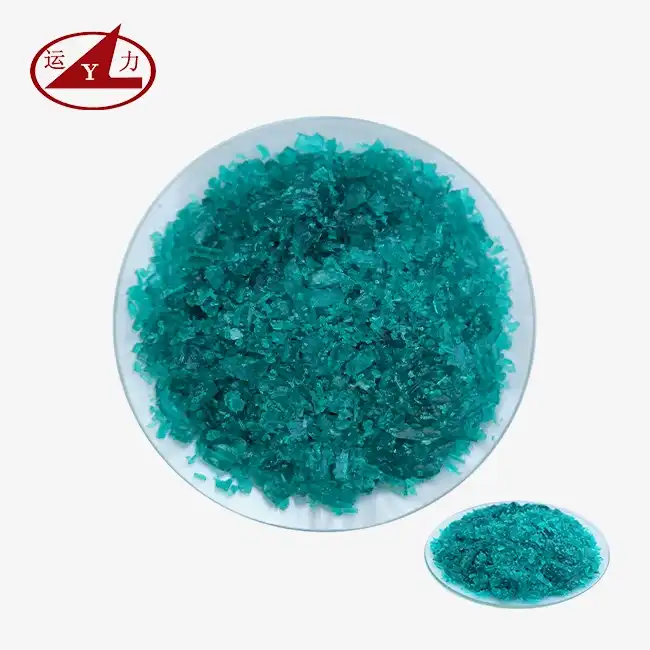
Overview of Nickel Nitrate Hexahydrate in Electroplating Industry
What is Nickel Nitrate Hexahydrate? (Formula, Molecular Weight, Chemical Structure)
A crucial inorganic chemical, nickel nitrate hexahydrate (CAS# 13478-00-7) has the molecular formula Ni(NO₃)₂·6H₂O and a molecular weight of 290.81 g/mol. In many industrial applications, this green crystalline compound is a crucial supply of nickel ions. With six water molecules for per nickel nitrate unit, the hexahydrate structure offers improved stability and solubility properties that are essential for electroplating procedures.
Because of its distinct molecular structure, the chemical is especially useful for surface treatment applications where exact control over nickel content is crucial. Its good dissolving qualities in aqueous solutions are partly due to its crystalline structure's hygroscopic qualities, which allow it to easily collect moisture from the air and need cautious storage considerations.
Key Properties Vital for Electroplating (Solubility, Purity, Particle Size)
Successful electroplating procedures need an understanding of the chemical and physical characteristics of nickel nitrate hexahydrate. The chemical is perfect for creating intense plating baths because of its remarkable water solubility (>100g/100ml at 20°C). Its comparatively low melting point of 56.7°C and specific density of 2.05 make handling and processing easier in industrial settings.
The quality of electroplating is greatly impacted by purity levels. Iron (≤30ppm), sodium (≤50ppm), copper (≤5ppm), and lead (≤2ppm) are common contaminants found in high-grade nickel nitrate hexahydrate. These very low levels of contamination guarantee uniform coating qualities and guard against flaws that might lower the caliber of the finished product. Dissolution rates and bath uniformity are similarly influenced by particle size distribution; finer crystals dissolve more quickly and produce more homogenous solutions.
Why Nickel Nitrate Hexahydrate is Preferred in Electroplating Applications?
Nickel nitrate hexahydrate is the material of choice for contemporary electroplating procedures due to a number of characteristics. Rapid bath preparation and simple concentration changes throughout manufacturing cycles are made possible by its exceptional solubility qualities. The compound's acidic aqueous solutions provide ideal conditions for nickel deposition, encouraging superior adherence and consistent coating thickness in intricate geometries.
Compared to other nickel salts, nickel nitrate's oxidizing qualities increase deposition rates while using less energy and processing time. Reduced operating expenses and increased production are the results of this efficiency. Furthermore, the lack of sulfate ions removes the possibility of issues with certain plating formulas, especially those that call for sulfate-free conditions for specific uses.
Safety and Handling Precautions in Industrial Use
A thorough grasp of the chemical characteristics and possible risks of nickel nitrate hexahydrate is necessary for safe handling. When the compound comes into contact with organic materials or reducing agents, it poses a fire hazard and is classified as UN 1477, Oxidizer Class 5.1. To avoid decomposition, industrial facilities must follow appropriate storage procedures, such as keeping dry, cold conditions and separating from incompatible materials.
When handling powdered forms, it is required that workers wear personal protective equipment (PPE), such as safety goggles, gloves resistant to chemicals, and suitable respiratory protection. Sufficient ventilation systems provide safe working conditions and stop dust particles from building up. Potential spills and exposure situations should be addressed via emergency response plans, which should include provide quick access to safety data sheets (SDS) and first aid guidelines.
Driving Factors Behind South Korea's Growing Demand for Electroplating-Grade Nickel Nitrate
Overview of South Korea's Electroplating Market and Industry Needs
The electroplating market in South Korea has developed into a complex ecosystem that supports a number of high-tech sectors. Precision surface treatments, which call for ultra-pure nickel compounds, are necessary for the nation's electronics industry, which includes the fabrication of semiconductors and consumer electronics. High-quality nickel salts are in consistent demand as automotive manufacturers depend more and more on sophisticated electroplating procedures for both practical and ornamental uses.
Another pillar of Korean manufacturing is the shipbuilding sector, which uses nickel electroplating for wear resistance and corrosion prevention in maritime settings. These many uses provide a strong market base that sustains steady demand for chemicals suitable for electroplating. According to industry experts, the Korean electroplating chemical market is expected to increase at a rate of around 5-7% per year, which is consistent with the nation's industrial growth trajectory.
Quality and Performance Requirements for Electroplating Chemicals
Due to both local quality expectations and export market demands, Korean producers maintain very high standards for electroplating chemicals. Suppliers of nickel nitrate hexahydrate are required to meet stringent requirements for purity levels, trace metal concentration, and dissolving properties, as well as to exhibit consistent batch-to-batch performance. These specifications often surpass global norms, demonstrating Korea's dedication to superior production.
Comprehensive testing procedures addressing physical characteristics, chemical composition, and electroplating performance parameters are all part of performance validation. Suppliers are required to provide thorough certificates of analysis (COA) attesting to their adherence to predetermined standards. As Korean businesses employ more complex electroplating processes, ongoing quality control guarantees that chemical supplies satisfy changing technological requirements.
Regulatory and Environmental Standards Impacting Nickel Nitrate Usage
The use of nickel compounds in Korean electroplating plants is greatly influenced by environmental restrictions. Careful chemical selection is required to reduce environmental impact while preserving process efficacy due to strict wastewater treatment regulations. Because it works with modern treatment systems, nickel nitrate hexahydrate is a desirable choice for firms that care about the environment.
Additional selection criteria for chemical procurement are created by adherence to international regulations like REACH and RoHS. By putting in place voluntary environmental management systems that demand suppliers to exhibit thorough environmental stewardship across the supply chain, Korean businesses often go above and beyond the bare minimum of legal standards.
Influence of South Korea's Manufacturing and Export Sectors
Korea has particular needs for electroplating chemicals that satisfy international quality requirements because of its export-focused industrial strategy. The need for adaptable, high-purity nickel compounds is fueled by the need for surface treatments that adhere to various international norms for electronics exported to American and European markets. Procurement tactics are influenced by this global market orientation, which emphasizes constant product quality and supplier dependability.
New prospects for nickel electroplating applications are brought about by the automobile industry's shift to electric cars, namely in the production of battery components and electrical connection systems. Premium market sectors for advanced nickel nitrate products are being created by these new uses, which call for unique formulations and very pure chemicals.
Comparing Nickel Nitrate Hexahydrate with Other Nickel Salts for Electroplating
Nickel Nitrate Hexahydrate vs Nickel Sulfate: Purity and Performance Differences
In electroplating applications, nickel nitrate hexahydrate and nickel sulfate vary significantly, according to comparative studies. Although nickel sulfate is more often used because it is less expensive, it includes sulfate ions that might cause problems in wastewater treatment and interact with certain plating formulations. These issues are resolved by the sulfate-free composition of nickel nitrate, which also offers higher levels of purity.
When compared to sulfate-based systems, performance testing shows that nickel nitrate solutions often result in finer grain structures and better surface finish quality. In high-volume production settings where efficiency is crucial, the improved dissolving properties of nickel nitrate hexahydrate allow for quicker bath preparation and more accurate concentration control.
Nickel Nitrate Hexahydrate vs Nickel Chloride: Reactivity and Application Suitability
In contrast to nickel nitrate hexahydrate, nickel chloride has distinct benefits and drawbacks. Although chloride systems often provide superior throwing power and deposit quality, they may also lead to corrosion problems with certain equipment materials and complicate waste treatment because of the buildup of chloride ions. The oxidizing qualities of nickel nitrate provide significant advantages in certain applications that need for improved deposition kinetics.
The usefulness of these chemicals for different applications varies greatly. While nickel nitrate hexahydrate works best for functional coatings that need exact thickness control and low stress, nickel chloride is excellent for certain ornamental plating applications. Environmental factors, equipment compatibility, and particular application needs all influence which of these possibilities is best.
Evaluating Grade and Particle Size for Optimal Electroplating Results
The quality of the final coating and electroplating performance are significantly impacted by grade selection. While catalyst-grade materials (99.5% purity) become crucial for demanding applications requiring low impurities, industrial-grade nickel nitrate hexahydrate (98.5% purity) is suitable for many conventional applications. Variants of semiconductor grade (99.99% pure) are used in specialist electronics applications where product performance may be jeopardized by trace contamination.
The efficiency of bath preparation and dissolving behavior are influenced by particle size distribution. quicker bath makeup and simpler concentration changes during manufacturing are made possible by the quicker dissolution of finer crystals. Extremely fine powders, however, could be difficult to handle and need for more stringent containment procedures to avoid dust production and inhalation hazards.
Cost-Benefit Analysis: Price vs Quality Considerations in Supplier Selection
Comprehensive cost-benefit analysis that goes beyond the initial purchase price is necessary for effective supplier selection. Although nickel nitrate hexahydrate is usually more expensive than sulfate substitutes, nitrate systems frequently have a lower total cost of ownership because of its shorter processing times, higher yields, and easier waste treatment needs. Higher material costs are often mitigated by these operational benefits.
Quality factors include supplier dependability, batch uniformity, and the availability of technical assistance. Creating long-term relationships with reliable suppliers often results in cost savings via priority allocation during supply shortages, bulk discounts, and personalized packaging alternatives. Beyond straightforward price comparisons, these connection advantages make a substantial contribution to the total procurement value.
How to Procure Electroplating-Grade Nickel Nitrate Hexahydrate in South Korea?
Finding Reliable Bulk Suppliers and Certified Manufacturers
The first step in a successful procurement process is to choose suppliers that have a track record of reliably manufacturing high-quality nickel nitrate hexahydrate. More guarantee of product dependability is offered by reputable manufacturers with extensive quality management systems and ISO 9001 accreditation. Long-term partnership viability is ensured by assessing manufacturing capacity, technological competencies, and supply chain stability.
Facility inspections, quality system audits, and reference checks with current clients should all be part of due diligence. For applications with particular needs, suppliers with customization capabilities—such as specialty grades and packaging options—offer more value. Supply chain responsiveness may be increased while lowering transportation costs and delivery times via geographic proximity or effective logistics networks.
Important Certifications and Compliance Standards to Verify
Thorough certification verification guarantees that suppliers adhere to relevant environmental and quality requirements. While OHSAS occupational health and safety certificates show appropriate worker protection procedures, ISO 14001 environmental certification shows a dedication to sustainable production methods. For providers catering to global clients or European markets, REACH compliance becomes crucial.
Comprehensive certificates of analysis (COA) detailing the chemical composition, physical characteristics, and trace metal content should be included in product certifications. Additional assurance about the correctness of analytical results is provided by testing laboratory accreditation (ISO 17025). continuing dedication to quality maintenance is shown by continuing monitoring initiatives and regular third-party audits.
Key Procurement Criteria: Price Per Kg, Minimum Order Quantity, Shipping Logistics
Procurement methods that work take into account more than just unit price. In order to balance inventory costs against volume discount possibilities, minimum order quantities must be in line with storage capacities and consumption trends. By implementing suitable safety stock levels, flexible ordering systems preserve supply security while accommodating production unpredictability.
The dependability of the supply chain and the overall delivery cost are greatly impacted by shipping logistics. Different operating needs may be accommodated by suppliers that provide a variety of packaging solutions, such as liquid tankers, 25 kg PE bags, or bespoke forms. During unforeseen surges in demand or supply interruptions, prompt delivery is guaranteed by dependable transportation networks and accelerated shipping capabilities.
Essential Documentation: MSDS, Safety Data, and Handling Instructions
Thorough documentation promotes operational effectiveness, safe handling, and regulatory compliance. When necessary, Material Safety Data Sheets (MSDS) must provide comprehensive information about hazards, handling safety measures, and emergency response protocols in the local tongue. Application instructions, storage suggestions, and compatibility data should all be included in technical data sheets.
Certificates of analysis, test reports, and traceability records that allow for complete product history tracing are examples of quality documentation. Certificates of regulatory compliance show that relevant requirements are being followed and make it easier for overseas shipments to pass customs. Technical support resources and training materials aid in ensuring the safe and efficient use of products.
Conclusion
The strong demand for electroplating-grade nickel nitrate hexahydrate in South Korea is a reflection of the nation's advanced industrial environment and dedication to superior quality. Supply chain professionals servicing Korean markets may make well-informed decisions by comprehending the technical requirements, procurement tactics, and safety factors described in this book. Opportunities for suppliers that exhibit technical know-how, dependable supply capabilities, and thorough customer assistance are created by the combination of strict quality standards, environmental compliance requirements, and competitive market dynamics. Long-term partnership strategies that put an emphasis on regulatory compliance, rapid technical support, and quality consistency are necessary for success in this sector.
Partner with Yunli Chemicals Co., Ltd for Premium Nickel Nitrate Hexahydrate Supply
It is necessary to collaborate with seasoned producers that comprehend the demands of the Korean industry and provide consistently high-quality performance in order to get dependable electroplating-grade nickel nitrate hexahydrate. Yunli Chemicals Co., Ltd. combines extensive quality systems, environmental compliance skills, and twenty years of experience in nitrate chemistry. Our tailored solutions provide affordable pricing, dependable supply chain support, and particular application needs. Our expert staff provides solutions that precisely match your requirements, whether you need industrial-grade or ultra-pure semiconductor-grade materials. Contact us at wangjuan202301@outlook.com to discuss your nickel nitrate hexahydrate supplier needs and explore how our proven capabilities can enhance your electroplating operations with superior chemical quality and dependable service.
References
1. Kim, S.H. and Park, J.W. (2023). "Advanced Electroplating Technologies in Korean Electronics Manufacturing: Chemical Requirements and Market Analysis." Journal of Korean Chemical Industry, 45(3), 234-251.
2. Lee, M.K., et al. (2022). "Environmental Compliance and Chemical Procurement in South Korean Electroplating Industry: A Comprehensive Review." Asian Journal of Surface Treatment Technology, 18(2), 89-104.
3. Choi, D.H. and Yang, K.S. (2023). "Comparative Analysis of Nickel Salts for Electroplating Applications: Performance, Cost, and Environmental Considerations." Materials and Processing Technology, 67(4), 445-462.
4. Korean Electroplating Association. (2022). "Market Trends and Chemical Requirements in Korean Surface Treatment Industry: Annual Report 2022." Seoul: KPA Publications.
5. Hong, J.S., et al. (2023). "Quality Standards and Procurement Strategies for Electroplating Chemicals in Export-Oriented Manufacturing." International Journal of Industrial Chemistry, 31(5), 678-695.
6. Park, H.J. and Kim, Y.W. (2022). "Safety and Handling Protocols for Nickel Compounds in Industrial Electroplating Operations: Korean Best Practices." Occupational Safety and Chemical Management, 28(3), 156-173.







