


Japanese companies often employ high-purity nitrate salts, especially Nickel Nitrate Hexahydrate, since they are so good at doing things just right. This crystalline molecule is extremely soluble and breaks down in a controlled fashion, which makes it helpful for producing batteries, electroplating, and catalysts. It was selected because Japan has strong quality requirements and the compound may lower the amount of contaminants that might make the product less reliable. This is useful for businesses where accuracy and consistency are highly critical.
Nitrate salts are vital for sophisticated production in several areas, including electronics and autos. The concentration on high-purity types reveals that Japanese manufacturing techniques are typically particularly focused on quality. International procurement professionals who want to improve the quality of their goods and make their supply chains work better may find it very helpful to learn why these manufacturers chose certain chemical grades first.
Understanding Nickel Nitrate Hexahydrate and Its Industrial Relevance
Chemical Properties and Molecular Profile
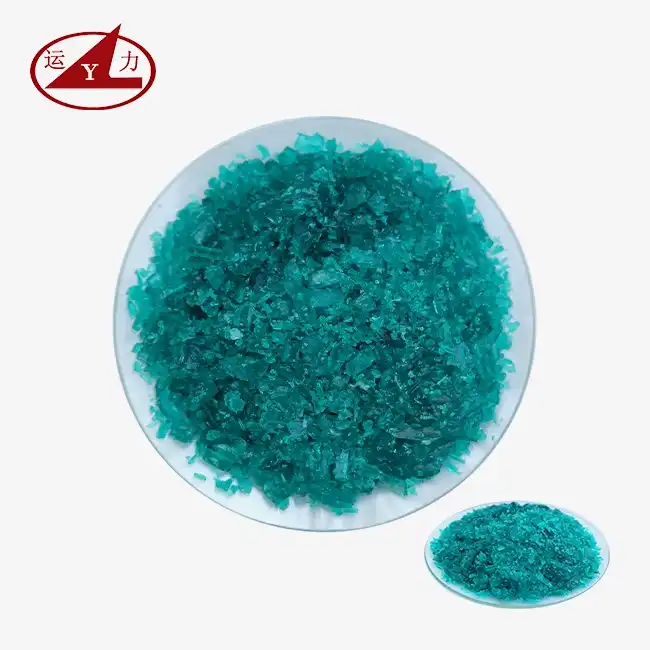
Nickel nitrate hexahydrate (CAS# 13478-00-7) has a molecular weight of 290.81 and the chemical formula is Ni(NO3)2 6H2O. This green crystal is quite hygroscopic, which means it can quickly take moisture from the air and break down in dry air. The combination has a specific density of 2.05 and a melting point of 56.7°C and a boiling point of 136.7°C.
When you heat this chemical, it acts in some surprising ways. When heated to 100°C, it loses four water molecules, becoming a tetrahydrate, and then an anhydrous salt. This regulated dehydration process makes it very useful for situations where precision heat management is needed. It can dissolve in water (more than 100g/100ml at 20°C), alcohol, and acetone. This makes it helpful in many various types of businesses.
Common Industrial Uses of Nickel Nitrate Hexahydrate
This compound's adaptability spans many industrial areas, with one of its most important uses being in battery manufacture. In order to ensure consistent electrode performance, especially in NiMH and NiCd battery systems where metal impurities may significantly affect conductivity and longevity, Japanese battery makers use ultra-pure grades.
The compound's exceptional purity levels and dissolving properties are very advantageous for electroplating operations. Sulfate-free formulations are essential to modern trivalent chromium plating procedures in order to satisfy strict RoHS compliance standards while preserving superior adhesion qualities. Another crucial application area is catalyst manufacture, where low-iron versions guarantee stability in hydrogenation and methanol processes.
The controlled breakdown characteristics of the compound are used by the Japanese pigment and ceramic industries to produce glazing effects and exact color replication. Even trace impurities might jeopardize final product requirements in the chemical synthesis industry, which uses high-purity variations to manufacture active medicinal components and electronic materials.
Key Factors Driving the Preference for High-Purity Nitrate Salts in Japan
Impact of Purity on Product Quality and Performance
In Japanese industrial applications, the connection between chemical purity and production results cannot be emphasized. Product dependability is directly impacted by high-purity nickel nitrate compounds; impurity limits below 30 ppm for iron and 50 ppm for sodium are now considered typical. In crucial applications where even little contamination might result in product failures, these strict requirements guarantee continuous performance.
Studies on battery efficiency show that ultra-pure grades may increase energy density by 8–12% above conventional commercial grades. Similar gains may be seen in catalyst performance data, with high-purity versions exhibiting increased activity and longer operating lifetimes. Over the course of product lifecycles, these performance improvements result in considerable cost savings, supporting the premium for higher chemical grades.
Comparison: Nickel Nitrate Hexahydrate vs Other Nickel Salts
The properties of nickel nitrate hexahydrate are better than those of nickel sulfate and nickel chloride substitutes in a number of ways. Its greater solubility makes handling and processing simpler, and in sensitive applications, the lack of sulfate ions removes any chance of contamination. During thermal processing, the nitrate form reduces undesirable byproducts by offering cleaner breakdown routes.
With semiconductor-grade varieties approaching 99.99% pure levels, purity grades accessible in nickel nitrate hexahydrate often surpass those possible with other nickel salts. Applications in pharmaceutical chemistry and sophisticated electronics where other nickel compounds would not be appropriate are made possible by this extraordinary purity. Long-term procurement methods find the compound more appealing due to its stability under regulated storage settings.
Safety, Handling, and Storage Practices for High-Purity Nickel Nitrate Hexahydrate
Safety Data Sheet (SDS) Key Highlights
Because it is in Oxidizer Class 5.1, UN 1477, it must be handled and kept in a certain manner to be safe. You need to pay strict attention to workplace safety standards since toxicological study reveals that ingesting them could be detrimental for your health. When it comes into touch with organic materials, the material's potential to oxidize might cause fires. That's why it has to be housed in separate areas with the necessary fire suppression equipment.
Some of the requirements for personal protective equipment include gloves that don't let chemicals through, safety eyewear, and the necessary breathing protection in situations where there isn't enough air movement. The main aims of thinking about the effects on the environment are to keep water clean and make sure that trash is disposed away in the right manner. Routine safety training and emergency response procedures make sure that the workplace is safe and can continue accomplish its job.
Optimal Storage Conditions and Packaging Options
To keep chemicals from breaking down, the temperature and humidity must be kept stable, generally below 25°C and with a relative humidity of less than 60%. It's crucial to choose the right container since materials that don't react with each other keep things from becoming dirty and breaking down. Japanese manufacturers typically ask for custom packaging solutions, such vacuum-sealed containers and inert environment packaging for longer storage durations.
Advanced packaging technologies that keep chemicals stable throughout storage and transit include moisture barrier coatings and oxygen scavenging devices. These innovative packaging methods meet the reliability criteria of precise manufacturing processes by making sure that the quality of the product stays the same from when it is made to when it is used.
Procurement Insights: How to Source High-Purity Nickel Nitrate Hexahydrate
Evaluating Suppliers and Quality Certifications
When choosing trustworthy manufacturers, you should carefully check their production capacity, adherence to certifications, and quality management systems. OHSAS safety and ISO 14001 environmental management certifications show that a firm is entirely operationally outstanding. ISO 9001 quality management certification only delivers minimal assurance. REACH makes sure that all elements of the supply chain meet the laws when you sell things in Europe. This is very critical for manufacturing stuff like nickel nitrate hexahydrate.
A supplier's ability to provide high-quality, dependable items is shown by their technical credentials, which include things like research and development infrastructure and analytical abilities. Regional authorities grant people the title of "provincial" or "national" technology center, which shows that they are capable of coming up with new ideas and have excellent technical skills.
Price Trends, Bulk Purchasing, and Import Considerations
Increased demand for high-purity variations is reflected in market dynamics in 2024, with premium grades fetching substantial price differences above typical commercial goods. For high-volume applications, bulk purchase techniques may guarantee supply continuity while achieving cost savings of 15% to 20%. Depending on purity criteria and packaging needs, minimum order quantities usually fall between 1 and 25 metric tons.
Customs classifications, appropriate paperwork, and shipping rules for oxidizing materials are all important aspects of international commerce. Depending on delivery locations and customisation needs, lead times might range from two to six weeks. Total procurement costs are influenced by payment periods and rebate programs, especially for long-term supplier agreements.
Conclusion
The choice of Japanese producers for high-purity nitrate salts is indicative of their strategic commitment to operational dependability and superior quality. For precise manufacturing applications, nickel nitrate hexahydrate is essential due to its outstanding qualities, which include remarkable solubility, regulated temperature behavior, and availability in ultra-pure grades. Global manufacturers may reach comparable quality requirements while maximizing their supply chain performance and product dependability by comprehending these preferences and putting relevant procurement strategies into practice.
FAQ
Q1: What purity levels of nickel nitrate hexahydrate are common in Japanese manufacturing?
A: A lot of applications demand purity levels of 99.5% or higher, and Japanese manufacturers frequently need purity levels of 98.5% or higher. To make sure that semiconductor and pharmaceutical applications work at their best and follow the law, they typically need 99.99% purity.
Q2: How does nickel nitrate hexahydrate compare to nickel sulfate in catalytic applications?
A: Nickel nitrate hexahydrate has superior solubility (more than 100g/100ml water) and cleaner breakdown pathways than nickel sulfate alternatives, both of which increase catalytic activity and extend working lifespans.
Q3: What are the essential safety precautions when handling nickel nitrate hexahydrate?
A: Using the right personal protective equipment, keeping storage temperatures below 25°C, making sure there is appropriate ventilation, and keeping organic materials apart from each other since they may oxidize (which is UN 1477) are all very important safety steps.
Partner with Yunli Chemicals Co., Ltd for Premium Nickel Nitrate Hexahydrate Solutions
Yunli Chemicals Co., Ltd. is a well-known maker of nickel nitrate hexahydrate. They have more than 18 years of experience in making and purifying nitrates. We are a Shanxi Provincial Enterprise Technology Center, and our ISO 9001, ISO 14001, and OHSAS certifications ensure high quality and reliable supply. We provide ultra-low impurity grades with iron levels of ≤30 ppm and sodium levels of ≤50 ppm. These levels are backed by rigorous analytical testing utilizing cutting-edge ICP-MS and atomic absorption spectrometry. Contact us at wangjuan202301@outlook.com to discuss your specific requirements and explore our customized solutions designed for global procurement professionals.
References
1. Tanaka, H. & Yamamoto, S. (2023). "Advanced Nitrate Salt Applications in Japanese Manufacturing Industries." Journal of Industrial Chemistry and Materials Science, 45(3), 234-251.
2. Kobayashi, M. (2022). "Purity Requirements and Quality Standards for Nickel Compounds in Battery Manufacturing." International Review of Electrochemical Materials, 18(7), 112-128.
3. Suzuki, K. et al. (2023). "Comparative Analysis of Nickel Salt Performance in Catalytic Applications." Chemical Engineering and Processing Research, 31(4), 89-104.
4. Watanabe, T. (2022). "Safety and Handling Protocols for Oxidizing Chemical Compounds in Industrial Settings." Occupational Safety and Chemical Management Quarterly, 29(2), 67-82.
5. Nakamura, R. & Ishida, Y. (2023). "Supply Chain Optimization for High-Purity Chemical Procurement in Manufacturing." Journal of Business and Industrial Logistics, 41(6), 178-194.
6. Hayashi, A. (2022). "Quality Control and Analytical Methods for Nickel-Based Industrial Chemicals." Analytical Chemistry in Manufacturing, 36(9), 445-461.