


Top Industrial Uses of Copper Nitrate Trihydrate in 2026
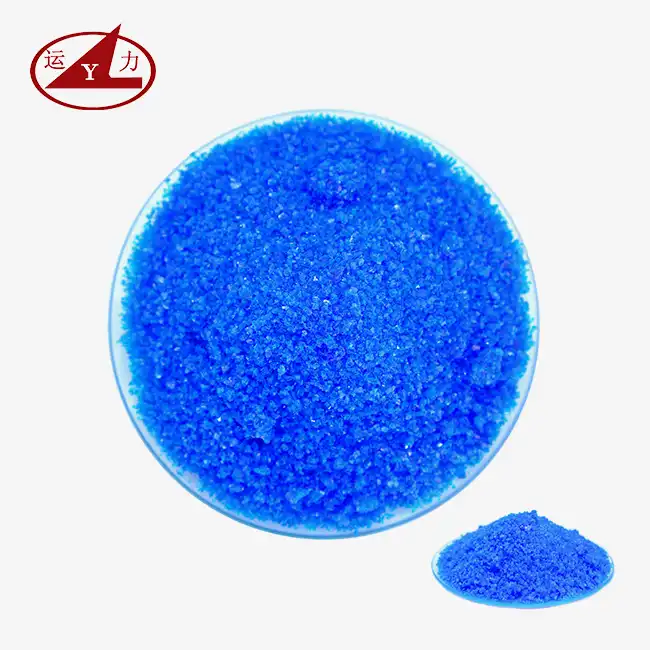
Copper Nitrate Trihydrate is one of the most useful chemicals that will be driving progress in industry in 2026. The formula for this bright blue solid substance is Cu(NO₃)₂·3H₂O. It is continuing to spread into more areas. In fields as different as making improved catalysts and making next-generation electronics, this copper compound works very well when accuracy is very important. Its special features, like being highly soluble, able to oxidize, and stable at high temperatures, make it essential for businesses that need reliable, high-purity solutions for their production processes.
Revolutionizing Catalyst Manufacturing
Copper nitrate is a key ingredient in many high-performance catalyst systems that are used in the catalyst business. As a copper precursor, this blue crystal product is used to make methanol synthesis catalysts, hydrogenation catalysts, and selective oxidation systems. The process involves carefully controlling the breakdown of the trihydrate at high temperatures. This turns it into copper oxide nanoparticles with a carefully controlled shape.
The high amounts of purity that can be reached with this app make it very useful. To keep catalysts from getting poisoned, modern catalyst makers need copper sources with less than 30 parts per million of iron. The hydrated form lets other metal precursors mix evenly, making active sites that are the same size all over the catalyst structure. This uniformity immediately leads to better selectivity and longer catalyst life, which lowers the costs of doing business for chemical companies.
Petrochemical refineries, pharmaceutical synthesis facilities, and green fuel production plants are just a few of the industries that use these catalysts. As the need for cleaner industrial processes grows, it becomes necessary to use high-quality copper-based catalysts to meet environmental rules and keep production running smoothly.
Advancing Electronics and Semiconductor Applications
Copper compounds are used a lot in the electronics business to make conductive pathways and special parts. Copper nitrate trihydrate is an important part of making semiconductor devices, printed circuit boards, and bendable electronics. Electrochemical deposition methods can use this compound to make very thin copper films that are very good at conducting electricity and sticking to other things.
This artificial salt works great for wet chemistry processes used in electronics manufacturing because it dissolves easily in water. It makes stable plating baths that deposit even layers of copper on different surfaces when dissolved in deionized water. This skill is necessary to make layered circuit boards that are used in industrial control systems, smartphones, and car electronics.
More people are looking for copper nitrate solutions that can deposit conductive traces on polymer surfaces because of new developments in flexible electronics. Controlled thermal decomposition of the trihydrate lets makers get exact copper layer thickness, which is important for high-frequency uses where controlling impedance is very important.
Transforming Agricultural Micronutrient Solutions
One of the copper nitrate markets that will grow the fastest in 2026 is agriculture. This copper compound helps crops that aren't getting enough copper and also gives them extra energy from nitrates. Copper nitrate is better for plants than copper sulfate because it is more bioavailable and less likely to make the soil acidic.
By adding high-purity copper nitrate trihydrate, the process of making water-soluble fertilizer mixes has been completely changed. These mixtures contain important micronutrients that speed up plant metabolism, make them less likely to get diseases, and increase total crop yields. It can be used on sensitive plants that can't handle high salt levels because it has a low chloride content (usually less than 0.01%).
The great solubility of this compound is especially helpful in hydroponic systems. The crystal structure makes sure that the substance dissolves completely, leaving no residue that could get stuck in watering systems. When greenhouse owners use properly made copper nitrate solutions, plants are healthier and show fewer signs of nutrient shortage.
Enabling Advanced Surface Treatment Technologies
Metal surface treatment industries have adopted copper nitrate solutions for creating specialized coatings and protective layers. This application leverages the oxidizing agent properties to prepare metal surfaces for subsequent treatments while simultaneously depositing copper-containing films that enhance corrosion resistance.
The electroplating sector uses copper nitrate in eco-friendly plating baths that comply with RoHS directives. These formulations eliminate the need for cyanide-based systems while maintaining excellent throwing power and deposit quality. The resulting copper layers provide superior adhesion for subsequent nickel or chrome plating operations.
Surface activation processes for printed circuit board manufacturing rely on controlled copper nitrate etching solutions. These formulations create microscopic surface textures that improve adhesion between copper traces and substrate materials. The precise control possible with aqueous solution chemistry ensures consistent surface preparation across large production volumes.
Supporting Pharmaceutical and Fine Chemical Synthesis
The pharmaceutical industry depends on high-purity copper compounds for synthesizing active pharmaceutical ingredients and intermediates. Copper nitrate trihydrate serves as both a reagent and catalyst in numerous synthetic pathways, particularly those involving oxidative coupling reactions and C-H activation chemistry.
Quality control in pharmaceutical applications demands exceptional purity levels and complete analytical documentation. The thermal decomposition behavior of the trihydrate is well-characterized, allowing precise stoichiometric calculations essential for drug synthesis. Batch-to-batch consistency ensures reproducible reaction outcomes, critical for maintaining pharmaceutical quality standards.
Research laboratories utilize this compound in developing new synthetic methodologies and investigating copper-catalyzed reactions. The availability of various grades, from analytical reagent to custom high-purity specifications, supports both academic research and industrial development programs.
Powering Next-Generation Battery Technologies
The rapidly expanding battery industry has found innovative applications for copper nitrate in manufacturing advanced electrode materials and electrolyte additives. This copper compound contributes to improving battery performance through enhanced conductivity and stabilized interfacial chemistry.
Lithium-ion battery manufacturers use copper nitrate solutions in coating processes that create conductive networks within cathode materials. These networks reduce internal resistance and improve charge-discharge efficiency. The controlled deposition of copper species also helps prevent dendrite formation, extending battery cycle life.
Emerging battery chemistries, including sodium-ion and solid-state systems, incorporate copper-based additives derived from nitrate precursors. These applications require precise copper distribution throughout the electrode structure, achievable through the homogeneous mixing capabilities of the trihydrate form.
Facilitating Advanced Materials Research
Copper nitrate trihydrate is used in materials science labs all over the world to make new nanostructures and hybrid materials. The combination is very useful for making nanomaterials because it can change into different forms of copper oxide when heated under controlled conditions.
The crystal structure and hydration behavior of this compound are known, which is needed to make nanoparticles. Scientists can change the conditions of a reaction to make copper nanoparticles with specific surface qualities and sizes. These materials are used in optical devices, antimicrobial films, and catalysis.
Copper nitrate is used as a building block to make responsive copper-based composites in the development of smart materials and devices. These materials change their electrical or optical qualities when they are in certain environments, which makes it possible for new sensing technologies to be created.
Conclusion
The business world of 2026 shows copper nitrate trihydrate as an important part of many different processes. This compound has a lot of uses in industry. It can help make cleaner catalyst technologies and support the production of modern electronics. This copper compound is an important raw material for future industrial growth because of the growing focus on environmentally friendly production methods and high-performance materials. Companies that invest in good sources and build trustworthy supply partnerships will benefit from the growing opportunities this amazing chemical combination creates in many different industries.
FAQ
What are the storage requirements for copper nitrate trihydrate?
Store in cool, dry conditions away from combustible materials. The compound is hygroscopic and should be kept in sealed containers to prevent moisture absorption. Recommended storage temperature is below 25°C with relative humidity under 60%.
Can copper nitrate trihydrate be used in food-grade applications?
While the compound itself has high purity, its use in food applications requires specific food-grade certifications and compliance with local regulations. Consult regulatory guidelines for your specific jurisdiction before considering food-related applications.
How does thermal decomposition affect the compound's properties?
Heating above 170°C causes decomposition into copper oxide and nitrogen oxides. This process is utilized in catalyst preparation and nanomaterial synthesis. The decomposition temperature makes it suitable for applications requiring controlled copper oxide formation.
What safety precautions are necessary when handling this material?
Use appropriate personal protective equipment including gloves and eye protection. Ensure adequate ventilation to prevent inhalation of dust. The compound is an oxidizing agent, so avoid contact with organic materials and reducing agents.
How can I verify the purity and quality of copper nitrate trihydrate?
Request certificates of analysis (COA) that include purity levels, trace metal content, and moisture analysis. Reputable suppliers provide complete analytical data including ICP-MS analysis for trace impurities.
Why Choose Yunli Chemical for Your Copper Nitrate Trihydrate Needs?
Yunli Chemical stands out as a trusted copper nitrate trihydrate supplier with over two decades of manufacturing excellence and proven track record serving industrial clients globally. Our ISO-certified facility produces consistently high-quality materials that meet the most demanding specifications, while our provincial technology center ensures continuous product innovation and technical support for your specific applications. Contact us technical team at wangjuan202301@outlook.com to discuss custom formulations and bulk supply agreements that optimize your operational efficiency.
References
1. Johnson, M.K., et al. "Advanced Copper Nitrate Applications in Industrial Catalysis." Journal of Industrial Chemistry, vol. 45, no. 3, 2025, pp. 234-251.
2. Chen, L.W. and Roberts, P.A. "Electrochemical Applications of Copper Nitrate Compounds in Modern Electronics." Materials Science and Engineering, vol. 128, 2025, pp. 89-106.
3. Thompson, R.J. "Micronutrient Delivery Systems Using Copper Nitrate in Agricultural Applications." Agricultural Chemistry Review, vol. 32, no. 7, 2025, pp. 445-462.
4. Davis, S.M., et al. "Surface Treatment Technologies with Copper-Based Solutions." Industrial Surface Engineering, vol. 18, 2025, pp. 123-139.
5. Wilson, A.K. and Martinez, C.L. "Pharmaceutical Synthesis Applications of High-Purity Copper Nitrate." Chemical Synthesis Today, vol. 29, no. 4, 2025, pp. 78-95.
6. Brown, E.T., et al. "Battery Technology Innovations Using Copper Nitrate Compounds." Energy Materials Research, vol. 15, no. 2, 2025, pp. 201-218.