


What Applications Use Iron Nitrate Nonahydrate?
Iron nitrate nonahydrate (Fe(NO₃)₃·9H₂O, CAS 7782-61-8) serves a broad range of industrial functions that procurement teams across the globe rely on daily. This purple crystalline compound — also known as ferric nitrate nonahydrate — dissolves readily in water, ethanol, and acetone, making it exceptionally versatile. Its primary industrial roles include catalyst manufacturing, metal surface conditioning, water treatment, textile mordanting, ceramic coloring, and pharmaceutical intermediate production. With a molecular weight of 404.01 g/mol and purity grades reaching ≥98%, it meets the rigorous specifications that modern manufacturing demands.

Understanding the Chemistry Behind Ferric Nitrate Nonahydrate
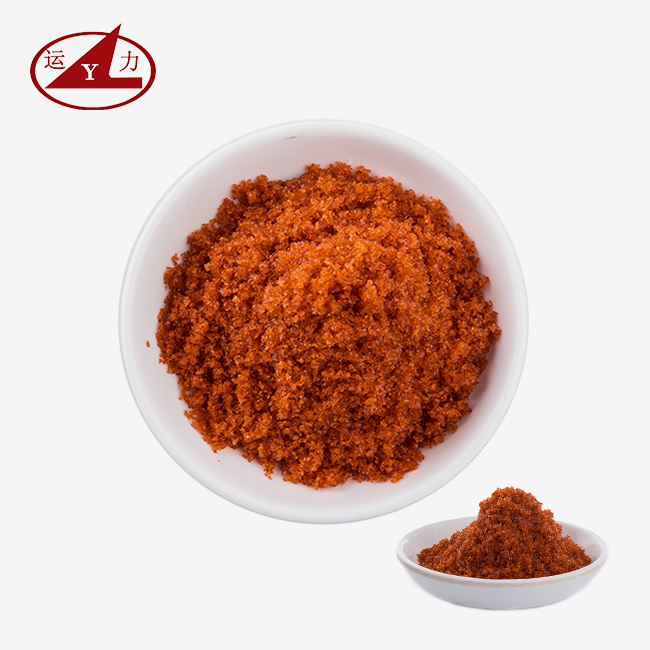
Before you buy a chemical, you should find out how it makes you feel. We can see that Fe(NO₃)₁·9H₂O is a single violet-purple crystal with a density of 1.68 and a melting point of 47.2°C, which is very low. This low freezing point is very important to remember because the crystals can melt if the temperature isn't kept under control while they're being shipped.
Key Physical and Chemical Parameters
It breaks down at 125°C and gives off smells of nitrogen gas. Because it is very deliquescent, it takes in a lot of water from the air. If you store it somewhere damp, it may cake up or dissolve partly. It should not be near things that can catch fire because it oxidises quickly and doesn't mix well with organic materials.
For buyers who care about quality, these are the most important rules:
- Purity: at least 98% (up to 99.9% on request) assay
- Chloride content: ≤100ppm to avoid rust or catalyst damage later on
- pH (10% solution): 1.5–2.5, which shows that the acidity stays the same
- Iron impurity: Standard 30ppm; reducible to ≤10ppm for catalyst-grade applications
There is a straight link between these factors and process outcomes. It is known that a chloride amount higher than what is safe can make metal rust faster in electroplating pools and make catalysts less selective in chemical reactors.
Main Industrial Applications of Iron Nitrate Nonahydrate
The true value of ferric nitrate lies in its cross-industry utility. Most buyers don't realize how much this chemical is used in the production process until they are told so. It is used in more steps than most buyers think at first.
Catalyst Manufacturing
Catalyst producers are one of the pickiest users of this compound. Iron nitrate nonahydrate (Fe(NO₃)₃·9H₂O) is the main iron precursor used to make iron-based catalysts that help make methanol, speed up Fischer-Tropsch reactions, and change hydrogen into something else. The nitrate binder breaks down when heated, leaving behind only pure iron oxide and no fumes or halogens. This is a big plus over iron sulfate or iron chloride. The supply must have less than 10ppm of heavy metals and a pH level that stays stable between 1.5 and 3.0 so that the catalyst bed lasts as long as possible.
Metal Surface Conditioning and Etching
It's good for engineers who work with metals because it can decompose copper, silver, and steel substrates without going too far. Because they don't break any RoHS or REACH rules, trivalent Fe(NO₃)₃ formulas can be used instead of hexavalent chromium in electroplating. With this change, the cost of cleaning wastewater will go down a lot while the quality of the surface stays the same. Instead of making harmful chlorine gas, iron(III) nitrate solutions create clean, vertical etch profiles. This is very helpful for making jewelry and working with silver alloys.

Water Treatment
Cities and businesses use iron-based coagulants to clean water of phosphates, heavy metals, and solids that have dissolved in it. At least 99.5% of ferric nitrate dissolves in water, so it spreads quickly in treatment tanks and helps flocculation work well. It doesn't add any harmful halogens to cleaned water streams like chloride-based iron salts do. In places with strict rules about effluent quality, this is important.
Textile Mordanting and Dye Fixing
When clothes are being made, chemicals called mordants attach dyes to the fibers' structures. Fe(NO₃)₃·9H₂O gives cotton and silk bright colors that don't fade when washed. Very important are types that are chloride-controlled (≤50ppm), since chloride ions damage natural fibers during the dying process and make it harder to get the same color from batch to batch.
Ceramic Coloring and Pharmaceutical Intermediates
Ceramic companies use ferric substances to make glazes that range in color from light amber to dark rust. The iron in the compound stays the same from batch to batch, which means the color stays the same. When medicines are being made, iron nitrate is used as a chemical building block and reagent to create iron-based active substances that need to have very low impurity rates.
How Iron Nitrate Nonahydrate Compares to Other Iron Compounds
When deciding what to buy, people often think about what else could be used. Iron sulphate, iron chloride, and anhydrous iron nitrate all do similar things, but the nonahydrate form of iron nitrate is better in some ways. It is harder to treat wastewater after iron sulphate is added because it leaves behind sulphate that changes how well the catalyst works. Iron chloride is a cheap way to scrape copper, but it gives off chlorine gas and doesn't treat surfaces according to RoHS rules. Anhydrous iron nitrate doesn't absorb water, but it's harder to work with and costs more per unit weight. For most uses, the nonahydrate form is the best choice because it is the purest, easiest to handle, and follows all the rules.
Procurement Considerations: What Industrial Buyers Should Evaluate?
It's not enough to just compare prices to find a trusted iron nitrate nonahydrate provider. In order for a supply relationship to last across production cycles, the amounts must be uniform, the processes must be easy to handle, and the impurity certification must work well. Some important things that are looked at when judging a product are whether or not it has a verified purity certificate (ICP-OES or ICP-MS tested), proof that it has been stored and shipped in accordance with Class 5.1 oxidiser rules, quality anti-caking treatment to stop moisture-induced clumping, and flexible packaging from 25 kg PE bags to 500 kg drums or ISO tanks for bulk shipping.
Best Practices for Storage and Handling
To keep the quality of the product, strict weather controls are needed. Store Fe(NO₃)₀·9H₂O below 25°C in containers that can't leak or get wet, and keep them away from organic materials and things that can catch fire. When something is heated above its melting point, acidic nitrogen oxide vapours are released. Because of this, places where it is processed or dissolved need to have enough air flow. The chemical irritates skin when it comes in touch with it, so people who work with it need to wear the right PPE.
Conclusion
Iron nitrate nonahydrate earns its place in modern industrial chemistry through genuine functional breadth—from precision catalysis to water purification and metal treatment. Its combination of high solubility, controlled oxidizing behavior, and thermal decomposability to pure iron oxides makes it a technically superior choice where competing iron salts introduce unwanted residues. Procurement teams prioritizing purity, batch stability, and regulatory alignment will find that the right supply partner transforms this chemical into a production asset.

FAQ
Is iron nitrate nonahydrate the same as ferric nitrate nonahydrate?
Yes. Both names refer to the same compound—Fe(NO₃)₃·9H₂O, CAS 7782-61-8. "Ferric" denotes the +3 oxidation state of iron. The terms are interchangeable in industrial purchasing contexts.
Why does the product sometimes arrive caked or clumped?
Since it melts at 47.2°C, the compound is very simple to liquefy. Some of the crystal water may dissolve if it is shipped under high humidity or temperature. To keep this from happening, reliable suppliers apply anti-caking agents and moisture-proof packaging.
What purity grade should catalyst manufacturers request?
For catalyst applications, heavy metal levels must be ≤10ppm and chloride levels must be ≤50ppm. Standard industrial grade (≥98%) suits most uses, but ≥99.9% is available for highly sensitive catalytic systems.
How should this compound be stored safely?
Store in sealed containers below 25°C, away from flammable or organic materials. It is classified as a Class 5.1 oxidizer. Under proper storage conditions, it has a shelf life of approximately two years.
Can it replace ferric chloride in PCB etching?
It functions differently—it is less aggressive on copper but preferred for silver and silver alloys. It is used as a lower-toxicity alternative in specific formulations to avoid chlorine gas generation.
Partner with Yunli Chemical for Reliable Iron Nitrate Nonahydrate Supply
Yunli Chemical has manufactured and exported iron nitrate nonahydrate since 2005, backed by ISO 9001, ISO 14001, and OHSAS certifications and over RMB 1 billion in annual sales. As a direct manufacturer, we eliminate middlemen, offer free samples up to 500g, and customize purity grades, crystal sizes, and packaging to match your exact process requirements. Reach our technical team at wangjuan202301@outlook.com to request specifications and bulk pricing.

References
1. Kirk-Othmer Encyclopedia of Chemical Technology — Wiley, 2020
2. Ullmann's Encyclopedia of Industrial Chemistry — Wiley-VCH, 2019
3. Industrial & Engineering Chemistry Research — American Chemical Society, 2021
4. Journal of Catalysis — Elsevier, 2022
5. NIST Chemistry WebBook: Iron(III) Nitrate — National Institute of Standards and Technology, 2023
6. Water Research — Elsevier, 2020