


Which Cobalt Nitrate Solution Concentration Fits My Process Best?
When sourcing cobalt nitrate solution for industrial use, concentration is not a minor detail—it is the variable that separates a smooth production run from a costly batch failure. Whether you are synthesizing NCM battery precursors, impregnating alumina catalyst supports, or producing cobalt blue ceramic glazes, the Co(NO₃)₂ concentration you specify directly determines reaction efficiency, impurity risk, and total cost per unit output. This guide walks through the key concentration tiers, their real-world process fit, and what to verify before placing a bulk order.

Understanding Cobalt Nitrate Solution and Its Key Properties
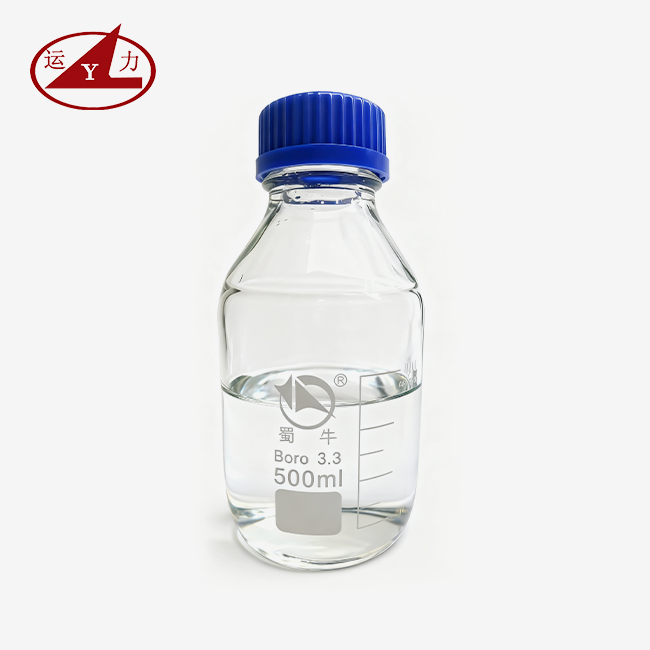
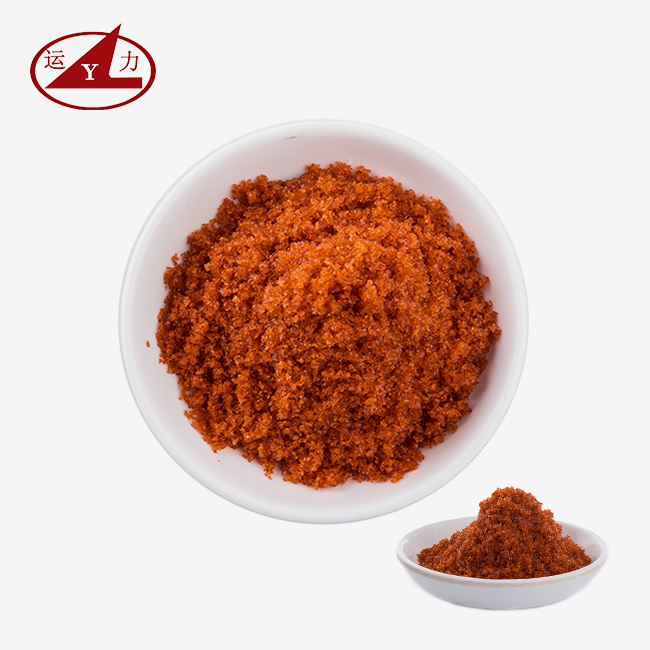
Cobalt nitrate, with the chemical formula Co(NO₃)₂·6H₂O and a molecular weight of 291.03, is a clear, red-to-dark-red liquid when it is dissolved in water. The hexahydrate solid is a golden-red crystal that melts at 55–56 °C and has a specific gravity of 1.88. It dissolves easily in water, ethanol, and acetone, which makes processing in the liquid phase very easy.
Why Physical Properties Matter for Process Selection?
Because the nitrate anion is an oxidizer, it can cause combustion or explosion when it comes into contact with organic reducing agents. When there is more cobalt in the solution (above about 15% w/w), it gets thicker and more acidic, with a pH that is usually between 2.0 and 4.0. This acidity speeds up breakdown if the pH rises above 5. It makes cobalt hydroxide crystals that block spray nozzles and impregnation pathways. For catalyst-grade material, it is normal to keep the pH range between 3 and 5.
Safety handling needs the same amount of care. Cobalt nitrate is dangerous to eat, breathe in, or touch your skin. It must be kept in sealed HDPE drums or 316L stainless steel tanks that are out of direct sunlight and have a shelf life of 12 to 24 months as long as the seals are still in place.
Key Concentration Ranges and Their Industrial Applications
The amount of cobalt needed varies from process to process. By knowing how concentration levels relate to real-world uses, you can avoid over-specification and the higher costs that come with it.
Low-Concentration Range (Below 0.1 M / ~1% Co w/w)
For analytical work, lab catalytic screening, and quality control reference standards, diluted cobalt nitrate solution works well. It is very important to be exact here, because even very small amounts of particles (parts per billion) can change the findings. These solutions have the lowest risk of handling, but they can't handle a lot of throughput at once.
Mid-Range Concentration (0.1–1 M / ~1–10% Co w/w)
This range meets the needs of the most industries. Paint drier mixtures, ceramic pigment dispersions, and surface treatment baths can all work well in this range. Cobalt blue glazes that are fired at 1200–1300 °C need constant supply of cobalt ions; changes in concentration of more than ±2% can be seen in the fired color. This includes electroplating baths and coats that prevent corrosion. The evenness of the layer depends on how active the ions are all the time.
High-Concentration Range (Above 1 M / ~10–15% Co w/w and beyond)
The biggest amounts of cobalt are needed for making battery cathode precursors and industrial catalysts. To make a Co-Mo hydrodesulfurization (HDS) catalyst, you need a dense, uniform source of cobalt that can get deep into alumina carriers. For NCM/NCA co-precipitation processes to work, the mixing has to be very precise at the atomic level. A concentration difference of just ±2% can change the Ni:Co:Mn stoichiometry enough to lower the energy density. In this case, you have to meet certain requirements, like ≤30 ppm Fe, ≤50 ppm Na, and ≤10 ppm heavy metals (Pb, Cd).
How to Choose the Right Concentration for Your Process?
Matching concentration to process is a choice that depends on a lot of factors. Three useful tools make it easy to cut down the options.
First, there is the response type and the loading goal. A final Co loading of 2–5 wt% on the carrier is usually the goal of wet impregnation for catalyst supports. By using the support's pore volume and the loading that is wanted, you can figure out the exact amount of Co ions that are needed in the impregnation solution. For commercial-scale runs, this is usually between 1.0 and 2.5 M.
The next step is material suitability. The nitrate anion in cobalt nitrate is usually cleaner than the sulfate or chloride anion. Some acid-sensitive catalysts can be poisoned by sulfate leftovers, while chloride ions eat away at stainless steel reactor walls and are tightly controlled in battery-grade predecessors. Nitrate-based cobalt solutions break down thermally into cobalt oxide without leaving behind halide or sulfur pollution, which is a big plus for steps that involve high temperatures.
Automation of the process is the third measure. Liquid cobalt nitrate solution that is ready to use gets rid of the dust problem and the need for energy to dissolve solid hexahydrate. Automated dosing systems need a liquid that doesn't change density and has a percentage difference of no more than 1% from batch to batch. Reliable makers can guarantee that their products meet this requirement.
Purity Grade vs. Concentration: An Overlooked Interaction
There is no automatic link between higher concentration and higher purity. Ions of impurities concentrate in the same way that cobalt does. There is ten times more absolute iron in a 15% Co solution with 100 ppm Fe than in a 1.5% Co solution with the same ppm standard. When checking for impurities, it's important to use absolute mg/L instead of relative ppm, especially when the application is for batteries or something close to medicine.

Practical Guidelines on Preparing and Storing Cobalt Nitrate Solutions
The quality of buying either holds or fails when it comes to keeping the integrity of the answer from delivery to reactor feed. A well-defined solution can become less useful if it is stored or handled incorrectly.
These steps protect the accuracy of concentration all along the supply chain:
- Sealed storage in HDPE or 316L stainless steel tanks prevents evaporative concentration drift. This is what can change the cobalt content by 1% to 3% over 30 days in open containers at room temperature.
- Temperature control during transport is very important. Between 0 and 5 °C is when a 13–14% Co solution crystallizes. For winter exports, ISO tanks need to be covered or heated to keep out rain, which changes the effective concentration in a way that can't be undone.
- ICP-OES or EDTA complexometric titration on receipt checks that the content matches the Certificate of Analysis (CoA) within the ±0.2% range needed for commercial quality control.
- pH verification at intake finds the start of hydrolysis early. If the pH of a high-concentration cobalt nitrate solution is above 5, it means that cobalt hydroxide is forming and should be thrown out or re-acidified right away.
Consistent monitoring translates directly to reduced batch rejection rates and tighter process control. When these checks are put in place, plants usually see a drop in the variability of products further down the line within the first quarter.
Case Studies: Matching Concentration to Industry Application
What is written in standard sheets is backed up by real output data.
A company that makes ceramic pigments for cobalt blue tiles settled on a 5% Co w/w solution after tests showed that amounts above 8% made it hard for the glaze to penetrate evenly, which led to color spots in the finished product. Getting the pH level down to 3.5–4.0 and dropping to 5% got rid of the flaw completely over the course of six months of production.
A catalyst OEM that made Co-Mo HDS units switched from dissolving solid cobalt nitrate hexahydrate in-house to buying a 12% cobalt w/w liquid that was already mixed and ready to use. The switch cut the time needed to prepare for the reaction by about 18%, stopped any dust exposure incidents in the workplace, and made the distribution of cobalt on alumina supports more uniform, as shown by SEM-EDS mapping.
It was found that a medium-sized cathode material maker could get a better yield by over 60% when they specified ≤30 ppm Fe and ≤10 ppm Pb in their cobalt nitrate feed. This was because it lowered the rejection of magnetic foreign matter at the final checking stage. These results show that choosing the concentration is linked to choosing the purity level and the delivery method. It's not just a matter of picking one variable.
Conclusion
The right Co(NO₃)₂ percentage depends on the chemistry of your process, the level of cleanliness you need, and the equipment you have for handling the material. Low-concentration cobalt nitrate solution is good for coloring and analysis, mid-range grades are good for ceramics and coatings, and high-concentration, pure liquid is a must for making catalysts and battery precursors. Liquid-state supply gets rid of the need for dissolution steps and lowers the risk of dust, which makes it the best option for automatic industrial processes. At every scale, protecting both product quality and operational efficiency is possible by lining up concentration with impurity limits, pH stability, and storage conditions.
FAQ
What concentration of cobalt nitrate solution is safe for laboratory use?
In the lab, solutions that are less than 0.1 M are usually used. Oxidation risks can be handled at these amounts with normal PPE. IARC says that cobalt compounds may cause cancer, so always check the SDS and make sure there is enough air flow.
How does concentration affect solution stability and crystallization risk?
At room temperature, solutions with more than about 13–14% Co w/w get close to being saturated. Crystallization is likely to start below 5 °C. Stability is maintained for 12 to 24 months when stored above 10 °C in containers that are sealed and shielded from light.
Can cobalt nitrate be substituted with cobalt sulfate or cobalt acetate?
What happens after substitution depends on what happens next. Even though cobalt sulfate is less expensive, it leaves behind sulfate residues that can damage some catalysts. It costs more than cobalt acetate but breaks down more easily. The nitrate form is still the standard for HDS catalysts and battery precursors because it breaks down cleanly at high temperatures and works well with co-precipitation chemistry.
What documentation should I request from a supplier?
Before you take a bulk package, make sure you have the Certificate of Analysis (CoA), the ICP-MS impurity report, the SDS, the REACH or TSCA registration paperwork, and the UN-certified packaging proof.
Partner With Yunli Chemical for Precision Cobalt Nitrate Supply
Yunli Chemical delivers customized cobalt nitrate solution with concentration stability of ±1%, ≤30 ppm Fe, and pH tailored to your process window—backed by ISO 9001 certification and 20 years of production expertise. As a direct cobalt nitrate solution manufacturer with no intermediaries, we cut procurement costs while maintaining 4N-grade purity options. Reach out to our technical team at wangjuan202301@outlook.com to request a free sample or discuss a tailored supply agreement.

References
1. Applied Catalysis A: General — "Cobalt distribution and activity in Co-Mo/Al₂O₃ hydrodesulfurization catalysts prepared by wet impregnation," Elsevier, 2018.
2. Journal of Power Sources — "Effect of precursor purity on the electrochemical performance of NCM cathode materials for lithium-ion batteries," Elsevier, 2020.
3. Journal of the American Ceramic Society — "Cobalt colorant behavior in high-temperature ceramic glazes: concentration effects on fired color," Wiley, 2017.
4. Industrial & Engineering Chemistry Research — "Liquid-phase impregnation methods for supported metal catalysts: a comparative review," ACS Publications, 2019.
5. Chemical Engineering Journal — "Impurity effects of iron and sodium ions on the co-precipitation synthesis of Ni-Co-Mn hydroxide precursors," Elsevier, 2021.
6. Journal of Hazardous Materials — "Storage stability and crystallization kinetics of concentrated cobalt nitrate aqueous solutions," Elsevier, 2016