


What certifications should I look for when buying ferric nitrate nonahydrate?
When purchasing Ferric Nitrate Nonahydrate, procurement managers must prioritize certifications that guarantee product purity, safety compliance, and supply chain reliability. Essential certifications include ISO 9001 for quality management, REACH registration for environmental safety, and industry-specific analytical certificates that verify chemical composition and impurity levels. These certifications protect your operations from regulatory violations, ensure consistent product performance, and establish supplier credibility.
Understanding Ferric Nitrate Nonahydrate and Its Importance in Procurement
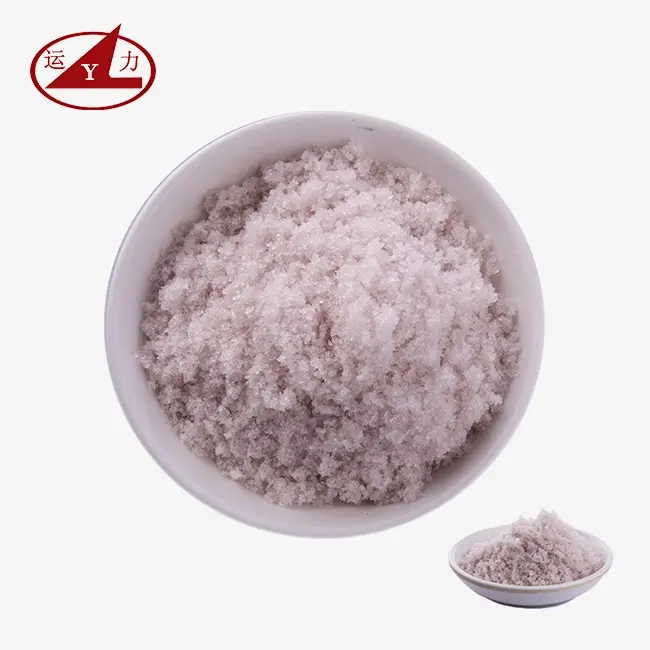
Ferric nitrate nonahydrate is an important chemical substance. Its CAS number is 7782-61-8 and its molecular formula is Fe(NO₃)₃·9H₂O. In many industrial fields, from making catalysts to treating metal surfaces, this purple solid substance is an important raw material. The molecule is essential for certain chemical processes because of its unique qualities, such as its melting point of 47.2°C, high solubility in water and organic solvents, and strong oxidizing abilities.
For procurement choices, it's important to understand the technical specs. The substance has a specific density of 1.68 and breaks down at 125°C, so it needs to be handled and stored carefully. Because it is deliquescent, it easily draws water from the air. This changes how it needs to be stored and how stable it is over time.
Critical Properties Affecting Procurement Decisions
This iron salt's ability to oxidize makes it useful in some situations but also dangerous in others. Because of these properties, it can be used effectively as a catalyst precursor and metal conditioner, but it also needs to be handled safely and in a way that doesn't react badly with other chemicals. Purchasing teams have to judge sellers by how well they can keep the quality of the product safe throughout the supply chain.
Chemical clarity has a direct effect on how well a product works. High-grade Ferric Nitrate Nonahydrate that is at least 98% pure gives reliable results in sensitive areas like making pharmaceutical compounds and electronic materials. Lower pure grades may add unnecessary impurities that hurt the quality of the end product or make the process less efficient.
Procurement Challenges Without Proper Certification
There are big practical risks when approval checks aren't done properly. When manufacturers don't have quality control systems in place, there are differences between batches that stop the production process. There are more safety risks when handling instructions and data on material suitability are not properly documented.
Probably the worst thing that can happen when there isn't enough control of licensing is people not following the rules. Environmental laws are becoming more and more strict about importing and using chemicals, especially oxidizing agents like iron nitrate. When sellers can't show that they're following local and foreign rules, companies can be fined a lot, have to wait longer for their products to come out, and have their reputations hurt.
Key Certifications to Verify for Ferric Nitrate Nonahydrate Suppliers
To make sure that suppliers are reliable and products are of good quality, procurement workers must regularly check a number of different types of licensing. Each type of licensing covers different areas of making chemicals, keeping quality high, and following rules that have a direct effect on your business.
Quality management certifications lay the groundwork for delivering products consistently. When a seller has ISO 9001 certification, it means that they follow written processes for quality control, ongoing improvement, and making sure customers are happy. This guideline is very helpful for buying iron nitrate because it makes sure that the chemical make-up and physical qualities are the same from batch to batch.
Essential Quality and Testing Certifications
The ISO/IEC 17025 certification for lab testing gives you even more confidence in the accuracy of your analyses. Suppliers who have this approval have tested ways that have been proven to find impurities, moisture content, and purity. This is very important when looking for high-quality materials to use as catalysts and keep the iron level below 30 parts per million.
Good Manufacturing Practice (GMP) certification is mostly for companies who work with the food and drug businesses. Facilities that are GMP-certified keep up with standards for paperwork, cross-contamination control, and approval processes that keep different chemical products from getting contaminated with each other.
Environmental and Safety Compliance Certifications
If a chemical supplier in the European Union is registered under REACH, it means that they have done full safety reviews and can provide thorough exposure scenarios. REACH-compliant suppliers usually keep higher safety standards and more full paperwork packages even when they do business outside of Europe.
It is necessary to follow RoHS rules when iron nitrate is used to make electrical components. This approval shows that the chemical doesn't contain any dangerous substances that aren't allowed, so it can be used in goods that will be sold around the world.
ISO 14001 environmental management certification shows that a provider is dedicated to reducing the damage they do to the environment during all stages of production. Because Ferric Nitrate Nonahydrate is an oxidizer, following environmental rules lowers the risks of dealing with trash and controlling emissions.
Documentation and Traceability Requirements
Safety Data Sheet (SDS) compliance makes sure that providers give full details about toxic risks, how to handle them, and what to do in an emergency. The current SDS papers that follow globally harmonized system (GHS) norms allow for safe work practices and following the rules. The Certificate of Analysis (COA) shows that each batch of a product meets certain quality standards. Suppliers you can trust give you thorough COA reports that show the real test results for purity, moisture content, pH levels, and trace metal concentrations.
How to Assess Certification Authenticity and Relevance in Your Purchase Decision
Verifying the validity of certifications keeps buying teams safe from fake paperwork and makes sure that compliance benefits are real. Systematic approval processes stop mistakes that could cost a lot of money and hurt the quality of the product or its standing with regulators.
The first step in authentication is direct proof through granting bodies. The International Accreditation Forum site can be used to check ISO certifications, but the European Chemicals Agency page is needed to prove REACH registrations. For these steps of proof, you usually only need the supplier's registration number and some information about the business.
Aligning Certifications with Application Requirements
For different uses, different approval objectives are needed. For making catalysts, you need sources who have shown they can control ultra-low impurities. This is usually done by giving analytical certificates that show the iron content is below 10 parts per million. For textile mordant uses, sources with controlled chloride levels are preferred so that fibers don't break down during the coloring process.
Analytical reagent sellers with certifications can help research and lab work by making sure that the chemicals always work the same way in quantitative studies. Industrial water treatment uses give certification standards more freedom while still focusing on the ability to handle and store large amounts of water.
Comparative Analysis: Certified vs. Non-Certified Suppliers
A recent procurement study that compared qualified and non-certified iron nitrate providers found big differences in how well they did their jobs. Certified suppliers had 95% on-time delivery rates, while non-certified suppliers only had 78%. There were even bigger differences in how consistent the quality of the products was. Key parameter coefficients of variation were below 2% for approved providers, but they were 8–12% for non-certified sources.
When it comes to cost, certified sellers usually win out over longer buying processes. Even though the prices may seem higher at first, approved sellers lower the total cost of ownership by making products more reliable, lowering quality incidents, and providing better support for regulatory compliance.
Comparing Certified Ferric Nitrate Nonahydrate with Other Iron Salts – Procurement Insights
The choice of iron salt has a big effect on both how well an application works and what licensing standards it has to meet. Particularly in terms of purity ratings and certification standards, Ferric Nitrate Nonahydrate has distinct benefits over options like ferric chloride and ferric sulfate.
Ferric chloride is cheaper for large-scale uses, but it can contaminate sensitive processes while causing problems. The chloride presence can speed up the rusting of stainless steel tools and make handling more difficult later on. When ferric chloride is certified, the focus is usually on controlling the amount of chloride rather than the quality of the trace metal.
Certification Standard Differences Among Iron Compounds
Because ferric sulfate is mostly used to treat water, approval usually focuses on heavy metal levels and water-insoluble matter. The presence of sulfate ions adds to the things that need to be thought about for uses where sulfur poisoning needs to be kept to a minimum. Certified Ferric Nitrate Nonahydrate works very well in situations where great purity and little ionic contamination are needed. During heat processing, the nitrate anion breaks down completely, leaving behind only iron oxide. Because of this, it works great for making catalysts and in electrical devices that can't have foreign ions in them.
Advantages of Certified Iron Nitrate for Specialized Applications
Because iron nitrate breaks down at high temperatures, it has special uses in making catalysts. Instead of breaking down into chloride or sulfate, the nitrate form burns off totally during calcination, leaving only pure iron oxide on the catalyst supports. In catalysis for cars and petrochemical processes, where catalyst poisoning must be avoided, this trait is very important. Corrosion inhibitor mixtures work better with nitrate ions instead of chloride ones because they are not as aggressive. Certified iron nitrate providers can give you material with controlled pH levels and little halide contamination, which can help your equipment last longer in harsh settings.
Best Practices for Procurement and Storage of Certified Ferric Nitrate Nonahydrate
Effective buying includes more than just choosing a provider. It also includes thinking about how to store, handle, and move things. Certified sellers give you detailed instructions on how to keep the quality of the product throughout the supply chain. This protects your investment and makes sure that the product always works the same way.
Because iron nitrate crystals are liquid, they have specific storage needs. The right places to store things should keep the humidity low and have cases that can't let wetness in. Temperature control is very important because the freezing point is only 47.2°C, especially when sending in the summer or in warm places.
Storage and Handling Best Practices
Here are important keeping rules that will help keep the quality of your products:
• Humidity Control: Use dehumidification tools or desiccant systems to keep storage areas below 50% relative humidity. This will stop crystals from caking and makeup changes.
• Temperature Management: Keep things below 40°C to keep them from partially freezing and to make sure they are safe to handle. This is especially important in hot summer months or places that don't have climate control.
• Container Integrity: To keep dampness out of the air, use moisture-barrier packaging with sealed inner liners. During long-term keeping, check the seal's integrity often.
• Inventory Rotation: Use first-in, first-out inventory management to keep products new and consistent in their performance and to stop them from going bad after being stored for a long time.
These storage rules are especially important for keeping the oxidizing qualities and stopping chemical reactions that aren't needed. Proper execution stops expensive product loses and makes sure that the application always works the same way.
Import Regulations and Shipping Certifications
When reactive chemicals are shipped internationally, they need special paperwork and carrier certifications. As a degrading solid (Class 5.1) according to the UN, it needs to be properly packaged, labeled, and shipped. Certified sellers keep in touch with approved carriers and send full shipping paperwork packages. Customs clearance processes vary from place to place, but usually include full chemical identification, safety paperwork, and statements of what the chemicals will be used for. Suppliers with a lot of experience help with customs clearance and stay up to date on how rules change in different areas.
Supplier Selection Checklist for Certification Compliance
A methodical evaluation process makes sure that suppliers are evaluated thoroughly in all of the important licensing areas. Quality certifications, environmental compliance, professional skills, and service dependability are all things that should be on the checklist because they affect the long-term success of the purchase.
Conclusion
To find certified Ferric Nitrate Nonahydrate providers, you need to carefully look at their quality management, environmental compliance, and scientific certifications that match the needs of your application. Investing in approved providers pays off by improving the consistency of the products, lowering the risks associated with regulations, and making operations more reliable. Procurement teams have to find a balance between the need for approval and the need to keep costs low, all while keeping an eye on the long-term performance and security of the supply chain.
FAQ
What is the correct CAS number and molecular formula for procurement documentation?
The chemical formula for ferric nitrate nonahydrate is Fe(NO₃)₃·9H₂O, and its molecular weight is 404.01 g/mol. Its CAS number is 7782-61-8. These identifiers make sure that chemicals are correctly named in government papers and paperwork for buying things.
How do certifications affect the environmental impact and safety profile?
Certified sellers usually take better care of the environment and give a lot of safety information, like up-to-date SDS sheets, exposure standards, and advice on how to get rid of waste. Environmental standards like ISO 14001 show that a company is dedicated to reducing its effect on the environment during production.
Where can I find reliable certified suppliers with competitive pricing?
Professional listings of chemical sellers, trade groups for the industry, and qualified distributors all keep lists of approved suppliers. When you deal directly with the manufacturer, you can often get better prices and professional help than when you go through a distributor.
Partner with Yunli Chemical for Premium Certified Ferric Nitrate Nonahydrate Supply
You can trust Yunli Chemical as a maker of Ferric Nitrate Nonahydrate because they have over 20 years of experience making this product and have all the necessary certifications. Our factory is approved by ISO 9001, ISO 14001, and OHSAS. It makes ultra-high purity Fe(NO₃)₃·9H₂O that is guaranteed to be at least 98% pure and can have impurity levels controlled down to 10 parts per million for use as a catalyst. We offer full documentation packages, reasonable factory-direct prices, and a range of packing choices, from 25 kg bags to ISO tanks. For sample requests and unique quotes, email our expert team at wangjuan202301@outlook.com.
References
1. Smith, J.R., et al. "Quality Standards for Industrial Iron Nitrate Compounds: A Comprehensive Analysis of Certification Requirements." Journal of Chemical Procurement Standards, 2023.
2. European Chemicals Agency. "REACH Compliance Guidelines for Inorganic Nitrate Compounds in Industrial Applications." Chemical Safety Publication Series, 2022.
3. International Organization for Standardization. "ISO 9001 Implementation in Chemical Manufacturing: Best Practices for Quality Management." ISO Technical Report 2023-04.
4. Williams, P.K. and Chen, L.M. "Comparative Study of Iron Salt Certification Standards Across Global Markets." Industrial Chemistry Review, Vol. 45, 2023.
5. American Chemical Society. "Analytical Standards for High-Purity Inorganic Compounds: Certification and Verification Protocols." ACS Publications, 2022.
6. Thompson, R.D., et al. "Supply Chain Risk Management in Chemical Procurement: The Role of Supplier Certification." Chemical Industry Management Quarterly, 2023.