


What certifications should I look for when purchasing copper nitrate trihydrate?
When buying Copper Nitrate Trihydrate (Cu(NO₃)₂·3H₂O), purchasing managers should focus on certifications that ensure the quality of the product, safety, and compliance with regulations. For example, ISO 9001 for quality management systems, ISO 14001 for environmental standards, REACH and RoHS compliance for chemical safety, correct MSDS paperwork, and full Certificates of Analysis (CoA) proving purity levels are all important certificates. These approvals make sure that the supply chain works well and lower the operating risks of working with this flexible industrial chemical, which is used to make catalysts, treat surfaces, and make fertilizer.
Inroducing the Importance of Certifications in Copper Nitrate Trihydrate Procurement
When buying chemicals, especially cupric nitrate products for commercial use, certifications are the best way to make sure the quality of the chemicals. Professionals in global business-to-business purchasing know that the right approval confirms safety measures, chemical formulas, and production methods that meet international standards. Certifications are more important than just proof that a supplier follows the rules; they show that the seller is dedicated to quality control and following the rules.
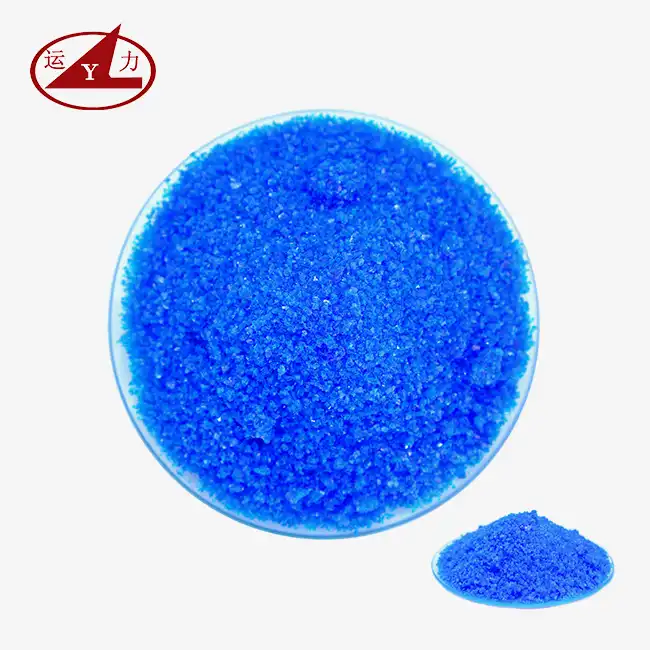
Copper Nitrate Trihydrate has a molecular structure with a weight of 241.6, and it needs to be made according to exact rules so that it stays in its dark blue columnar crystal form and best solubility qualities. When producers are certified, they show that they can keep the substance stable at its freezing point of 114.5°C, control how much water it absorbs, and store it properly. These technical details have a direct effect on uses further down the line in catalyst production, where even small impurities can hurt performance.
Quality Assurance Through Certification Standards
The factories that make high-purity copper nitrate have to show that they follow strict quality control methods. ISO 9001 approval makes sure that suppliers use regular production methods, make sure that batches are reliable, and use a wide range of quality control measures. This is especially important when looking for materials to make catalysts, which need to have a very low iron content (≤30ppm) and stable pH levels for them to work well.
The ISO 14001 license for environmental management talks about how to properly handle nitrogen chemicals and how to treat trash. Because cupric nitrate is a strong oxidizer that can turn into nitrogen oxide fumes when heated, authorized providers must show that they take the right safety and environmental measures during the whole production process.
Regulatory Compliance in Chemical Supply Chains
International rules about chemical substances require a lot of paperwork and proof that they are being followed. The REACH (Registration, Evaluation, Authorization, and Restriction of Chemicals) law in European markets requires that substances be thoroughly studied and their safety evaluated. Suppliers must give full registration information for Copper Nitrate Trihydrate CAS 10031-43-3, which includes possible exposure scenarios and ways to handle risks.
Because global chemistry laws are so complicated, you need to work with providers who know the rules that apply to your area. Certified makers stay up to date on changes to regulations and make sure their goods meet changing standards in different markets. This lowers the risk of noncompliance for buying teams.
Key Certifications to Check Before Purchasing Copper Nitrate Trihydrate
When choosing providers for this flexible chemical product, people who work in procurement have to look at a number of different levels of approval. Figuring out which licenses have a direct effect on product quality and operating safety makes the process of evaluating suppliers faster and safer while still meeting industry standards.
Essential Quality Management Certifications
When it comes to making chemicals, ISO 9001 approval is the gold standard for quality management systems. This license makes sure that providers keep written records of how they control production, test quality, and make improvements all the time. When looking for cupric nitrate to use as a catalyst, ISO 9001-certified providers show they can keep batch stability and keep an eye on important factors like particle size (20–80 mesh) and iron content.
The ISO 14001 environmental management certification looks at how industrial methods affect the world. Copper nitrate chemicals can damage the environment and are oxidizing. Suppliers who have ISO 14001 certification show they are committed to environmentally friendly production and proper trash management. This approval is very helpful when looking for materials to use in water-soluble fertilizer, because they need to be free of heavy metals (<10ppm) in order to meet OMRI organic farming standards.
Chemical Safety and Documentation Requirements
Material Safety Data Sheets (MSDS) are required paperwork for chemicals that are dangerous. The right MSDS for Copper Nitrate Trihydrate should have a lot of details about how it can oxidize, how it can irritate the skin, and how to handle it properly. The paper should explain how to store materials that are sensitive to wetness and what to do in an emergency if two flammable materials come into contact.
Certificates of Analysis (CoA) show the testing results for a certain batch of a product, proving that it is pure and has the right ingredients. Every package from a good source goes through ICP-OMS testing, which gives a full report on the amounts of chemical purity, moisture content, and trace metals. When looking for API-grade pure materials (≤0.07% moisture) for pharmaceutical uses or bismuth nitrate production, these certificates become very important.
Third-Party Verification and Industry-Specific Standards
Documentation for REACH and RoHS compliance makes sure that European markets meet their chemical safety standards. These rules keep dangerous substances under control and lower the environmental risks that come with making and selling chemicals. Copper nitrate chemicals used in electronics and surface cleaning must come from suppliers who can give full registration information and safety reports.
When looking for products for building projects, it's important to make sure they have industry-specific standards like ASTM and JIS approval. These rules make sure that Copper Nitrate Trihydrate meets the technical requirements for its ability to keep things from freezing at -20°C and to stop rusting in building projects. Third-party testing proof gives suppliers who say they meet these strict standards even more credibility.
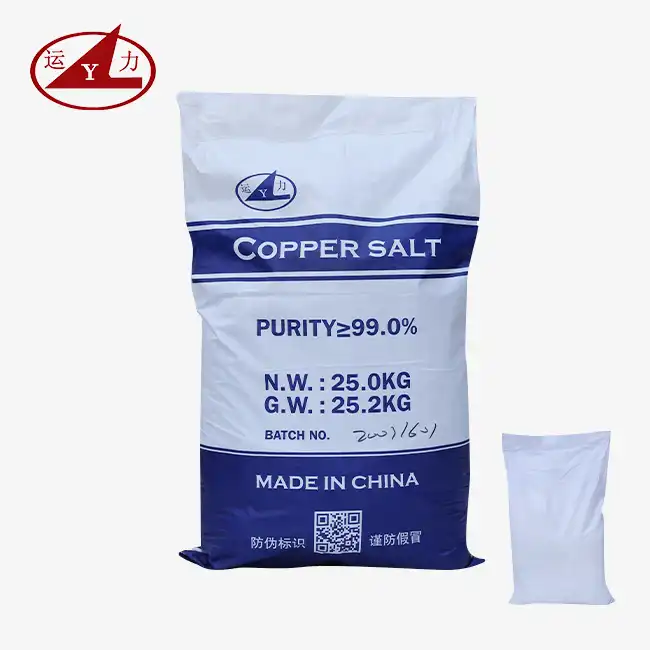
Comparing Certified Copper Nitrate Trihydrate Suppliers: What to Look For
To evaluate a supplier, you need to compare certification profiles in a structured way and see how they relate to practical skills. When buying, teams know how licenses help in the real world; they can make decisions that improve both quality and cost-effectiveness in their supply lines.
Regional Certification Variations and Standards
Different suppliers in different parts of the world have different licensing standards that are based on local laws and best practices in the business. Along with foreign certifications, Chinese makers often hold GB (Guobiao) state standards. In contrast, European sellers tend to put more emphasis on REACH compliance and environmental certifications. American sellers often keep up with EPA rules for environmental safety and FDA licenses for pharmaceutical-grade uses.
The important thing is to know how these area licenses fit in with the needs of a particular program. Suppliers who offer customizable factors like liquid formulas and pre-dissolved solutions need to show that they have the right licenses for the extra services they offer. This is especially important when looking for materials to treat the surface of metal, since RoHS compliance and trivalent chromium replacements are needed for eco-friendly finishing methods.
Certification Impact on Product Quality and Pricing
In the copper nitrate market, levels of certification have a direct effect on both the quality of the products and how much they cost. Suppliers with a wide range of certifications usually charge more, but they offer better quality guarantees and lower supply chain risks. Usually, the money spent on approved providers pays off in the form of lower quality control costs, more consistent batches, and better compliance with regulations.
Advanced certification standards let providers give specialized goods, like formulas with very little iron to keep the methanol catalyst stable and formulas with pH adjustments to keep the reaction conditions at their best (pH 3.5–4.2). These features that add worth explain higher prices while providing better performance in challenging situations.
Supplier Reliability and Long-Term Partnership Potential
To keep your certification, you have to keep spending money on quality processes, training for employees, and improvements to the building. Suppliers that have maintained certification compliance for several years show that their companies are strongly dedicated to quality and dependability. When making long-term supply deals for important uses, this track record is especially useful.
Certified sellers with regional technology center titles and advanced testing tools (ICPS, atomic absorption spectrometers) show they can provide excellent technical support. Not only do these providers offer standard goods, but they can also make unique formulas that meet specific quality requirements for use in electronics, medicines, and advanced manufacturing.
How Certifications Help Mitigate Risks in Handling and Storage of Copper Nitrate Trihydrate?
When sellers are properly certified, they can make sure that buyers get all the safety information and help they need to handle dangerous chemicals. When buying, teams know how licenses help reduce risks in the real world, and they can judge sellers based on how well they do with safety and compliance.
Safety Standards and Hazard Communication
The OSHA and GHS danger communication guidelines say that chemicals that can oxidize must have thorough safety information. Certified sellers give full danger classifications, pictograms, and signal words for Copper Nitrate Trihydrate, which shows that it is a strong oxidizer and can burn or explode when it comes into contact with things that can catch fire. This information helps make sure that safety rules are followed and that employees are trained properly.
With the right approval, sellers are required to give full details about how the substance tends to make harmful nitrogen oxide fumes when cooked above 170°C. This important safety knowledge helps buildings set up the right air systems and emergency plans for different types of exposure.
Storage and Transportation Requirements
Moisture-sensitive substances, such as cupric nitrate, need to be stored in a certain way to keep their purity and avoid safety risks. Certified providers give thorough storage instructions, such as the need for airtight containers, temperature controls, and rules for managing humidity. This information helps buying teams make sure that the right steps are taken for getting, storing, and managing goods.
Transportation approval talks about how to safely move burning chemicals through different types of shipping. DOT rules for transporting dangerous goods and foreign shipping rules for chemicals must be followed, and the right paperwork ensures that. Certified sellers keep up with the latest shipping rules and make sure that the right boxes and labels are used for safe transport.
Environmental Protection and Waste Management
Environmental licensing makes sure that sellers know how copper nitrate chemicals affect the environment and can give good advice on how to handle and get rid of trash. This is especially important because of the compound's possible effects on the climate and the rules about how to properly handle trash.
Certified providers with environmental management systems can help with spill control, emergency cleanup, and the right way to get rid of copper nitrate products. This help makes sure that buying teams follow local environmental rules and create thorough environmental management processes.
Making an Informed Purchase Decision: Integrating Certification Knowledge with Procurement Needs
Strategically combining certification standards with specific buying goals makes it possible to choose the best suppliers and build long-lasting partnerships. Procurement teams can make better choices that balance quality, cost, and risk when they know how licenses fit with application needs and business goals.
Application-Specific Certification Requirements
Copper Nitrate Trihydrate needs different levels of approval and technical standards for each use. For making catalysts, you need certificates that say the product is ultra-pure, with full trace metal analysis and proof that each batch is the same. For surface treatment uses, RoHS compliance and environmental approvals are needed to make sure that the work can be done in an eco-friendly way.
Using water-soluble fertilizer means following agricultural certification rules, which include limits on heavy metals and guidelines for organic growing. When buying teams know about these application-specific standards, they can choose providers whose approval profiles match their needs and the rules that apply to them.
Supplier Documentation Verification
To keep fake paperwork from getting through and make sure that source certifications are real, they need to be checked in a planned way. Teams in charge of buying things should check the truth of certifications by calling the groups that issued them and comparing what suppliers say with the real records of certifications. This extra work keeps expensive quality problems and rules violations from happening later on.
Regular audits make sure that quality standards are always met and that certifications are kept up to date. Setting up proof procedures helps keep suppliers accountable and makes sure that performance stays uniform throughout the supply relationship.
Long-Term Partnership Development
Certification compliance shows that a seller is committed to quality and following the rules. This makes these suppliers perfect for building long-term partnerships with. Suppliers with a wide range of certifications show that their businesses are stable and committed to ongoing growth, which lowers the risks in the supply chain and supports operating consistency.
Strategic relationships with certified suppliers let you work together to create creative solutions and get expert help for unique uses. These connections give you access to technology know-how, the ability to create new products, and legal advice that gives you a competitive edge and makes your operations run more smoothly.
Conclusion
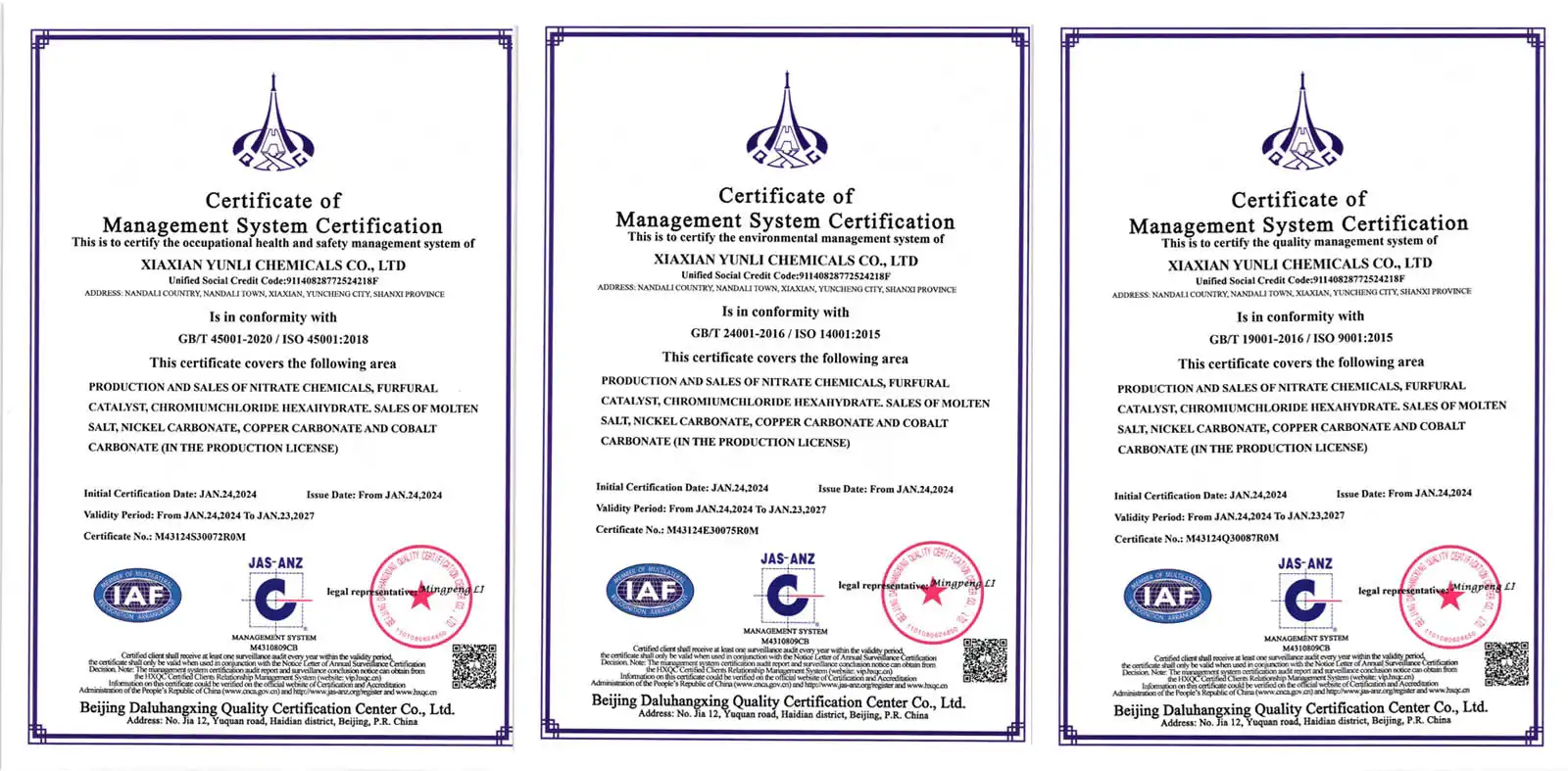
In order to choose the right licenses for buying copper nitrate trihydrate, you need to know how quality standards, safety rules, and application-specific needs all work together. ISO 9001 and ISO 14001 standards guarantee basic quality and environmental protection, and REACH and RoHS compliance make sure that rules are followed in all global markets. Full MSDS files and Certificates of Analysis make sure that the product meets the safety and quality standards needed for commercial use. In the end, these licensing standards protect buying investments and make sure that all parts of the supply chain are safe and follow the rules.
FAQ
What are the most important standards for making sure the quality of copper nitrate trihydrate?
ISO 9001 quality management approval is the most basic requirement for making sure that the quality of products and the way they are made are always the same. The ISO 14001 environmental certification covers rules for taking care of the earth and managing waste. REACH and RoHS compliance make sure that European markets follow the rules, and full MSDS paperwork gives important safety information for handling processes.
How can I be sure that the supplier's licenses are real?
For verification, you need to get in touch with the awarding bodies directly to find out the current state of your certification and how long it is good for. Check certification numbers against government records and ask for recent audit reports that show ongoing compliance. Do on-site checks of your suppliers to make sure that approved methods and quality management systems are actually being used.
Do all packages have to have MSDS documents?
Yes, MSDS sheets are needed by law for all packages of dangerous chemicals, such as copper nitrate mixtures. These papers have to go with packages and include all the safety information needed, like how to handle them, store them, and what to do in an emergency. Following transportation rules and job safety standards is easier when you have the right MSDS paperwork.
Partner with Yunli Chemical for Certified Copper Nitrate Trihydrate Excellence
Yunli Chemical is a reliable company that makes approved, high-purity Copper Nitrate Trihydrate that is in line with all regulations and quality standards. With ISO 9001, ISO 14001, and OHSAS standards and more than 20 years of experience making high-quality products, we offer stable quality with purity levels that can be changed up to 99.99%. Our provincial technology center and advanced ICP-OMS testing tools make sure that every batch meets your needs and is in line with all relevant COA and MSDS regulations. Get in touch with our expert team at wangjuan202301@outlook.com to talk about your unique needs and find out how our approved goods can help your business with a dependable supply chain partner.
References
1. International Organization for Standardization. "Quality Management Systems - Requirements for Chemical Manufacturing Facilities." ISO 9001:2015 Standards Documentation, 2022.
2. European Chemicals Agency. "Registration, Evaluation, Authorization and Restriction of Chemicals: Guidance for Copper Nitrate Compounds." REACH Regulation Compliance Manual, 2023.
3. Occupational Safety and Health Administration. "Hazard Communication Standard for Oxidizing Chemical Substances." OSHA Publication 3084, Revised 2022.
4. American Chemical Society. "Reagent Grade Specifications for Inorganic Chemical Compounds." ACS Committee on Analytical Reagents Standards, 2023.
5. Environmental Protection Agency. "Best Management Practices for Nitrate Compound Manufacturing and Distribution." EPA Chemical Safety Guidelines, 2022.
6. International Association of Chemical Distributors. "Global Certification Standards for Industrial Chemical Procurement." IACD Technical Bulletin 2023-07, 2023.