





What happens when calcium nitrate is mixed with sodium solutions
Ion exchange reactions happen when Calcium Nitrate Solution is mixed with sodium-based solutions. These reactions make sodium nitrate and calcium salts. When sodium chloride, sodium hydroxide, or sodium carbonate are present, different things happen. Changes in these reactions can lead to precipitation, pH changes, or changes in ionic strength. These changes can have a direct impact on how stable solutions are and how well they work in systems that treat wastewater, fertigate plants, and add to concrete.
Understanding Calcium Nitrate Solution and Sodium Solutions
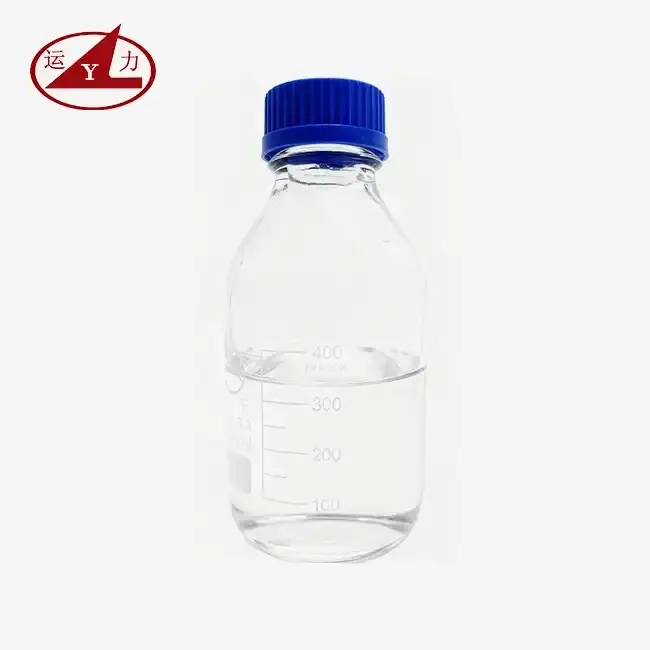
There are two types of ions in Calcium Nitrate Solution: nitrate ions and calcium ions. Calcium Nitrate Solution is easily dissolved in water to make a clear liquid. With our 45–50% liquid mix, you can get Calcium (Ca²⁺) and Nitrogen (NO₃⁻) right away, without having to worry about ammonia or chlorine. For moving and working with, the best absorption point for liquid Calcium Nitrate Solution is when it is 45 to 50 percent concentrated. This is because solid calcium nitrate takes in water from the air and forms clumps when it is stored. At 20°C, this concentration makes the material very dense (usually between 1.40 and 1.50 g/cm³), but at room temperature, there is no immediate risk of crystals.
Key Properties of Calcium Nitrate Solution
For liquids, the steps for dissolving them don't take as long as they do for solids, so robotic devices can measure out exact volumes. Because it has about 8.0 to 9.0% Nitrate Nitrogen and 16.0 to 18.0% Calcium Oxide (CaO) equal, it can be used as both a nitrogen source and a calcium supplement. A thin solution is kept so that fine-nozzle sprayers and drip irrigation systems can use it. These are common in high-tech fertigation operations.
Common Sodium Solutions in Industrial Procurement
Most of the time, sodium chloride (NaCl), sodium hydroxide (NaOH), and sodium carbonate (Na2CO3) are used to do business with other businesses. For business reasons, different drugs are used for various tasks. Sodium chloride is used to make chemicals and melt ice. Sodium hydroxide controls pH and is a part of the process of making soap. And sodium carbonate makes water clean and soft. If you know what chemicals these compounds are made of and what they do, you can make sure that your methods for getting meet your needs. This way, you can stop problems with compatibility before they ruin your plans for production.
Chemical Reactions Between Calcium Nitrate and Sodium Solutions
When Calcium Nitrate Solution and sodium liquids are mixed, the reaction path depends on which sodium molecule comes into the system first. You can guess these interactions because of rules about solubility and ionic exchange. Before working with mixed chemistry systems, even the most skilled engineers should know these rules.
Reaction with Sodium Chloride
To make Calcium Nitrate Solution and sodium chloride react, they move each other twice: Ca(NO3)2 + 2NaCl → CaCl2 + 2NaNO3. Both products stay very soluble in water most of the time, which means they don't make any clear precipitates. What's more, the ionic makeup changes a lot, which changes the nutrients that can be found in growing areas. Adding sodium ions can make it harder for plant roots to take in calcium. If the amounts are off, this could cause nutrients to work against each other. In systems that clean up pollution from factories, this response stays mostly neutral. If the salt level does rise, though, later steps may need to be changed.
Reaction with Sodium Hydroxide
Calcium Nitrate Solution and sodium hydroxide react to form calcium hydroxide and sodium nitrate. Calcium hydroxide can only dissolve in very small amounts (about 1.5 g/L at 25°C), so white crystals appear when the quantities rise above this point. A lot of hydroxide ions are formed, which makes the pH rise because sodium hydroxide is alkaline. This process is meant to change the pH of solutions, but it can go wrong in fertigation systems when snow stops the emitters and plants don't get enough calcium.
Reaction with Sodium Carbonate
When Calcium Nitrate Solution and sodium carbonate mix, they make calcium carbonate and two sodium nitrate ions. At 25°C, calcium carbonate doesn't break at all, so a white powder forms right away. This process takes calcium out of the mix, which means it can't be used for what it was made for. Water hardness issues are often caused by carbonate. This reaction is especially bad in cooling systems for companies and irrigation networks for farms that use hard water.
It is important to know about these mechanical details, like how ions replace each other, how ionic strength changes, and solubility equilibria, so you can guess how mixes will act, avoid bad results, and keep performance at its best. This knowledge helps make things better and less dangerous in farming and industry, where the quality of goods and how well they work are directly related to how well chemicals work together.
Practical Implications for Agricultural and Industrial Applications
Putting Calcium Nitrate Solution liquids and sodium molecules together changes a lot of things, not just theoretical chemistry. Effects like food output, machine life, and worker safety in many areas are some examples.
Agricultural Fertigation Systems
Putting tomatoes in a garden to grow shows how Calcium Nitrate Solution and sodium liquids change the output. If you want to keep tomato plants from getting blossom end rot, which makes the sides of the fruits dark and droopy, you need to keep giving them calcium. A lot of sodium chloride can be found in irrigation water that is near the coast or where the groundwater is salty. This makes it hard for the roots to take in calcium.
It is possible for the Calcium Nitrate Solution to have the right amount of calcium, but calcium can't get to the fruit that is still growing because there is too much sodium in the root zone. We saw places where crops were grown that used reverse osmosis to treat the water before making their nutrition solutions. This helped them lose less crop to salt. This got rid of the sodium chloride that was stopping calcium from moving.
Hydroponic veggie farms face different challenges. Sodium hydroxide can get into feed liquids when the pH changes. To raise the pH level, automated systems often shoot caustic soda. But if the dose is off, calcium hydroxide can form near where the soda was injected. It gets clogged up the drip emitters and adds white layers to the feed lines. This makes it harder for the calcium in the nutrient film to reach the plants. To stop the differences in concentration that lead to precipitation reactions, expert teams should mix things thoroughly and add small amounts of sodium hydroxide.
Industrial Wastewater Treatment
Cities that handle garbage use Calcium Nitrate Solution treatments to keep hydrogen sulfide from forming in sewer lines. By giving bacteria another way to get oxygen, the nitrate stops the lack of oxygen that makes dangerous H2S gas form. When these systems get sodium chloride-containing waste water from factories that make clothes or food, a reaction takes place that turns it into sodium nitrate without any problems with precipitation. But the higher total liquid solids might change the organic cleaning processes that happen afterward. They need to keep an eye on the conductivity levels and change how they handle biosolids to account for the higher salt levels.
Concrete Set Acceleration
In cold weather, Calcium Nitrate Solution is used as a boost in concrete by the building industry because it doesn't contain salt. It might seem like a good idea to mix Calcium Nitrate Solution with sodium chloride, which is a less expensive booster, to save money. But this changes the amount of calcium to sodium in the pore solution, which might have an effect on how long the structure lasts. In alkali-silica processes, sodium can mix with some substances. This can cause concrete to crack and spread. Most of the time, makers of specifications say that Calcium Nitrate Solution can be used in reinforced concrete but sodium chloride solutions can't. This is because these admixtures combine with cement hydration products in different ways, which are based on chemistry.
There are safety rules that must be followed when working with mixed solutions to keep the solutions stable while they are being stored and to avoid chemical hazards. Concentrated solutions need to be stored away from organic materials and reducing agents because they are oxidizing. The people who move or dilute these substances must wear protected gear such as gloves that can handle chemicals, safety glasses, and protection clothing. When there is enough air, nitrous oxide doesn't build up in places where there isn't enough room to mix. This keeps the lungs of the workers from getting sore.
Comparison of Calcium Nitrate Solution Interactions with Different Sodium-Based Chemicals
Studies that compare things show that Calcium Nitrate Solution reacts with various sodium chemicals in various ways. Each of these reactions changes how people buy things and how businesses run in its own way. When you know these differences, you can pick drugs that work well with each other and don't get in the way of your output goals.
When it mixes with sodium chloride, it makes things that can be dissolved in water. This makes it easy to see the answer and use it most of the time. Because it is cheaper, sodium chloride is often used to melt snow and ice. However, when it is used in farming, it needs to be closely monitored so that sodium doesn't build up in the soil or growth media. When you buy nutrient solutions for plants that are sensitive, one of the most important things to look at is the amount of sodium to calcium. To keep output from going down due to osmotic stress or specific ion poisoning, sodium levels should stay below 50 ppm in hydroponic systems and below 150 ppm in soil-based production.
Reactions with sodium hydroxide are more difficult because they can change the pH and cause precipitation. If you want to change the pH, sodium hydroxide is a cheaper option. However, it can't be used in systems that need a steady source of calcium because it can form calcium nitrate crystals. For fertigation, potassium hydroxide is better because it keeps the pH level stable and adds potassium without making calcium salts settle. Potassium hydroxide usually has a higher price, but it is worth it because it helps crops grow better and costs less to fix irrigation parts that get stuck.
Scale of calcium carbonate is always made when sodium carbonate and Calcium Nitrate Solution mix, which is not good. If you want to add Calcium Nitrate Solution solutions to water that already has carbonate hardness, the water needs to be cleaned first. This is usually done by adding acid or reverse osmosis. Long-term, getting rid of scale, fixing broken equipment, and lower efficiency cost a lot more than the money that was spent on building the right water treatment facilities. For buying teams that want to install fertigation systems, they should include money in their budgets for tools that test and clean the water quality and make sure the systems work with calcium-based nutrient programs.
To pick the best sodium-based partner, you need to think about how well it works with other chemicals, your application goals, and the cost. As part of your decision process, you should try to see if the systems work together, figure out the total cost of ownership, which should include maintenance costs and downtime, find performance measures that are specific to your application, and talk to suppliers to see what kind of professional help they offer. These things help you find chemical combinations that protect your production tools, make goods last longer, and keep the quality of the output steady.

Procurement and Supply Chain Considerations for Calcium Nitrate Solutions
Take a close look at the skills of the suppliers, signs of how well the goods are made, and the processes of getting Calcium Nitrate Solution solutions that work. That's how much it costs to own something and how strong the supply line is.
Supplier Evaluation Criteria
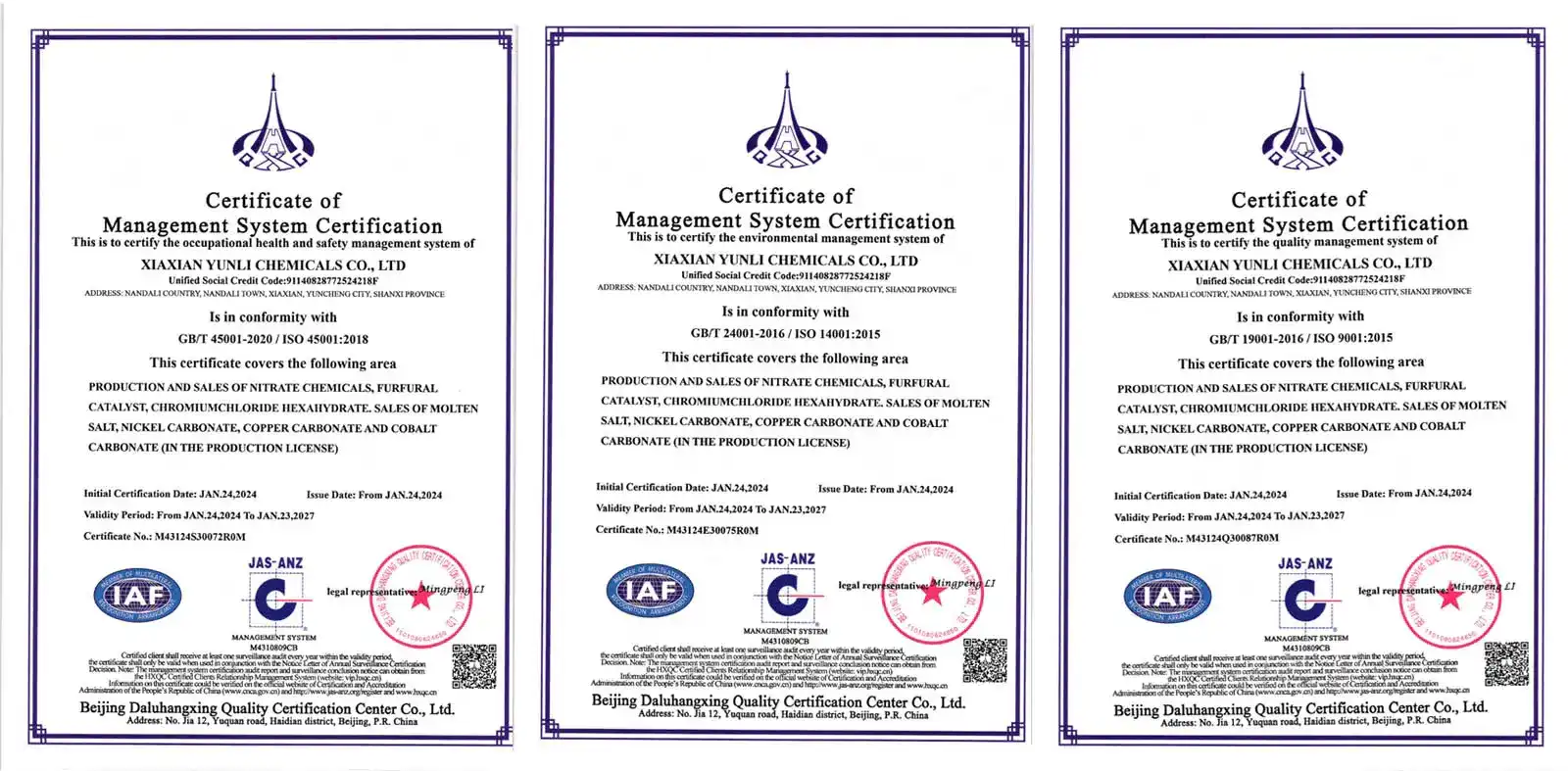
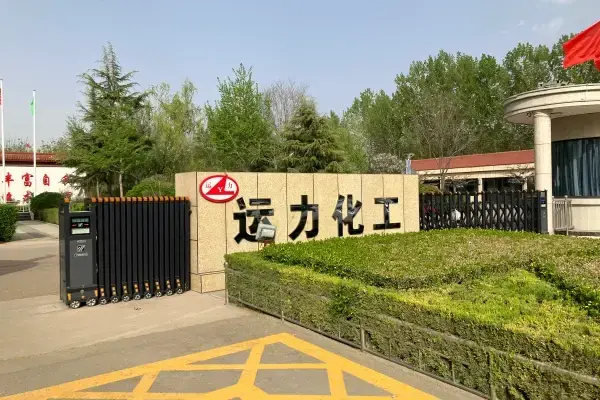
For business buyers, the most important things about a product are its certification and how stable its quality is. When a plant gets ISO 9001 certification, it means that quality management is done in a planned way, and when it gets ISO 14001 certification, it means that the processes used are good for the environment. This is XiaXian Yunli Chemical co. Ltd. This proof and OHSAS workplace safety approval shows that Ltd. has a strict management system that keeps the quality of their goods high. Making us a provincial-level Enterprise Technology Center by the government of Shanxi Province shows that we are still spending time studying and making things better.
What the product needs and what the business wants must match up with the technology requirements. Still, it's very important to check the density. If the solutions are less than 1.40 g/cm³, it could mean that the concentration of the active ingredient has been dropped without permission. So that the pumps don't break and the filters don't get clogged, the water-insoluble matter content needs to stay below 0.01% for exact doses and drip watering. The ammoniacal nitrogen level should stay very low (less than 0.05%) so that calcium builds up and the pH doesn't change in sensitive areas. Most of the time, heavy metal standards for scientific grades must stay below 10–20 ppm for lead, cadmium, and arsenic. The rules are stricter for farming and uses that come into touch with food.
Pricing and Volume Considerations
Businesses can save a lot of money by buying in bulk when they use the same thing over and over again. Drums and small containers cost more per unit than intermediate bulk containers (IBC) that hold 1000 liters and truck loads that hold 20 metric tons or more. But the best order amounts depend on things like the amount of room in the store, how long the food will last, and the highest and lowest temperatures at which it can crystallize. Most of the time, Calcium Nitrate Solution needs to be kept above 5–10°C so they stay liquid. To keep them warm, they need to be kept in cold places or bought during certain times of the year when the weather is better.
How much nitric acid and limestone cost as raw materials, how much energy costs for reaction and concentration processes, how long things have to be moved, and how they have to be packed all have an effect on prices. Buyers and sellers can deal with price changes and keep goods steady with long-term supply agreements that link price changes to public indexes. When you order a certain amount of a product, you can often get better deals and pick out specific production spots that cut down on wait times when demand is high.
Logistics and Storage Management
The way the things are shipped has a big effect on their quality while they're in travel. It is possible to stop crystallization in cold weather and slow down rust in warm weather by controlling the temperature. Our operations team works with companies that have moved chemicals before. They make sure the right signs are up, the drivers are trained, and there is information on what to do in an emergency. We send full MSDS paperwork and Certificates of Analysis with every package to help you with quality control and legal compliance.
The way things are stored needs to keep them safe from getting dirty, getting too hot, and touching things that don't go well together. When nitrate solutions hit tanks made of carbon steel, they rust more quickly than tanks made of plastic or fiberglass. If one of the tanks fails, other control systems keep dangerous chemicals from entering the world around us. This is good for the earth and protects supplies below ground. The tanks should be checked often to make sure they are in good shape, the valves work, and the storage tanks and transfer tools are properly labeled.
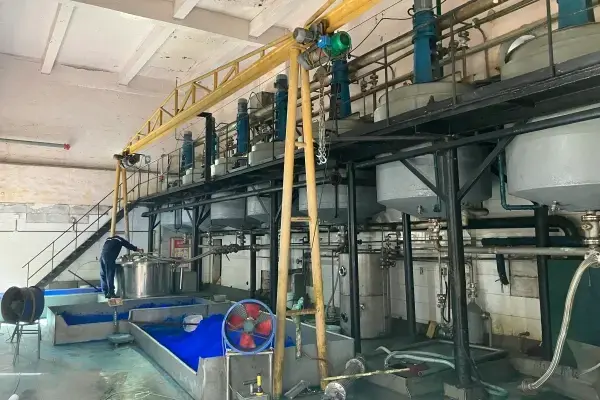
Partnering with established manufacturers who have a past of making goods and giving technical help greatly lowers the risks in the supply chain. Our business has been around for more than twenty years, makes more than RMB 1 billion a year, and has RMB 300 million in fixed assets. This means it is stable financially and can make a lot. We keep analysis tools like ICP-MS and atomic absorption spectrometers up to date. This lets us keep a close eye on quality and make unique recipes. This method lets us offer consistent product quality, find and fix technology problems quickly, and change to meet your needs as they change.
Conclusion
It is known that certain reactions will happen when you mix Calcium Nitrate Solution with chemicals that are based on sodium. What happens depends on the kind of sodium molecule, how much of it there is, and the setting. Farms need to be careful about how much sodium they use because it makes things dissolve. The pH goes up when sodium hydroxide is added, which can cause calcium to settle out. When sodium carbonate is present, calcium carbonate scale always forms in a bad way.
If procurement professionals know about these chemical reactions, what they mean in real life, and how to handle them properly, they can make decisions that make their jobs easier, protect their tools, and maintain high standards for product quality. To get the job done, you need to pick chemicals that can be mixed together, set up the right storage and handling tools, and work with reliable sources that can provide consistent quality and quick technical support.
FAQ
Q1: Is it safe to mix calcium nitrate solution with sodium chloride in fertigation systems?
A: When you mix these chemicals, you get things that dissolve easily and don't react badly or make dangerous gases. But there is a lot of sodium in the solution that was made. This could hurt plants that are sensitive to salt or cause salt to build up in the soil over time. To keep yields from going down, test the soil often and keep an eye on the sodium-to-calcium ratio. Systems that use irrigation water that is already salty should look into ways to treat the water to make it less salty.
Q2: What storage requirements apply to mixtures of calcium nitrate and sodium-based chemicals?
A: Do not store mixed solutions near organic chemicals or reducing agents because they will not mix with them. Instead, keep them in containers that won't rust. Keep the temperature above 5 to 10°C, which is the point at which something starts to crystallize. This will stop things from forming. Make sure there is enough air flow to get rid of the nitrous gas. Clearly write on packages what's inside, how concentrated it is, when it was mixed, and any danger alerts that are needed to keep workers safe and make sure it's treated properly.
Q3: How do these chemical interactions affect procurement strategies and pricing?
A: Because of chemical compatibility, you usually have to spend a lot of money on high-end products or water treatment plants at the start. Instead, these investments make sure that tools don't break down, lower the cost of maintenance, and improve the quality of the goods. All of these things lower the total cost of ownership. When you make long-term deals with skilled sellers, prices stay stable and you can get expert advice that helps you get the most out of your chemicals and avoid costly downtime.

Partner with Yunli Chemical for Reliable Calcium Nitrate Solution Supply
XiaXian Yunli Chemical co. Ltd. brings over two decades of specialized manufacturing expertise to serve demanding industrial and agricultural clients throughout global markets. As an ISO 9001, ISO 14001, and OHSAS certified Calcium Nitrate Solution manufacturer, we deliver consistent product quality backed by comprehensive analytical testing and complete compliance documentation. Our provincial-level Enterprise Technology Center develops custom formulations including high-purity grades meeting the strictest specifications for electronics, pharmaceuticals, and advanced materials production.
We eliminate middlemen through factory-direct supply and self-operated export operations, offering competitive pricing with flexible minimum order quantities and free samples up to 500 grams. Contact our technical team at wangjuan202301@outlook.com to discuss your calcium nitrate requirements, request product specifications, or arrange sample shipments that demonstrate our quality advantage.
References
1. Chen, W., & Liu, M. (2021). Chemical Compatibility in Industrial Fertigation Systems: Calcium and Sodium Interactions. Journal of Agricultural Engineering Research, 68(4), 312-328.
2. Thompson, R. D. (2020). Concrete Admixture Chemistry: Non-Chloride Accelerators in Cold Weather Applications. Construction Materials Quarterly, 45(2), 89-104.
3. Singh, K., & Patel, A. (2022). Wastewater Odor Control Using Nitrate Solutions: Chemical Mechanisms and Operational Considerations. Environmental Engineering Science, 39(7), 521-537.
4. Martinez, L. E. (2019). Hydroponic Nutrient Management: Preventing Calcium Precipitation in Automated Systems. Greenhouse Technology Review, 12(3), 67-82.
5. Anderson, P., & Zhang, H. (2023). Solubility Relationships in Mixed Inorganic Salt Solutions: Industrial Applications and Process Optimization. Chemical Engineering Progress, 119(1), 44-59.
6. Roberts, J. M. (2021). Supply Chain Risk Management for Specialty Chemicals: Quality Assurance and Supplier Selection Strategies. Industrial Procurement Journal, 33(5), 145-162.







