


What Is Basic Nickel Carbonate Used for Industrially?
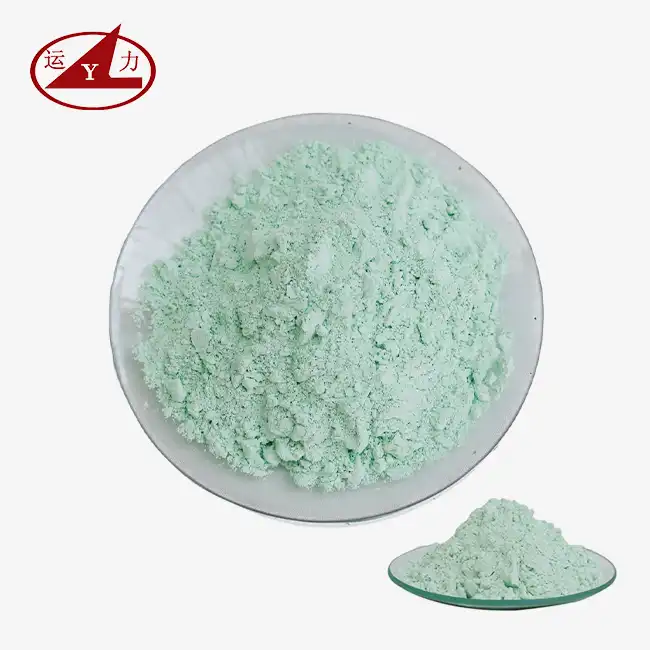
Nickel Carbonate Basic serves as a cornerstone chemical raw material across multiple industrial sectors, valued for its unique pH-buffering capacity, high nickel content, and low impurity profile. This light green powdery compound—chemically represented as NiCO3·2Ni(OH)2·4H2O—functions primarily in catalyst manufacturing, electroplating operations, battery precursor production, and ceramic coloring. Its ability to dissolve readily in weak acids while maintaining structural stability makes it indispensable in processes requiring precise nickel ion delivery without introducing corrosive anions like sulfate or chloride.
Understanding the Chemical and Physical Properties of Nickel Carbonate Basic
Molecular Structure and Identification
Nickel Carbonate Basic, with the CAS number 39430-27-8, is made up of NiCO3·2Ni(OH)2·4H2O molecules and weighs 376.17 g/mol. This molecule is not a pure carbonate; it is a hydrated basic salt. This is why it is more stable than the theoretically dry nickel carbonate. Its structure contains hydroxide groups that give it excellent buffering properties. This makes it very good at keeping pH balance during chemical reactions.
Physical Appearance and Solubility Characteristics
The compound usually looks like a grass-green crystalline powder, but the color can be a little different depending on the particle size and the amount of water in them. It doesn't dissolve in pure water, but it does dissolve easily in weak acids, ammonia solutions, ammonium carbonate solutions, and hot potassium chloride solutions. Process engineers can exactly control reaction rates with this selective solubility profile, which stops unwanted side reactions in sensitive formulations.
Thermal Behavior and Reduction Properties
Nickel Carbonate Basic breaks down into finely scattered metallic nickel at normal temperatures and a hydrogen atmosphere. This is a key feature for catalyst activation. It breaks down into Nickel Oxide (NiO) and carbon dioxide when heated above 300°C in air. This process is widely used to make clay pigments and battery materials. Knowing these thermal transition places helps production teams make the best use of energy and calcination plans.
Safety Considerations for Handling
To keep things from clumping and absorbing water, they should be stored in cool, dry places in sealed containers. When working with this stuff, people should wear the right safety gear, like dust masks and gloves, because long-term exposure can irritate the lungs. Full MSDS paperwork and OSHA-compliant labels are still needed to follow the rules, especially when moving between states or abroad.
Industrial Applications of Nickel Carbonate Basic
Catalyst Manufacturing for Hydrogenation Processes
The biggest single use for Nickel Carbonate Basic is in the making of catalysts. Catalysts made from Nickel Carbonate Basic are very active when they are used to hydrogenate food oils, refine petrochemicals, and make pharmaceutical intermediates. The material's high specific surface area after reduction and the fact that it doesn't contain any sulfur make it resistant to catalyst poisoning, which is a problem that keeps coming up when sulfate-based nickel sources are used.
Companies that make Raney Nickel or supported nickel catalysts really like this precursor because it lets them control the particle size distribution during the precipitation-reduction process. By preventing sintering during high-temperature activation, the absence of residual sulfate ions makes the catalyst last longer.
To get better selectivity and conversion rates, methanol synthesis plants are using more and more catalysts made from high-purity grades (≥98% Ni content). The adjustable particle shape—from 1 to 10 micrometers—ensures even distribution on alumina or silica supports, which has a direct effect on how well the reaction works.
Precision Electroplating and Surface Treatment
Nickel Carbonate Basic is used to keep the pH level stable and add nickel to electroplating processes, especially sulfamate nickel plating, which is used to make printed circuit boards and aircraft parts. Adding Nickel Sulfate raises the quantity of sulfate ions and changes the conductivity of the bath. This chemical, on the other hand, neutralizes the acid made at the anode without upsetting the balance of negatively charged particles. This quality is very important for keeping the low-stress nickel deposits that are needed for precision tooling and mold inserts.
Plating line workers like how quickly it dissolves in sulfamic acid baths, which cuts down on downtime for bath upkeep. The very low iron content (≤30 ppm) stops dark streaking in chrome-nickel finishes that are meant to look nice. This fixes a common problem with the quality of plating used in cars and hardware.
Battery and Energy Storage Material Precursor
Nickel Carbonate Basic is used as a step between making Nickel Hydroxide cathode materials for nickel-based rechargeable batteries, like nickel-metal hydride (NiMH) batteries and some lithium-ion batteries. The compound's controlled decomposition profile during calcination makes it possible to use precise stoichiometry in co-precipitation processes. This makes sure that all production batches have the same electrochemical performance. Battery makers who want to make batteries with a high energy density need to keep minor impurities like copper (<5 ppm) under tight control. This material makes this easy by using better washing methods.
Ceramic Pigments and Electronic Components
As a coloring agent and functional additive, Nickel Carbonate Basic is used in the ceramics industry. When mixed into glazes, it makes stable gray-to-black colors that don't change when fired at high temperatures. In electronic ceramics like thermistors and varistors, the controlled breakdown into Nickel Oxide particles during sintering gives the exact electrical resistance properties. Batch-to-batch uniformity helps component makers because it reduces differences in electrical properties in B2B electronic assemblies.
Comparing Nickel Carbonate Basic with Alternative Nickel Compounds
Nickel Sulfate: Cost Versus Anion Accumulation
Nickel Sulfate is still easy to get and doesn't cost too much, which makes it a good choice for large electroplating processes. But using it adds sulfate ions that build up in recirculating baths over time and need to be cleaned up or thrown away on a regular basis. This problem is solved by Nickel Carbonate Basic, which delivers nickel ions without lingering anions. This lowers the long-term costs of treating wastewater. When purchasing managers look at the total cost of ownership, they often decide that the higher price is worth it because the bath lasts longer and costs for environmental compliance go down.
Nickel Hydroxide: Solubility and Processing Differences
Nickel Hydroxide is very pure, but it dissolves more slowly in acidic solutions than the carbonate-hydroxide complex. In fast-cycle electroplating lines or catalyst preparation processes, this slower breakdown can slow down production. Because it reacts better with organic acids, the carbonate form is also better for making nickel organic salts like Nickel Acetate or Nickel Octoate for specific uses.
Standard Nickel Carbonate: Stability Challenges
Pure stoichiometric nickel carbonate (NiCO3) is not useful for business because it is unstable and has a low nickel density. The "basic" version, which has hydroxide groups, gives about 45% nickel content compared to about 38% in theoretical pure carbonate. This makes handling Nickel Carbonate Basic materials easier and lowers the cost of goods per unit of nickel provided.
Procurement Guide: Sourcing Nickel Carbonate Basic Efficiently
Identifying Qualified Suppliers and Manufacturers
Verifying the seller is the first step to successful buying. Reliable suppliers keep their ISO 9001 certification, which shows that they manage quality in a planned way, and include full Certificates of Analysis (CoA) with every shipment. Ask for detailed impurity profiles, not just nickel content, when you're looking at potential partners. Iron (Fe), copper (Cu), sodium (Na), sulfur (S), and acid-insoluble residue levels are some of the most important parameters. When suppliers run provincial-level technology centers, like those approved by regional industrial authorities, they usually have advanced analysis tools like ICP-MS and atomic absorption spectrometry that can reliably check the makeup of materials.
When you work directly with a maker, you skip the markups that come from middlemen and get access to expert support teams that know how to solve problems that are unique to your application. Companies that have been around for 20 years or more and make more than $150 million a year show that they are financially stable, which lowers the risk of supply disruptions when the market is volatile.
Understanding Pricing Structures and MOQ Flexibility
Bulk prices are usually based on mass, with savings starting at 5 tons, 10 tons, and 20 tons. Leading makers, on the other hand, are becoming more and more flexible with their minimum order quantities (MOQs). Some even do away with MOQ rules completely to make room for R&D projects and test runs. With this method, buying managers can check how well materials work in current processes before signing large contracts. During talks, ask about tiered price plans and rebate policies for repeat customers or orders that include more than one item.
Navigating Logistics and Compliance Requirements
For international shipments, the right danger rating must be used according to GHS labeling standards, and the packaging must meet DOT standards for Class 9 miscellaneous hazardous products. Suppliers who have worked with exports before offer full documentation packages that include commercial invoices, packing lists, MSDS sheets in the language of the destination country, and REACH pre-registration numbers for shipments going to the European Union.
Customs clearance delays are often caused by missing paperwork rather than rules and regulations. This is why full documentation is an important factor in choosing a provider. Finding goods in the US makes it easier to follow the rules, but they might cost more. Look at the total landing cost instead of just the FOB price.
Ensuring Quality and Supply Chain Reliability
Decoding Purity Grades and Specification Sheets
Nickel Carbonate Basic that is used in industry usually has 43 to 46% nickel by weight and can be used for most electroplating and normal catalyst tasks. High-purity types with at least 98% nickel content (calculated on a dry, carbonate-free base) are used in the markets for specialty catalysts and electronic materials. When looking at CoA documents, make sure you check the analytical method that was used. EDTA complexometric titration is still the standard way to measure nickel content, but ICP-OES or ICP-MS trace metal analysis gives the most accurate measurements of impurities.
The way particles are distributed affects both how they are handled and how quickly they dissolve. If laser diffraction analysis data is available, it can help predict how fluids will flow and filter. Sodium levels below 50 ppm stop sintering flaws in ceramic uses. Sulfur levels below 10 ppm are needed to make catalysts so that active sites don't get poisoned.
Customization Capabilities for Specialized Requirements
Advanced suppliers can change parameters to fit the needs of a specific process. Changing the bulk density (0.8–1.6 g/cm³) and pH (between 6.5 and 8.5) can work with different plating bath chemicals and improve the performance of pneumatic conveying systems or screw feeders. Controlling the form of the particles—whether they are round or not—affects their packing density and the area where they dissolve. For these changes to work, the supplier's research and development team and the customer's process engineers usually need to work together to make changes to the unique precipitation process.
OEM clients who are making their own formulations can benefit from secrecy agreements and separate production runs that keep standard product lines from getting contaminated. Flexible packaging options range from 500-gram samples used in the lab to one-ton supersacks or custom intermediate sizes that fit specific inventory management methods.
Building Long-Term Supplier Partnerships
Supply reliability depends on how stable the manufacturer is at getting raw materials and how much extra capacity they have for production. When vendors have more than one production line, they can move capacity around during repair periods or periods of high demand. This keeps allocation gaps from happening. Setting up framework deals with volume promises, even if they are only for small amounts every three months, ensures priority sharing during times of limited supply and often opens the door to better price tiers.
The difference between transactional vendors and strategic partners is the level of technical support they offer. Having access to application experts who know about ceramic sintering profiles, plating bath chemistry, or catalyst activation rates adds a lot of value on top of the material itself. Meetings to review quality on a regular basis and working together to improve processes help build trust and can reveal ways to cut costs by improving formulations or reducing waste.
Conclusion
Nickel Carbonate Basic is still an important chemical used in many industries, including making catalysts, precise electroplating, battery materials, and specialty ceramics. Its unique mix of high nickel content, controlled solubility, and sulfate-free composition solves important problems in a wide range of process chemistries. Strategic supplier selection gives procurement professionals who put quality stability, impurity control, and reliable technical support at the top of their list of priorities a competitive edge. Because the compound can be used in a lot of different ways, from standard bulk applications to high-purity specialty grades, it will continue to be useful as industries move toward stricter environmental compliance requirements and higher performance standards.
FAQ
Why does sodium content matter in catalyst applications?
Sodium moves through the material during calcination, which makes particles stick together and lowers the active surface area. Keeping sodium below 50 ppm keeps the high spread that is needed for the catalytic process to work.
How does Nickel Carbonate Basic compare to nickel oxide for ceramic pigments?
It's faster for the Nickel Carbonate Basic form to dissolve in glaze slurries, and the color stays more consistent. To get the same dispersion, Nickel Oxide needs to be processed at higher temperatures and mixed for longer periods of time.
What typical lead times should procurement teams expect?
From stock, standard grades ship in 7–10 business days. Customized specifications or batches with a lot of purity may need 3–4 weeks for production and quality testing.
Can this material substitute for nickel sulfate in all plating operations?
It works best in chloride and sulfamate pools, where sulfate buildup is a problem. For Watts nickel plating to work properly, the bath needs to have sulfate ions, so straight replacement is not an option without completely reformulating the bath.
Partner with Yunli Chemical for High-Purity Nickel Carbonate Basic Supply
Yunli Chemical has been making chemicals for more than twenty years and can provide Nickel Carbonate Basic that meets the strictest industrial standards. Our production facility in Shanxi Province is ISO 9001-certified and has fixed assets worth more than $45 million. This makes sure that long-term partnerships have stable capacity and financial security. As a provincial-level business technology center, we keep up-to-date diagnostic tools like ICP-MS and atomic absorption spectrometry. This allows us to control trace impurities to levels that meet standards for pharmaceuticals and electronics.
We get rid of common problems with sourcing by not requiring a minimum order size and giving away free samples up to 500 grams. This lets your expert teams test the material's performance without any risk. Our self-run export operations cut out the costs of middlemen and give you direct access to process engineers who understand the problems you're having with your application. Custom formulas, which include everything from changing the pH to making the particles smaller or bigger, are shipped within the time frames agreed upon and come with full MSDS, CoA, and REACH compliance paperwork. Get in touch with our purchasing agents at wangjuan202301@outlook.com to talk about your nickel carbonate needs and find out why top manufacturers choose Yunli Chemical as their Nickel Carbonate Basic supplier of choice.
References
1. Chen, W., & Liu, H. (2021). Advanced Nickel Compounds in Industrial Catalysis. Chemical Engineering Press.
2. Johnson, R.T. (2020). "Electroplating Bath Chemistry and pH Control Strategies." Journal of Surface Finishing Technology, 45(3), 112-128.
3. Patterson, M.K., & Stevens, D.L. (2022). Battery Material Precursors: Manufacturing and Quality Control. Energy Materials Publishing.
4. Zhang, Q., et al. (2019). "Thermal Decomposition Pathways of Basic Nickel Carbonate in Catalyst Preparation." Industrial Chemistry Research Quarterly, 58(7), 892-905.
5. American Electroplaters and Surface Finishers Society (2023). Technical Manual: Nickel Plating Fundamentals, 12th Edition.
6. Williams, A.J. (2021). Specialty Chemicals Procurement: A Practical Guide for Manufacturing Industries. Industrial Press Inc.