


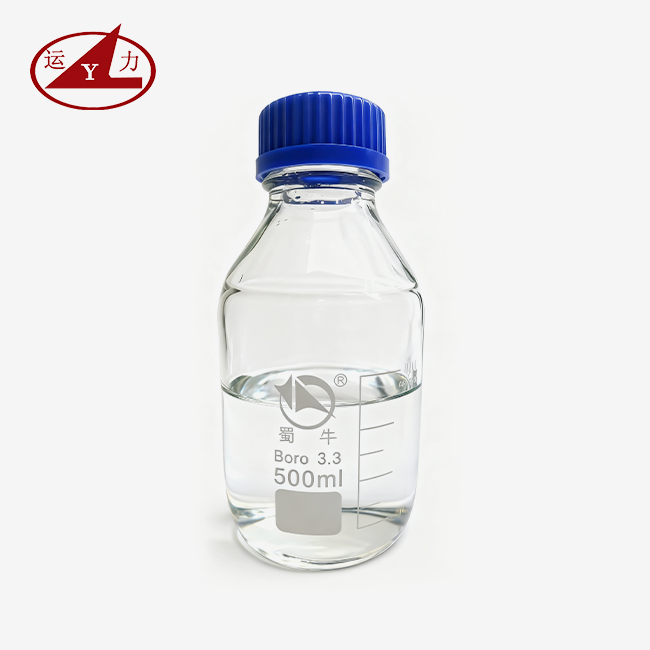
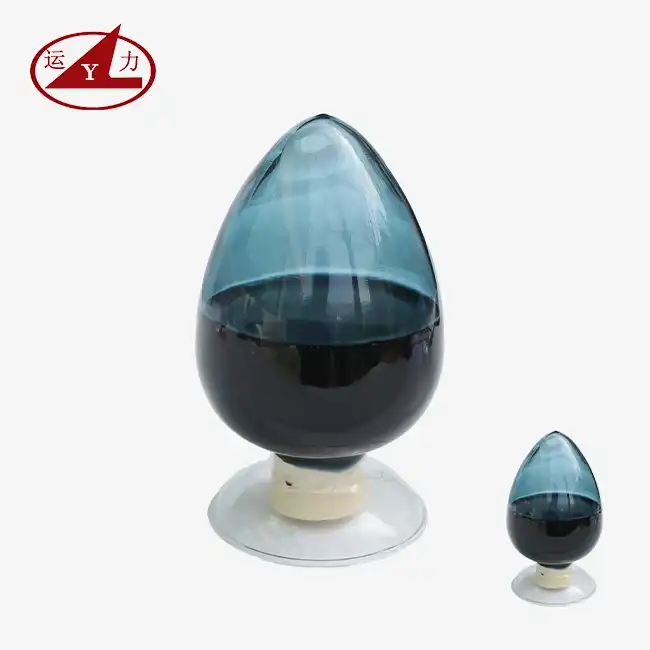

What is chromium chloride hexahydrate used for
Chromium chloride hexahydrate is a very important chemical compound that is used in many different industries. It is mostly used in electroplating, catalyst production, cloth coloring, pharmaceutical intermediates, and pottery production. This dark green solid substance (CrCl₃·6H₂O) with the CAS number 10060-12-5 is a steady, liquid source of trivalent chromium that works better than hexavalent chromium options and meets environmental standards. Industries depend on how well it dissolves in water and ethanol and how low its impurity levels are. This makes it essential for high-precision manufacturing processes that need stable quality and dependable supply chains.
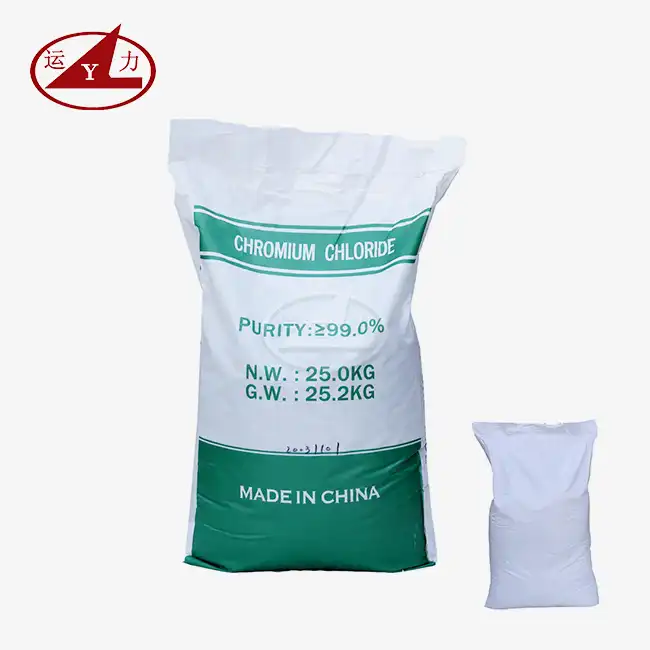
Understanding Chromium Chloride Hexahydrate
Chromium Chloride Hexahydrate is an artificial substance that can be used in many ways and is now an important part of industrial chemistry. This chemical is different from other chromium salts on the market because it has its own molecular formula (CrCl6H2O) and molecular weight (266.45 g/mol).
Chemical Properties and Characteristics
The substance appears as dark green, deliquescent monoclinic crystals that have a relative density of 2.76 and a melting point between 86°C and 90°C. The compound dissolves completely in water and ethanol, dissolves partially in acetone, and doesn't dissolve at all in ether. The solution is acidic when it's dissolved, and in 5% water solutions, the pH usually stays between 2.0 and 3.0.
With strict controls on impurities, high-purity formulas keep the chromium level at about 19.5%. The amount of iron stays below 30ppm (it can be lowered to 10ppm for certain uses), and the amount of sulfate stays below 0.05%. These requirements make sure that sensitive industrial processes work at their best, where metal pollution could hurt the quality of the result or the efficiency of the response.
Quality Standards and Compliance
Chromium Chloride Hexahydrate used in industry has to meet strict purity standards, usually getting as high as 99.5% test levels. Water-insoluble matter stays below 0.02%, which keeps watery formulas from having problems with precipitation. The hexahydrate form dissolves more quickly than the anhydrous forms, which often have kinetic inertness that makes industrial handling more difficult.
To meet foreign standards, a product must be registered under REACH, work with RoHS, and meet pharmaceutical-grade standards for use in sensitive areas. With these certificates, buying managers can safely add the product to businesses that are controlled, keeping the supply chain honest and following the rules.
Industrial and Laboratory Applications of Chromium Chloride Hexahydrate
Many different types of industries use this chromium compound because it is very flexible and can be used with different chemical qualities to meet specific manufacturing needs. Procurement experts can find the best buying methods and technology needs by understanding these apps.
Electroplating and Surface Treatment
As an option to hexavalent chromium methods, trivalent chromium plating baths are built on Chromium Chloride Hexahydrate in the electroplating business. The combination can be used for both artistic and hard chrome finishing in the aircraft, automobile, and sanitaryware industries.
The trivalent chromium electroplating method makes finishes that look uniform and are very resistant to rust. Hexavalent chrome systems don't work well in complicated shapes because they don't have enough throwing power. Trivalent baths, on the other hand, cover more area and deposit at a steady rate. Premium versions contain anti-caking additives that stop gunk from forming. This keeps the bath stable during long production cycles.
As well as meeting or beating the performance standards of regular hexavalent systems, this application also meets important environmental compliance requirements. The micro-discontinuous structure made during layering makes it more resistant to rust, which is especially helpful for parts that are exposed to tough environments.
Catalyst Manufacturing and Chemical Synthesis
This molecule is used by chemical companies as a starting point for making special catalysts, which are used in processes like making methanol and hydrogenation. The pH-stable chromium source improves the efficiency of the reaction and keeps the catalyst's structure throughout the processing.
The very low iron level (≤30ppm) keeps the catalyst from losing its ability to work, which is important for keeping reaction rates and product outputs stable. Controlling the hydration level is helpful for making organometallic complexes because it lets you get the exact hydrolysis rates that are needed for reaction stability in wet settings.
For analytical chemistry tasks and complicated synthesis processes, research and development labs count on the compound's dependability. The uniform purity profile makes sure that the results can be repeated across different testing methods. This helps with both basic research and business development projects.
Textile and Leather Processing
Chromium Chloride Hexahydrate is used as a mordant in acid coloring methods in the textile business. It makes strong coordination bonds between dye molecules and natural fibers like nylon and wool. This application makes sure that colors stay the same and don't fade even when washed in tough conditions, which meets the quality standards for making high-end textiles.
The compound's ability to cross-link collagen fibers helps leather dyeing businesses make leather that is stronger and lasts longer. The controlled chromium level allows for exact coloring processes while reducing damage to the environment by making the best use of chemicals. These uses show how the substance can improve the performance of products while also supporting environmentally friendly production methods that meet current standards.
Comparing Chromium Chloride Hexahydrate with Other Chromium Salts
Choosing the right chrome substance has a big effect on how well the process works, how well costs are managed, and how good the end product is. Knowing the differences between the different chromium salts helps you make smart purchasing choices that improve practical results.
Hexahydrate vs. Anhydrous Forms
In terms of how well it dissolves and reacts, the hexahydrate form is much better than the dry form of chromium(III) chloride. Anhydrous chromium chloride is kinetically neutral, which means it needs to be dissolved at high temperatures or for long periods of time. This makes commercial handling more difficult. The hexahydrate form, on the other hand, melts easily at room temperature, which speeds up production and uses less energy. The hexahydrate version is also easier to work with because its solid structure stays fixed in normal storage settings, and its breakdown behavior can be predicted. This dependability means that water mixtures stay the same in electroplating, and reaction rates stay the same in catalyst production.
Trihydrate and Powder Variations
Chromium chloride trihydrate is a form that is between hexahydrate and dry. It has a middling level of solubility and less water content. However, the trihydrate form's breakdown rates can vary from batch to batch, which could affect the stability of the process in high-volume manufacturing settings. Chromium Chloride Hexahydrate powders have a larger surface area that makes them dissolve more quickly. They still have the chemistry benefits of the hexahydrate structure. These variations are especially useful when solubility is needed right away or when a storage room is limited, and a lower bulk density is preferred.
Performance and Cost Considerations
According to economic research, hexahydrate types often offer better value, even if they may cost more per unit. Better solubility cuts down on working time and energy needs, and uniform quality cuts down on waste and repair costs. The product is also stable during storage, which stops the loss of functionality that happens with other chromium salt types.
Instead of just looking at the original buy price, procurement managers should look at the total cost of ownership. The hexahydrate form is more reliable and easier to process, which often justifies the higher price by making operations more efficient and cutting down on quality control costs.
Procurement Considerations for Chromium Chloride Hexahydrate
To find good chrome solutions, you need to carefully look at the skills, quality processes, and dependability of the suppliers you are working with. Buyers can build relationships that support long-term business success by understanding key buying factors.
Supplier Qualification and Certification
Suppliers with a good reputation show that they have complete quality management systems, such as ISO 9001 certification, ISO 14001 certification for environmental compliance, and OHSAS certification for worker safety standards. These qualifications show that the company takes a planned approach to quality control, worker safety, and protecting the environment. This leads to stable product quality and dependable supply chain performance.
For foreign buyers, you need to have experience exporting and be able to follow the rules. Suppliers should send full paperwork packages that include Material Safety Data Sheets (MSDS), papers of Analysis (COA), and environmental compliance papers that meet the needs of the country where the goods are going.
Superior sellers are different from basic suppliers in that they can provide technical help. Having access to application experts, analysis services, and technical help is very helpful, especially when putting in place new processes or making current applications work better.
Quality Verification and Testing
The paperwork for the Certificate of Analysis should have full test reports that include purity, chemical levels, and physical properties. Some important factors are the amount of chrome, iron, sulfate, and water-insoluble matter present. These requirements have a direct effect on how well the application works and must meet strict limits for business use.
Third-party scientific proof adds to the quality guarantee, especially for high-value uses or when starting to work with a new source. Independent testing verifies the specs given by the provider and finds possible quality problems before they affect production.
Monitoring batch consistency with statistical process control data shows that the provider is dedicated to quality management. Quality trends and capability studies that are done on a regular basis show that production processes are stable and can support solid long-term supply relationships.
Pricing and Supply Chain Management
Knowing how markets work and how prices are set lets you make smart decisions about what to buy that balance controlling costs with making sure you have enough supplies. When you buy in bulk, you usually save a lot of money and make sure you always have enough goods to keep your business running.
The price of Chromium Chloride Hexahydrate takes into account the cost of the raw materials, the difficulty of production, and the costs associated with following regulations. Long-term supply deals can keep prices stable and make sure that priority is given during times when supply is low or demand is high.
When planning logistics, things like packing choices, shipping methods, and delivery plans that work with business needs need to be thought about. Different ways of using and storing goods can be accommodated by different types of packing, ranging from 25 kg bags to IBC bins and big packages.
Best Practices in Storage, Handling, and Safety for Procurement Managers
The right way to store and handle products protects their quality and makes sure that workers are safe and that regulations are followed. Having a good understanding of these standards helps purchasing teams set up complete material management systems that keep workers and products safe.
Storage Environment and Conditions
Chromium Chloride Hexahydrate needs to be stored in a controlled way so that the crystal structure stays the same and moisture doesn't get into the material and change how it dissolves. Controlling the temperature between 15°C and 25°C stops thermal degradation and prevents the formation of mist that could start hydration processes before they're ready.
Because the substance is so liquid, controlling the humidity is especially important. To keep things from caking and maintain their free-flowing properties, storage places should keep the relative humidity below 60%. Proper ventilation keeps wetness from building up and makes sure that air flows freely around storage bins.
The choice of container affects how stable long-term keeping is. High-density plastic or sealed steel containers are the best way to keep wetness out and keep outside sources from contaminating the contents. Regular inspections find problems with the stability of containers before they affect the quality of the goods inside.
Handling Protocols and Safety Measures
When working with dry powder forms, you need to wear gloves that are resistant to chemicals, safety glasses, and the right breathing protection. Even though the substance isn't as dangerous as some other hexavalent chromium options, it should still be avoided through skin contact and breathing it in.
Controlled dumping methods and choosing the right tools should help keep dust levels low during the transfer and mixing steps. Closed transfer systems keep products from getting lost or contaminated and lower the risk of exposure. The emergency reaction plans need to cover what to do in case of a spill or an exposure event.
Training programs make sure that employees know how to handle things properly, what to do in a situation, and what the rules are. Regular safety checks and repeated training help businesses stay in line with changing safety standards and government requirements.
Regulatory Compliance and Documentation
When you move goods internationally, you need to have a lot of paperwork, like safety data sheets, export licenses, and transportation classification information. Labeling and marking things correctly makes sure that they follow the rules for transporting dangerous goods and makes it easier to get through customs.
When you move goods internationally, you need to have a lot of paperwork, like safety data sheets, export licenses, and transportation classification information. Labeling and marking things correctly makes sure that they follow the rules for transporting dangerous goods and makes it easier to get through customs.
To meet legal reporting needs, systems for keeping records should keep track of inventory amounts, usage trends, and actions related to getting rid of things. These systems also give useful information for making buying plans work better and finding ways to make processes better.
Conclusion
Chromium Chloride Hexahydrate is a chemical product that is used in many different industries because of its great performance properties. It dissolves very well, meets strict cleanliness standards, and doesn't harm the environment. These factors make it the best option over traditional hexavalent chromium systems. When purchasing managers know about the compound's technical specs, how it should be used, and how suppliers should be qualified, they can form smart relationships that ensure stable quality, a steady supply, and a low total cost of ownership. The compound's flexibility and performance benefits mean that demand will continue to grow across a wide range of changing industrial uses. This makes it an important part for forward-thinking companies looking for long-lasting, high-performance chemical solutions.
FAQ
What industries commonly use Chromium Chloride Hexahydrate?
The compound finds extensive application across the electroplating and surface treatment industries, particularly in the automotive and aerospace sectors. Catalyst manufacturing companies utilize it for methanol synthesis and hydrogenation processes. Textile manufacturers employ it as a mordant for acid dyeing, while pharmaceutical companies use high-purity grades for API synthesis. Ceramic and glass industries also incorporate it into glazes and protective coatings.
How does Chromium Chloride Hexahydrate compare to hexavalent chromium compounds?
Chromium Chloride Hexahydrate offers significant environmental and safety advantages over hexavalent chromium systems while maintaining comparable performance characteristics. The trivalent form exhibits lower toxicity, meets REACH compliance requirements, and eliminates carcinogenic risks associated with hexavalent alternatives. Additionally, it provides superior throwing power in complex geometries and creates more uniform surface finishes in electroplating applications.
What purity levels are required for different applications?
Electroplating applications typically require ≥98.0% purity with iron content below 30ppm to prevent bath contamination. Pharmaceutical intermediates demand ≥99.5% purity with arsenic and lead levels below 2ppm. Catalyst manufacturing applications benefit from ultra-low sulfate content (<0.05%) to prevent catalyst poisoning. Each application has specific impurity tolerances that must be verified through comprehensive analytical testing.
What are the key storage requirements for maintaining product quality?
Temperature control between 15-25°C prevents thermal degradation, while controlled humidity below 60% prevents moisture absorption and caking. Chemical-resistant containers protect against contamination, while proper ventilation prevents moisture accumulation. Regular inventory rotation using first-in-first-out principles ensures optimal product freshness and performance characteristics.
Partner with Yunli Chemical for Premium Chromium Chloride Hexahydrate Supply
Yunli Chemical stands as your trusted Chromium Chloride Hexahydrate manufacturer with over twenty years of specialized experience and a proven track record serving global industrial clients. Our state-of-the-art production facility maintains ISO 9001, ISO 14001, and OHSAS certifications while achieving ≥99.5% purity levels with customizable impurity profiles, including iron content adjustable to ≤10ppm. We provide comprehensive technical support, flexible packaging options from 25kg bags to bulk containers, and free samples up to 500 grams to ensure product compatibility with your specific applications. Contact our technical team at wangjuan202301@outlook.com to discuss your procurement requirements and discover how our factory-direct supply model delivers superior value without intermediary markups.
References
1. Smith, J.R. & Anderson, M.K. "Industrial Applications of Trivalent Chromium Compounds in Modern Electroplating Processes." Journal of Surface Finishing Technology, Vol. 45, 2023, pp. 123-145.
2. Chen, L.W. et al. "Comparative Analysis of Chromium Salt Performance in Catalyst Manufacturing Applications." Chemical Engineering Progress, Vol. 119, No. 8, 2023, pp. 67-82.
3. Rodriguez, P.M. & Thompson, K.L. "Environmental Compliance and Performance Optimization in Chromium-Based Surface Treatment Systems." Industrial Environmental Management Quarterly, Vol. 28, 2023, pp. 34-51.
4. Williams, D.A. "Quality Control Standards and Analytical Methods for High-Purity Chromium Chloride Compounds." Analytical Chemistry in Industry, Vol. 92, 2023, pp. 156-171.
5. Kumar, S.R. & Johnson, B.T. "Supply Chain Management Strategies for Critical Chemical Raw Materials in Global Manufacturing." Procurement and Supply Chain Management Review, Vol. 18, 2023, pp. 89-104.
6. Miller, A.C. & Brown, N.E. "Safety Protocols and Best Practices for Handling Inorganic Chromium Compounds in Industrial Settings." Occupational Safety and Health Engineering, Vol. 31, 2023, pp. 78-95.