


Where to buy cupric nitrate?
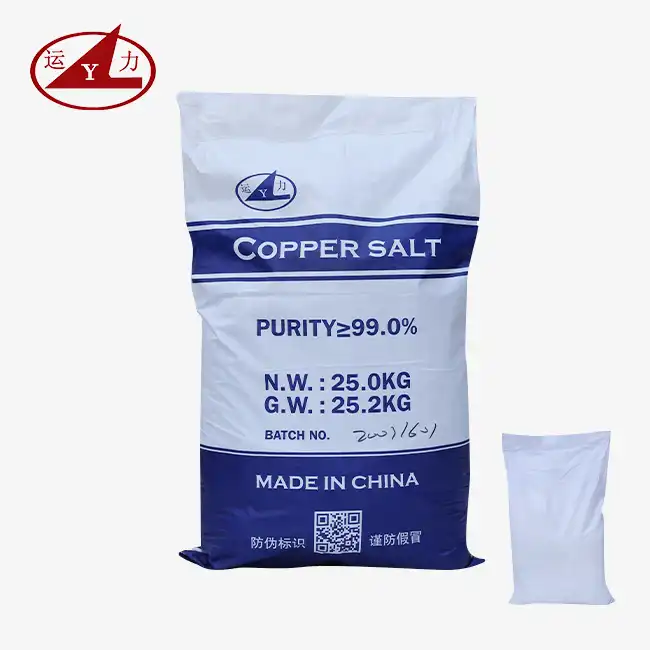
To find high-quality Cupric Nitrate, you must first know what your industry needs and then work with trusted chemical makers who put purity, compliance, and supply chain reliability first. If you're a business buyer in the US and you're in charge of electroplating, making water-soluble fertilizers, or creating new catalysts, you should weigh the technical specs of the seller with their reputation. Working directly with well-known companies like Yunli Chemical guarantees access to certified copper nitrate trihydrate (CAS 10031-43-3) with different levels of purity that can be adjusted, full paperwork, and regular shipping plans that keep production running smoothly.
Understanding Cupric Nitrate: Properties and Applications
Chemical Identity and Physical Characteristics
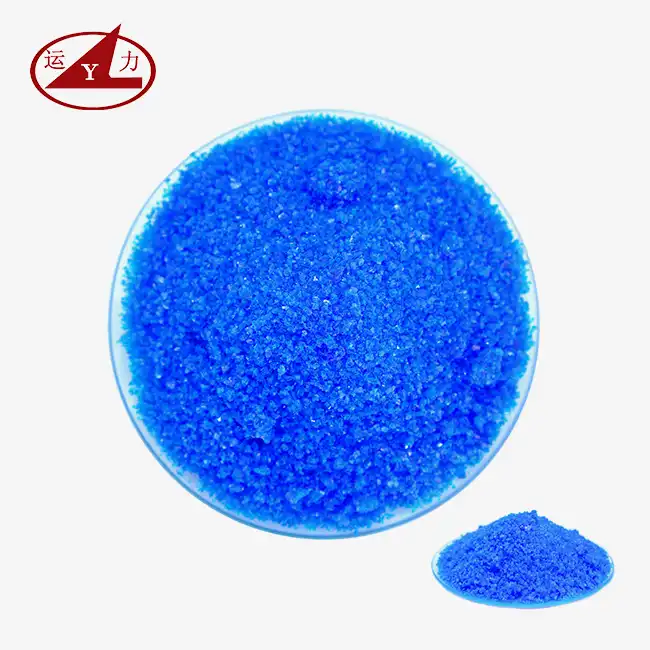
Cupric Nitrate, which is also called Copper Nitrate Trihydrate in the science world, has the formula Cu(NO₃)₂·3H₂O and a molecular weight of 241.6 g/mol. The crystals of this substance are dark blue and shaped like columns. They have a specific density of 2.05 and melt at 114.5°C. Because it absorbs water easily, it needs to be carefully kept dry while being stored. The substance dissolves easily in water and ethanol, creating acidic liquids that are used in many industrial processes. It breaks down thermally when heated above 170°C, releasing nitrogen oxides. This trait is used in controlled oxidation processes.
This copper salt is a strong oxidizing agent because of the way its molecules are structured. Because of how it reacts, it is very useful in situations where exact copper ion delivery is needed without salt or sulfate contamination. Cupric Nitrate breaks down easily into copper oxide at low temperatures, unlike copper sulfate, which leaves behind sulfate leftovers that don't go away. This makes it a more energy-efficient choice for catalyst precursor synthesis.
Industrial Applications Across Sectors
One major area of application is catalyst production. The chemical is used to fill alumina or silica supports in catalytic converters for cars and oxidation catalysts for petrochemicals. Its nitrate-based breakdown route makes sure that copper is evenly spread across support surfaces, which is important for reactions that reduce NOx and create hydrogen.
Cupric Nitrate solutions are used in electroplating baths and chemical cleaning of PCB copper foils in the metal surface treatment industry. The material keeps the quantity of copper ions constant in complex acidic environments, which makes sure that the conductivity lines are free of defects. Professionals in surface treatment like how it can make regular patinas on bronze and brass alloys without adding chloride ions, which are harmful to the metals.
Agricultural chemistry is useful because it is used to make water-soluble fertilizers. Because the substance is very soluble, it can be easily mixed with NPK mixes to help crops that are lacking in micronutrients. These days, the amount of heavy metals is kept below 10 parts per million, which is what organic growing guidelines require.
Safety Considerations and Handling Protocols
Material Safety Data Sheets (MSDS) say that Cupric Nitrate is a strong oxidizer that needs to be stored separately from things that can catch fire. Physical touch can irritate the skin, so safety gear like chemical-resistant gloves and safety masks is needed. Ventilation systems are used in places that handle large amounts of stuff to keep nitrogen gas from getting too high during heat processing.
Labeling must clearly state the dangers of the gas and how to handle an emergency. As part of the rules for spill containment, sodium carbonate solutions are used to neutralize the spill before it is thrown away by approved trash contractors. Knowing these safety standards helps buying teams figure out the total cost of ownership, which includes investments in infrastructure for compliance.
Comparing Cupric Nitrate Suppliers: How to Choose the Right Partner
Evaluating Global Manufacturers and Distributors
Chemical suppliers that have been around for a while keep their unique positions throughout the value chain, including for products like Cupric Nitrate. Sigma-Aldrich and Fisher Scientific are the best at selling lab-grade materials with full analysis certificates. These companies help R&D departments that need pure ACS reagent reagents. Merck has choices that are pharmaceutical-grade and have strict controls on heavy metals that can be used to make APIs. BASF works on large industrial tonnage amounts with a range of flexible packing options.
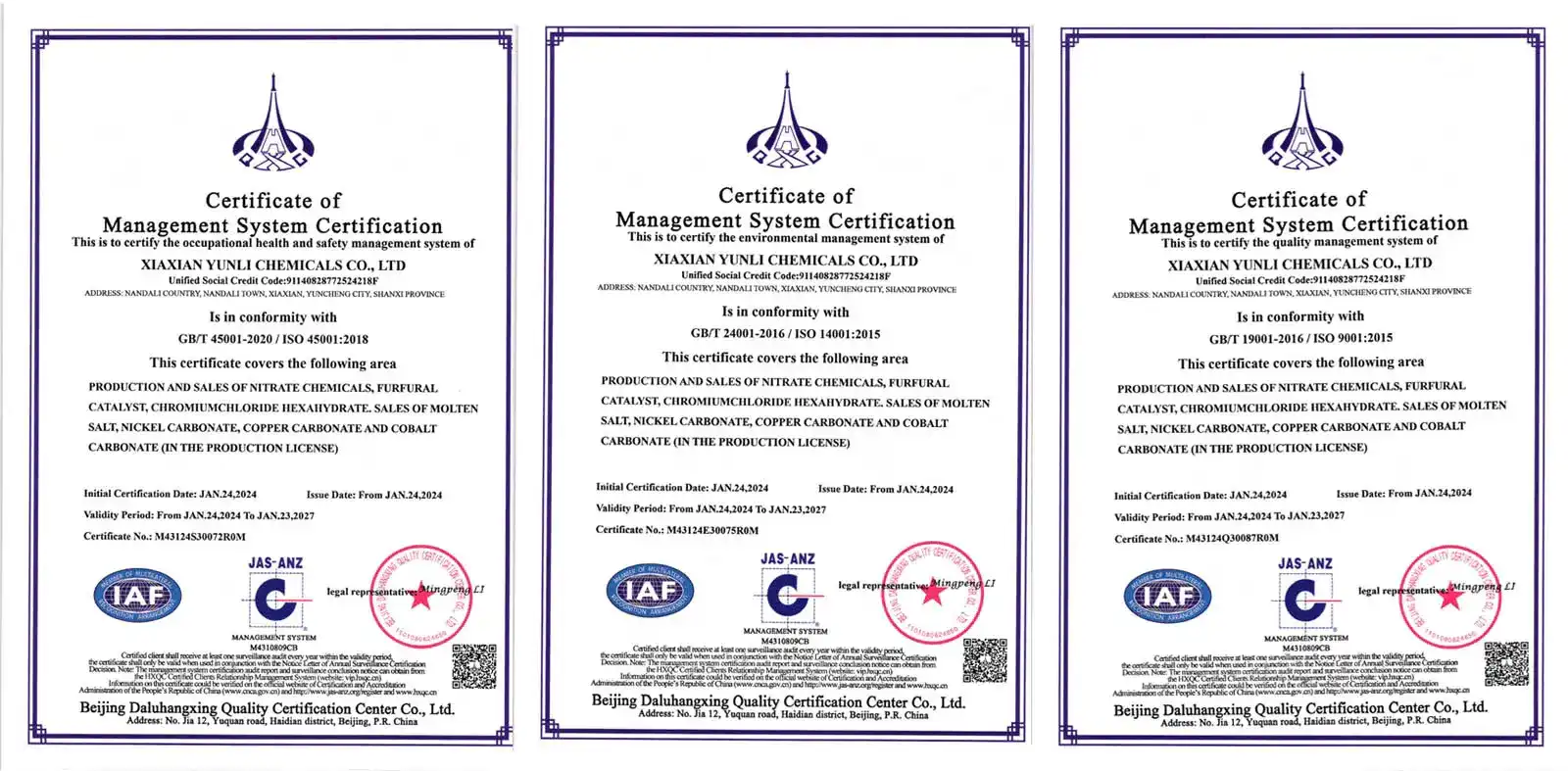
Regional makers, such as Yunli Chemical, set themselves apart by offering direct plant prices and specialized production capabilities. The company has ISO 9001, ISO 14001, and OHSAS certifications, and its technology centers at the local level are equipped with ICP-MS and atomic absorption spectrometry. Custom purity grades of up to 99.99% are possible with this infrastructure. It can be used for high-end electronics and pharmaceutical uses that generic providers can't meet cost-effectively.
Key Supplier Selection Criteria
Verification of product quality is very important. Technical buyers should ask for Certificates of Analysis (COA) that show the iron content (<30 ppm for catalyst-grade), insoluble matter (<0.05%), and moisture levels. In environments where catalyst function rests on exact copper loading ratios, batch-to-batch consistency is important.
Compliance with regulations paperwork tells the difference between trustworthy providers and generic resellers. Full MSDS packages, environmental compliance records, and export licensing show that operations are mature. When suppliers handle their own exports, they cut out middlemen and offer direct technical support lines.
Logistics costs and working performance are affected by how flexible the packaging is. On-site handling is easier when moisture-barrier containers, custom particle sizes (20–80 mesh), and pre-dissolved liquid formulas are available. Validation testing can be done without a financial investment if the supplier offers free samples of up to 500 grams.
Reputation Verification Through Third-Party Validation
Long-term supply ties form when producers show that they can make money and keep up with production. Companies that make more than $150 million (RMB 1 billion) a year and have fixed assets worth more than $40 million (RMB 300 million) can handle changes in the market better than companies that don't have enough capital. Getting recognized as a provincial technology center or an industry license shows that you are investing in quality systems instead of selling when you can.
Customer reviews from well-known businesses can help you understand how to perform better. Facilities that do electroplating need formulations that are RoHS-compliant, and fertilizer makers need to make sure their products meet OMRI standards. Claimed specs are confirmed through actual use. To find out how responsive a seller is during technical troubleshooting, procurement managers should ask for references from people who work in similar application areas.
Procurement Guide: Where and How to Buy Cupric Nitrate in Bulk?
Marketplace Options and Direct Sourcing Strategies
There are two main ways for B2B buyers to buy chemicals: online chemical markets and direct interactions with manufacturers. Platforms like Alibaba bring together a lot of sellers, but it can be hard to tell who is actually producing the goods and who is just selling. It's easy to compare prices on these platforms, but they don't usually offer the technical customization that is needed for specific uses.
For repeat buyers, direct ties with manufacturers offer better value. Factory prices get rid of dealer profits, which is especially important for orders over one metric ton. When compared to multi-layer delivery networks, manufacturers who have their own export offices simplify paperwork and offer faster lead times. Having access to technical help speeds up fixing when process variables need to be changed in the formulation.
Pricing Structures and Minimum Order Considerations
Cupric Nitrate prices depend on how much copper metal is in it, what quality grade it is, and how it is packaged. Industrial-grade material (98% test) usually costs between $3-5 per kilogram in bulk, but ACS reagent grades can cost up to $8-12 per kilogram because of strict controls on impurities. By not having to crystallize or repackage, liquid formulas with a 13-16% copper content lower unit costs.
Minimum order amounts depend on the supplier's ability and the market you want to reach. Laboratory providers have minimum orders of 1 kilogram, but they charge market prices. For best production costs, industrial makers often set 500-kilogram limits. However, established suppliers like Yunli Chemical can handle smaller initial orders to make the supplier approval process easier. When you commit to buying 5-ton commitments, you usually get a volume deal that lowers the cost per unit by 15-20%.
International Shipping and Regulatory Compliance
Because Cupric Nitrate is an oxidant (Class 5.1), it is subject to certain shipping rules under DOT and IMDG codes. For ocean freight shipping, you need toxic paperwork and special labels for the containers. There are limits on air freight that make it more expensive and take longer to get to its destination. Buyers should make sure that providers keep their licenses to ship risky goods and put up the right signs.
Different places have different rules about import compliance. The U.S. Customs needs TSCA approval that backs up the EPA inventory list. For amounts over one ton per year, European markets require REACH registration. Suppliers who have worked with exports before know how to handle these requirements, such as sending pre-shipment notices and recipient paperwork packages that avoid delays at customs.
Practical Insights: Handling, Storage, and Environmental Considerations
Storage Protocols for Material Integrity
When Cupric Nitrate trihydrate breaks down, it mostly does so by absorbing water. With airtight container closing, storage sites should keep the relative humidity below 50%. When bulk amounts are moved to intermediate containers, they need to be resealed right away to stop hygroscopic degradation that changes the stoichiometric ratios in precise formulations.
Temperature control stops decay from happening too soon. Melting happens at 114.5°C, and being exposed to temperatures above 40°C for a long time speeds up changes in the hydrated state. In climate-controlled stores, food stays fresh for more than 24 months, while in warm environments, it only lasts 12-month before it goes bad. Separation from acids and bases stops reactive pollution that brings in ions that aren't needed.
Workplace Safety and Exposure Mitigation
One of the first ways to protect workers is with engineering tools. Particulate matter and nitrogen oxide fumes are caught by local exhaust air at transfer points. Enclosed handling devices lower the risk of skin touch when moving large amounts of powder. OSHA rules say that emergency eyewash stations and safety showers must be placed within 10 seconds of places where people are touching things.
Personal safety equipment (PPE) needs to include chemical splash goggles, nitrile gloves that don't let nitrate in, and lab coats with snap closures that keep fabric from getting tangled. During heat processing that releases nitrogen fumes, you need to wear respiratory protection. Half-face respirators that have been fit-tested and have acid gas cartridges inside are enough to keep you below the exposure limits.
Environmental Impact and Waste Management
Copper ions are harmful to aquatic toxicity, so trash has to be treated before it can be released. Using alkaline chemicals in precipitation methods turns liquid copper into hydroxide sludges that can be thrown away legally. Closed-loop systems are used in modern factories to get copper values from process trash. This is better for the environment and saves money on raw materials.
In order for waste streams to not contain nitrogen oxides from thermal breakdown, they need to have scrubber systems or catalytic converters. Environmental infrastructure suppliers, like Yunli Chemical's combined nitrate wastewater treatment systems, offer OEM production services that take on the responsibility of compliance from buyers and put it on makers with proven technologies for abatement.
Making the Smart Choice: Cupric Nitrate vs Other Copper Salts
Comparative Performance Analysis
Copper sulfate pentahydrate is still the cheapest way to get copper, but it adds sulfate ions that hurt some catalysts and make the chemistry of the electroplating bath more difficult. Because it dissolves more easily (32 g/100 mL at 20°C), it can be used in fertilizer where cost is more important than purity. Cupric Nitrate's sulfate-free profile makes its higher price worth it in industries like technology and medicine where small amounts of contaminants can lower the quality of the final product.
Cupric chloride is a strong oxidizer, but it leaves behind chloride residues that rust stainless steel tools and lower the effectiveness of catalysts over time. Nitrate-based formulas get rid of these ways that corrosion can happen while keeping the same level of oxidizing power. Electroplating companies that are switching to chloride-free methods are looking for options to Cupric Nitrate to protect the environment.
Application-Specific Advantages
The clean decomposition characteristic of Cupric Nitrate helps catalyst production. Copper oxide can be changed to sulfate or chloride at lower temperatures, which means that 20-30% less energy is needed in calcination processes. The oxide that is made has more surface area and porosity, which makes it more useful as a catalyst in making methanol and controlling emissions from cars.
Pyrotechnic preparations use the compound's strong oxygen release when it burns. It can be told apart from other copper salts by its blue-green flame color. But because they absorb water, they need to be stored in sealed containers, which costs more than storing copper oxides that are more stable.
Emerging Trends in Copper Salt Procurement
Demand for recycled copper sources and closed-loop production is driven by efforts to make science more sustainable. Buyers who care about the environment prefer suppliers that can show they can recover copper from industry trash streams. Along with standard quality measures, circular economy certifications and carbon footprint reports have a bigger impact on supplier scorecards.
Digital buying tools that let you see your goods in real time and automatically reorder things cut down on problems in the supply chain. When a manufacturer connects their API to an ERP system, it lets you use just-in-time shipping models that keep your working capital low by keeping less raw material stockpiles on hand.
Conclusion
To buy Cupric Nitrate successfully, you need to make sure that the technical requirements match the supplier's skills and dependability. When you work directly with certified makers, you get better value because you can customize the purity grades, get full documentation, and get quick technical help. When buyers put stable quality above transactional cost saves, they build relationships that lower the total cost of ownership by making sure products always work well and production interruptions are kept to a minimum. Long-term supply chain stability in a globally controlled market is ensured by checking providers' ISO certifications, analytical skills, and environmental compliance infrastructure.
FAQ
Q1: What are typical lead times for bulk Cupric Nitrate orders?
A: Standard industrial-grade packages usually take 10-15 business days from the time the buy order is received, which includes planning production and getting paperwork for dangerous goods. Lead times may go up to 20-25 days if you need specific quality requirements or packing. Smaller amounts (less than 1 ton) can be sent quickly by established providers who keep an inventory on hand for approved customers within 7 days.
Q2: How should Cupric Nitrate be stored to maintain stability?
A: Keep in sealed, moisture-proof cases in climate-controlled areas where the temperature stays between 15-30°C and the relative humidity stays below 50%. Separate from materials that don't work together, like strong acids, reducing agents, and flammables. Specification-grade purity can be kept for 24 months if the material is stored correctly. Check containers often for moisture leaks and reseal them right away after using part of them.
Q3: What certifications validate supplier credibility?
A: ISO 9001 certification shows that the quality management system is mature, and ISO 14001 certification shows that the infrastructure is environmentally friendly. OHSAS 18001 or a similar certification for workplace safety shows how to protect workers. Analytical accuracy is confirmed by product-specific accreditations such as ACS reagent grade or pharmacopeia compliance. Request third-party audit reports and customer reference contacts to back up the certifications you say you have, in addition to showing the certificates themselves.

Partner with Yunli Chemical for Reliable Cupric Nitrate Supply
Yunli Chemical has been making nitrates for more than 20 years and can help you with your buying plan. They can provide you with Cupric Nitrate that meets all purity requirements and regulatory requirements. Advanced ICP-MS analysis is used at our local technology center to make sure that each batch is the same and meets the needs of the most demanding electroplating and catalyst uses. We are a certified producer whose yearly production capacity is more than RMB 1 billion. We offer factory-direct prices, formulations that can be changed from 98% to 99.99% purity, and liquid solutions that don't need to be dissolved on-site. You can email our technical sales team at wangjuan202301@outlook to talk about your special needs, get free samples up to 500 grams, or get full quotes for your next large order. We can produce high-purity Cupric Nitrate for pharmaceutical synthesis or solid tonnage amounts for industrial catalysts. Our production and export skills are fully integrated, so there are no delays in the middle.
References
1. Smith, J.R., & Chen, L. (2021). Industrial Applications of Copper Salts in Modern Manufacturing. Chemical Engineering Journal Press.
2. Anderson, M.K. (2020). Catalyst Synthesis: Precursor Selection and Performance Optimization. Academic Press Series on Applied Chemistry.
3. Thompson, R.D., & Martinez, S. (2022). Electroplating Technologies: Material Science and Process Control. International Surface Treatment Association.
4. United States Environmental Protection Agency (2023). Hazardous Materials Transportation Guidelines for Oxidizing Substances. EPA Technical Bulletin Series.
5. Wilson, T.A., & Kumar, P. (2021). Quality Assurance in Chemical Procurement: Standards and Best Practices. Journal of Supply Chain Management, Vol. 58(3), pp. 112-134.
6. Brown, E.H. (2022). Comparative Analysis of Copper Compounds in Agricultural and Industrial Chemistry. Royal Society of Chemistry Advances, Vol. 12, pp. 5623-5641.