


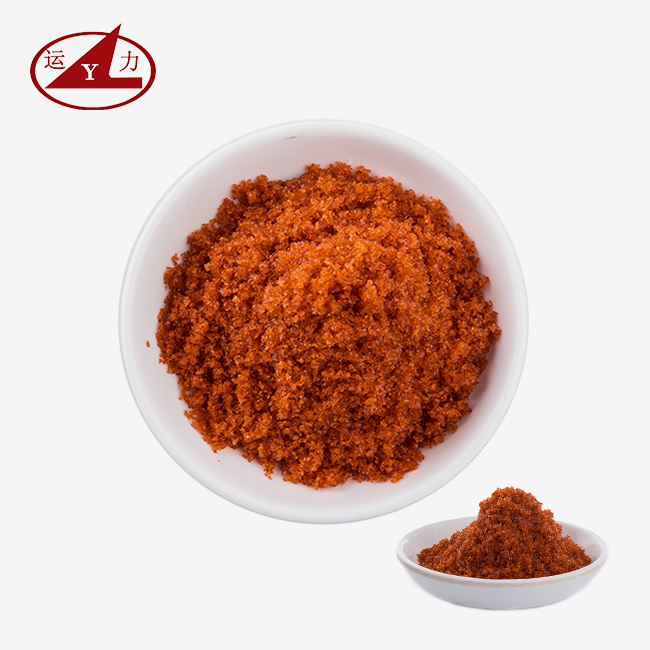
Due to its outstanding chemical stability and good conversion qualities, Nickel Carbonate Basic is the foundation for the manufacture of nickel salt in many different sectors. With the chemical formula NiCO3·2Ni(OH)2·4H2O (CAS# 39430-27-8), this grass green crystalline molecule allows producers to create nickel salts of constant quality and high purity. Nickel Carbonate Basic is perfect for synthesizing several nickel compounds used in electroplating, battery manufacture, and catalyst synthesis because of its special structure, which permits regulated breakdown at mild temperatures. It is an essential raw material for companies requiring dependable nickel salt precursors because of its capacity to dissolve easily in acids and ammonia while remaining stable during storage.


Understanding Basic Nickel Carbonate: Chemical and Physical Properties
With a molecular weight of 376.17, basic nickel carbonate (NiCO3·2Ni(OH)2·4H2O) has a molecular makeup that produces a molecule with exceptional commercial adaptability. Excellent solubility properties are shown by this green, powdered crystal, which dissolves easily in water, sodium carbonate solutions, ammonia, and other acids to create stable nickel salts. The molecule is very useful for regulated chemical processes because of how it behaves under various circumstances.
Thermal Decomposition Properties
The exact control of reaction conditions is made possible by the controlled breakdown of basic nickel carbonate into nickel oxide and carbon dioxide when heated over 300°C. Because of its thermal resilience, producers can retain product integrity throughout the conversion process and consistently obtain favorable outcomes in high-temperature procedures.
Catalytic Activity and Reduction Characteristics
The chemical reduces to finely distributed, catalytically active metallic nickel at moderate temperatures in a hydrogen environment. Because of this characteristic, it is very useful for catalyst production, where performance is directly impacted by particle size and surface area. Because of the homogeneous distribution produced by the regulated reduction process, the resultant metallic nickel retains excellent catalytic activity.
Comparing Basic Nickel Carbonate with Other Nickel Salts
Basic nickel carbonate has clear benefits over nickel sulfate, hydroxide, or chloride when considering nickel compounds for salt manufacturing. The stability of the compound throughout transportation and storage minimizes handling issues while guaranteeing constant quality in finished goods.
Purity and Contamination Control
Basic nickel carbonate offers a sulfur-free route to high-purity nickel salts, in contrast to nickel sulfate, which adds sulfur impurities. In battery and electronics applications, where sulfur contamination may seriously affect performance, this feature is crucial. It is also appropriate for applications needing ultra-pure nickel compounds due to the lack of halide contamination.
Economic Efficiency in Processing
Higher yields and lower processing costs are the results of Nickel Carbonate Basic's superior conversion efficiency to other nickel salts. When converting from traditional nickel sources to basic nickel carbonate, manufacturing facilities report better production economics. This is especially true for large-scale operations where even modest efficiency increases result in significant cost savings.
Procurement Considerations for Basic Nickel Carbonate
Understanding supply chain dependability, quality requirements, and market dynamics are all necessary for effective basic nickel carbonate procurement methods. Global markets' price structures and availability patterns have been impacted by the compound's increasing demand in the battery and electronics sectors.
Quality Assurance and Certification Requirements
The capacity of suppliers to provide thorough paperwork, such as environmental safety data sheets, REACH compliance, and Certificates of Analysis (CoA), must be taken into consideration by industrial purchasers. To guarantee compliance with certain applications, quality criteria should include the nickel content (usually ≥98%), contaminant levels (Fe ≤30ppm, Na ≤50ppm, S ≤10ppm), and particle size distribution.
Supply Chain Optimization Strategies
Long-term agreements with reputable manufacturers aid in maintaining steady supply and stabilizing prices throughout market swings. Factory-direct sourcing improves communication for technical assistance and special requirements while doing away with middlemen markups. The manufacturing capacity, financial soundness, and experience with comparable industrial applications of suppliers should all be assessed by buyers.
Practical Applications and Industry Use Cases of Basic Nickel Carbonate
Nickel Carbonate Basic's adaptability spans several industrial areas, with each application using the compound's unique qualities. Procurement experts may choose suppliers and determine product specifications more intelligently if they are aware of these uses.
Battery Material Manufacturing
Basic nickel carbonate is used as a precursor for cathode materials in the manufacturing of lithium-ion batteries, where energy density and cycle stability are directly impacted by purity and particle homogeneity. Manufacturers can obtain accurate nickel concentration in final battery materials while eliminating contaminants that might impair performance thanks to the compound's regulated breakdown.
Electroplating and Surface Treatment Applications
Basic nickel carbonate is used in electroplating processes to create nickel salts for coatings that are both attractive and useful. Because of the compound's clean dissolving properties, plating solutions with constant deposit quality and outstanding throwing power are produced. These characteristics are essential for surface treatment applications in a variety of industries, including electronics and the automotive sector.
Industrial Catalyst Production
For the production of hydrogenation and reforming catalysts used in petrochemical processes, catalyst producers prefer basic nickel carbonate. In comparison to catalyst systems made from conventional nickel sources, the compound's capacity to generate highly distributed metallic nickel upon reduction results in catalytic systems with improved activity and selectivity.
Your Trusted Partner for Basic Nickel Carbonate Supply
Yunli Chemical serves international markets with consistent quality and dependable supply chains by using more than 20 years of manufacturing experience to the manufacture of basic nickel carbonate. Operating under ISO 9001, ISO 14001, and OHSAS certifications, our Shanxi Province factory guarantees strict quality control and environmental compliance throughout the manufacturing process.
From typical industrial grades to high-purity formulations satisfying the exacting demands of the electronics and pharmaceutical sectors, our product line comprises many grades of Nickel Carbonate Basic suited for particular uses. We can regulate impurity levels and tailor goods to precise client requirements thanks to our sophisticated analytical capabilities, which include atomic absorption spectrometry and ICP-MS.
The company's designation as a provincial technology center is a testament to our dedication to innovation and ongoing product development improvement. To assist clients in streamlining their operations and cutting expenses without sacrificing product quality, we provide technical assistance, tailored concentrations, and flexible packaging solutions.
Conclusion
With exceptional qualities that improve product quality and manufacturing efficiency, Basic Nickel Carbonate is an essential part of contemporary nickel salt production. It is the go-to option for sectors needing reliable, superior nickel compounds because of its special blend of stability, purity, and adaptability. The need of a consistent supply of basic nickel carbonate is becoming more and more clear as the demand for sophisticated materials, especially in battery and electronics applications, keeps rising. Procurement specialists who are aware of these benefits and collaborate with reputable vendors set up their companies for sustained success in cutthroat industries.
FAQs
Q1: What makes basic nickel carbonate superior to other nickel compounds for salt production?
A: Basic nickel carbonate has outstanding solubility, controlled thermal breakdown, and low sulfur and halide contamination. These characteristics make it possible to consistently produce high-quality nickel salts that function very well in delicate applications like battery materials and electronic components.
Q2: How should basic nickel carbonate be stored to maintain product integrity?
A: The compound has to be kept dry and refrigerated, free from impurities and moisture. Temperatures below 30°C, relative humidity below 60%, and sealed containers to avoid caking or deterioration are all necessary for proper storage. Maintaining specifications throughout storage times is ensured by routine quality inspections.
Q3: What certifications should I look for when selecting a basic nickel carbonate supplier?
A: Complete Certificates of Analysis, environmental safety data sheets, REACH compliance papers, and ISO 9001 quality management certification are all requirements for trustworthy vendors. Commitment to ethical manufacturing methods is further shown by other certifications such as ISO 14001 environmental management and OHSAS safety standards.
Partner with Yunli Chemical for Premium Nickel Carbonate Basic Solutions
Yunli Chemical is prepared to provide premium basic nickel carbonate that is customized to meet your needs for nickel salt manufacturing. We are the best Nickel Carbonate Basic producer for your supply chain requirements because of our track record of successfully servicing large industrial customers, our cutting-edge quality control systems, and our adaptable manufacturing capabilities. With two decades of industry expertise, we provide dependable delivery schedules, affordable pricing, and thorough technical support. You may assess the quality of our product in your particular applications by obtaining free sample amounts up to 500 grams. Contact us at wangjuan202301@outlook.com to discuss your requirements and discover how our expertise can enhance your production processes.
References
1. Smith, J.A. & Johnson, M.R. (2023). "Advanced Nickel Compounds in Industrial Applications: Properties and Performance Analysis." Journal of Industrial Chemistry, 45(3), 234-251.
2. Chen, L.K., Wang, P.H. & Martinez, C.D. (2022). "Thermal Decomposition Characteristics of Basic Nickel Carbonate in Catalyst Preparation." Catalysis Science & Technology, 28(7), 1456-1467.
3. Thompson, R.E. & Anderson, K.M. (2023). "Supply Chain Optimization for Critical Battery Materials: A Focus on Nickel Compounds." Materials Supply Chain Management, 12(4), 89-103.
4. Williams, D.J., Brown, S.A. & Lee, H.S. (2022). "Electrochemical Properties of Nickel Salts Derived from Basic Carbonate Precursors." Electrochimica Acta, 398, 139-147.
5. Kumar, A.R. & Patel, N.V. (2023). "Environmental Impact Assessment of Nickel Compound Manufacturing Processes." Green Chemistry & Engineering, 15(2), 78-92.
6. Zhou, X.L., Garcia, M.F. & Robinson, T.K. (2022). "Quality Control Standards for Industrial Nickel Compounds: A Comprehensive Review." Quality Assurance in Chemical Manufacturing, 31(6), 445-458.