


Why Choose Calcium Nitrate for Modern Fertilizer Production
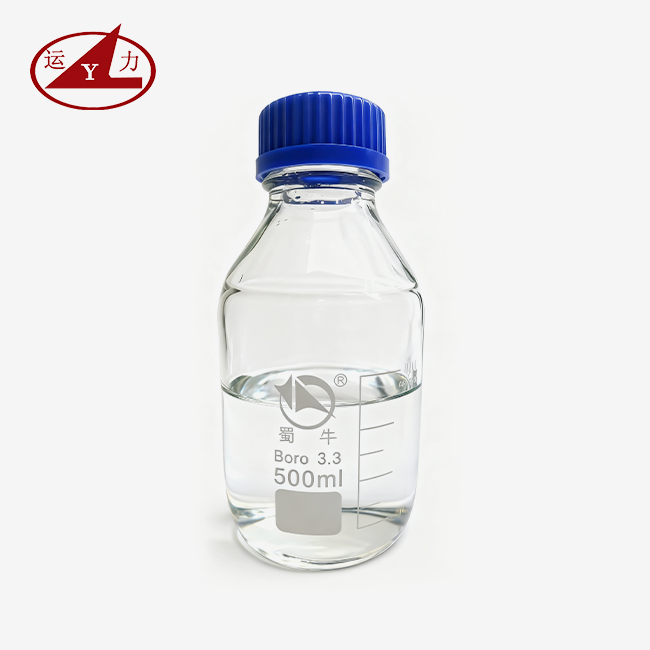
When fertilizer manufacturers evaluate raw materials, calcium nitrate (Ca(NO₃)₂·4H₂O) consistently ranks among the most effective dual-nutrient inputs available. It delivers immediately available calcium and nitrate-nitrogen in a single compound, supporting strong cell wall development and efficient nitrogen assimilation in plants simultaneously. Unlike alternatives that introduce harmful chlorides or acidify the root zone, this compound maintains a near-neutral solution pH (5.0–7.0) and leaves no phytotoxic residues. For B2B procurement teams sourcing inputs for water-soluble fertilizer manufacturing, understanding exactly what makes this compound indispensable is the first step toward smarter purchasing decisions.
Understanding Calcium Nitrate and Its Role in Fertilization
What Makes Ca(NO₃)₂·4H₂O Chemically Unique?
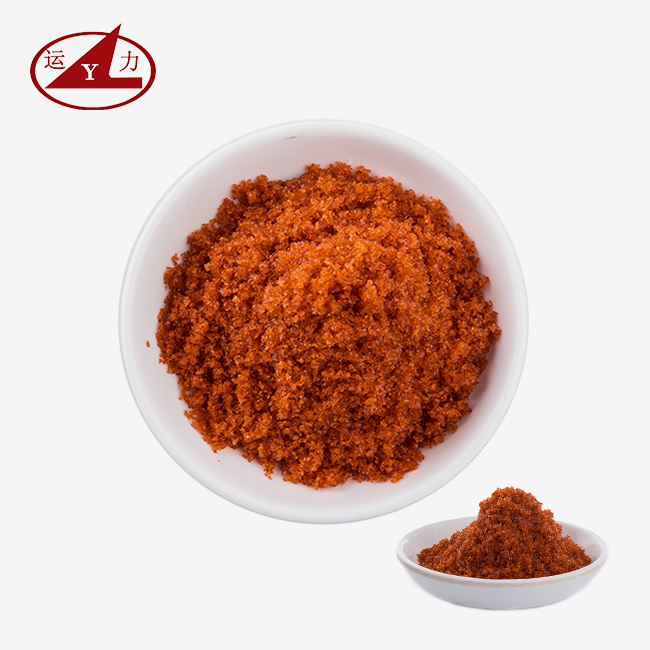
Chemically, calcium nitrate tetrahydrate is written as Ca(NO₃)₂·4H₂O, and its molecular weight is 236.15. At 1.895 times its own weight, it has the shape of white columnar monoclinic crystals. An amount of 1,290 g/L at 20°C makes it easy to dissolve in water, methanol, ethanol, and acetone. Because of this, it works great in concentrated liquid fertilizer mixes and fertigation systems. Because nitrate-nitrogen (NO₃⁻) has a negative charge, it doesn't stick to dirt particles that also have a negative charge. It instead easily moves with the water in the soil to places where roots can take it up.
How It Supports Plant Health at the Cellular Level?
Calcium ions make the cross-linking of pectin in plant cell walls stronger. Pests like blossom end rot and tip burn are less likely to happen to plants when they do this. A study in Scientia Horticulturae says that fruit needs enough calcium during times of rapid cell expansion to stay firm and last a long time after it is picked. There is no change in the plant's cation exchange behavior when calcium nitrate is given with nitrate instead of ammonium. This means that the pH level in the rhizosphere stays the same and nutrients can be taken in.
Key Benefits of Using Calcium Nitrate in Modern Fertilizer Production
Data from both fields and gardens make a good case for adding this source of nutrients to fertilizers that get mixed with water. Agronomists and buying teams always list the following as the main benefits:
- Dual-nutrient efficiency: Each unit gives makers both calcium (>16.9% Ca) and nitrogen (>11.7% N), so they don't have to keep as many different sources on hand. The cost of buying them goes down and it's easier to blend them.
- Drip irrigation compatibility: This compound won't clog 200-micron fertigation filters because it has less than 0.05% water-insoluble matter in premium grades, which means it can be used with drip irrigation. This is an important level of performance for precision drip systems that grow plants that are related to peppers and tomatoes.
- Non-acidifying nitrogen source: Calcium nitrate is a nitrogen source that doesn't make the earth more acidic: nitrate-nitrogen doesn't do that like urea or ammonium sulfate do. Over time, this keeps the soil useful and lowers the need for corrective liming.
- Saline soil performance: In high-sodium environments, nitrate-nitrogen suppresses competitive sodium uptake by roots, making this compound particularly valuable in arid production regions.
You can measure these benefits because they have direct effects on crops. Growers who use fertigation plans with extra calcium say that their plants have fewer physiological problems and produce more useful material. These results make the fertilizer companies' goods more important to people who want results.
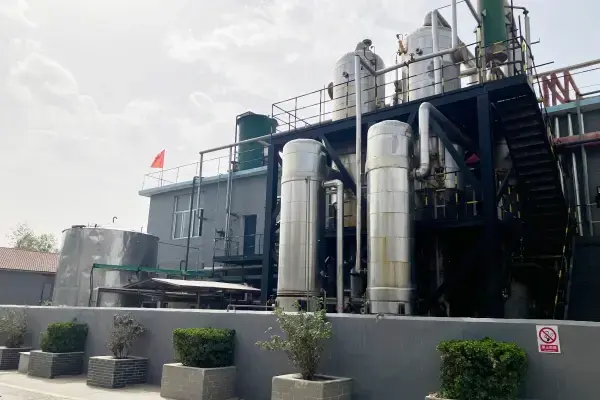
Comparative Analysis: Calcium Nitrate vs. Other Nitrogen Fertilizers
Why Chloride-Based Calcium Sources Fall Short?
Calcium chloride adds chloride ions to plant tissue, where they can build up and hurt crops that aren't used to them. Over time, applying the same thing over and over again also makes the soil saltier. Calcium nitrate is the best way to get calcium in high-value farming programs because it doesn't pose this risk.
Urea and Ammonium Nitrate: Where the Gaps Appear?
It takes ammonium and nitrogen to break down urea so that plants can use nitrogen. This makes it take longer, but calcium nitrate gets rid of it completely. Fertilizers that are based on ammonium can cause plants to grow too quickly and can stop roots from taking in calcium by competing with cations at the root membranes. A lot of nitrate-nitrogen can be made from potassium nitrate, but it doesn't add calcium, so growers have to add calcium separately.
Calcium nitrate is special because it dissolves quickly and gives you both calcium and nitrogen without them competing with each other. It also doesn't take long to convert or have a lot of negatively charged ions. There is less work to do on the science and the supply chain for companies that make complicated water-soluble blends.
Procuring Calcium Nitrate: What B2B Buyers Need to Know?
Evaluating Supplier Quality Beyond Spec Sheets
If the standard sheet says ">99% assay," that's just a place to begin. It's not a promise. Along with the product's claimed purity, tough buying teams look at three quality vectors that can be measured to evaluate calcium nitrate quality:
- Heavy metal content (Pb, Cd, Hg): ICP-OES was used to check the amount of heavy metals (Pb, Cd, and Hg) to make sure it met REACH and farming safety standards. Trace metals can build up in the soil if you go over certain limits. This can make organic or specialty certification programs not work.
- Water-insoluble matter: Gravimetric research is used to find out how heavy something is that doesn't dissolve in water. Low levels (less than 0.01%) are needed for high-end fertigation to keep the mixing tank clean and the drip emitter working well.
- Crystal integrity and caking behavior: Whether the product comes as free-flowing crystals or a fused mass depends on how well the PE-liner is wrapped inside and treated to prevent caking. The reason for this is that the substance is great at taking in water.
Logistics, Storage, and Packaging Considerations
Bulk shipments need to be kept below 30°C, dry, and with less than 60% relative humidity. For things to keep their flowability, they are often packed in PE-lined bags with heat-sealed seals that keep out wetness. As an oxidant (UN Class 5.1), the product must be shipped according to IMDG and IATA rules. When you work with a seller who has experience shipping, the time it takes to clear customs is cut down by a lot.
Trusted Brands and Suppliers of Calcium Nitrate
The world market is made up of well-known companies like Yara International and Haifa Group, which are both very good at selling products for farming. China has made a lot of progress in their professional skills. Now, they can compete with companies in India, Southeast Asia, Latin America, Africa, and North America on price and quality.
One company that has changed a lot is Yunli Chemical, which was founded in 2005 and is based in Yuncheng City, Shanxi Province. The business meets world standards for growth and compliance. It makes more than RMB 1 billion a year in sales, has fixed assets worth RMB 300 million, and has three management certifications (ISO 9001, ISO 14001, and OHSAS 18001). It has a provincial technology center with high-tech ICP-MS and atomic absorption spectrometers that make all kinds of calcium nitrate materials, from regular farming grades to 4N materials that are very pure. There are a few things that can slow down first-time B2B partnerships, but they don't happen when you can sell directly from the factory, handle your own exports, and not have a minimum order number.
Conclusion
A company that makes water-soluble fertilizer can still get calcium nitrate tetrahydrate, which is one of the most important things for their business. It has two types of nutrients, which makes formulating it easier and helps farmers with real problems. It works with precise watering methods too. It is important to choose the right supplier, though, so that these benefits can be seen on a large scale. One way to tell the difference between transactional sellers and trusted long-term partners is to look at their heavy metal controls, packaging standards, and ability to follow export laws. Since it opened 20 years ago, Yunli Chemical has been making chemicals and has good equipment that has been cleared. It's a good choice for buyers who want to set up stable supply lines at a low cost.
FAQ
Can calcium nitrate be mixed with phosphate or sulfate fertilizers in the same tank?
No. When you mix calcium nitrate with sulfates like magnesium sulfate or potassium sulfate, you get gypsum, which is calcium sulfate that doesn't dissolve. When you mix calcium phosphate with sulfates, you get calcium phosphate that doesn't dissolve. Both of these things stop water from getting to plants and nutrition from getting to them. Separate the steps for mixing for each tank, or use a list of what tanks can work with what.
Why does the product sometimes liquefy inside the bag?
A lot of water is soaked up by this chemical. This happens when the crystals are kept in a place with a humidity level above 60% RH or when the packaging is broken. The crystals take in moisture from the air until they dissolve. Store in a cool, dry place in bags that are sealed to keep water out.
What is the difference between agricultural grade and technical grade?
Most of the time, technical grade means that the purity is above 99% and the iron content is tightly controlled to make sure that clear solutions are available for uses in industry, such as mixing rubber or adding to concrete. Agricultural grade has a little more room for iron traces and insolubles, but it still meets food safety standards.
Is this compound hazardous during transport?
It is an oxidizer in UN Class 5.1. Even though it doesn't change chemically when it's not being used, it makes fires bigger when it comes in touch with living things. Individual safety gear (PPE) like gloves and safety glasses are needed when working.
Source Your Calcium Nitrate Supply Through Yunli Chemical
Yunli Chemical sells calcium nitrate that is very pure and has been checked and approved by people all over the world who make fertilizer, trade in agricultural products, and buy things for industry. You don't have to guess where to find things because we offer factory-direct prices, ISO-certified quality control, custom packaging, and free samples of up to 500 grams. Get in touch with us right away if you need a trusted source for large calcium nitrate for production or to store for the season. You can email us at wangjuan202301@outlook.com.

References
1. Sonneveld, C., & Voogt, W. Plant Nutrition of Greenhouse Crops. Springer, 2009.
2. Marschner, H. Mineral Nutrition of Higher Plants (3rd ed.). Academic Press, 2012.
3. Hochmuth, G., & Hanlon, E. "Nitrogen Sources for Vegetable Crop Production." University of Florida IFAS Extension, 2010.
4. Bar-Tal, A., et al. "Calcium nutrition of greenhouse tomatoes as related to fruit quality." Scientia Horticulturae, 2001.
5. Trenkel, M. E. Slow- and Controlled-Release and Stabilized Fertilizers: An Option to Improve Nutrient Use Efficiency in Agriculture. IFA (International Fertilizer Industry Association), 2010.
6. Savvas, D., & Gruda, N. "Application of soilless culture technologies in the modern greenhouse industry." European Journal of Horticultural Science, 2018.