


Why Nickel Nitrate Hexahydrate Purity Matters for OEM Production
When it comes to OEM manufacturing, the purity of your raw materials can make or break your final product. Nickel nitrate hexahydrate (CAS# 13478-00-7, Ni(NO₃)₂·6H₂O, MW: 290.81) is a green crystalline inorganic salt that serves as a foundational precursor across catalyst synthesis, electroplating baths, battery material production, and ceramic colorants. Even marginal impurity deviations — measured in parts per million — can destabilize reaction kinetics, compromise coating adhesion, or reduce battery cycle life. For OEM procurement teams, choosing the right purity grade is not a preference; it is a production necessity.

Understanding Nickel Nitrate Hexahydrate and Its Chemical Profile
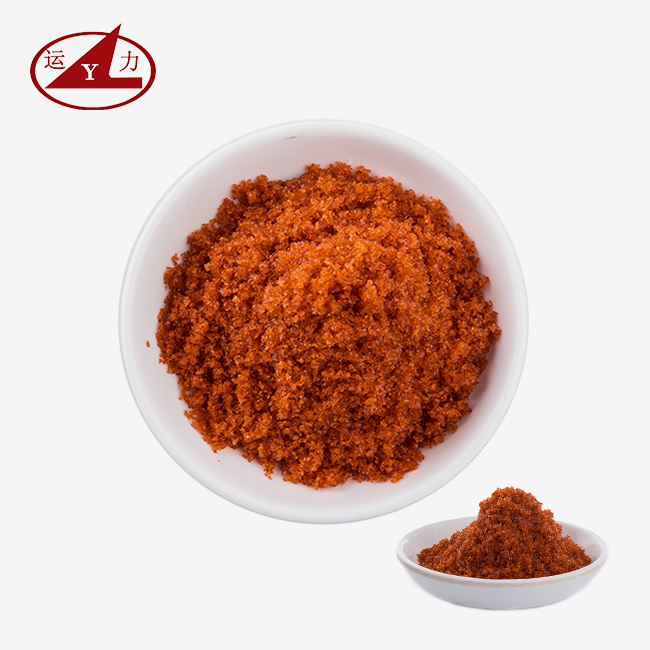
Before getting into what pure means, it's helpful to know what the object is. Ni(NO₃)₂·6H₂O crystals are very bright blue-green. They have a specific density of 2.05 and a very low melting point of 56.7°C. It draws a lot of water from the air and breaks down in dry air if it is not kept properly. Its boiling point is 136.7°C, and around 100°C, it starts to lose water molecules, slowly changing into its dry form.
Solubility and Reactivity Characteristics
The compound dissolves easily in water (more than 100 g per 100 mL at 20°C). It also dissolves in alcohol, but not as well in acetone. The pH of its water solution is usually between 3.5 and 5.5, which means it is acidic. It reacts strongly with organic chemicals and is known as an oxidizer (Class 5.1, UN 1477). This is an important safety note. If you swallow it, it will hurt you, and you need to follow the right procedures for dealing dangerous materials. Baseline product definition is an important part of evaluating suppliers because it determines how well the product works in industry processes.
How Purity Is Measured and Certified
Nickel nitrate hexahydrate used in industry usually has a purity level of ≥98.5%, but high-end catalyst and battery uses need a purity level of ≥99.5%. A reputable supplier will check the purity by using ICP-OES analysis, EDTA titration to find out how much nickel is in the product, and close monitoring of anionic impurities like chlorides and sulfates. Often, a chloride level below 50 ppm is needed to keep stainless steel reactor tanks from stress rusting while they are being heated. As a minimum, you need to get a Certificate of Analysis (CoA) and a Safety Data Sheet (SDS) from your provider.
Why Purity Is Critical for OEM Production Success
Every process that comes after your nickel salt source picks up trace amounts of pollution. Iron (Fe) ions change the voltage stability in battery cathodes when there are a lot of them. Copper (Cu) particles change how selective a catalyst is in hydrogenation processes. Anions like sulfate or chloride eat away at reactor substrates and poison active catalytic sites. These aren't just theoretical risks; they lead to batches being rejected, catalysts wearing out faster, and unstable production yields.

Purity's Impact Across Key OEM Applications
The three main ways this nickel salt is used in industry are affected by the purity level:
- Catalyst manufacturing relies on ultra-low iron grades (Fe ≤30 ppm) because iron contamination disrupts nickel oxide dispersion on alumina or silica supports during calcination. Decomposition to NiO begins at approximately 260°C, and any residual sulfur or chlorine from impure feedstock poisons the active nickel sites permanently. Yunli Chemical's catalyst-grade material adjusts to 99.5% purity with controlled impurity profiles tailored to hydrogenation and steam methane reforming applications.
- Battery precursor synthesis for NCM or NCA cathodes requires Cu ≤5 ppm and Pb ≤2 ppm. Calcium and magnesium impurities disrupt the crystalline lattice of the mixed metal hydroxide precursor, directly reducing energy density and shortening cycle life in the finished cell. Battery-grade specifications are non-negotiable for EV supply chain qualification.
- Electroplating and surface treatment demands sulfate-free formulations to comply with RoHS and wastewater treatment standards. Grain refinement and corrosion resistance in nickel-plated coatings depend on bath chemistry stability, which high-purity feedstock preserves over extended plating cycles.
These gaps in performance caused by purity can be measured and are well-documented in the literature of materials engineering. They make the point that choosing the purity grade should come before shortlisting suppliers, not after.
Comparing Nickel Nitrate Hexahydrate with Alternative Nickel Salts
This compound is often compared to nickel sulfate (NiSO₄·6H₂O) and nickel chloride (NiCl₂·6H₂O) by OEM procurement teams. The differences are important and depend on the purpose. For nickel nitrate hexahydrate, the nitrate anion is the key differentiator — it decomposes cleanly during thermal processing, leaving no sulfate or chloride residues that could interfere with catalyst performance or plating quality.
Why the Nitrate Anion Offers a Technical Edge
Between 260°C and 300°C, the nitrate anion breaks down thermally into gaseous oxides (NOₓ), leaving behind no sulfur or halide contaminants. When nickel sulfate breaks down, sulfur residues are left behind that can stop catalyst surfaces from working for good. When nickel chloride is heated, it gives off chlorine, which eats away at stainless steel and causes halide poisoning. These are big problems when making petroleum catalysts and working with ceramics at high temperatures.
If you use nickel sulfate in standard electroplating baths, where it costs less per unit of nickel, it can save you money. Nickel chloride is valuable because it dissolves and conducts electricity more easily in Watts-type soldering solutions. Ni(NO₃)₂·6H₂O, on the other hand, always gives the cleanest and most constant profile when process cleaning, thermal decomposition behavior, and downstream purity standards are the most important things to consider.
Procuring High-Purity Nickel Nitrate: What OEM Buyers Need to Know?
To find a trusted source of high-purity nickel nitrate hexahydrate, you need to look at more than just price when comparing sellers.
Key Criteria for Supplier Qualification
The most important operational metric is consistency from batch to batch. Nickel content should be checked to be between 19.8% and 20.2% per lot, and water-insoluble matter should be less than 0.005% to keep spray dryers and finishing equipment from getting clogged. Not self-reported figures, but ICP-MS or atomic absorption spectroscopy must be used to prove the presence of trace metals. If asked, suppliers should give full CoA paperwork, MSDS, and records of third-party audits.
Risk in the supply chain is just as important. Nickel is a strategic commodity whose price changes a lot on the London Metal Exchange (LME). Suppliers with stable inventory buffers, pricing mechanisms linked to the London Metal Exchange (LME), and flexible packaging options, such as 25 kg PE bags and liquid tanker deliveries, greatly lower the risk of procurement. Liquid-phase nickel nitrate solution gets rid of the dissolution step completely, which in direct-feed production settings saves 15–20% on energy costs.
Optimizing Production with the Right Purity Grade
Picking the right purity level from the start stops quality problems that cost a lot more to fix than the extra money spent on better material. When catalyst makers move from standard-grade to low-iron standards, they always say that the catalysts have a higher turnover rate and last longer. When nickel salt impurity profiles are tightened, battery makers using NCM 811 lines have seen improvements that can be measured in the consistency of discharge capacity.
Proper keeping is also very important. Because the substance absorbs water and melts at 56.7°C, materials must be kept in sealed cases below 30°C with controlled humidity. The people who work in production who handle this oxidizer class material need to be trained on how to keep it separate from organic chemicals and follow IMDG/IATA transport rules.
Conclusion
Nickel nitrate hexahydrate purity is not a side point; it is the variable that determines whether your catalyst works consistently, your battery cell works consistently, or your plating bath keeps its makeup over time. OEMs that use purity benchmarking as part of their procurement qualification process see improvements in yield, compliance, and long-term cost control that can be measured. It's a technical field to find the right purity grade for your process chemistry, and it starts with working with a supplier that can provide quality that can be tracked and documented.

FAQ
What purity grade of nickel nitrate hexahydrate is suitable for catalyst production?
For making catalysts, the purity needs to be at least 99.5% and the Fe level needs to be below 30 parts per million. During calcination, iron contamination makes it harder for nickel oxide to spread out on catalyst supports. This lowers the surface activity in hydrogenation and steam reforming processes.
Why does nickel nitrate hexahydrate cake during storage?
It absorbs water and partly melts because it is hygroscopic and has a low melting point (56.7°C). To keep the free-flowing crystals intact, store them in cases with tight lids below 30°C in a wet place.
How do trace impurities affect battery precursor quality?
Impurities like calcium, magnesium, copper, and lead make it hard for the NCM precursor lattice to form during co-precipitation. Even small amounts lower the energy efficiency and shorten the cycle life of finished lithium-ion batteries. Battery-grade material with Cu ≤5 ppm and Pb ≤2 ppm is the standard in the business.
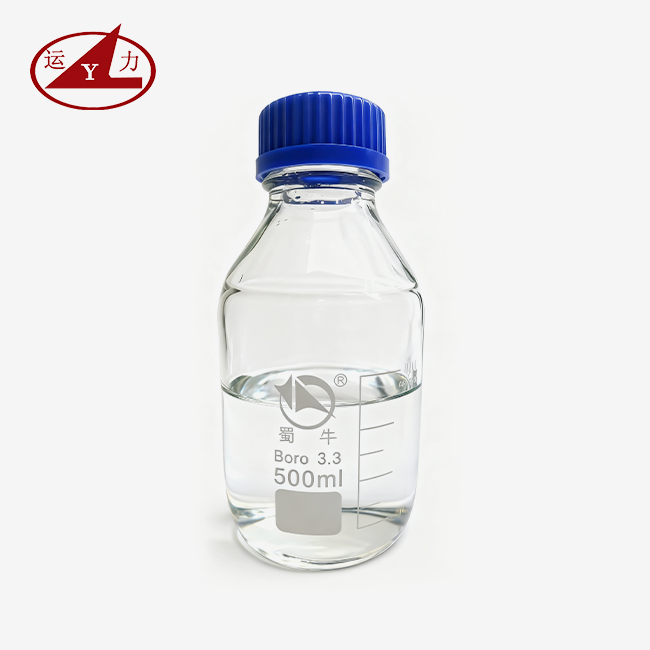
Is liquid nickel nitrate solution available, and what are its advantages?
Yes. Liquid-phase solutions get rid of the need for dissolution, which cuts energy use by 15–20% and makes dosing more accurate in continuous production lines.
Partner with Yunli Chemical for Certified High-Purity Supply
The company Yunli Chemical has been making nickel nitrate hexahydrate for more than 20 years and makes more than 1 billion yuan a year. They give purity grades from 98.5% to 99.5%, custom impurity profiles, flexible packing, and free samples of up to 500 grams. They are ISO 9001, ISO 14001, and OHSAS certified, and they check every lot with an in-house ICP-MS. You can email our technical team at wangjuan202301@outlook.com to get your standard sheet and begin the approval process right away.
References
1. Richardson, J. T. Principles of Catalyst Development. Springer, 1989.
2. Whittingham, M. S. "Lithium Batteries and Cathode Materials." Chemical Reviews, 2004.
3. Schlesinger, M., & Paunovic, M. Modern Electroplating, 5th ed. Wiley, 2010.
4. Bartholomew, C. H., & Farrauto, R. J. Fundamentals of Industrial Catalytic Processes, 2nd ed. Wiley, 2006.
5. Goodenough, J. B., & Park, K.-S. "The Li-Ion Rechargeable Battery: A Perspective." Journal of the American Chemical Society, 2013.
6. Tanner, C. W., & Virkar, A. V. "Instability of NiO in Reducing Atmospheres." Journal of the Electrochemical Society, 1996.