


Aluminium Nitrate Nonahydrate Supplier Guide for Lab and Industry
If you work in catalyst manufacturing, textile dyeing, or fine chemical synthesis, sourcing the right aluminium nitrate nonahydrate can make or break your production quality. This guide walks you through everything you need — from core chemical properties and application grades to supplier evaluation criteria and safe handling protocols. Whether you are a procurement manager comparing vendors or a lab technician verifying specs, you will find actionable, evidence-based information here to make a confident sourcing decision.

Understanding the Chemical and Physical Properties
What the Data Sheet Actually Tells You?
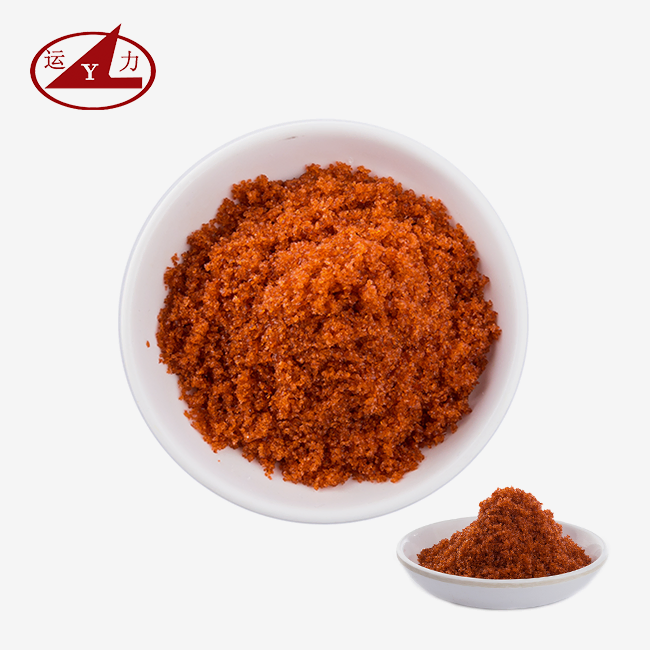
Aluminium nitrate nonahydrate, with the chemical formula Al(NO3)3-9H2O and a molecular weight of 375.13 g/mol, is a white solid salt with a strong hygroscopic nature. It melts at 73.9°C and dissolves in its own water of crystallization. At about 150°C, it starts to break down thermally, giving off nitrogen oxides and eventually turning into aluminum oxide (AlO). While it dissolves very well in water (64 g/100 mL at 25°C), it doesn't dissolve very well in alcohols or ethylene glycol. Since water-based treatments are acidic and the substance has a strong oxidizing ability, it is important to rinse the skin right away after touching it.
These numbers are not vague. With a freezing point of 73.9°C, the substance can turn into a liquid during shipping in warm weather if the package isn't strong enough. A 150°C decomposition threshold tells reactor engineers exactly how much thermal headroom they have left before the nitrate ligand starts to leave the structure. This is a very important detail that directly controls the calcination protocols used to prepare the catalyst.
Safety Classification at a Glance
The substance is in UN Number 1438, Packing Group III, as a Class 5.1 oxidizing chemical. For handling, you need safety goggles, rubber or neoprene gloves, and enough air flow. It needs to be stored in cool, dry warehouses in sealed, moisture-proof bags, away from flammable organics and reducing agents. Every business package should have SDS paperwork, a Certificate of Analysis (COA), and an Origin Certificate.
Industrial and Laboratory Applications
Catalyst Precursor: The High-Value Use Case
This aluminum salt is most useful when it is used as a catalyst precursor in the production of petrochemicals and organic compounds. When heated, it breaks down into high-surface-area gamma-alumina without leaving behind any corrosive leftovers. This is a big benefit over aluminum sulfate or chloride, which can leave behind sulfur or halide ions that poison active catalyst sites over time. Studies in industrial catalysis show that iron pollution above 30 ppm shortens the life and sensitivity of catalysts in a measurable way. That's why technical buyers in this area set a limit of Fe ≤ 30 ppm that can't be crossed.
In addition to catalysis, the compound is used as a mordant in textile dyeing. It creates stable coordination bonds between the fiber and the dye molecule, which makes the fabric more resistant to light and washing, especially cotton and silk. It can also be used as a building block to make other aluminum salts and specialized alumina products that are used in electronics and high-tech ceramics.
Laboratory vs. Industrial Grade: Choosing the Right Specification
Laboratory-grade material needs to be at least 99.9% pure and have tightly controlled heavy metal profiles. Industrial-grade material, on the other hand, needs to be at least 98.0% pure and have realistic impurity ceilings (Fe < 0.003%, Cl⁺ and SO₄²⁺ at trace levels). If you choose the wrong grade, like industrial material for an analytical synthesis, you introduce variables that change the results. Before finalizing an order, procurement teams should ask for a full ICP-MS impurity report, not just the headline purity figure.
For manganese nitrate 50% solution, this distinction between laboratory-grade and industrial-grade purity is critical — the right grade ensures analytical accuracy in research applications and consistent performance in industrial catalyst or electronics production. The same principle applies to aluminium nitrate nonahydrate, where grade selection directly affects catalyst activity, textile processing consistency and fine chemical synthesis outcomes.
How to Choose and Procure the Right Supplier?
Choosing a supplier is where most of the buying risk lies. A perfectly fine product from a source that can't be trusted still slows down production. Before you sign a supply agreement, here are the main things you should think about.
- Certified quality management: ISO 9001 certification signals that the supplier's production and inspection processes operate within a documented, auditable framework. Suppliers holding additional ISO 14001 and OHSAS certifications demonstrate environmental and occupational safety discipline — attributes that matter when importing into the U.S. or EU under increasingly rigorous compliance environments.
- Impurity control capability: Ask specifically for ICP-MS or atomic absorption spectrometry data on Fe, Na, Cl, and SO₄ across at least three consecutive production batches. Batch-to-batch consistency is as important as a single-point result; catalyst engineers revalidate their processes against a moving average, not a best-case number.
- Sampling and trial order policy: Reputable manufacturers offer free samples (up to 500 g) with a lead time of 48 hours or less, and they support small trial orders of 1–5 metric tons before you commit to an annual framework agreement. Suppliers who resist sampling deserve skepticism.
- Packaging and logistics flexibility: Depending on your downstream process, you may need 25 kg PE-lined bags, 1,000 kg bulk containers, or ISO tanks for liquid concentrates. Confirm that the supplier can accommodate your format, provide UN-compliant labeling, and ship with a standard lead time of 15 days (expedited 7 days) alongside complete documentation.
All of these factors lower the chance of getting materials that don't meet specifications, having a supply interruption, or having to wait for goods to clear customs, all of which can cause unplanned production downtime.
Safe Handling, Storage, and Environmental Responsibility
The nitrate salt is a strong oxidizer, so even small mistakes can get worse very quickly. When working with crystalline forms, people who handle the material should wear gloves that are resistant to chemicals, splash shields, and a dust mask or respirator. If it gets on your skin, wash it off with water right away and for at least 15 minutes. Eye contact needs to be looked at by a doctor right away.
Temperatures and humidity should be kept below 30°C and under control in storage sites. Because the substance is deliquescent, even short contact to humid air can cause surface caking, which raises the bulk density and makes it harder to dose accurately in production lines that work all the time.
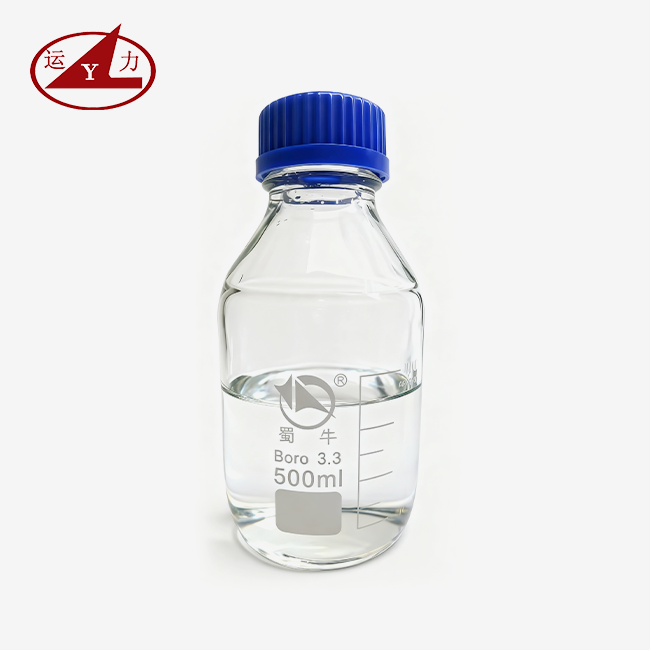
Containers must stay closed when they're not being used. For manganese nitrate 50% solution, however, this deliquescence risk is largely avoided because the liquid form is already dissolved and sealed — eliminating caking, dust and the dosing inconsistencies that solid manganese salts can cause in continuous production. The same advantage applies to aluminium nitrate nonahydrate when supplied as a liquid: sealed storage prevents moisture uptake, keeps concentration stable and supports accurate dosing in automated catalyst and chemical processes.
When it comes to the environment, nitrate-containing wastewater needs special cleaning before it can be released. Suppliers with well-established in-house systems for treating wastewater and exhaust gasses pose less of a legal risk to their clients, especially those who have to follow U.S. EPA or EU REACH rules. A simple due diligence step that many procurement teams forget to do is to ask your supplier for an environmental compliance certificate.
Supplier Comparison and Decision Support
Western specialty chemical distributors, major catalog suppliers, and direct-from-manufacturer sources in Asia are all options for buying chemicals around the world. Most of the time, Western distributors give perfect paperwork and nearby storage, but they charge a lot more. If you work directly with manufacturers, especially certified Chinese ones, you can cut landed costs by 30–60% without losing quality as long as the seller has proven ISO certifications and a quality control system that can be tracked.
This group is well represented by Yunli Chemical (yunlichemical.com), which was founded in 2005 and has its main office in Shanxi Province, China. The company makes more than 1 billion yuan a year, has fixed assets worth 300 million yuan, and is recognized as a Shanxi Provincial Enterprise Technology Center. It runs ICP-MS and atomic absorption spectrometry labs that can produce 4N-grade high-purity output. Its self-run export section cuts out markups from middlemen, and its one-stop nitrate portfolio of over 60 types makes buying multiple products easier. For catalyst makers in particular, the company's special low-iron control process consistently gives Fe ≤ 30 ppm, and Na and Cl limits can be changed upon request.

Conclusion
To find good aluminum nitrate nonahydrate, you need three things: requirements for confirmed purity, batch consistency, and a provider that can keep up with both of these things over time. For people who make catalysts, the iron level barrier is the most important factor. When people buy textiles and fine chemicals, both test purity and freedom from halide poisoning are important. No matter what application is driving your demand, before you scale up, make sure you have ICP-verified batch data, quality management that is backed by ISO, and a clear sampling protocol. If you make a bad choice about a provider, it will cost you a lot more in the long run in the form of deactivated catalysts, dyes that don't mix right, or production delays.
For aluminium nitrate solution liquid, these same criteria apply — verified purity, batch-to-batch consistency and a supplier with ISO-backed quality systems are what prevent costly downstream failures in catalyst, textile and fine chemical production. The same standards hold true for aluminium nitrate nonahydrate, where grade verification, trace impurity control and reliable batch data are equally essential before scaling up production.
FAQ
What is the molecular weight of aluminium nitrate nonahydrate?
Its molecular weight is 375.13 g/mol, which is the same as the formula for Al(NO₂)₃·9H₂O (CAS# 7784-27-2).
Why is iron content so critical for catalyst applications?
Any iron impurities above 30 ppm poison the catalyst, making it less selective and shortening its useful life. Catalyst engineers set a strict acceptance level of Fe ≤ 30 ppm.
How does this aluminum salt compare to aluminium sulfate in catalyst synthesis?
The nitrate form of aluminum doesn't leave behind sulfur residues that need to be washed off thoroughly after calcination like the sulfate form does. This makes the chemical process easier and keeps the catalyst's action safe.
What are the UN transport requirements?
It is shipped under UN 1438, Class 5.1 (Oxidizing Substance), Packing Group III. During transportation, it must be kept away from flammables and reducing agents.
Can suppliers provide customized impurity profiles?
Yes, Fe, Na, Cl, and SO₄ limits can be changed to fit your process needs by well-known manufacturers. Before you approve a new provider, you should always ask for batch COA and ICP data.

Partner with Yunli Chemical for Reliable Aluminium Nitrate Nonahydrate Supply
Yunli Chemical offers certified aluminum nitrate nonahydrate with Fe levels below 30 ppm. They are ISO 9001-compliant and send out free 500 g samples within 48 hours. We cut out the middlemen and keep your costs low because we are a straight producer of aluminum nitrate nonahydrate with 20 years of experience and our own export team. You can email our technical team at wangjuan202301@outlook.com to get a specification sheet and custom quote right away.
References
1. Kirk-Othmer Encyclopedia of Chemical Technology — Aluminum Compounds, 5th Edition, Wiley, 2004.
2. Industrial & Engineering Chemistry Research — "Preparation of High-Surface-Area Gamma-Alumina from Aluminum Nitrate Precursors," Vol. 45, 2006.
3. Applied Catalysis A: General — "Effect of Iron Impurities on Alumina-Supported Catalyst Performance in Hydrodesulfurization," Vol. 312, 2006.
4. Dyes and Pigments — "Mordant Dyeing of Cotton with Metal Salt Complexes: Colorfastness and Fiber Interaction," Vol. 74, 2007.
5. Chinese National Standard GB/T 25578 — Industrial Aluminium Nitrate, Standardization Administration of China, 2010.
6. Journal of Hazardous Materials — "Thermal Decomposition Kinetics of Aluminium Nitrate Nonahydrate and Associated NOₓ Emission Control," Vol. 166, 2009.