


Calcium Nitrite Powder Uses in Ready-Mix Concrete and Mortar
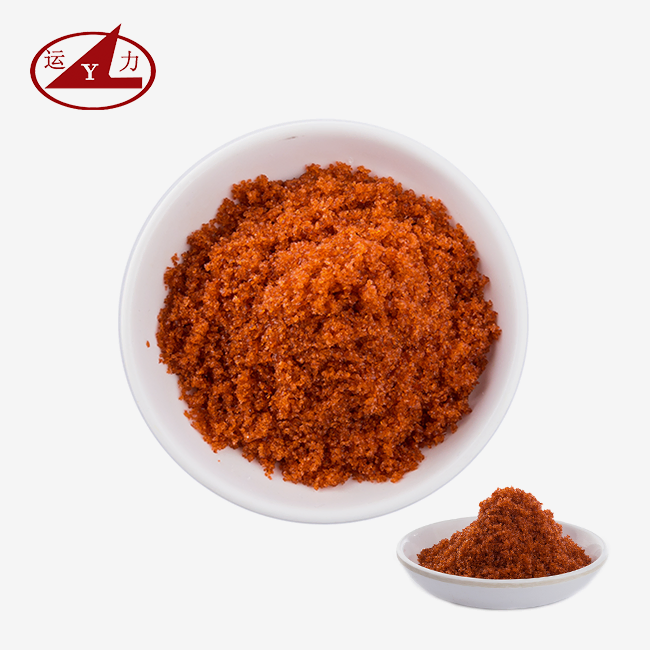
Calcium nitrite powder (Ca(NO₂)₂, CAS 13780-06-8) plays a decisive role in ready-mix concrete and mortar manufacturing. As a non-chloride corrosion inhibitor and early-strength accelerator, it protects embedded steel reinforcement from chloride-induced oxidation while improving curing performance in cold-weather conditions. With a purity of ≥99.5% and tightly controlled impurity limits, this pale yellow crystalline compound integrates cleanly into dry-mix mortar systems, antifreeze admixtures, and industrial grout formulations—making it a dependable raw material for procurement teams who need measurable, repeatable results across batches.

Understanding Calcium Nitrite Powder and Its Role in Concrete
Even though concrete seems to be harmless, the steel rebar that is buried in it is always at risk from electrochemical attacks. When chloride ions get into the concrete from seawater, deicing salts, or harsh ground conditions, they damage the passive oxide layer on the surfaces of the rebar, which starts the corrosion process. If this process isn't stopped, it leads to cracks, flaking, and structural failure, which costs the U.S. construction industry about $270 billion a year in repairs and replacements.
How the Inhibition Mechanism Works
Anodic corrosion can't happen when calcium nitrite is present. The nitrite ion (NO₂⁻) competes directly with the chloride ions on the surface of the steel, turning ferrous ions (Fe²⁺) into ferric oxide (Fe₂O₃) and making the passive film stronger. Studies in the journal Cement and Concrete Research show that a molar ratio of NO₂⁻ to Cl⁻ above 0.6 is enough to keep the material passivity in most structure situations. This electrochemical process has been studied a lot and can be repeated, which is very important for design engineers. For calcium nitrite powder, this well-documented mechanism provides a reliable basis for specifying corrosion protection in reinforced concrete exposed to chlorides.
Key Physical and Chemical Properties
The compound has a melting point of 100°C and a molecular weight of 132 g/mol. Its density ranges from 2.23 g/cm³ (when it's dry at 34°C) to 2.53 g/cm³ (when it's wet). It dissolves quickly in water but not so quickly in alcohol. For this reason, watery pre-dissolution is the best way to dose liquid additive systems. It is colorless to pale yellow as a powder, and it absorbs a lot of water. This is something that procurement teams have to think about when planning how to store it.
Because it doesn't contain chloride (unlike calcium chloride boosters), it doesn't increase the risk of rusting while also decreasing it. This non-chloride profile meets the requirements of ASTM C494 Types C and CI, which gives project engineers a clear audit trail for structural certifications.
Application Methods and Best Practices for Calcium Nitrite Powder
Using the right amount of any concrete additive and mixing it the right way are very important for getting good results. There are two useful methods for evenly dispersing calcium nitrite powder, which is essential for its best performance.
Dosing and Mixing Guidelines
Depending on how much chloride is expected to be present, the recommended amount for stopping corrosion is between 2% and 4% by weight of the cementitious material. In places with less chloride, like distant buildings that don't come into direct contact with deicing salt, a 2% amount is usually enough. Marine bridges, parking decks along the coast, and port infrastructure usually need between 3 and 4 percent. These levels are in line with the ASTM G109 standard test protocol for checking admixtures that stop corrosion.

Here are the two well-known ways that formulators add numbers:
- Pre-dissolution in gauging water: Before mixing, mix the powder with some of the mix water. This method makes sure that the cementitious material is evenly distributed and gets rid of the risk of concentration zones, which can change the set time in unpredictable ways.
- Dry-blending with aggregate: For dry-mix mortar and fix goods that come in bags, the powder is mixed with the aggregate part before the cement is added. It's important that the particles are spread out evenly, and a consistent D50 value makes sure that the inhibitor doesn't separate during transport or batching.
Both ways can be used with polycarboxylate superplasticizers (PCE), but it's best to make sure they're compatible first because calcium nitrite may need a small increase in PCE dose to keep goal slump values.
Storage and Handling Requirements
Any nitrite-based powder is hard to work with because it absorbs water. Caking happens when moisture is absorbed, which makes the substance less fluid and makes it harder to dose accurately by weight. Keep the stuff in a cool, dry, well-ventilated warehouse in the moisture-proof packaging it came in. As soon as a bag is opened, it needs to be closed again. Under normal conditions, it can stay on the shelf for 12 to 18 months without losing any of its active nitrite content.
You have to store things in this way because they protect the concentration of measurable NO₂⁻ that the inhibitor needs to work.
Comparing Calcium Nitrite Powder with Alternative Corrosion Inhibitors
When purchasing managers look at corrosion inhibitors for ready-mix concrete, they usually compare calcium nitrite to three other common options: calcium chloride, sodium nitrite, and calcium nitrate. Each has its own performance style and set of rules that must be followed.
Calcium chloride is the most common set accelerator, but the chloride substance of it doesn't work well with goals for rust defense. The ASTM C1107 and ACI 318 standards either limit or ban its use in reinforced and pre-stressed concrete. Sodium nitrite also stops electrochemical reactions, but its sodium content makes people worry about the alkali-silica reaction (ASR) in reactive aggregate systems, and OSHA 29 CFR 1910.1000 sets stricter limits on how much of it workers can be exposed to.
Calcium nitrate is sometimes advertized as a chloride-free booster. It increases power quickly but doesn't do as well at passing electrons as the nitrite ion. A study published in 2018 in the journal Construction and Building Materials showed that equivalent molar concentrations of Ca(NO₂)₂ were better than Ca(NO₃)₂ at delaying the start of corrosion by 1.8 times when chloride ponding was happening quickly.
Calcium nitrite powder, on the other hand, has two functions: it slows things down and speeds them up. It has a good track record for performance and regulation. Because it doesn't contain chlorides and has a low sodium level (Na ≤ 50 ppm in high-purity grades), it can be used in almost all reinforced and pre-stressed concrete projects.
Procurement Guide for Calcium Nitrite Powder: Suppliers, Pricing, and Ordering
Finding a trustworthy calcium nitrite powder supplier is more than just comparing prices per unit. Inconsistent purity, an unstable particle size distribution, and bad packaging all have real costs that show up later: failed batch tests, work needed to redo the recipe, and project schedule delays.
Before agreeing to a trial order, buying teams should check the following about a supplier:
- ISO 9001 quality management certification confirms that production follows a written system that can be checked, instead of depending on the operator's opinion alone.
- Batch-specific Certificate of Analysis (COA) includes the nitrite test results, the chloride ion content (target <0.1%), and information on the particle size distribution.
- Moisture-proof packaging options—at least 25 kg sealed bags, and large containers are available for people who buy a lot.
- Technical support availability—a supplier's ability to help with recipe compatibility testing shows real manufacturing depth, not just trade activity.
For the first qualification, trial order quantities of 1 to 5 metric tons are common. Prices depend on the purity grade and the amount you buy. Industrial-grade material (≥94% active content) costs less than high-purity grades (≥99.5%), which are used in dry-mix mortar uses where trace metal contamination could change the chemistry of the admixture.
Conclusion
In the making of ready-mix concrete and mortar, calcium nitrite powder plays an essential role in technology. It can stop corrosion and speed up the curing process without chlorides. It also works with both dry-mix and liquid admixture systems, which makes it a good choice for procurement teams that need to balance performance, cost, and regulatory compliance. With the right supplier relationship, you can control the three most important factors: purity, particle size, and the integrity of the packaging. Most field performance risks can be avoided by basing purchase on verified COA paperwork, approved quality systems, and tried-and-true cold-chain packing.

FAQ
Does calcium nitrite powder affect concrete air content?
It usually has no effect on entrained air or a small amount of an effect that makes it less dense. Small changes may need to be made to the amount of air-entraining agent used, but usually no major changes need to be made to the recipe.
Why is it preferred over calcium chloride for reinforced concrete?
Calcium chloride makes steel reinforcement rust faster. Calcium nitrite stops it from happening. This is the exact reason why ACI 318 limits calcium chloride in strengthened and prestressed uses.
How long before corrosion protection becomes measurable?
The top of the rebar starts to passivate as soon as it gets wet. As shown by ASTM G109 half-cell potential monitoring, a measurable delay in the start of corrosion can usually be seen within 28 to 90 days, depending on how much chloride is exposed.
How should the powder be stored to prevent caking?
In a cool, dry warehouse, keep it sealed in the moisture-proof packaging it came in. Quickly close any bags that have been opened. If you store something properly, the active nitrite content will stay the same for 12 to 18 months.
Is it compatible with polycarboxylate superplasticizers?
Yes. However, because calcium nitrite speeds up setting, it's best to do a compatibility test first. PCE dosage may need a small increase to stay within the target range.
Request a Sample or Bulk Quote from Yunli Chemical
For more than 20 years, Yunli Chemical has sold highly pure calcium nitrite powder to businesses in the Middle East, Southeast Asia, and the construction industry around the world. We are a direct manufacturer of calcium nitrite powder and are ISO 9001, ISO 14001, and OHSAS certified. We offer purity grades of up to ≥99.5%, particle sizes that can be customized, moisture-proof packaging from 25 kg bags to bulk containers, and free samples of up to 500 g. You can email our technical team at wangjuan202301@outlook.com to ask for a COA or talk about your formulation needs.
References
1. NACE International. (2016). International Measures of Prevention, Application, and Economics of Corrosion Technologies (IMPACT) Study.
2. Berke, N. S., & Hicks, M. C. (1992). Calcium nitrite corrosion inhibitor in concrete. Cement and Concrete Composites, 14(1), 55–65.
3. Ann, K. Y., & Song, H.-W. (2007). Chloride threshold level for corrosion of steel in concrete. Corrosion Science, 49(11), 4113–4133.
4. Hansson, C. M., Mammoliti, L., & Hope, B. B. (1998). Corrosion inhibitors in concrete. Cement and Concrete Research, 28(12), 1775–1781.
5. Li, L., & Sagüés, A. A. (2001). Chloride corrosion threshold of steel in concrete. Corrosion, 57(1), 19–28.
6. Justnes, H. (1998). Corrosion inhibitors for reinforced concrete. Construction and Building Materials, 12(2–3), 121–131.