


How Does Calcium Nitrite Act as Corrosion Inhibitor?
Calcium nitrite works as an anodic corrosion inhibitor by chemically passivating the steel reinforcement embedded within concrete. When nitrite ions (NO₂⁻) migrate to the rebar surface, they react with ferrous ions (Fe²⁺) to form a stable ferric oxide (Fe₂O₃) passive layer, effectively raising the chloride threshold needed to trigger active corrosion. Yunli Chemical's calcium nitrite 30% solution (CAS# 13780-06-8) delivers nitrite ions uniformly throughout the concrete matrix at a consistent 30% ± 0.5% concentration, ensuring that this passivation process is both reliable and measurable across large-scale infrastructure pours.

Understanding Calcium Nitrite 30% Solution and Its Role in Corrosion Inhibition
Chloride-induced corrosion is a silent enemy of reinforced concrete structures that costs a lot of money. Chloride ions can get into concrete from sea spray, de-icing salts, or salty soils. They change the natural neutrality of steel rebar, which causes rust to expand and crack and spall the concrete around it. This is what engineers call "concrete cancer." The American Society of Civil Engineers says that infrastructure damage caused by corrosion costs the U.S. economy more than $270 billion a year. This shows why effective inhibition is not a choice but a basic
The Chemistry Behind Passivation
Calcium nitrite [Ca(NO₂)₂, molecular weight 132] works by creating a competitive balance of ions on the surface of steel. It is nitrite ions that change soluble iron ions into a thick iron oxide film before they can form expanding iron hydroxides. This film covers the anodic spots on rebar, which greatly raises the critical chloride-to-nitrite ratio that needs to be passed before pitting corrosion starts. A study in the journal Cement and Concrete Research shows that keeping the NO₂/Cl⁻ molar ratio above 0.90 at the steel contact is a good design rule for long-term safety.
Physical Properties That Matter in Practice
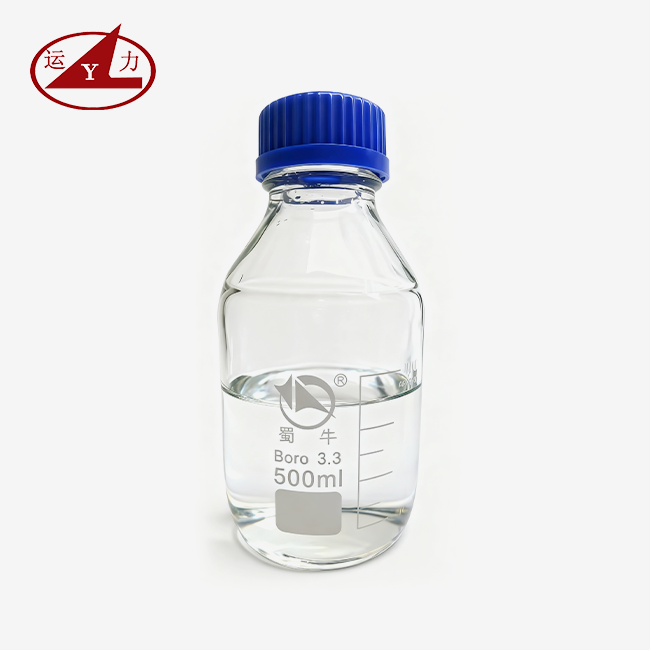
The product from Yunli Chemical has a specific gravity of 1.28–1.32 g/cm³, a pH of 9.0–11.0, less than 0.1% chloride, and less than 10 parts per million heavy metals. The ready-to-use liquid format gets rid of the need to dissolve solids on-site, which cuts down on mistakes and work time. Sodium nitrite adds sodium ions that raise the alkali content of the concrete pore solution and can speed up the alkali-silica reaction (ASR). The calcium-based formulation, on the other hand, doesn't add any harmful alkalis, so it can be used with aggregates that are vulnerable to ASR.
Key Benefits and Application Techniques of Calcium Nitrite 30% Solution
In addition to passive film creation, this mix has two performance profiles that procurement engineers really like. For calcium nitrite 30% solution, these two profiles — accelerated setting and long-term corrosion protection — make it a dual-function admixture that supports both construction schedules and structural durability.
In demanding project settings, this mix stands out because of its core performance traits, which are:
- Extended service life: Independent field studies on marine bridge decks treated with calcium nitrite have demonstrated structural service life extensions exceeding 50 years compared to untreated controls, translating directly into reduced lifecycle maintenance budgets.
- Cold-weather concreting capability: The solution lowers the freezing point of mix water, enabling concrete placement at ambient temperatures as low as -10°C. This eliminates costly project shutdowns during winter months and keeps schedules intact.
- Early strength acceleration: Nitrite ions catalyze cement hydration kinetics, producing measurably higher early compressive strength. Precast producers benefit from faster mold turnover; cast-in-place contractors achieve earlier formwork removal.
- Industrial versatility: Beyond concrete, the 30% solution is effective in heavy oil removal, lubricant emulsification, and chemical processing applications where precise nitrite concentration matters.
All of these features lower both direct building costs and long-term fix costs, which is good news for procurement managers who are responsible for keeping track of life-cycle costs.
Dosage and Application Guidelines
Dosage is directly related to how much salt is expected to be exposed. 10 to 30 liters per cubic meter of concrete is what the industry usually does, according to ASTM C1582. The solution goes right into the water that is mixing it, either before or during batching. Each addition must be added separately to keep the mixture from gelling when it is mixed with superplasticizers or supplementary cementitious materials (SCMs) like silica fume or fly ash. It can be kept for 12 months in plastic or lined stainless steel containers above -15°C to keep it from crystallizing.

Comparing Calcium Nitrite 30% Solution with Alternative Corrosion Inhibitors
Professionals in procurement regularly compare rival inhibitors. The main differences are shown in the table below:
Calcium nitrite is better than sodium nitrite in two important ways: it doesn't load with alkalis, which can cause ASR, and it has less acute toxicity per equivalent dose. Calcium nitrate speeds up the setting process but doesn't protect well against active chloride attack, so it can't be used alone to stop corrosion in naval or de-icing situations. Lithium nitrite works well in small amounts, but it costs a lot more than other chemicals, so it's not usually worth it to use it in large infrastructure pours.
Organic inhibitors, like amino-alcohol-based products, work through a mixed anodic-cathodic process and are easy to apply to the surface. However, their long-term effectiveness under continued chloride loading has been more variable than that of inorganic nitrite chemistry. For projects that need to meet ASTM C1582, which is the standard for additives that stop chloride-induced corrosion, calcium nitrite 30% solution is still the gold standard, with decades of field performance proof.
Procurement Considerations for Calcium Nitrite 30% Solution
Finding this mix requires paying attention to quality factors that have a direct effect on the results of the project.
What Quality Certificates Should You Verify?
A trustworthy company that makes calcium nitrite 30% solution will give you a Certificate of Analysis (CoA) that shows the specific gravity, sulfate levels, pH, and amount of active nitrite within 29% to 31%. If the project requirements call for independent performance confirmation, ask for ASTM G109 macrocell rust test results. The production facility's ISO 9001 certification shows that the processes are always being controlled. Yunli Chemical is certified by ISO 9001, ISO 14001, and OHSAS, and it runs a provincial technology center with ICP-MS and atomic absorption spectrometers for strict quality checks inside the company.
Logistics and Supply Reliability
Due to its ability to oxidize, calcium nitrite is considered a dangerous substance. For both local and international shipments, you must have verified documents for transporting dangerous goods. For big building projects that might need hundreds of tons spread out over several delivery windows, you should look at both price and the supplier's production capacity and warehouse inventory levels. Yunli Chemical has yearly sales of more than RMB 1 billion and fixed assets worth RMB 300 million. This gives them the production size and financial stability that project-scale procurement needs. You can change the packaging and concentration, and samples up to 500 grams are given away for free to help with quality checks before the contract is signed.
Conclusion
Calcium nitrite stops corrosion by protecting the sides of rebar through competitive nitrite-iron chemistry. For calcium nitrite 30% solution, this anodic passivation mechanism is the core of its protective value — it interrupts the corrosion cycle before chloride attack can cause spalling, cracking and costly structural repairs. This raises the chloride barrier that causes pitting corrosion to happen. The 30% liquid recipe makes it easy to measure out the right amount, batch it quickly, and handle it on-site. It has a well-documented mix of anodic inhibition, set acceleration, and cold-weather performance that meets ASTM C1582 standards, compared to sodium nitrite, calcium nitrate, or organic alternatives. It is just as important for procurement teams that are in charge of building bridges, tunnels, marine structures, or precast structures to choose a verified, ISO-certified manufacturer with experience moving dangerous goods as it is the chemistry itself.
FAQ
Does calcium nitrite affect concrete compressive strength?
By speeding up the cement's drying, it usually raises the early compression strength. Most published studies show that there is no negative effect on the strength after 28 days. In many mix designs, early-age strength gains allow the formwork to be removed earlier without affecting the long-term durability.
What is the correct chloride-to-nitrite ratio for effective protection?
A NO₂/Cl⁻ molar ratio of 0.90 or higher is usually what structural engineers aim for at the steel contact. Dosage is changed based on the project specification's predicted chloride exposure class.
Can the solution be used with fly ash or silica fume?
Yes, SCMs make concrete less permeable, which slows the flow of chloride into the steel. Any chloride that does get to the steel is protected by the nitrite. During batching, add each blend separately to keep them from not working with the others.
What storage conditions are required?
Keep above -15°C in polyethylene or lined tanks. Stay away from carbon steel containers that aren't lined on the inside. If freezing causes crystallization, gentle recirculation will get the solution back to the right state. With the right care, the shelf life is 12 months.
Is it compliant with U.S. standards?
Most bridge and marine infrastructure projects in the U.S. call for products that meet ASTM C1582. Before buying something, you should always ask the supplier to show proof that they follow this standard.
Partner with Yunli Chemical for Your Calcium Nitrite 30% Solution Supply
Yunli Chemical is a reliable company that has been making calcium nitrite 30% solution for 20 years, has three ISO certifications, and can send directly from their plant. We provide project-scale amounts on time, with CoA documentation and no minimum order quantity (MOQ) sample tests. You can email our technology team at wangjuan202301@outlook.com to get product details and a reasonable bulk quote.

References
1. Berke, N. S., & Hicks, M. C. (1992). Corrosion of Steel in Concrete. Cement and Concrete Research.
2. ASTM International. (2011). ASTM C1582/C1582M: Standard Specification for Admixtures to Inhibit Chloride-Induced Corrosion of Reinforcing Steel in Concrete. ASTM International.
3. ASTM International. (2007). ASTM G109: Standard Test Method for Determining Effects of Chemical Admixtures on Corrosion of Embedded Steel Reinforcement in Concrete Exposed to Chloride Environments. ASTM International.
4. Elsener, B. (2001). Corrosion Inhibitors for Steel in Concrete — State of the Art Report. European Federation of Corrosion Publications, No. 35.
5. Page, C. L., & Treadaway, K. W. J. (1982). Aspects of the electrochemistry of steel in concrete. Nature, 297, 109–115.
6. Nmai, C. K., Farrington, S. A., & Bobrowski, G. S. (1992). Organic-based corrosion-inhibiting admixture for reinforced concrete. Concrete International, 14(4), 45–51.