


Calcium Nitrate Manufacturing Process Explained Step by Step
Calcium nitrate (Ca(NO₃)₂·4H₂O) is one of the most widely used water-soluble calcium fertilizers in modern agriculture and industrial manufacturing. Understanding how it is produced helps procurement professionals make sharper sourcing decisions — evaluating purity, consistency, and supplier credibility with confidence. The manufacturing process moves through several well-defined stages: raw material preparation, acid neutralization, crystallization, drying, and rigorous quality control. Each step directly influences the final product's calcium content, solubility, and heavy metal profile — factors that matter enormously to fertilizer formulators, concrete admixture producers, and agricultural traders alike.

Understanding Calcium Nitrate: Key Basics for Procurement
Chemical Identity and Physical Properties
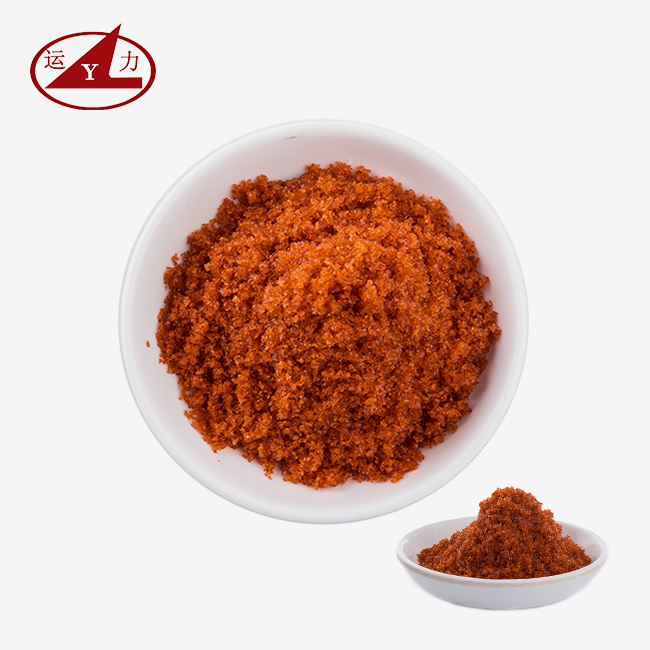
With a molecular weight of 236.15 g/mol, calcium nitrate tetrahydrate has the chemical formula Ca(NO3)2H2O. It appears as columnar, monoclinic crystals that are white. It has a specific density of 1.895 and breaks down at about 132°C. It is very well dissolved in water—about 1,290 g/L at 20°C—which makes it a great base material for making liquid fertilizer and drip watering systems. It breaks down easily in acetone, methanol, and ethanol, but not in nitric acid. Due to its oxidizing nature, it must be kept away from materials that can catch fire according to standard SDS guidelines.
Primary Applications Across Industries
Calcium nitrate is used by three different types of customers. In farming, it has two uses: nitrate-nitrogen helps roots take in nutrients right away, and calcium strengthens cell walls, which stops diseases like Blossom End Rot in tomatoes and Tip Burn in lettuce. In building, it speeds up the hydration of cement in cold-weather concreting below 5°C without rusting the steel reinforcement, which is a big plus over options based on chloride. It is used in cooling circuits, to coagulate rubber for making gloves, and to control the smell of wastewater by killing sulfate-reducing bacteria. Because of these many uses, buying teams at companies that make fertilizer and building chemicals put a high priority on a steady supply of high-purity materials.
Step-by-Step Calcium Nitrate Manufacturing Process Explained
Raw Material Selection and Preparation
To start production, you need to get pure nitric acid (HNO₁) and high-quality calcium carbonate (CaCO₃) or calcium hydroxide (Ca(OH)₂). At this point, the purity of the raw material is very important. Limestone that has a lot of iron or heavy metals in it will add those impurities directly to the finished product, which can cause problems further down the line in the fertigation lines and in the soil buildup. Reputable companies spend money to check the minerals they use by using ICP-OES analysis before the reaction starts.
Neutralization and Crystallization
Nitric acid is neutralized by a calcium compound, which is what the reaction is all about. If you mix calcium carbonate with nitric acid, you get calcium(NO₃)₂, hydroxylamine, and carbon monoxide. This exothermic reaction happens in reactors that control the temperature so that the heat output is managed and unwanted breakdown doesn't happen. After the solution is made, it is concentrated by letting it evaporate in a vacuum.
Concentration comes before crystallization. When the saturated solution is cooled in a controlled setting, crystals start to form and grow. The rate of cooling and the stability of the temperature affect the size, regularity, and hygroscopicity of the crystals. In this step, the single-crystallographic α-form of Ca(NO₃)₂·4H₂O is found.

Granulation, Drying, and Packaging
Granulation changes the crystal mass into prills or granules that can be easily moved in bags or in bulk. For plying, the melt is sprayed through a tower where droplets solidify in the air. For granulation, mechanical agglomeration in rotating drums is used. Next, drying methods lower the amount of wetness left over so that caking doesn't happen during transport and storage. Anti-caking coatings are added at this stage to protect the quality of the product in humid regions. This is a very important detail for buyers who are sending goods to warm markets. The standard in the industry is to package items in sealed PE-lined bags that keep moisture out. Top providers offer private-label sourcing with labels that can be changed to fit your needs.
Comparing Calcium Nitrate Variants and Manufacturing Approaches
Prilled vs. Granulated Forms
When calcium nitrate is rolled, it tends to make crystals that are smaller, more regular, and dissolve faster. This is better for hydroponics and NFT systems where nutrients need to be available quickly. As a result, granulated forms are better for broadcast use in open-field agriculture because they are stronger and make less dust. The choice between the two isn't just about looks; it's a deliberate manufacturing choice that affects how well it grows crops and how easily it can be handled.
Calcium nitrate tetrahydrate has a normal solution pH (5.0–7.0) and a very different set of nutrients than ammonium nitrate. This means that it doesn't make the soil more acidic like ammonium-based fertilizers do. It doesn't need to be changed into urea first like urea does; it delivers nitrogen right away in the form of nitrate, which is better in cold or wet soils where urease activity is low.
Sustainability and Environmental Compliance
Calcium nitrate makers today are under more and more pressure to control the nitrous gas and nitrate-filled waste water that comes out of their factories. Structured environmental management systems, such as treating garbage and cleaning pollution gasses, are used by ISO 14001-certified facilities. Purchasing teams that follow the ESG guidelines of their companies are adding these badges to their suppliers' scorecards more and more. They see environmental compliance not as an extra, but as a basic need.
Practical Procurement Considerations for Calcium Nitrate
Every evaluation of a procurement should be based on a number of quality standards. Matter that doesn't dissolve in water should stay below 0.01% for high-end fertigation uses. Heavy metal levels, especially lead, cadmium, and mercury, need to be in line with REACH rules and US safety standards for farming. For agricultural-grade material, the calcium content should be higher than 16.9% and the nitrogen content should be higher than 11.7%.
Before making a long-term deal, procurement teams should also look at the following supply chain factors:
- Batch traceability and COA documentation: Every shipment should arrive with a verified Certificate of Analysis that cross-references ICP-OES test results, not just visual inspection reports.
- Packaging integrity: PE-liner bags with heat-sealed closures significantly reduce deliquescence risk during ocean freight — especially on routes to high-humidity markets in Southeast Asia and Latin America.
- Minimum order flexibility: Suppliers offering trial quantities (e.g., 500 g free samples) before full container commitments reduce procurement risk meaningfully during the qualification phase.
When these standards are used together, they give purchasing managers a solid way to evaluate suppliers. This means that the talk can move beyond price alone and focus on the overall value of the supply chain.
Optimizing Your Use of Calcium Nitrate Fertilizer
Correcting Calcium Deficiency and Application Rates
Crops that don't get enough calcium have necrotic leaf edges, distorted growing tips, and lower-quality fruit. High-purity calcium nitrate tetrahydrate fixes these problems well because the calcium in it is available to plants right away in the form of ions. For field crops, the usual fertigation rate is between 100 and 200 kg/ha per season. The exact rate is determined by tissue analysis and the calcium level in the soil.
Storage Best Practices
Because Ca(NO₃)₂·4H₂O is very hygroscopic, storing it in places with more than 60% relative humidity causes deliquescence, which means the crystal soaks up the moisture in the air until it melts inside its packaging. Warehouses should keep the temperature and humidity under control. Bags should never be stored directly on concrete floors; instead, they should be stored on pallets with moisture barriers under them. Do not mix with sulfate or phosphate fertilizers when getting the tank ready, because the calcium sulfate will immediately clog the irrigation emitters.
Conclusion
The way calcium nitrate tetrahydrate is made is not an afterthought; it directly affects how pure the product is, how well it dissolves, and how well it works in agriculture. Each step in the production process, from sorting the raw materials to neutralizing the acid to crystals, grinding, and quality control, changes what ends up in your storage facility. When procurement professionals understand this chain of causes, they can have different conversations with suppliers. Instead of talking about price per ton, they can talk about batch COA standards, heavy metal limits, and controlling moisture in the packaging. That's when supply-chain risk really starts to go down.
FAQ
How does the manufacturing process affect solubility?
How cleanly the product melts depends on how pure the crystals are and how the product is dried. When controlled evaporation and cooling are used to make high-purity grades, fewer insolubles are produced. This means that tank mixes are cleaner and drip systems don't have to worry about emitters getting clogged.
What is the difference between prilled and granulated calcium nitrate tetrahydrate?
Prills break down more quickly and work with both hydroponic and NFT setups. Granules are better for field broadcasting or bulk bagging because they stay more stable when being moved and stored.
Are there environmental concerns associated with production?
Yes. The main environmental considerations stem from the production process itself and the inherent properties of the material.
Can I mix it with magnesium sulfate in a tank?
Suppliers with ISO 14001 certification handle these streams using documented treatment systems, which procurement teams can check with audit reports from a third party.
Source Your Calcium Nitrate Supply with Yunli Chemical
For more than 20 years, Yunli Chemical has sold high-quality calcium nitrate in bulk to customers in the US, Southeast Asia, and other agriculture areas around the world. Our factory-direct model cuts out the middlemen and gives you the best prices on all orders because we are a verified calcium nitrate manufacturer with ISO 9001, ISO 14001, and OHSAS certifications. We offer free samples up to 500 g, minimum order quantities that are easy to change, and full COA paperwork with ICP-OES heavy metal proof. To get a bulk price right away, email us at wangjuan202301@outlook.com.

References
1. Havlin, J. L., Tisdale, S. L., Nelson, W. L., & Beaton, J. D. Soil Fertility and Fertilizers: An Introduction to Nutrient Management. Pearson Education, 2014.
2. Mortvedt, J. J. "Heavy Metal Contaminants in Inorganic and Organic Fertilizers." Fertilizer Research, 1996.
3. Maynard, D. N., & Hochmuth, G. J. Knott's Handbook for Vegetable Growers. John Wiley & Sons, 2007.
4. Nair, A., & Ngouajio, M. "Integrating Row Covers and Soil Amendments for Organic Production of Vegetables." HortScience, 2010.
5. European Fertilizer Manufacturers Association. Calcium Nitrate and Lime Ammonium Nitrate Production Technology. EFMA, 2000.
6. Shen, Q., & Zhao, J. "Quality Control Standards for Water-Soluble Calcium Fertilizers in Precision Irrigation Systems." Journal of Plant Nutrition, 2019.