


Calcium Nitrate Solution 45-50% Liquid: Best Supplier for Large Farms - yunli chemical
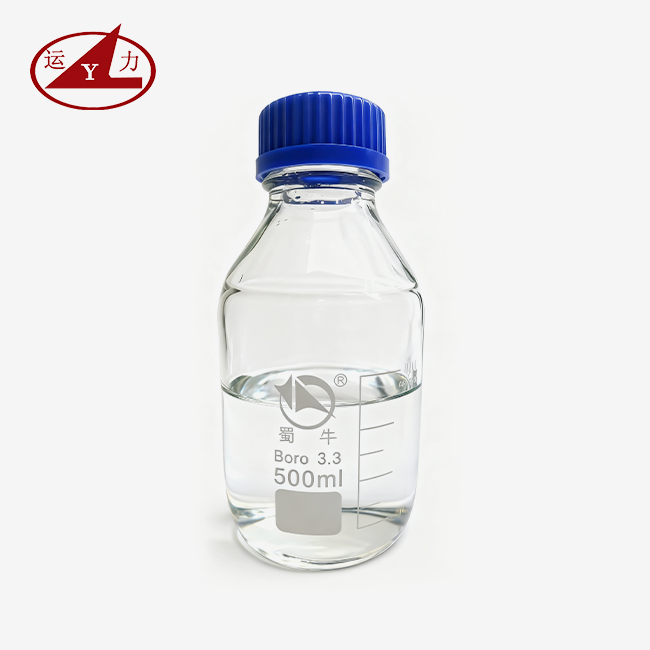
When large farms and fertilizer manufacturers search for a dependable calcium source, calcium nitrate solution 45-50% liquid consistently ranks as the top choice. This ready-to-use liquid formulation (CAS# 13477-34-4, Ca(NO₃)₂·4H₂O, MW: 236.15) delivers both calcium and nitrate nitrogen in a single, fully soluble product — no dissolving, no caking, no downtime. At Yunli Chemical, we have supplied this product to agricultural cooperatives, water-soluble fertilizer producers, and concrete admixture companies across North America, Europe, and Asia-Pacific for over two decades. If you manage high-volume procurement, this guide is written for you.

Understanding Calcium Nitrate Solution 45-50% Liquid
What Makes the 45-50% Concentration the Industrial Standard?
The best mix between nutrient density and logistical reliability is found between 45 and 50% concentration. The specific gravity is between 1.40 and 1.50 g/cm³ at 20°C, and there are about 8.0 to 9.0% nitrate nitrogen and 16.0 to 18.0% calcium oxide (CaO) equivalents per liter. At room temperature, it stays low-viscosity and pumpable, so it can be used with drip irrigation lines and fine-nozzle spray systems without any changes. If you go below this percentage, the quantity of the nutrients drops and the cost of freight per unit goes up sharply. Above it, the risk of crystallization goes up a lot, especially below 10°C, which makes winter travel more difficult.
At the cellular level, calcium helps keep things together. It makes the cell walls and membranes of plants stronger, which directly stops diseases like flower end rot in tomatoes and tip burn in cabbage. Unlike ammonium, the nitrate form (NO₃⁻) doesn't compete with calcium ions for uptake. This means that plants can absorb both nutrients at the same time and effectively. For calcium nitrate solution 45-50% liquid, this nitrate-based calcium delivery is what makes it particularly effective in fertigation programs, where simultaneous uptake of calcium and nitrogen supports stronger cell structure and healthier crop development.
There are three main transport methods that work well for large-scale operations:
- Drip systems for further spreading: The liquid fits right into injection lines that are already there. For field crops, the recommended rates are usually between 15 and 25 kg Ca per hectare per season, but this can change depending on the soil's calcium level and the crop's needs.
- Foliar spraying: Dilute to a 0.5–1.0% solution to add calcium to the plant's cells to help them stay healthy during the early stages of fruit growth.
- Hydroponic recirculating systems: As a liquid, it doesn't create the solubility bottleneck that granular calcium nitrate does in mixing tanks. This makes sure that nutrients are delivered consistently at scale.
It's easy to store things correctly: keep tanks insulated above 10°C, use HDPE or 304/316 stainless steel containers, and seal them to keep out contamination. Chemically, the solution stays stable for more than 24 months in suitable containers that are covered and kept out of direct sunlight.

Comparing Calcium Nitrate Solution 45-50% with Other Fertilizers
Liquid vs. Solid Calcium Nitrate
When compared to solid calcium nitrate, it is the most direct. Solid forms are very hygroscopic, which means they soak up water from the air and clump together while they're being stored, which leads to inconsistent dosing and production delays. When our clients switch to a calcium nitrate solution 45-50% liquid, the breakdown step is skipped completely. This saves them 15–20% on energy and labor costs per production batch, according to our clients. It is also easier to measure how evenly the liquid form spreads in fertigation systems, which lowers the risk of nutrient deficiencies in big areas.
Against Calcium Chloride and Ammonium Calcium Nitrate
Calcium chloride is less expensive per kilogram, but too much chloride in the soil and irrigation lines is bad for farming, especially in greenhouses and with high-value plants. Over several seasons, too much salt kills off good bacteria and damages the structure of the soil. Another problem with ammonium calcium nitrate products is that the ammonium part competes with calcium for root uptake and can lower pH in substrates that are sensitive to it.
At 45 to 50 percent, calcium nitrate solution 45-50% liquid doesn't have any chloride or ammonium nitrogen in it. This makes it the cleanest calcium-nitrogen source for precision farming. For companies that make water-soluble fertilizer, this purity rating means a better product with a stronger place in the market.
Procurement Guide for Calcium Nitrate Solution 45-50% Liquid
Key Quality Checkpoints Before You Order
Before committing to a bulk order, procurement managers should check four factors about suppliers:
- Verification of density: A number below 1.40 g/cm³ means that the active ingredient is diluted or not up to standard. Ask a third party to confirm the density of each batch.
- Heavy metal levels: For agricultural use, the amounts of As, Pb, and Cd must be below 10–20 ppm each. Any amount above that puts the finished fertilizer product at risk with the government.
- Ammoniacal nitrogen content: A good calcium nitrate solution 45-50% liquid should test below 0.05% ammonium to keep hydroponic substrates from precipitating and losing their pH.
- Matter that doesn't dissolve in water: This must stay below 0.01% to keep drip emitters and dosing pumps from getting clogged.
Certifications and Documentation That Matter
Suppliers you can trust give you certificates of analysis that have been checked by SGS, MSDS/SDS paperwork that follows GHS rules, and paperwork for logistics compliance (ADR for road freight and IMDG for ocean freight). For U.S. importers, make sure the supplier has ISO 9001 quality management certification and can give you purity records that can be traced back to the batch. These papers aren't just for paperwork's sake; they keep you from being sued if your end customer or a government agency asks for proof of input quality.
Yunli Chemical includes all standard paperwork with every package, and IBC tanks and tankers can be used for shipping anywhere in the world.
Why Choose Yunli Chemical as Your Calcium Nitrate Solution Supplier?
Since it was founded in May 2005 in Yuncheng City, Shanxi Province, XiaXian Yunli Chemical Co., Ltd. has built a reputation for quality nitrates that few other companies can match. Now, yearly sales are more than RMB 1 billion, and fixed assets are worth RMB 300 million. These are real signs of financial stability that are important when you sign a seasonal supply agreement. For calcium nitrate solution 45-50% liquid, this scale and stability translate into reliable bulk supply, consistent concentration and the capacity to support long-term contracts through peak fertigation and concrete batching seasons.
This is what buying directors always say are the main reasons they choose Yunli Chemical:
- Triple certification backbone: ISO 9001, ISO 14001, and OHSAS occupational health certifications were some of the first in the industry, setting a culture of compliance that now affects all product lines.
- Pureness at farming prices: It has more than 99.5% nitrate, less than 30 parts per million of iron, less than 50 parts per million of sodium, and less than 50 parts per million of chloride. These levels are higher than the usual standards for agricultural-grade materials. Customers get pollution control on an industrial level without having to pay industrial level fees.
- Recognized R&D capability: The facility was named a Shanxi Provincial Enterprise Technology Center in 2019 and has its own ICP-MS and atomic absorption spectrometry equipment, which lets it do quick batch analysis and custom formulation development.
- One-stop nitrate sourcing: Yunli Chemical sells more than 60 different kinds of nitrates, such as magnesium nitrate and zinc nitrate, in addition to calcium nitrate solution 45-50% liquid. This means that companies that make water-soluble fertilizer can do all of their buying from a single seller.
- Reliability of seasonal supply: The way production is set up supports peak demand windows in agriculture. When customers place orders 4–6 weeks before the planting or application seasons in the spring or fall, they are guaranteed a spot and given clear lead times.
All of these benefits help to eliminate the supply chain risks that stop big farms from running smoothly, like inconsistent quality, failed harvest checks, and source shortages during busy times.

Conclusion
At a concentration of 45–50%, calcium nitrate solution 45-50% liquid is not a common ingredient; it is a precision agricultural tool that sets the quality standard for every batch of water-soluble fertilizer it goes into. There is a difference between a seller who just sends goods and one who guarantees consistency, documentation, and availability during peak seasons. This is what makes the supply chain uncertain. This is what Yunli Chemical has done for clients in North America, Europe, and the Asia-Pacific region for almost twenty years. The purity data, certifications, and R&D infrastructure can be checked and are given to anyone who asks for them.
FAQ
Can calcium nitrate solution be mixed with phosphate fertilizers in the same tank?
No, they can't. Putting together solutions with a lot of calcium nitrate solution 45-50% liquid and phosphate or sulfate makes calcium phosphate or calcium sulfate precipitate, which blocks watering valves and dose pumps. After each use, always keep the injection tanks and rinse lines separate.
At what temperature does the 45-50% solution begin to crystallize?
Depending on the exact concentration, crystallization usually starts between 0°C and 12°C. In places where winter temperatures drop close to freezing, storage tanks should be sealed or heat-traced to keep the ability to pump during transport and storage.
Is it safe to switch from granular to liquid calcium nitrate without reformulating?
In general, yes, as long as you figure out the dose again using the weight of the active calcium instead of the volume. The liquid form has more even dispersion, and most agronomists say that crops responded the same or better after the switch.
What container materials are compatible for storage?
304/316 stainless steel and HDPE can be used together. Copper alloys and mild steel corrode when they come into contact with the solution, so all fittings and transfer equipment must be made of the right material before they are installed.
Request a Quote from Yunli Chemical — Calcium Nitrate Solution 45-50% Liquid Supplier
With no minimum order quantity required for sample testing, Yunli Chemical offers calcium nitrate solution 45-50% liquid manufacturer prices. You can reach our expert team at wangjuan202301@outlook.com to look through our collection of products, get certificates of analysis that have been approved by SGS, and set up a custom supply agreement. It takes five business days to ship free samples up to 500 grams. Send us a message right now, and we'll help you set up a supply plan that will last through your busy time of the year.
References
1. Mengel, K., & Kirkby, E. A. Principles of Plant Nutrition. Springer, 2001.
2. Hochmuth, G., & Hanlon, E. "Nitrogen Sources for Vegetable Production." University of Florida IFAS Extension Circular, 2000.
3. Bar-Tal, A., et al. "Effects of Calcium Concentration and Nitrogen Form on Nutrient Uptake in Tomato." Journal of Plant Nutrition, 2001.
4. Savvas, D., & Gruda, N. "Application of Soilless Culture Technologies in the Modern Greenhouse Industry." European Journal of Agronomy, 2018.
5. Mortvedt, J. J. "Heavy Metal Contaminants in Inorganic and Organic Fertilizers." Fertilizer Research, 1996.
6. Fageria, N. K., Baligar, V. C., & Jones, C. A. Growth and Mineral Nutrition of Field Crops. CRC Press, 2011.