


Calcium Nitrate Solution 45-50% Liquid vs Solid: Which Is Best?
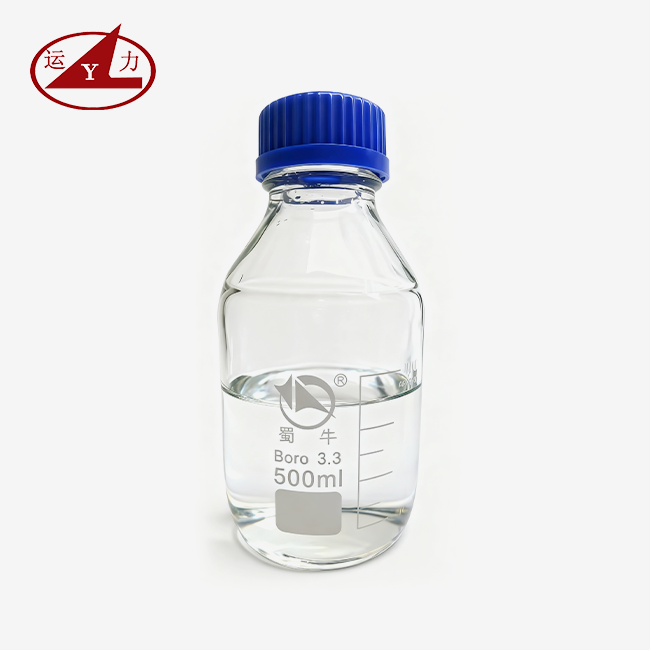
When choosing between liquid and solid calcium nitrate for industrial or agricultural use, the liquid form — specifically calcium nitrate solution 45-50% liquid — consistently delivers greater operational efficiency. At 45-50% concentration, this ready-to-use solution eliminates dissolution steps, enables precise volumetric dosing in automated systems, and maintains stable nutrient delivery without the caking or moisture-absorption issues common in solid grades. For water-soluble fertilizer manufacturers, concrete admixture producers, and large-scale hydroponic operations, the liquid form offers measurable advantages in both performance and supply chain simplicity.

Understanding Calcium Nitrate Solution 45-50%: Composition and Benefits
Chemical Identity and Core Properties
Calcium nitrate solution at this strength comes from calcium nitrate tetrahydrate (CAS# 13477-34-4), which has the formula Ca(NO3)24H2O and a molecular weight of 236.15. The liquid compound gives plants calcium (Ca²⁺) and nitrate nitrogen (NO₃⁺) at the same time. Plants can take in these two nutrients through routes that work well together. The liquid that is made has a specific gravity of about 1.40–1.50 g/cm³ at 20°C, is fully water-soluble, and has a low viscosity that makes it good for drip lines and fine-nozzle sprayers. It also contains about 16–18% CaO equivalent and 8–9% nitrate nitrogen.
Why the Liquid Form Outperforms Solid in Nutrient Delivery?
Unlike solid calcium nitrate, which absorbs a lot of water and tends to clump together in humid warehouses, the 45–50% liquid formulation has the best saturation point for transportation and use. For calcium nitrate solution 45-50% liquid, this balance means lower shipping volume than dilute solutions, while still remaining fluid enough for reliable pumping through fertigation lines and concrete batching systems.
When nutrients are applied in ionic form, they are instantly bioavailable—there is no delay in breakdown and no residue that hasn't been dissolved. This directly leads to more stable brix levels in fertigation systems, less blossom end rot in peppers and tomatoes, and better cell wall integrity across all high-yield crops. For safety reasons, the solution is an oxidizer, so it needs to be kept away from things that can catch fire and stored in containers made of stainless steel (304/316) or high-density polyethylene (HDPE). It should also not be stored near mild steel or copper fittings, because it will corrode them.
Liquid vs. Solid Calcium Nitrate: Core Differences and Practical Implications
Very rarely is the choice between forms just based on chemistry. Instead, operational workflow, infrastructure, and the specific application environment all play a role. These differences are the most important to the buying and production teams:
- Dissolution requirement: Solid calcium nitrate requires mixing tanks, heated water, and dedicated dissolution time before use. The liquid form pumps directly into dosing lines, cutting labor by a documented 15–20% and eliminating energy costs associated with heating and agitation.
- Crystallization risk: At concentrations between 45% and 50%, crystallization onset occurs between approximately 0°C and 12°C depending on exact concentration. Solid products, by contrast, absorb atmospheric moisture continuously in storage, forming clumps that complicate accurate weighing and feeding.
- Application versatility: The liquid integrates cleanly into foliar spray programs, closed-loop hydroponic recirculation systems, fertigation scheduling, and concrete mix designs. Solid granules risk creating undissolved "hot spots" in concrete that can weaken structural integrity.
When a lot of goods are bought, these practical differences become more noticeable. By moving to the liquid grade, a fertilizer company that uses several hundred metric tons of the stuff every year can cut costs by a lot. When these things are taken into account, most medium- to large-sized companies that make water-soluble fertilizer find that the liquid form lowers the total cost of ownership, even though the unit price seems a little higher on paper. For calcium nitrate solution 45-50% liquid, this is especially true — bulk buyers save on labor, dissolution energy, dust control and equipment downtime, making the liquid grade the more economical choice at scale.

Evaluating Concentration and Cost Efficiency: 45% vs. 50% Calcium Nitrate Solutions
What the Concentration Difference Actually Means
At 45%, the solution has a slightly lower risk of crystallization during shipping in the winter, which makes it a good choice for buyers in the north or for packages going through cooler areas. At 50%, you get more active ingredient per liter, which means less freight and store space needed for each given nutrient unit. It's not always better to use one concentration over another; the best choice depends on your climate, storage facilities, and the need for dilution later on.
Bulk Procurement Economics
When figuring out how much liquid calcium nitrate is cheaper than solid options, like those made from calcium chloride, the total cost of all the inputs must be taken into account, not just the price of the raw material. Granular calcium nitrate is usually cheaper per kilogram, but making it dissolved takes energy, water, labor, and equipment that wears out over time. When these other costs are taken into account, independent cost analyzes of the water-soluble fertilizer industry always show that liquid calcium nitrate is as cheap or cheaper than these other costs, especially when yearly amounts are higher than 200 metric tons. If you live close to the production site and want to buy in bulk, IBC tanks or ISO trucks can further lower the cost of shipping each unit.
Choosing the Best Calcium Nitrate Solution 45-50% for Your Business Needs
Supplier Qualification Criteria That Actually Matter
When purchasing managers look at calcium nitrate liquid providers, they should focus on four technical factors. Checking the density (below 1.40 g/cm³ usually means that the product has been diluted without permission), the amount of water-insoluble matter (it should stay below 0.01% for drip systems), the amount of ammoniacal nitrogen (it should stay below 0.05% to keep the pH stable in hydroponic substrates), and the crystallization temperature for the specific shipment batch. In addition to technical specifications, you must have ISO 9001 certification, third-party quality reports that have been checked by SGS, and heavy metal limits (Pb, Cd, and As below 10–20 ppm for farm grade).
Why Yunli Chemical Earns Long-Term Agreements
XiaXian Yunli Chemical Co., Ltd. was founded in 2005 and is based in Shanxi Province. It has grown into a producer with yearly sales of more than RMB 1 billion and fixed assets worth RMB 300 million. The business is certified by ISO 9001, ISO 14001, and OHSAS, and it is also known as a Shanxi Provincial Enterprise Technology Center. It has ICP-MS and atomic absorption spectrometers in its lab, which can handle purity levels up to 4N grade. 70% of Yunli's nitrate production is sent to the EU, North America, and the Asia-Pacific region. The company makes calcium nitrate solution 45-50% liquid guaranteed to be pure, with nitrate content of at least 99.5%, iron content of less than 30 ppm, sodium content of less than 50 ppm, and chloride content of less than 50 ppm. These solutions can meet the needs of both agriculture and industry in the same production line.
Addressing Common Questions and Concerns in Using Calcium Nitrate Solutions
When working with calcium nitrate liquid safely, you need to keep in mind that it oxidizes easily. Contact with flammable materials can start a fire, and long-term chemical exposure can burn the skin. You must wear protective gear like gloves, goggles, and aprons that are resistant to chemicals. As required by ADR and IMDG guidelines for shipping, MSDS paperwork must be included with every shipment. When it comes to the environment, Yunli's closed-loop wastewater recycling and NOx absorption systems lower environmental risk and help with REACH and ESG compliance. Insulated or heat-traced tanks reliably keep pumpability down to the required storage temperature threshold for buyers who are having crystallization issues during cold transit.
Conclusion
Liquid calcium nitrate at 45-50% concentration outperforms solid grades for most B2B procurement scenarios involving water-soluble fertilizer production, concrete admixtures, and precision fertigation. The elimination of dissolution workflows, consistent nutrient delivery, and compatibility with automated dosing systems create compounding operational value at scale. When sourced from a certified manufacturer with verified heavy metal controls and peak-season supply capacity, the liquid form supports both product quality and supply chain resilience. For calcium nitrate solution 45-50% liquid, this combination of operational efficiency, nutrient consistency and supply reliability makes it the stronger choice for businesses that need performance to hold up under agronomic, logistical and financial scrutiny.

FAQ
Does calcium nitrate solution react with phosphate or sulfate fertilizers in the same tank?
Combining this solution directly with phosphates or sulfates will precipitate calcium phosphate or calcium sulfate (gypsum), clogging irrigation lines. Always use separate tanks and inject points.
What temperature triggers crystallization in the 45-50% liquid?
Crystallization onset ranges from approximately 0°C (50% concentration) to 12°C (45% concentration). Insulated or heat-traced storage vessels are recommended for winter logistics.
Can it be stored in standard plastic containers?
HDPE and stainless steel (304/316) are compatible materials. Mild steel and copper alloys corrode on contact and must be avoided in fittings and pumps.
What is the shelf life compared to solid calcium nitrate?
The liquid solution remains chemically stable for two or more years in sealed, compatible containers away from direct sunlight — unlike hygroscopic solid grades that degrade with ambient humidity.
Is agricultural-grade liquid calcium nitrate the same purity as industrial grade?
At Yunli Chemical, both grades share the same production line and impurity controls, with heavy metals held well below standard agricultural thresholds.
Request a Sample from Yunli Chemical — Trusted Calcium Nitrate Solution 45-50% Liquid Supplier
Yunli Chemical makes liquid calcium nitrate that is guarantyd to be pure and meets industrial-grade standards for use in agriculture and specialty chemicals. To get up to 500g of free samples, find out about bulk pricing, and confirm delivery details, please email our technical team at wangjuan202301@outlook.com. We offer custom concentrations, adjustable packing, and full compliance with ADR and IMDG. Our services are designed for buying teams that can't afford to have their supplies cut off.
References
1. Mengel, K., & Kirkby, E. A. Principles of Plant Nutrition. Springer, 2001.
2. Sonneveld, C., & Voogt, W. Plant Nutrition of Greenhouse Crops. Springer, 2009.
3. Nollet, L. M. L. (Ed.). Handbook of Water Analysis. CRC Press, 2007.
4. Marschner, H. Mineral Nutrition of Higher Plants (3rd ed.). Academic Press, 2012.
5. ACI Committee 212. ACI 212.3R: Report on Chemical Admixtures for Concrete. American Concrete Institute, 2016.
6. Savvas, D., & Gruda, N. "Application of soilless culture technologies in the modern greenhouse industry." European Journal of Horticultural Science, 2018.