


Can Calcium Nitrite Powder Improve Concrete Strength and Durability?
Yes — calcium nitrite powder genuinely improves both concrete strength and long-term durability. As an anodic corrosion inhibitor, it forms a stable passivating film on reinforcing steel surfaces, blocking chloride-induced oxidation that causes structural deterioration. Beyond corrosion protection, it accelerates early cement hydration, which translates to measurable compressive strength gains within the first 24 to 72 hours of curing. For construction professionals and procurement engineers sourcing admixtures for marine structures, cold-weather projects, or precast applications, understanding how this compound works — and where to source it reliably — matters considerably.

What Is Calcium Nitrite Powder and How Does It Work?
Chemical Identity and Physical Characteristics
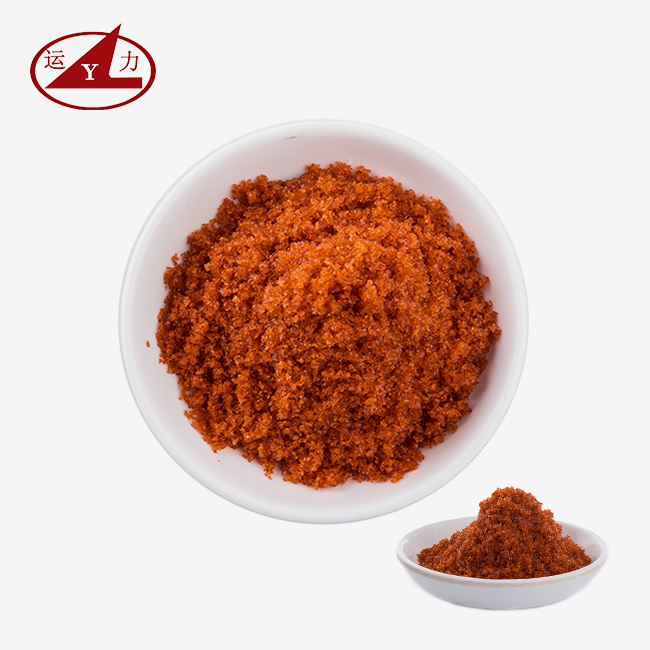
Calcium nitrite (Ca(NO₂)₂, CAS 13780-06-8) is a clear to light yellow powder that has a charge of 132 g/mol. The temperature at which it freezes is 100°C, and its mass changes from 2.23 to 2.53 g/cm³ as the temperature changes. In other words, it soaks up water from the air very quickly. It breaks down quickly in water but not so quickly in alcohol. Most industrial-grade material is nearly 94% pure, while high-performance grades are nearly 99.5% pure, with Fe levels below 30 parts per million, Na levels below 50 parts per million, and heavy metals (Pb, Cd) below 10 parts per million.
The Corrosion Inhibition Mechanism
When nitrite ions are added to concrete, they move toward the steel rebar and join with ferrous ions (Fe²⁺) to form a thick layer of ferric oxide passivation (γ-Fe₂O₀). Chloride ions can't get to the metal surface because of this oxide shield. This stops the electrolytic corrosion cycle from beginning. A study published in the journal Cement and Concrete Research shows that this anodic inhibition mechanism still works at low levels of chloride, like those found near the coast and in places where salt is used to melt ice. That stuff isn't naturally a chloride, so it doesn't have the self-defeating chemistry of calcium chloride boosters, which add the ions that rust steel.
Handling and Storage Considerations
This powder soaks up water very quickly, so it needs to be kept in a cool, dry, well-ventilated building in containers that can't leak. The package has to be closed again as soon as it is opened. It's important that the particles in dry-mix mortar stay the same size. If the granulometry changes, the structure of the mix changes, and inhibitors don't work as well. When powder is carefully measured and spread out, it can be mixed into dry premixes without making hot spots or separating. For calcium nitrite powder, these handling requirements are especially critical because moisture uptake, particle consistency and leak-proof packaging directly affect performance, shelf life and safety in dry-mix applications.

Performance Benefits in Concrete Applications
This addition has been shown to improve performance in a number of ways by the building business. The benefits can be seen in all kinds of projects.
These are the main useful benefits of this chemical that make structural engineers and people who make admixtures love it:
- Early-strength acceleration: Nitrite ions participate in cement hydration reactions, promoting the formation of calcium silicate hydrate (C-S-H) phases at an accelerated rate. Studies show compressive strength increases of 20–40% at 24 hours compared to untreated reference mixes, making it valuable for precast production and cold-weather pours.
- Marine and industrial durability: In structures exposed to seawater or de-icing salts, service life extensions of 20 to 30 years have been reported when dosages of 2–4% by cementitious weight are maintained — data cited in ACI 222R guidelines on corrosion of metals in concrete.
- Cold-weather workability: At dosages around 3–4%, it lowers the freezing point of pore water and accelerates hydration, permitting placement at ambient temperatures as low as -20°C without compromising the final strength profile.
These benefits work together to stop rebar corrosion-driven spalling, which is the most expensive way for reinforced concrete to fail. This happens decades before the building is meant to last and needs expensive repairs. For calcium nitrite powder, this protective effect is the core value proposition — not just extending service life, but preventing the kind of premature deterioration that drains maintenance budgets and compromises structural safety.
Calcium Nitrite vs. Alternative Corrosion Inhibitors
Comparison with Sodium Nitrite and Calcium Nitrate
Sodium nitrite stops the process in the same way, but it does so by adding sodium ions to the concrete. ASR (alkali-silica reaction) is more likely to happen when the sodium level goes up, especially with reactive aggregates. This is a well-known problem with longevity. This is not a problem with calcium nitrite. Calcium nitrate, on the other hand, adds calcium ions and speeds up the setting process, but it doesn't really passivate steel; it's more of a booster than an inhibitor. Calcium nitrite is the only substance that can do two things at once. This makes it ideal for projects that need to be strong right away and resistant to corrosion over time.
Grade Selection for Specific Applications
Powder of industrial grade that is at least 94% pure can be used to make normal cement admixtures and dry-mix cement. High-purity grades (≥99.5%) with low amounts of heavy metals work best for anticorrosion coatings, metal surface passivation, and foreign markets with strict rules. By matching the grade to the job, you can keep costs low and make sure that all professional needs are met. Type C (accelerating) and Type CI (inhibiting corrosion) of ASTM C494 help procurement teams make sure that specifications are in line with each other and can be checked.
Procurement Guide: What to Evaluate Before Sourcing?
You can't just look at price sheets to find the right calcium nitrite powder provider. A lot of things should be thought about by procurement managers and formulation engineers before they agree to work together on a supply relationship.
The Certificate of Analysis (COA) is the first thing that is checked to make sure the grade. Redox titration should be used to record the nitrite test results, along with the chloride ion content (goal <0.1%), particle size distribution, and water-insoluble matter percentage for each batch. When the chloride level rises above a certain point, it hurts the inhibitor badly. A supplier that can't give COA paperwork for each batch is a real threat to the supply chain.
Think about more than just papers when you think about travel compatibility. Powder forms of the same kind are much easier to ship than liquid forms. This saves buyers in the Middle East, Southeast Asia, and the Americas money on freight costs. For shipping across the country, you need to use packaging that doesn't let water in, like multi-layer kraft bags or sealed polyethylene liners inside woven sacks. Make sure that the usual package from the seller meets the rules for transporting dangerous goods in the place where the goods are going.
Conclusion
Calcium nitrite powder makes a difference in both the early compression strength and the long-term longevity of structures. It works well on tough building sites because it speeds up the cement's hydration and keeps salt from attacking the steel support. To ship, powder is better than liquid because it is lighter, lasts longer, and can be used with dry-mix mortar production lines, but liquid forms can't. This product is a well-known, standard-compliant choice for procurement workers looking for concrete additive ingredients. It has been used in the field for decades and has a history of good results.

FAQ
Does calcium nitrite powder affect concrete workability?
It generally has a neutral to slightly accelerating effect on setting time, which may require minor adjustment of retarders or superplasticizers. Compatibility testing with polycarboxylate (PCE) superplasticizers is recommended before full-scale use.
What is the standard dosage for corrosion inhibition?
Typical dosages range from 2% to 4% by weight of cementitious material. The precise amount depends on the anticipated chloride exposure level and the project's service life target.
How do I prevent caking during storage?
Keep the product in original, sealed moisture-proof packaging inside a cool, dry warehouse. Avoid stacking bags in humid environments, and reseal any opened packaging immediately to prevent deliquescence.
Is it compatible with dry-mix mortar systems?
Yes. The powder form integrates directly into dry premix formulations. Consistent particle size distribution is critical — confirm the supplier's granulometry data before incorporating it into production batches.
What certifications should I require from a supplier?
Look for ISO 9001 quality management certification, batch-specific COA documentation, ASTM C494 compliance data, and — for export procurement — relevant safety data sheets (SDS) conforming to GHS standards.
Partner with Yunli Chemical for Reliable Calcium Nitrite Powder Supply
For more than 20 years, Yunli Chemical has been making very pure inorganic chemicals. Their sales are more than 1 billion yuan a year, and their fixed assets are worth 300 million yuan. Yunli Chemical has ISO 9001, ISO 14001, and OHSAS certifications, which means it is a recognized producer of calcium nitrite powder. You can find it at the Shanxi Provincial Enterprise Technology Center. It has ≥99.5% pure material with tightly controlled impurity profiles. You can also get free samples up to 500 grams and custom-made packaging that doesn't let moisture in. Nobody gets in the way of factory-direct prices. To get a COA or talk about your needs, you can email the technology team at wangjuan202301@outlook.com.
References
1. American Concrete Institute. ACI 222R: Protection of Metals in Concrete Against Corrosion. ACI, 2001.
2. Berke, N. S., & Hicks, M. C. "Calcium Nitrite Corrosion Inhibitor in Concrete." Transportation Research Record, 1990.
3. ASTM International. ASTM C494/C494M: Standard Specification for Chemical Admixtures for Concrete. ASTM, 2019.
4. Elsener, B. "Corrosion Inhibitors for Steel in Concrete." European Federation of Corrosion Publications, EFC No. 35, 2001.
5. Hansson, C. M., Mammoliti, L., & Hope, B. B. "Corrosion Inhibitors in Concrete." Cement and Concrete Research, 1998.
6. Nmai, C. K., Farrington, S. A., & Bobrowski, G. S. "Organic-Based Corrosion-Inhibiting Admixture for Reinforced Concrete." Concrete International, 1992.