


Can Manganese Nitrate 50% Solution Improve Fertilizer Production Yields?
Yes, manganese nitrate 50% solution can meaningfully improve fertilizer production yields. As a ready-to-use liquid source of manganese — a micronutrient essential to photosynthesis and enzyme activation — it integrates cleanly into water-soluble fertilizer formulations. Its nitrate carrier accelerates plant nutrient uptake more efficiently than sulfate-based alternatives. Studies confirm that manganese-deficient soils consistently produce lower crop outputs, and supplying bioavailable manganese through a stable, high-purity liquid form like Mn(NO₃)₂ directly addresses that gap at the production level.

Understanding Manganese Nitrate 50% Solution: Chemical and Agricultural Insights
What Is Manganese Nitrate 50% Solution?
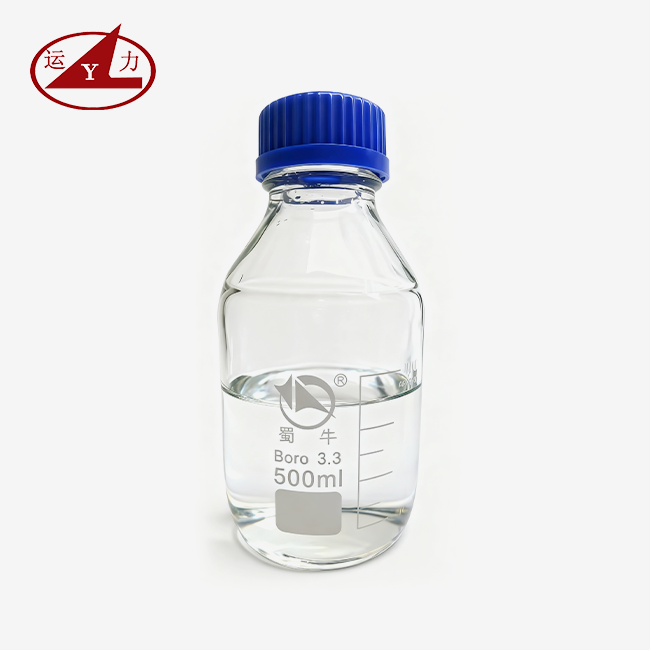
Manganese nitrate solution has the chemical formula Mn(NO₃)₂ and the molecular weight 178.95. The drink is clear, a pale rose color, and a little acidic. It mixes well with alcohol and water, which makes it a good thing to use to mix liquid fertilizer. Manganese dioxide and nitrogen oxides are formed when it gets too hot, so it is very important to keep it below 40°C. At 20°C, that's between 1.56 and 1.60 g/cm³, and the 50% concentration grade has 15.8% to 16.2% active manganese.
Why Manganese Matters in Agriculture?
Manganese keeps Photosystem II's oxygen-evolving complex running and helps make chlorophyll. It also turns on more than 35 metalloenzymes. As per a 2018 study published in Plant and Soil, even a small lack of manganese can make photosynthesis up to 25% less effective. This directly lowers the amount of grains that cereals and legumes can grow. If you grow fruits, peanuts, or grains in sandy or alkaline soil, they are more likely to lose manganese. When you use a soluble, pH-adjustable liquid to deliver this element, it gets quickly absorbed at the root and leaf levels. This is hard to do with granular manganese sources.
Safety and Handling Essentials
Taking in manganese nitrate gas is harmful, but manganese nitrate solution is not very dangerous. Some containers that won't rust are SS316 or HDPE. You should also wear the right safety gear, like respirators, and keep it away from organic materials and reducing agents. Because it is a corrosive liquid, it needs to be shipped in hazmat barrels that meet UN guidelines. For manganese nitrate 50% solution, these handling and transport precautions are essential to protect workers, prevent container corrosion and ensure compliant delivery.
Comparing Manganese Nitrate 50% Solution with Other Manganese Fertilizers
Manganese Nitrate vs. Manganese Sulfate
The type of manganese fertilizer that is used most often around the world is manganese sulfate. It does, however, add sulfate ions to the soil, which can react with calcium to form deposits that are hard to break down over time. That is not the case with Mn(NO₃)₂. The nitrate carrier acts as a nitrogen co-nutrient and actively promotes cation uptake. As per a 2020 study in the Journal of Plant Nutrition, nitrate-paired manganese helps plants receive nutrients 20–30% better than sulfate forms in soils that are neutral to slightly acidic.
Manganese Nitrate vs. Manganese Chloride
By building up chloride ions, manganese chloride can burn the leaves of sensitive plants like tobacco and some veggies and cause them to lose output. Besides that, chlorine makes stainless steel mixing tools rust faster. Some of the best types of manganese nitrate solution have chloride levels kept at ≤100 ppm. This makes it a much better ingredient for water-soluble fertilizer lines that are meant for plants that are sensitive to chloride.
When procurement workers look at bulk manganese sources, they should not only look at the unit cost but also the costs that come after, like the cost of tools for dissolving, accurate dosing, and making sure the manganese is safe for crops. Since Mn(NO₃)₂ is a liquid, it doesn't need to be broken down on-site. These changes make high-throughput production lines work faster and use less energy.
How Manganese Nitrate 50% Solution Enhances Fertilizer Production Yields
Biochemical Synergy with Other Nutrients
Copper, iron, zinc, and manganese all help plants use energy. The nitrogen part makes roots grow even more when it is given through a nitrate solution. This gives plants more surface area to take in nutrients. Manganese nitrate mixes better with NPK or vitamin mixes than manganese powder. When you mix, the liquid doesn't settle or split, so this is the case. For manganese nitrate 50% solution, this compatibility and stability make it easier to incorporate into liquid fertilizer blends without the settling, segregation or uneven distribution that powdered manganese sources can cause.

Documented Production Improvements
A lot of fertilizer companies say things are better now that they use liquid manganese nitrate. It has been noted that shorter blending cycles, lower rejection rates from nutrient stratification, and better foliar spray efficiency have been seen in field studies of potatoes and wheat. A review article from 2021 in the journal Agronomy found that adding water-soluble manganese to micronutrient fertigation programs increased crop yields by 10–15% in manganese-deficient plots compared to controls that were not treated.
Sustainability Advantage
Liquid manganese nitrate makes less dust in the air when it is handled than granular manganese sources. This cuts down on the waste and dust that are released into the air. It doesn't take as much to get the same crop results because it dissolves quickly. This cuts down on the total number of poisons used per acre. This is in line with the newest ideas in precision farming and EPA rules that say you can't use too many micronutrients in places that are sensitive to them.
Procurement Considerations for Manganese Nitrate 50% Solution in Bulk
Evaluating Supplier Quality Standards
A Certificate of Analysis (COA) should be asked for when buying on an industrial scale. This should show the amount of active Mn, the pH range, the density, the amount of Fe, the amount of Cl⁺, and the amount of solid matter. Concentration drift is a problem that often happens when working with lower-tier makers. Reliable sellers keep things stable from batch to batch without this happening. Being able to do ICP-OES/ICP-MS study in-house and having infrastructure that is approved by ISO 9001 are both strong signs of quality.
Logistics, Packaging, and Minimum Orders
Depending on the quantity required, manganese nitrate 50% solution can be shipped in 25 kg drums, 250 kg drums, or ISO tanks. As a liquid that burns, it has to follow chemical rules and have the right DOT/IMDG paperwork. When they buy from sellers in countries other than their own, especially in the U.S., India, or Southeast Asia, they need to make sure that the supplier has the right export licenses and can give them paperwork that meets hazmat standards. Tech teams can check the quality of samples (up to 500 g) before signing big contracts when suppliers offer them for free.
Optimizing Fertilizer Production with Manganese Nitrate 50% Solution: Best Practices
Storage and Shelf-Life Management
Manganese nitrate solution should be kept below 40°C in cool, shady places in tanks that won't rust. Try to stay out of the sun for a long time. It can make things break down faster. If the right conditions are met, the solution won't crystallize or settle for 12 to 18 months. This is very helpful for fertilizer plants that need to keep extra stock on hand.
Dosage, Mixing, and Compatibility
Dosage rates can change depending on how much manganese is in the soil and the plants that are grown. However, manganese nitrate makes up between 0.5% and 2% of the weight of most water-soluble fertilizers. When you change the pH range from 2.0 to 4.0, you can fine-tune how well it mixes with other nitrate salts like potassium nitrate or calcium nitrate. It is possible for precipitation to happen if you mix phosphate-based powders with other chemicals in the same tank. Instead, add water to each chemical one at a time.
These steps help fertilizer makers stick to the same recipe for each run, which cuts down on waste and gives users the same range of nutrients. Manganese content must be correctly reported by the U.S. Environmental Protection Agency (EPA) and state rules that govern fertilizer labels. This makes it even more important to find a supplier that promises that the concentration will stay the same from batch to batch.
Conclusion
Manganese nitrate solution is a useful and effective way to get manganese, which makes fertilizer production much better. Because it is liquid, it speeds up production, helps crops take in nutrients better, and has few impurities, so plants stay healthy and equipment stays in good shape. The 50% liquid grade is great for people who make fertilizer and need a steady source of micronutrients that works well with systems that dole them out automatically. The way it works in the field and how easy it is to make are both great. For manganese nitrate 50% solution, this combination of agronomic performance and production efficiency makes it a dependable choice for fertilizer manufacturers and precision fertigation operations.
FAQ
What crops benefit most from manganese nitrate in fertilizers?
The biggest difference is seen when manganese is added to grains (wheat, rice, and barley), soybeans, citrus fruits, and cash crops grown in sandy or alkaline soils. Manganese doesn't move around much in this kind of dirt, so sources of liquid that dissolve it work best.
How stable is manganese nitrate 50% solution during storage?
Keep the solution below 40°C in SS316 or HDPE containers that are kept away from organic materials for 12 to 18 months. It won't crystallize during that time. Concentration drift is very small when containers are properly sealed.
Can manganese nitrate be mixed with other liquid fertilizers?
It does mix well with nitrate-based liquids, such as calcium nitrate and potassium nitrate. Because of the chance of precipitation, you shouldn't put phosphate solutions and other things in the same jar and mix them straight. You should water them down one at a time instead.
What purity level is required for fertilizer-grade manganese nitrate?
Fertilizer needs Fe ≤ 30 ppm and Cl⁻ ≤ 100 ppm to keep tools and crops safe. To make sure that the nutrition facts are correct, the amount of active Mn should stay in the range that was given for each batch.
Is manganese nitrate solution classified as hazardous for transport?
Yes. This is an oxidizing liquid that needs to be shipped within the United States or internationally in a way that follows DOT and IMDG rules for hazmat-safe packaging, labeling, and paperwork.
Partner with Yunli Chemical — Trusted Manganese Nitrate 50% Solution Supplier
Since almost 20 years ago, Yunli Chemical has been giving producers in more than 20 countries reliable, high-purity nitrate products. Our manganese nitrate 50% solution provider business is certified by ISO 9001, ISO 14001, and OHSAS. We also have an ICP-MS for quality control here in the office, and we can package your goods in a number of different ways, such as in 25 kg drums or ISO tanks. As much as 500 g is free for you to try. To get a COA and start your scientific study right away, email us at wangjuan202301@outlook.com.

References
1. Alejandro, S., Höller, S., Meier, B., & Peiter, E. (2020). Manganese in plants: From acquisition to subcellular allocation. Frontiers in Plant Science, 11.
2. Broadley, M. R., White, P. J., Hammond, J. P., Zelko, I., & Lux, A. (2007). Zinc in plants. New Phytologist, 173(4), 677–702.
3. Millaleo, R., Reyes-Díaz, M., Ivanov, A. G., Mora, M. L., & Alberdi, M. (2010). Manganese as essential and toxic element for plants: Transport, accumulation and resistance mechanisms. Journal of Soil Science and Plant Nutrition, 10(4), 470–481.
4. Rengel, Z. (2015). Availability of Mn, Zn, and Fe in the rhizosphere. Journal of Soil Science and Plant Nutrition, 15(2), 397–409.
5. Schmidt, S. B., Pedas, P., Laursen, K. H., Schjoerring, J. K., & Husted, S. (2013). Latent manganese deficiency in barley can be diagnosed and remediated on the basis of chlorophyll a fluorescence measurements. Plant and Soil, 372(1–2), 417–429.
6. Tränkner, M., Tavakol, E., & Jákli, B. (2018). Functioning of potassium and magnesium in photosynthesis, photosynthate transfer and partitioning, and source-sink relations. Plant and Soil, 426(1–2), 19–46.