


Top Benefits of Aluminium Nitrate Solution Liquid for Industry
When industrial buyers evaluate aluminium nitrate solution liquid for their operations, the conversation quickly moves beyond basic chemistry. This ready-to-use aqueous formulation — derived from Al(NO₃)₃·9H₂O (CAS# 7784-27-2, MW: 375.13) — eliminates the dissolution step entirely, delivering measurable cost savings and process precision from day one. Whether you are scaling catalyst production, optimizing a water treatment line, or sourcing a reliable aluminum salt intermediate, understanding what separates a high-performance liquid formulation from a commodity product is essential for confident B2B procurement decisions.

Understanding Aluminium Nitrate Solution: Properties and Industry Applications
At 73.9°C, the nonahydrate form melts, and at 150°C, it breaks down. It dissolves easily in water (64 g/100 mL at 25°C), making an acidic solution that can oxidize things. When these properties are turned into a liquid, they create a stable feedstock that can be used in pipelines and stays uniform over long periods of storage as long as the pH is kept in check.
Core Chemical Characteristics
Standard solutions for industry have a concentration of Al(NO₃)₃ between 10% and 40% and a specific gravity between 1.10 and 1.35 g/cm³. The solution can still mix completely with water, which lets automatic reactors give exact doses based on volume. It can be stored for 12 to 24 months in sealed, corrosion-resistant containers made of 304L/316L stainless steel or PVC-lined tanks that are not in full sunlight. For aluminium nitrate solution liquid, these standard specifications make it easy to integrate into automated dosing systems while maintaining consistent quality and long-term storage stability.
Where the Liquid Form Fits Across Industries?
The most valuable application is catalyst manufacturers. The solution is a direct starting point for making alumina supports that are used in hydrogenation catalysts, hydrodesulfurization, and the production of methanol. For uniform pore impregnation, a steady flow of liquid is needed. In addition to catalysis, textile companies use it as a dye mordant to help the fibers stay in place, water treatment plants use it to coagulate water, and specialty chemical companies use it as a soluble aluminum salt intermediate for further synthesis.
Top 5 Benefits of Aluminium Nitrate Solution for Industrial Use
When you switch from solid granules to a liquid formulation, operational economics change in ways that add up quickly over the course of a production year. Here are the main performance benefits that procurement engineers always bring up during qualification reviews. For aluminium nitrate solution liquid, these benefits typically include easier dosing, faster dissolution-free handling, lower labor and energy costs, and more consistent batch performance in catalyst, water treatment and industrial applications.
- Direct feed capability eliminates dissolution costs. Solid aluminium nitrate must be dissolved, heated, and filtered before use — a sequence that consumes energy, water, and operator time. A ready-to-use solution bypasses that entire sequence, reducing energy and labor costs by an estimated 15–20% per production cycle. For high-volume catalyst plants running continuous reactors, this saving compounds across every batch.
- Ultra-low iron content protects catalyst performance. Iron contamination is the silent productivity killer in catalytic alumina production. Premium liquid grades control Fe at ≤30 ppm — three times lower than the Chinese national standard of ≤100 ppm — with adjustable specifications down to ≤10 ppm for the most demanding applications. A catalyst manufacturer in Mexico reported extended service life after switching to a low-iron liquid formulation, a real-world outcome that illustrates the downstream value of tighter impurity control.
- Dust-free handling improves workplace safety. Solid aluminium nitrate is hygroscopic and produces respirable dust during handling, creating inhalation hazards and surface contamination risks. The liquid form removes that hazard entirely, supporting cleaner compliance with OSHA industrial hygiene standards and reducing PPE expenditure.
- Batch-to-batch concentration stability enables process automation. Fluctuating concentration is the primary technical objection process engineers raise against liquid aluminium salts. When a supplier controls pH between 1.5 and 4.0 and verifies density by specific gravity on every batch, the dosing precision required for automated pipeline feed becomes achievable. ICP-OES analysis confirms trace impurity consistency across shipments.
- Customizable concentration and packaging reduce total supply chain cost. Concentrations from 10% to 40% can be matched to a plant's existing storage and feed infrastructure. IBC tote tanks and tanker truck delivery minimize intermediate handling steps compared to palletized solid drums, reducing warehouse labor and packaging waste simultaneously.
Because of these five benefits, companies that make catalysts and fine chemicals are using liquid aluminum nitrate more and more as a process input instead of a commodity chemical.

Selecting and Procuring Aluminium Nitrate Solution: What B2B Buyers Should Know?
There's more to choosing a supplier for a liquid oxidizer than just looking at prices per kilogram. Before shortlisting candidates, procurement managers should check that they have the right permits to make dangerous chemicals, the ISO 9001 certification for quality management, and the REACH/TSCA compliance paperwork. Suppliers with an in-house inspection lab that has ICP-MS or atomic absorption spectrometers can provide batch-level impurity certificates, which is something that must be done for catalyst-grade material.
Evaluating Concentration Consistency and Quality Documentation
Ask for analysis certificates that show the amount of Al₂O₁ (confirmed by EDTA complexometric titration), Fe, Cl⁻, SO₄²⁻, pH, and specific gravity for at least three production batches in a row. Changes in specific gravity between batches are a good way to measure concentration drift and show how strong a supplier's process controls really are.
Packaging, Transport, and Regulatory Compliance
Under UN rules for dangerous goods, aluminum nitrate solution is considered a reactive liquid. Manufacturers who are honest can move dangerous goods using IBC tanks or tanker trucks as long as they have the right labels on them. Buyers should make sure that the transportation partner of the buyer has the right chemical certifications for long-haul or cross-border delivery.
Ensuring Safe and Efficient Use of Aluminium Nitrate Solution in Industry
Safe use starts with storing things correctly. Because the solution is acidic, it needs containers made of 304L/316L stainless steel, PVC, or glass. If the temperature drops below 15°C, a 60% solution may start to crystallize. In cold places, enclosed or trace-heated storage keeps this from happening. The solution irritates skin, so operators should wear gloves that can handle chemicals and eye protection. For aluminium nitrate solution liquid, these storage and handling precautions are essential to prevent crystallization, avoid equipment corrosion and protect worker safety during daily operations.
Quality Control Checkpoints for Incoming Material
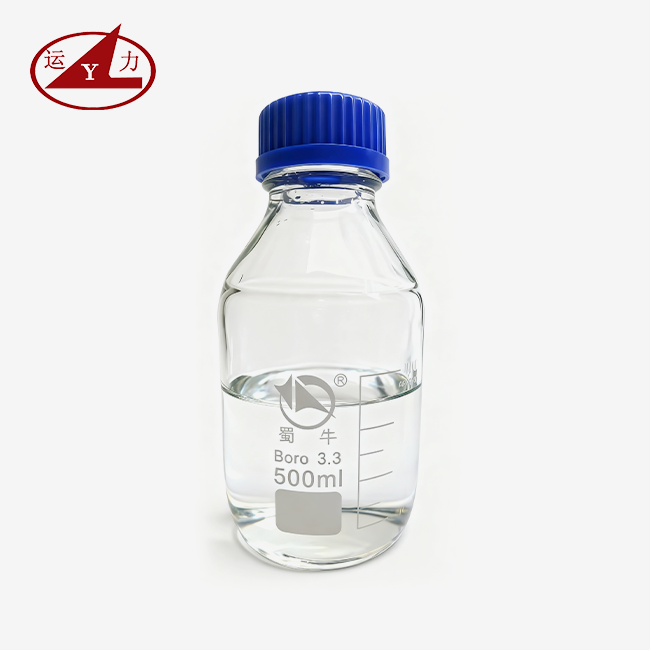
When you get it, use a calibrated hydrometer to check the specific gravity and a calibrated meter to check the pH. When looked at against a white background, the fluid should be clear, neutral to pale yellow, and there should be no objects in it. Any turbidity means that the material has been contaminated or hydrolyzed, so it should be rejected and the seller should be notified before it goes into the production line.
Case Studies: Real-World Industrial Benefits
A Mexican company that makes catalysts used a low-iron liquid aluminum nitrate recipe from Yunli Chemical and said that the catalysts worked longer because the Fe level stayed below 30 parts per million. The switch got rid of the need for on-site dissolution equipment, which freed up two shift workers and cut the time it took to do a batch cycle by about 18%. In a textile mordanting application, using a pre-dissolved liquid cut down on the time needed to prepare the dye bath. It also made color fixation more consistent across cloth lots, which meant that fewer rejects at the finishing stage.
Conclusion
The business case for liquid aluminum nitrate is based on real-world data, not marketing speak. The total cost of ownership is significantly lower than for solid alternatives because there are fewer steps needed for dissolution, tighter control of impurities, automated dosing, and packaging that fits with existing logistics infrastructure. For companies that make catalysts, treat water, or make fine chemicals that are looking for their next supply deal, the liquid formulation is a smart move—as long as the supplier can show consistent quality across batches and has the right paperwork to ship safely. For aluminium nitrate solution liquid, this combination of lower total cost, reliable purity and logistics-ready packaging is what makes it a practical long-term procurement choice.
FAQ
What concentration range works best for catalyst applications?
Most companies that make hydrogenation and methanol catalysts like it when the content is between 25% and 35% Al(NO₃)₃. In this range, the amount of aluminum is balanced with the ability to pump, and the risk of crystals is kept at a normal level in the warehouse. Suppliers like Yunli Chemical can change the quantity between 10% and 40% to fit the needs of the current feed system.
How does aluminium nitrate solution compare to aluminium sulfate for water treatment?
The aluminum nitrate solution coagulates well without adding sulfate ions, which can raise the sulfate level in treated water and make it harder to follow the rules further down the line. When sulfate loading is a problem for regulations, the nitrate-based coagulant has a better ion profile.
What storage vessel material is required?
When this acidic oxidizing fluid comes in touch with carbon steel, it rusts quickly. 304L/316L stainless steel, high-density polyethylene, PVC, and tanks lined with glass are all approved materials. Do not keep in steel drums or galvanized tubs that are not lined.
Can the solution crystallize during winter shipping?
If a solution is more than 40% concentrated, it starts to salt out below 10–15°C. Yunli Chemical suggests heated shipping for packages in cold weather and offers pH-controlled formulations that increase the temperature range where crystallization doesn't happen.
What is the typical shelf life?
If you keep the solution away from heat and light and properly seal it, it will stay stable for 12 to 24 months. Before putting older stock into precision dosing systems, it's best to test the pH and specific gravity again after 12 months.
Partner with Yunli Chemical for Your Aluminium Nitrate Solution Supply
Yunli Chemical is a certified manufacturer of aluminum nitrate solution liquid with 20 years of experience, ISO 9001/ISO 14001 credentials, and full hazardous chemical permits. They offer factory-direct pricing with no middlemen, free samples up to 500 g, and concentration and packaging that are made to fit your process. To get a technical datasheet or bulk quote right away, email us at wangjuan202301@outlook.com.

References
1. Kirk-Othmer Encyclopedia of Chemical Technology — Aluminum Compounds, Wiley, 2020.
2. Industrial Catalysis: A Practical Approach — Jens Hagen, Wiley-VCH, 2015.
3. Water Treatment: Principles and Design — MWH Global, John Wiley & Sons, 2012.
4. Inorganic Chemistry — Shriver & Atkins, W.H. Freeman, 2014.
5. Journal of Catalysis — "Alumina Support Preparation via Nitrate Precursor Hydrolysis," Elsevier, 2019.
6. Chemical Engineering Journal — "Impurity Effects on Alumina Catalyst Surface Area and Pore Distribution," Elsevier, 2021.