


Can Nickel Nitrate Hexahydrate Improve Nickel Plating Performance?
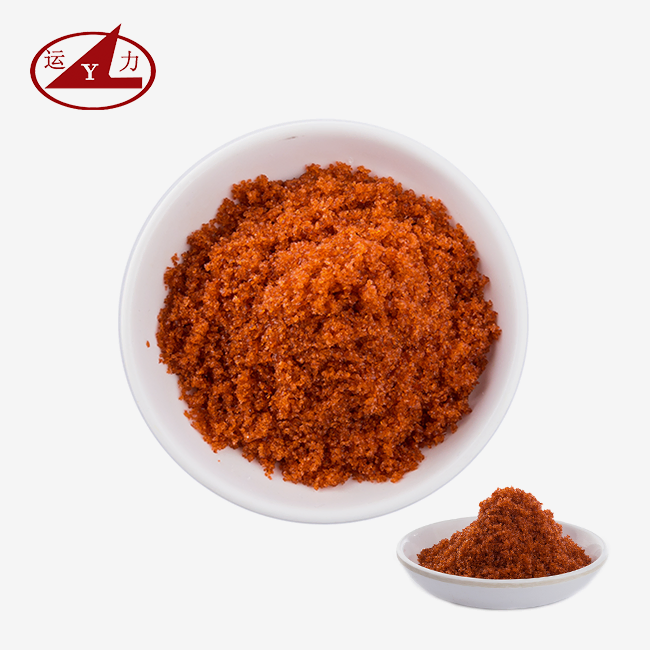
Yes — nickel nitrate hexahydrate (Ni(NO₃)₂·6H₂O, CAS 13478-00-7) can genuinely improve nickel plating performance when used correctly. This blue-green crystalline compound dissolves readily in water at over 100 g/100 mL at 20°C, delivering a stable, consistent nickel-ion source to your plating bath. Its nitrate anion leaves no sulfur or chlorine residues after thermal decomposition, which protects coating adhesion and corrosion resistance. For electroplating operations that demand deposit uniformity and reduced defect rates, switching to or supplementing with this compound is worth serious consideration.

Understanding Nickel Nitrate Hexahydrate in Nickel Plating
It's helpful to know what this chemical is and how it reacts in industrial settings before you decide to use it in your process.
Core Chemical Identity
With a molecular weight of 290.81 g/mol, nickel nitrate hexahydrate has the chemical formula Ni(NO3)2-6H2O. It has a specific density of 2.05 and a melting point of 56.7°C. It looks like green crystals. It gets hot enough to boil at 136.7°C. At 100°C, it slowly loses water molecules and changes into a dry salt. The watery solution is acidic, which is important for setting the pH of the bath during plating.
Solubility and Physical Behavior
The substance quickly soaks up water and breaks down in dry air, so how it is stored is important. Water and alcohol can dissolve it easily, but acetone can dissolve it only a little. Because it dissolves easily, it can be used to make concentrated plating solutions without having to heat them up first. On the production floor, this compound is often much easier to work with for people who have had trouble with other nickel salts not dissolving completely.
Safety and Handling Requirements
Nickel nitrate hexahydrate is categorized as an oxidizer (Class 5.1, UN 1477) in the chemical formula. It mixes badly with organic chemicals and is dangerous to eat. When handling, workers must wear the right PPE, like gloves, goggles, and respiratory protection. The places where things are stored should stay cool, dry, and away from things that can catch fire. Every shipment should have a full Safety Data Sheet (SDS) attached to it, and all U.S. operations must follow OSHA and DOT rules.
How Nickel Nitrate Hexahydrate Enhances Nickel Plating Performance
The science behind this compound's better performance is easy to understand, and the effects can be measured in the real world.
Deposit Uniformity and Adhesion
Nickel nitrate hexahydrate provides nitrate anion that works as a mild oxidant in the plating bath, which makes the nickel layer's grain structure smoother. It is directly linked to smoother surfaces and better binding to substrates that the grains are smaller. According to a study released in the Journal of the Electrochemical Society, adding nitrate to nickel baths makes the surface smoother than using only sulfate. This is very important for parts that need to have very tight tolerances on their dimensions or very thin coatings.
Corrosion Resistance Improvement
The nitrate anion breaks down thermally into gaseous oxides without leaving behind halide or sulfate residues. This means that the coating that is deposited doesn't have any micro-inclusions that speed up corrosion in service. It is known that nickel chloride baths can contaminate finished nickel coatings, which can lead to pitting. That risk goes down when you switch to or add nickel nitrate hexahydrate, especially to parts that will be used in naval or industrial settings.
Comparison With Other Nickel Salts
It's easy to see how this compound stacks up against the two most common alternatives in this table.
- Nickel sulfate is the most widely used source in Watts baths, but sulfate residues can remain in coatings and cause long-term corrosion. It offers good conductivity but lacks the grain-refining effect of the nitrate anion.
- Nickel chloride improves anode dissolution and bath conductivity, yet chloride contamination is a known source of coating pitting and equipment corrosion over time. It requires tighter bath controls to manage.
- Nickel nitrate hexahydrate produces a clean decomposition profile, leaves no corrosive residues, and delivers consistent nickel-ion availability. At purity levels of ≥98.5% — or ≥99.5% for higher-grade applications — its impurity profile (Fe ≤30 ppm, Na ≤50 ppm) is tight enough to satisfy demanding process specifications.
Nickel sulfate is the source that is most often used in Watts baths. However, sulfate leftovers can stay in surfaces and cause corrosion over time. It is a good conductor, but it doesn't smooth out the grains like the nitrate anion does.
Practical Considerations for Procurement and Usage
As important as the chemistry is, getting the right grade is just as important.
Supplier Selection and Documentation
For industrial plating, look for suppliers of nickel nitrate hexahydrate who give a Certificate of Analysis (CoA) with each batch. This will show the nickel content (target: 19.8%–20.2%), trace metal levels (Fe, Cu, Pb, Co), and chloride content (ideally below 50 ppm). Consistency from batch to batch is very important, because changes in nickel content can make it hard to control the plating thickness and deposit quality. As standard paperwork, ask any potential supplier for ICP-OES test data.

Bulk Purchasing and Pricing Factors
Nickel nitrate hexahydrate prices are linked to LME nickel prices, so buyers should ask for a pricing system that is based on an index instead of a fixed price. Standard packaging is 25 kg PE bags, but direct-charge operations that don't want to dissolve anything can use liquid solution formats instead. If you are a U.S. buyer, make sure that the seller has a valid hazardous goods transport license and that all of the export paperwork meets the DOT and IATA standards for oxidizers.
Storage Best Practices
Keep the goods in containers with tight lids in a cool (below 30°C), dry, and controlled-humidity area. Stay away from organic materials, reducing agents, and heat sources. When humidity control fails, clumping and deliquescence happen. This lowers the nickel yield per kilogram and makes doses inconsistent in the plating bath. First-in, first-out inventory movement helps keep the quality of the product high throughout the supply chain.
Optimizing Nickel Plating Processes With Nickel Nitrate Hexahydrate
A few working factors need to be paid attention to in order to get the chemistry in the bath just right.
Recommended Process Parameters
To keep the quality of the deposit and the effectiveness of the anode in plating baths that contain nickel nitrate hexahydrate, keep the pH of the solution between 3.5 and 4.5. The temperature at which something works is usually between 45°C and 65°C. You should adjust the concentration of nickel ions to meet your specific deposit thickness needs. This compound dissolves easily (>100 g/100 mL at 20°C), so it's easy to change the concentration without worrying about precipitation.
Integration Into Existing Systems
You don't have to redo your whole bath to change some of the nickel sulfate charge to nickel nitrate hexahydrate. A lot of places that do processing use mixed-salt baths, which have nitrate as an extra source of nickel sulfate. Start by replacing 10–20% of the nickel charge, and then check the Hull cell panels to see how bright and evenly the deposit is spread out before increasing the amount. This step-by-step method lowers the risk of the process while still letting data-driven optimization happen.
Environmental and Regulatory Advantages
Nitrate-based baths make wastewater that is easier to treat than chloride-based baths. If you live in a place with strict chloride release limits, which is becoming more common because of EPA pretreatment standards, switching to nickel nitrate hexahydrate can make it easier for your wastewater treatment to meet those limits. The lack of sulfate and chloride leftovers also lowers the number of times that chemicals and upkeep must be added to the bath over time.
Conclusion
Nickel nitrate hexahydrate has real, chemistry-based benefits for nickel plating. It leaves cleaner deposits, resists rust better, and has an easier bath chemistry profile than chloride options. It is a useful upgrade for operations that want to improve coating quality and make wastewater treatment less complicated if it is bought at the right purity and with the right batch documentation. The important thing is to find the right grade, a supplier whose quality can be shown across all shipments, and process parameters that are well controlled.
FAQ
Why does nickel nitrate hexahydrate cake in storage?
Its hygroscopic nature and low melting point (56.7°C) cause it to absorb moisture and fuse into lumps. Sealed containers stored below 30°C in low-humidity environments prevent caking and maintain free-flowing crystal form for accurate dosing.
How does it differ from nickel sulfate in plating baths?
Nickel sulfate is the standard Watts bath component, but its sulfate residues can contribute to long-term coating degradation. The nitrate anion in this compound decomposes cleanly, leaving no residual contaminants that compromise coating adhesion or corrosion resistance.
What purity grade should electroplating operations request?
For most industrial plating applications, ≥98.5% purity is sufficient. For decorative or high-corrosion-resistance applications, request ≥99.5% with specific limits on Fe (≤30 ppm) and Cu (≤10 ppm) to maintain deposit quality.
Is it classified as a dangerous good for import?
Yes. It is classified as Class 5.1 Oxidizer, UN 1477. U.S. importers must ensure suppliers provide compliant packing group documentation, an accurate SDS, and hazmat shipping certification for both ocean and air freight.
Can liquid nickel nitrate solution replace the solid form?
Yes. Aqueous solutions of different concentrations are available and eliminate the dissolution step entirely. This suits high-volume plating operations where dosing speed and consistency are priorities.
Partner With Yunli Chemical for Your Nickel Nitrate Hexahydrate Supply
Since 2005, Yunli Chemical has been making nitrate compounds. They have over 1 billion yuan in annual sales and are certified by ISO 9001, ISO 14001, and OHSAS. As a direct provider of nickel nitrate hexahydrate, we offer purity grades from 98.5% to 99.5%, COAs that have been checked by ICP-OES, free samples of up to 500 g, and special aqueous solutions. There are no middlemen, and there is no minimum order size. You can email us at wangjuan202301@outlook.com or go to yunlichemical.com to ask for details or a sample.

References
1. Schlesinger, M., & Paunovic, M. (Eds.). Modern Electroplating (5th ed.). Wiley, 2010.
2. Watts, O. P. "Rapid Nickel Plating." Transactions of the American Electrochemical Society, 1916.
3. Dini, J. W., & Snyder, D. D. "Electrodeposition of Nickel." ASM Handbook, Vol. 5: Surface Engineering. ASM International, 1994.
4. Agladze, R. I., & Vagramyan, A. T. "The Influence of Anions on Nickel Electrodeposition." Journal of Applied Electrochemistry, 1988.
5. Amblard, J., Epelboin, I., Froment, M., & Maurin, G. "Inhibition and Nickel Electrocrystallization." Journal of Applied Electrochemistry, 1979.
6. U.S. Environmental Protection Agency. Electroplating Effluent Guidelines: 40 CFR Part 413. EPA, 2021.