


Chemical Supplier Guide for Agriculture and Industry Buyers
If you're sourcing calcium nitrate for water-soluble fertilizer production, concrete admixtures, or industrial cooling systems, getting your supply chain right matters more than most buyers realize. This guide walks through the essential technical specifications, quality benchmarks, application use cases, and supplier selection criteria that procurement managers, agronomists, and production supervisors need before committing to a long-term purchase agreement. Whether you're buying in metric tons for drip irrigation systems or scaling up for cold-weather concreting projects, the decisions you make at the sourcing stage directly shape your output quality and bottom-line costs.
Understanding Calcium Nitrate and Its Role in Agriculture and Industry
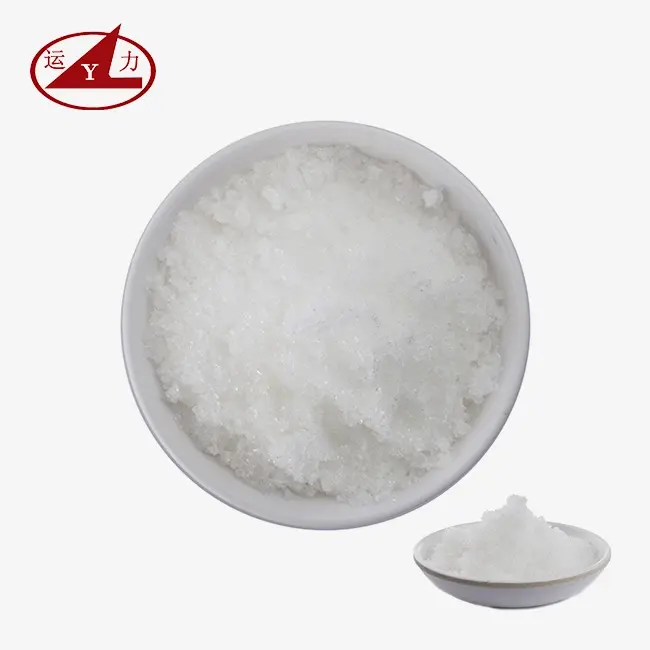
The chemical formula for calcium nitrate tetrahydrate is Ca(NO₃)₂·4H₂O, and its molecular weight is 236.15. It is a white, crystalline solid that is monoclinic and has a specific density of 1.895. At 132°C, it breaks down, and water, methanol, ethanol, and acetone can all dissolve it easily. Because it dissolves so easily in water (about 1,290 g/L at 20°C), it is the most popular calcium source in fertigation systems around the world.
Why It Outperforms Urea and Ammonium Nitrate in Crop Nutrition?
Calcium nitrate provides both calcium and nitrate-nitrogen at the same time without adding phytotoxic chlorides, unlike ammonium-based fertilizers that make the soil more acidic after repeated applications. Calcium ions help keep cell walls strong, which directly lowers health problems like Blossom End Rot in tomatoes and Tip Burn in cabbage. HortScience research confirms that giving calcium consistently during fruit development greatly reduces post-harvest losses in valuable crops, with a clear return on every kilogram used.
Industrial Versatility Beyond Fertilizer
For concrete work done in cold weather (below 5°C), calcium nitrate is used as a non-chloride set accelerator. It speeds up the hydration of tricalcium silicate without corroding the steel support, which is a big plus over cheaper options based on chloride. It's used to make latex uniformly coagulant, and it stops sulfate-reducing bacteria from doing their job to control the smell of hydrogen sulfide in wastewater treatment. These uses in different fields make it useful for business in areas other than agriculture.
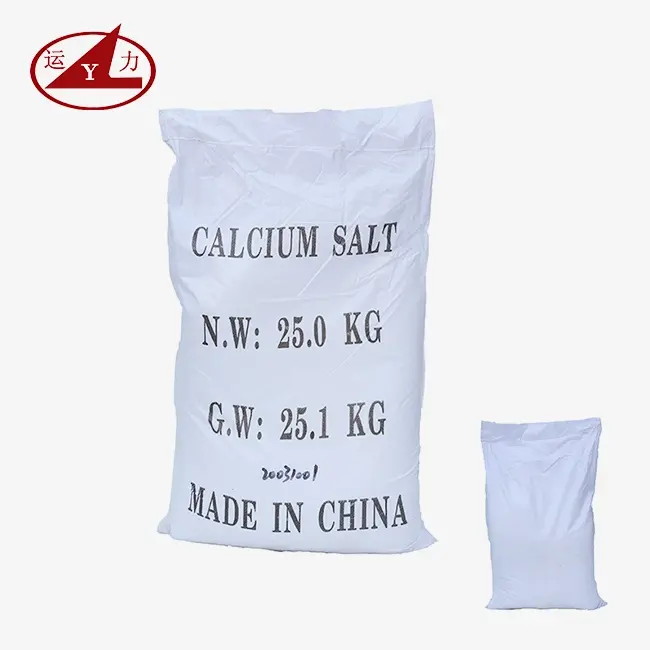
Evaluating Calcium Nitrate: Quality, Safety, and Application Guidelines
Not every score is the same. When buying this compound for important uses, procurement teams have to look at three technical factors before accepting a seller.
Here are the main quality checks that every buyer should do before making a large order:
- Assay and calcium content: It has an assay of more than 99%, a calcium content of more than 16.9%, and a nitrogen content of more than 11.7%. These numbers have a direct effect on how well fertigation methods supply nutrients.
- Water-insoluble matter: For high-end uses, less than 0.01% insolubles are needed to keep mixing tanks from settling and 200-micron drip irrigation screens from getting clogged.
- Heavy metal profile: To meet REACH and farm safety guidelines and to make sure the amounts of lead, cadmium, and mercury are correct, ICP-OES analysis must be used. Too many heavy metals in the land are both a governmental and an agricultural problem.
These factors are the absolute minimum that must be met for any important procurement decision. Skipping third-party verification at this point usually leads to shipments being sent back, production stopping, and bad relationships with suppliers.
Safe Handling and Storage Essentials
Oxidizers are things like calcium nitrate (Class 5.1). It speeds up combustion when it comes in contact with flammable materials and can irritate the skin if it is exposed for a long time. Standard PPE, like safety glasses and gloves, must be worn. The crystal can easily absorb water, so it needs to be kept in sealed PE-lined bags in a cool, dry place with a relative humidity below 60%. When packaging is broken, the material takes enough water to dissolve in its own water of crystallization. This is called deliquescence.
How to Choose the Right Calcium Nitrate Supplier – A Decision Support Framework (F-1 Criteria Screening Approach)
With the F-1 Criteria Screening Approach, procurement teams can review sellers in an organized way that isn't just based on price. It includes five levels of decision-making: purity certification, production capacity, delivery reliability, environmental compliance, and technical support after the sale.
Applying the F-1 Framework in Practice
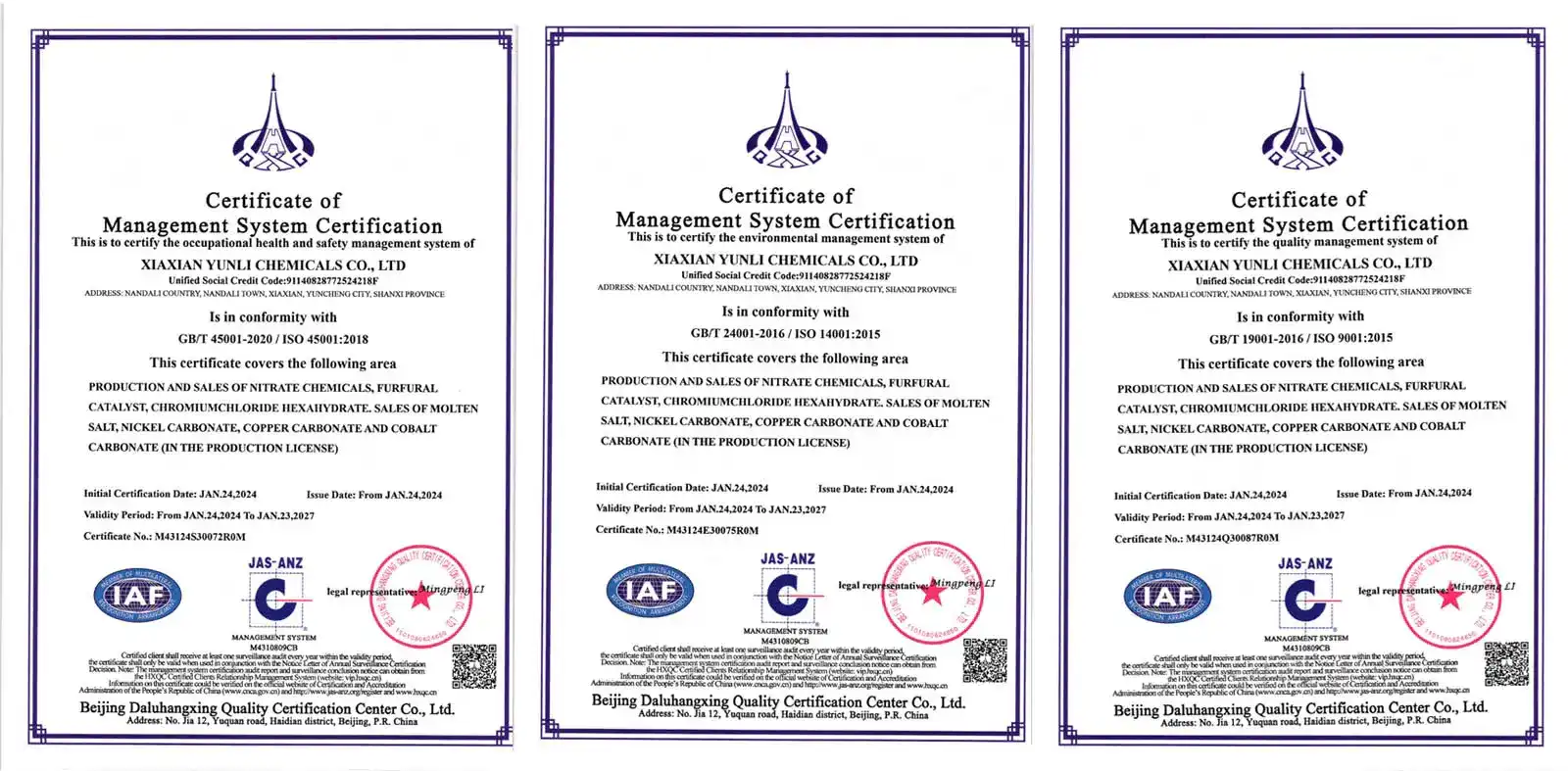
Go through each layer one at a time. Even if a supplier has a good unit price, buyers with contracts worth more than $500,000 a year will not be able to work with them if they are not ISO 9001 certified or have consistent production records. Verified certifications, like ISO 9001, ISO 14001, and OHSAS, let you know that your internal processes meet internationally recognized standards. This lowers the risk in your supply chain. Before you sign a long-term contract, make sure you get real lab reports, not just spec sheets, and ask for examples from buyers in similar businesses.
Market Comparison of Calcium Nitrate Brands and Products
There are companies on the global market that sell solutions in powdered, prilled, and liquid forms. The granular product works well for bulk mixing, and the liquid concentrate makes it easier to directly put into fertigation lines. Before you negotiate price, make sure that the product form matches your operating infrastructure when you are comparing sellers.
Yunli Chemical stands out in this field for several substantive reasons. The company was founded in 2005 and is based in Yuncheng City, Shanxi Province. It has been making nitrate for more than 20 years and makes more than RMB 1 billion in sales every year. Its provincial technology center has ICP-MS and atomic absorption spectrometers that can certify 4N-grade high-purity output, which is a level of quality that most manufacturers in the region can't match. With factory-direct supply and self-operated export, there are no middlemen to add markups, and special aqueous solutions with different amounts can be made. Buyers can try out the formula on free samples of up to 500 grams before committing to a larger order.
Purchasing Guide: From Inquiry to Delivery – Ensuring a Smooth Transaction
A structured process for buying cuts down on shocks at every step. Checking the quality comes first, then trying out a small batch of the recipe, then comparing prices, then reserving stock for the busy season, and finally signing a long-term supply agreement for calcium nitrate. It usually takes four to six weeks for the first supplier to be evaluated, and only two weeks for a contract to be renewed with a partner that has already been working with the company.
Key Logistics Considerations for Bulk Orders
As much care should be taken with product purity as with export paperwork, freight terms, and packing specs. For customs purposes, make sure that the PE inner liners are still in place and that the oxidizer type is clearly marked on the outer package. Yunli Chemical can customize the packing and labeling to meet the needs of the buyer and ship on time with regular lead times. These are two operational details that often decide whether yearly demand windows are met or missed.
Conclusion
It takes more than just looking at price lists to find a reliable nitrate fertilizer or industrial calcium compound. Technical purity, heavy metal control, the integrity of the packaging, and certified production processes all show if a supplier can keep your business going during peak demand. The F-1 approach described here gives buying teams a way to make decisions about where to get things that can be defended. Yunli Chemical has been in business for 20 years, has quality infrastructure that has been certified, and can ship calcium nitrate directly. This makes it a reliable partner for buyers in the agriculture, building, and specialty chemical sectors.
FAQ
Can I mix this compound with sulfate or phosphate fertilizers in the same tank?
No, mixing it with sulfates or phosphates causes fast formation of calcium sulfate or calcium phosphate, which blocks irrigation nozzles and takes all the nutrients out of the solution.
Why is the product liquefying inside the bag?
Extreme hygroscopicity means that the crystal can take in water from the air above 60% RH until it melts. The only reliable ways to stop this from happening are intact PE-liner packaging and a dry warehouse.
What distinguishes technical grade from agricultural grade?
Technical grade has a higher result (above 99%), less iron, and tighter limits on what it can't dissolve. It's best for use in rubber and industrial catalysts. Agricultural grade can handle a little bit higher trace amounts and still meet the nutritional needs of crops.
Does it function as a plasticizer in concrete?
No, it doesn't. It speeds up the initial setting time and early development of compressive strength. However, it doesn't make the material easier to work with or lower the need for water like a superplasticizer does.
Is it suitable for hydroponic NFT systems?
Yes. Its very low solid matter content (below 0.05%) keeps the nozzles from getting clogged, and it stops salt from being absorbed in salty water, which makes it especially good for solanaceous plants in systems that use water that is recycled.
Request a Quote from Yunli Chemical — Your Trusted Calcium Nitrate Supplier
Yunli Chemical sends calcium nitrate directly from the factory. The purity has been checked and is confirmed. The quality control is ISO-certified, and the packaging is made to fit your needs. Partnering with us lowers sourcing risk right away because we've been exporting for over 20 years and don't require a minimum order for free trials. To get a standard sheet and cheap mass price, email our technical team at wangjuan202301@outlook.com right now.
References
1. Marschner, H. Mineral Nutrition of Higher Plants. Academic Press, 2012.
2. Hochmuth, G., & Hanlon, E. Fertilizer Recommendation Guides for Vegetable Crops in Florida. University of Florida IFAS Extension, 2020.
3. Mehrotra, O. N., & Singh, M. Concrete Technology: Theory and Practice. S. Chand Publishing, 2015.
4. Imas, P., & Bar-Yosef, B. Potassium and Calcium Nutrition of Crops Under Fertigation. International Potash Institute Bulletin, 2008.
5. Savvas, D., & Gruda, N. "Application of Soilless Culture Technologies in the Modern Greenhouse Industry." European Journal of Horticultural Science, 2018.
6. Nollet, L. M. L., & Tölgyessy, J. Handbook of Water Analysis. CRC Press, 2019.