


What Are the Main Uses of Ferric Nitrate Nonahydrate in Industry?
Ferric nitrate nonahydrate (Fe(NO₃)₃·9H₂O, CAS 7782-61-8) is one of the most versatile iron salts in modern industrial chemistry. With a molecular weight of 404.01 g/mol and purity reaching ≥98%, this purple crystalline compound serves as a critical input across catalyst manufacturing, wastewater treatment, metal surface conditioning, textile mordanting, and ceramic coloring. Its clean thermal decomposition profile — leaving no chloride or sulfate residue — makes it a preferred iron source wherever impurity control is non-negotiable. Understanding its full application range helps procurement managers and engineers make sharper, better-informed sourcing decisions.
Understanding Ferric Nitrate Nonahydrate: Composition and Properties
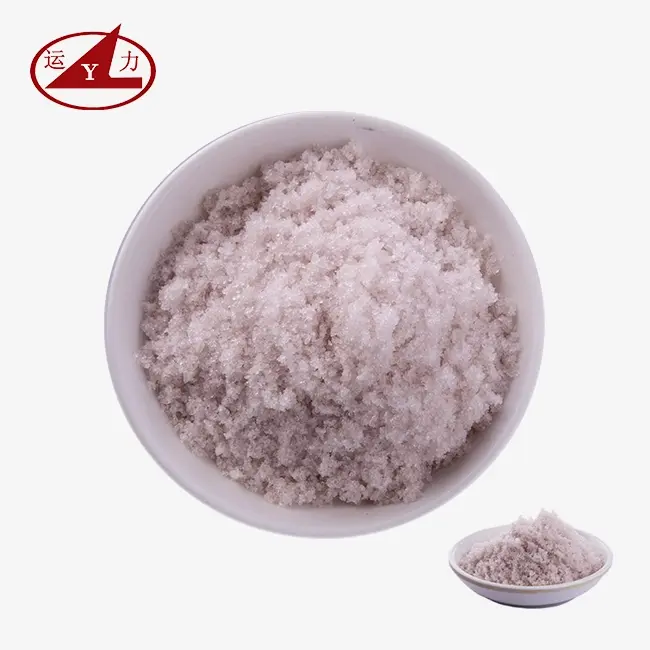
Crystals of ferric nitrate nonahydrate (Fe(NO₃)₃·9H₂O) look like purple and violet prismatic shapes. It weighs 1.68 grams per cubic centimeter and melts at 47.2°C. It breaks down at 125°C, making iron(III) oxide and nitrogen oxides. During calcination, this property helps the people who make catalysts.
Physical Characteristics That Drive Industrial Choice
When this substance comes in contact with water, it easily turns into a liquid. If it's not sealed, it can do this at room temperature. Since it's easily broken down in water, ethanol, and acetone, it's simpler to make a smooth solution for processes that need to implant. The pH of a 10% water mix is between 1.5 and 2.5, which means it is not too acidic. The amount of chloride in good commercial material is less than 100 parts per million. This keeps process equipment made of stainless steel from getting pits or corrosion.
Purity Grades and Why They Matter
There are different apps that can clean up different amounts of dirt. When used in catalyst production, reagent-grade material must have less than 10 ppm of heavy metals. On the other hand, water treatment can use technical grades with a purity level of 98% or higher. When you know the difference before you buy, you avoid costly batch fails later on. This industrial-grade Fe(NO₃)₃·9H₂O is a UN 1466 (Class 5.1 Oxidizer) that needs to be kept away from organic materials and come with the right MSDS records.
Key Industrial Applications of Ferric Nitrate Nonahydrate
This iron salt is useful in many cases because it breaks things down without halides and oxidizes things. These traits make people more successful in a number of areas.
Catalyst Manufacturing — The Primary Market
Ferric nitrate nonahydrate is the iron precursor used to make supported catalysts that are used in hydrogenation reactions, Fischer-Tropsch reactions, and the production of ammonia. The whole compound burns off during calcination, leaving behind only iron oxide species that are active on silica or alumina supports. This clean burn-off can't happen with ferric chloride because it leaves behind chloride ions that hurt catalytic sites and make the bed last less time. Iron nitrate with ≤10 ppm of heavy metals and a pH stability that is tightly controlled between 1.5 and 3.0 is always what catalyst makers ask for when they want to make methanol and grow carbon nanotubes.
Wastewater Treatment and Coagulation
Iron salts with three charges are used in water treatment plants for companies and towns to clump together floating solids and make phosphates solid. Ferric nitrate nonahydrate is the best choice when you don't want to add a lot of salt, like in systems with stainless steel pipes or biological steps further down the line that don't like high conductivity. It's easy for water to dissolve, so it spreads out quickly in treatment tanks. This helps floc creation work better. Iron-based coagulants have been shown to regularly lower the amount of phosphorus in cleaned trash to less than 0.1 mg/L by environmental engineers.
Metal Surface Conditioning and Precision Etching
Some people who make electronics and jewelry use ferric nitrate nonahydrate solution to get rid of silver, copper, and zinc metals that have a smooth surface. It is important to note that the nitrate-based etchant does not cause violent pitting like hydrochloric acid does. This is necessary for fine welding and accurate circuit design. Because this compound is compatible with RoHS and REACH, hexavalent chromium is no longer used in some electroplating baths. This has a big effect on how much it costs to clean up toxic wastewater.
Textile Mordanting, Ceramic Coloring, and Corrosion Inhibition
When colors are added to natural fibers like silk, ferric nitrate nonahydrate forms stable groups with the dye molecule and the iron ion. An adjuvant is what we call this. It turns glazes yellow with iron oxide after they've been fired. It is used to make anti-rust coatings because it mixes well with zinc phosphate binders and is simple to dissolve in water. These groups of customers always buy things from the property because they have special wants.
Comparing Ferric Nitrate Nonahydrate with Other Iron Salts
Picking iron salts is never a chance process. Here is a list of the most important changes that people who work in buying look at.
There are a few things you should look at before you agree to a standard:
- vs. Ferric Chloride (FeCl₃): Ferric chloride is simpler to get and cheaper, but it adds chloride ions that hurt stainless steel tools and stop catalysts that are sensitive to halides from working. Ferric nitrate nonahydrate is the only thing that can be used if the chemistry further down the line can't handle chloride.
- vs. Ferric Sulfate (Fe₂(SO₄)₃): When you mix ferric sulfate with water that has no pH, it works well to fix it, but when it breaks down at high temperatures, it leaves behind sulfate. People who make catalysts or materials for processes that are sensitive to sulfur must stay away from it at all costs.
- vs. Ferrous Nitrate (Fe(NO₃)₂): Ferrous types have Fe²⁺, which is not as good at oxidizing things. For reactions that need Fe³⁺ for etching, coagulation, or making catalysts, the ferric form is needed.
Since these things are different, ferric nitrate nonahydrate is the better choice technically for many important uses, even though it costs a little more per unit than chloride or sulfate possibilities. It is often clear that the nitrate road is the cheaper option when things like catalysts need to be changed and waste water needs to be cleaned.
Procurement Best Practices for Ferric Nitrate Nonahydrate
If you want to always get this material, you need to compare suppliers on more than just price. People who work with catalysts and water treatment and need steady impurity profiles worry about batch-to-batch regularity most of the time. Key supplier evaluation criteria include ISO 9001 certification for quality management, checked analytical data (ICP-MS or atomic absorption spectroscopy), proven CAS 7782-61-8 traceability, anti-caking packaging to keep moisture out, and flexible MOQ options that let you place trial orders before making a long-term commitment. There must be the right papers for every shipment so that it meets the safety and customs rules of the countries that are getting it. In this group are the SDS, the Certificate of Analysis, and the UN 1466 transport rating for ferric nitrate nonahydrate.
Safety and Storage Guidelines for Industrial Use
UN rules for transport say that ferric nitrate nonahydrate is a Class 5.1 oxidizer. Things made of organic matter burn faster, and you should never store it with fuels, acids, or reducing agents. When working with chemicals, you need to wear rubber gloves, safety masks, and aprons that can handle chemicals because they can be irritating to the skin.
Storage temperature should remain below 30°C while it is being kept in a dry place with good air flow. Because it only melts at 47.2°C, the compound isn't very easy to break down. Even light heat can partly melt it inside covered drums. HDPE drums with covers that block moisture keep food fresh for an extra year. As soon as the containers are opened, they should be put back together and used so that the contents don't settle and become less pure.
Conclusion
Ferric nitrate nonahydrate is a key ingredient in many chemical reactions and is used to treat water, work on metal surfaces, and make catalysts. It's easy to dissolve, doesn't contain any halides, and its purity level can be managed. These qualities make it clearly better than other iron salts in situations where controlling impurities affects how the process turns out. Your results will depend on how good and consistent your iron nitrate supply is, whether you are trying out a new catalyst precursor, increasing the size of a coagulation process, or finding a surface conditioner without chromium.
FAQ
What purity grade is required for catalyst manufacturing?
Most of the time, a catalyst needs to be ≥99% pure and have a heavy metal amount of ≤10 ppm. Heavy-duty types that are at least 98% good at cleaning water and making surfaces smooth. Before you place an order, talk to your process expert about the specifics.
How does iron nitrate compare to ferric chloride in wastewater treatment?
If you don't want chloride ions, iron nitrate is better. Especially in systems with parts made of stainless steel or biological stages that don't like it when the conductivity is high. Iron chloride is less expensive, but it adds chloride, which can make rust pits and mess up other steps in the process.
What causes ferric nitrate to clump or liquefy in storage?
The mix melts at 47.2°C and stops being liquid in a big way. It soaks up water and breaks down partly in its own crystal water when it gets humid or hotter than 30°C. When HDPE drums are sealed and have desiccant bags inside them, they are kept cool and dry, so this can't happen.
Is ferric nitrate nonahydrate hazardous to transport?
Oxidizer, UN 1466 Class 5.1, is the right word for it. As part of the shipping paperwork, there must be a Safety Data Sheet and the right kind of labeling for dangers. Use service providers who have dealt with oxidizer-class shipping before to make sure you get your packages on time.
Source High-Purity Iron Nitrate Directly from Yunli Chemical
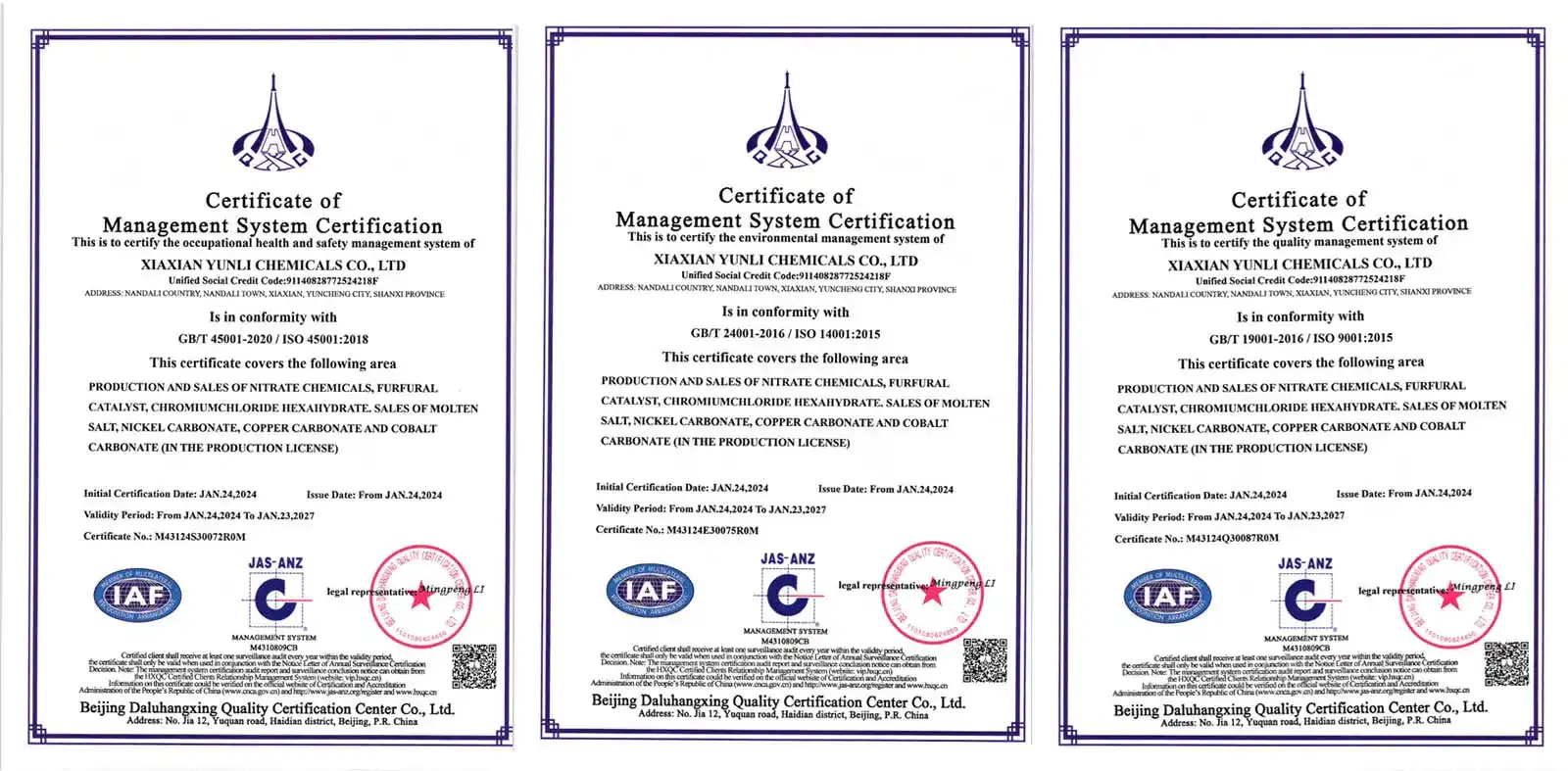
Yunli Chemical has manufactured and exported specialty nitrate compounds since 2005, with annual sales exceeding RMB 1 billion and ISO 9001, ISO 14001, and OHSAS certifications validating our quality systems. As a trusted ferric nitrate nonahydrate supplier, we offer ≥98% purity (up to 99.9% on request), ICP-MS verified batch reports, anti-caking packaging, and free samples up to 500 g. Reach our technical team at wangjuan202301@outlook.com to request a quote or download the full product SDS.
References
1. Schwertmann, U., & Cornell, R. M. Iron Oxides in the Laboratory: Preparation and Characterization. Wiley-VCH, 2000.
2. Tchobanoglous, G., Burton, F. L., & Stensel, H. D. Wastewater Engineering: Treatment and Resource Recovery. McGraw-Hill, 2014.
3. Richardson, J. T. Principles of Catalyst Development. Springer, 1989.
4. Kirk-Othmer Encyclopedia of Chemical Technology. "Iron Compounds." John Wiley & Sons, 2005.
5. Lide, D. R. (Ed.). CRC Handbook of Chemistry and Physics, 84th Edition. CRC Press, 2003.
6. European Chemicals Agency (ECHA). Classification and Labelling of Iron(III) Nitrate Nonahydrate (CAS 7782-61-8). ECHA C&L Inventory, 2019.