


Chromium Acetate 50% Solution for Textile and Chemical Industries
When textile manufacturers and chemical processors face inconsistent dye fixation or unreliable cross-linking in their production lines, the root cause often traces back to the quality and stability of their chromium-based mordants. Chromium Acetate 50% Solution has emerged as the industry's reliable answer—a trivalent chromium compound with CAS 1066-30-4 that delivers predictable performance across dyeing, tanning, and catalyst synthesis operations. Unlike hexavalent chromium alternatives that raise environmental red flags, this grayish-green liquid offers a safer, more stable pathway for achieving superior color fastness and material durability in demanding industrial settings.
Understanding Chromium Acetate 50% Solution
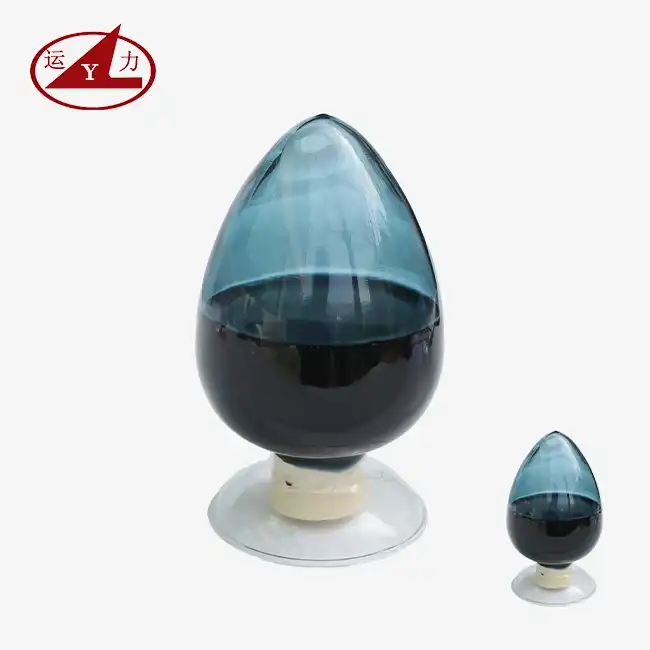
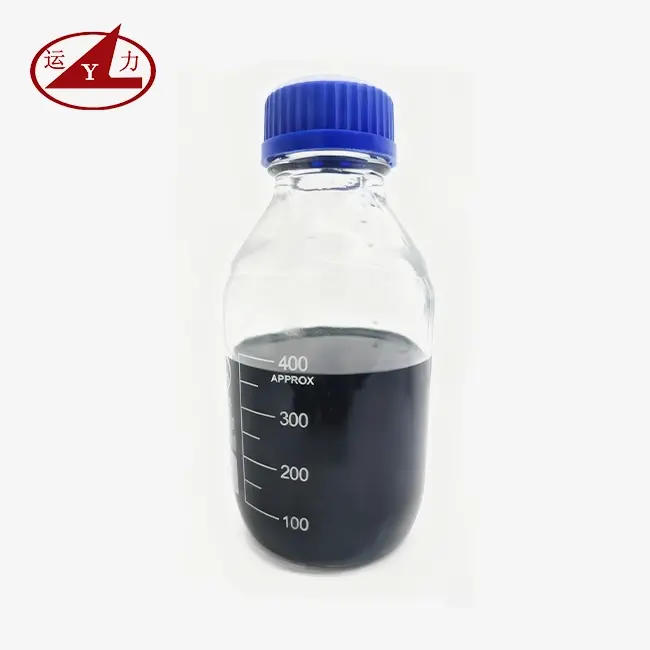
This substance is mostly made up of Chromium (III) acetate, which has the formula Cr(CH₃COO)₃ and a molecular weight of 229.13. This substance is unique because it is a thick, bluish-green to grayish-green liquid that dissolves completely in water. This makes it incredibly easy to add to current processing systems without having to buy expensive new equipment.
Chemical Properties and Stability Profile
The 50% concentration number means the amount of active chromium, which is about 7.5% to 7.8% elemental chromium. This level of concentration is the best compromise between working well and being safe to handle. At Yunli Chemical, we keep our formulation's pH between 3.5 and 4.5. This keeps chromium hydroxides from precipitating too soon and allows for controlled reactivity during application. At room temperature, the specific gravity is usually between 1.26 and 1.30 g/cm³, which makes sure that automatic syringe systems give the same dose every time.
Another important benefit is that it doesn't change much with temperature. A quality that is very important in high-temperature cloth dyeing processes is that our solution doesn't break down at processing temperatures up to 90°C. The acetate ligand acts as a buffer, slowing down the cross-linking reaction. This lets operators use a wider range of processes than with chloride versions, which respond faster.
Safety Information and Environmental Impact
Trivalent chromium substances, such as chromium acetate, are much less harmful than their hexavalent cousins. Our Material Safety Data Sheet shows that the amount of lead, cadmium, and arsenic that is present is still less than 5 parts per million (ppm). The amount of iron stays below 30 parts per million, and the amounts of chloride and sulphate impurities stay below 50 parts per million. These numbers keep the dyeing chemicals from being affected.
Standard chemical safety rules say to handle chemicals in well-ventilated areas, wear acid-resistant gloves and glasses, and store them in sealed containers away from strong oxidisers. To keep the concentration from changing due to evaporation, the solution should be kept between 5°C and 30°C. When kept in these conditions, the shelf life goes up to 12 to 24 months without losing any of its effectiveness.
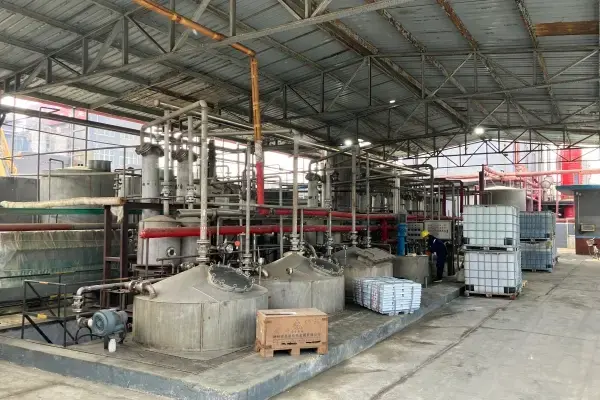
Chromium acetate is better for the environment than older options. Yunli Chemical's closed-loop wastewater systems collect and reuse chromium, and our Cr⁶⁺ reduction technology stops oxidation while production is going on. This method is in line with the REACH and RoHS rules that are becoming more and more important for global chemical industry.
Application and Performance in the Textile and Chemical Industries
Chromium Acetate 50% Solution can be used in a lot of different ways when you look at its industrial uses. Textile processors mostly use it as a mordant, which is a chemical bridge that locks dye molecules to the surface of fibres through coordination bonding.
Textile Dye Fixation and Fabric Treatment
Chromium acetate forms stable clusters with acid dyes when wool and silk are dyed, which greatly increases the wash fastness scores. Depending on the type of fibre and the colour depth you want, the usual dose runs from 2% to 5% of the cloth weight. Compared to chromium sulphate, the acetate form reacts later, which lets it get deeper into fibre cores before the binding reaction is over. This trait makes the colour more consistent across batch runs and lessens surface staining.
Treatments for cotton and synthetic fibres work just as well. When used as a post-mordant after reactive dyeing, the solution makes the colour more resistant to light by making metal complexes that protect the chromophore groups. Depending on the weight and structure of the cloth, the processing factors usually include lowering the pH to 4.5 to 5.5, treating it at 60 to 80°C, and letting it sit for 20 to 40 minutes.
Leather Tanning Applications
Chromium acetate is used by leather processors for retanning processes that make leather softer and better at taking dye. The solution gets into the structures of collagen fibres and makes cross-links that make the skin more stable without the harsh effects of chromium sulphate tanning. The application rates are usually between 1% and 3% of the shaved weight, and the pH is kept between 3.8 and 4.2 during the drum cycle.
Case studies from leather providers for cars show changes that can be measured. When a manufacturer in Michigan switched from chromium sulphate to acetate-based retanning protocols, light fastness scores went up by 18% and grain break went down by 23%. Because of these improvements in performance, there were fewer service claims and happier customers.
Catalyst Manufacturing and Surface Treatment
In addition to being used in fabrics, the solution is also used as a starting material to make catalysts for use in petrochemicals. When heated, it breaks down into chromium oxide, which makes catalysts with more surface area and more evenly distributed pores than nitrate-based options. This means that polymerisation processes will be more selective and cracking activities will have catalysts that last longer.
Dilute chromium acetate solutions are used to seal anodised aluminium parts in metal finishing processes. The treatment fills in tiny holes in the oxide layer, making it more resistant to corrosion without adding hexavalent chromium. This is a huge benefit for aerospace and marine uses where regulations are getting stricter all the time.
Comparing Chromium Acetate 50% Solution with Other Chromium Compounds
Understanding the changes in performance between the different sources of chromium is often a key part of making purchasing choices. Each type of substance has its own unique properties that make it useful for different tasks.
Concentration and Cost Efficiency Analysis
Chromium Acetate 50% Solution comes in a range of strengths, from 10% to 60%. For medium- to large-scale activities, the 50% version provides the best economics. Lower concentrations (10–25%) lower shipping costs but raise the amount of work needed to handle and dilute the substance. Higher concentrations (55–60%) get close to saturation limits, which is where the risk of rain during storage goes up, especially in colder climates.
When comparing prices to chromium sulphate and chromium chloride, the amount of active chromium must be taken into account. Chromium sulphate seems to be less expensive per kilogram, but because it reacts more easily, it often needs extra process controls and neutralising agents. In textile uses, acetate formulations are often better because they are cheaper to install because they don't need as many safety tools or pH adjusters.
Application Efficacy in Different Industries
Different types of chromium chloride respond quickly, which means they can be used in systems that process things all the time and have short holding times. But at this speed, there isn't much room for process changes, which makes rejection rates higher when feed materials change. Chromium acetate gives a more flexible process window because the acetate ligand slows down the reaction, so operators can account for changes in water hardness, temperature, or fibre lot differences.
Chromium sulphate is still commonly used to tan leather because it is strongly basic and goes deep into the leather. But sulfate-based methods make more wastewater with more total dissolved solids, which makes cleaning more expensive. Acetate formulations make wastewater streams that are cleaner and contain less sulphate, which is a big benefit in situations where sulphate amounts are limited by release rules.
Procurement Guide for Chromium Acetate 50% Solution
When looking for commercial chromium compounds, you need to think about how reliable the suppliers are, how consistent the products are, and how well they can handle transportation. Technical buyers look at more than just unit price when making decisions.
Evaluating Supplier Credentials and Certifications
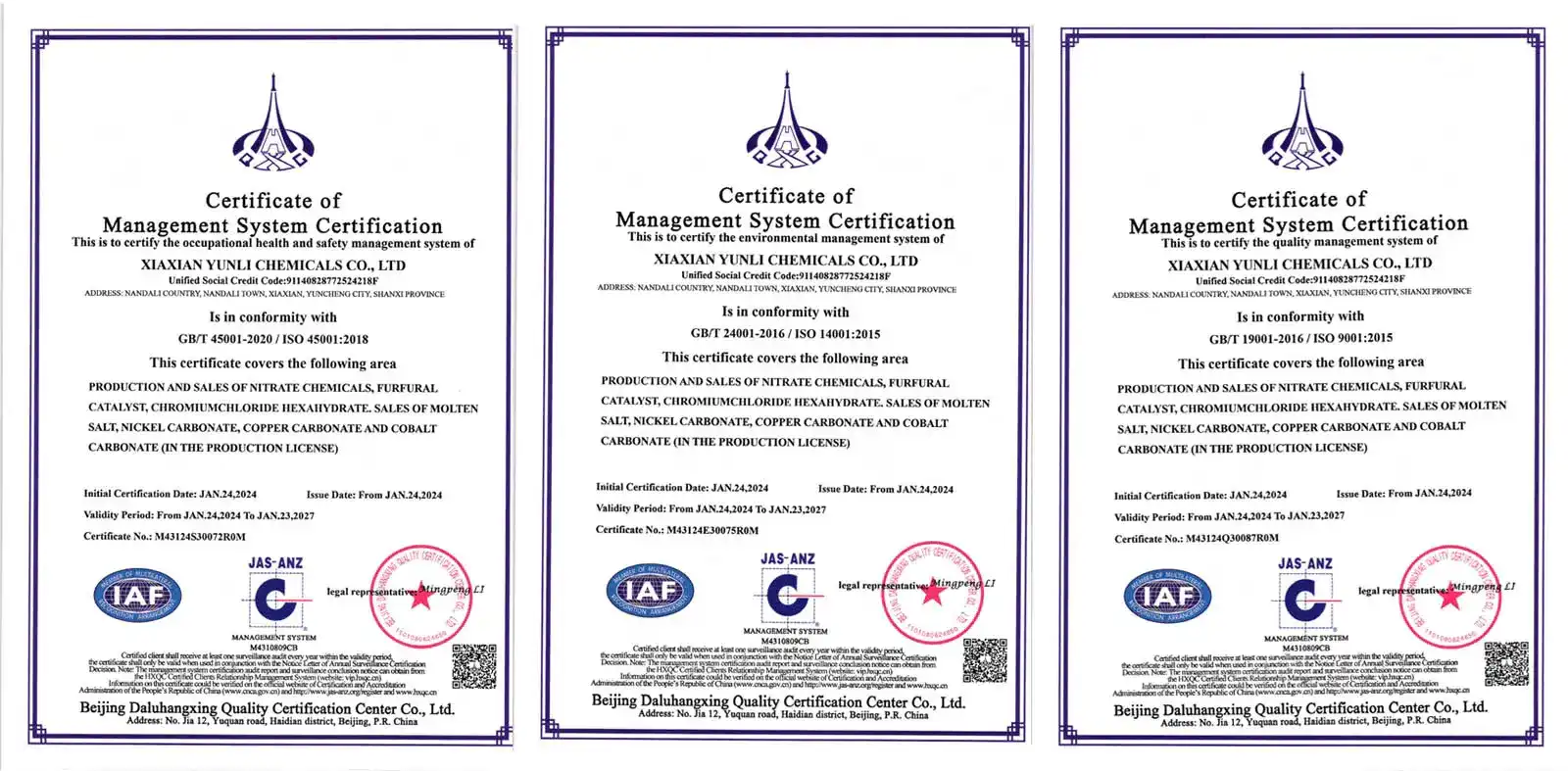
ISO 9001 approval shows basic quality management skills, but for cloth and pharmaceutical uses, more thorough testing is needed. Look for suppliers that have both ISO 14001 environmental certification and OHSAS occupational safety certification. These show that the company has mature management systems that lower the risk of supply disruption.
Yunli Chemical is an Enterprise Technology Center at the local level, which means it has advanced research and development skills that aren't common among producers of commodity chemicals. This infrastructure makes it possible to create unique formulations, profile impurities, and get help with problems that come up. These features are very helpful when adding more processes or fixing performance problems that came up out of the blue.
Every shipment should come with a Certificate of Analysis that lists the chromium content (by titration and ICP-OES), pH, specific gravity, and other important impurities. When suppliers offer batch tracking and kept samples, they show that they are responsible for quality, which saves buyers during regulatory checks.
Packaging Options and Logistics Considerations
For bulk deliveries, 200-liter HDPE drums or 1000-liter IBC totes are usually used. Drum packaging works well for small businesses or places that make more than one product and can't afford dedicated storing. IBC totes are better for high-volume users who handle many tonnes of goods every month because they lower the cost of handling each unit and protect goods during transport.
Most places don't consider Chromium Acetate 50% Solution to be dangerous for transportation, which makes it easier to handle than oxidising agents or flammable chemicals. But when shipping in the winter to cold places, you need to pay attention to freezing points. If you store solutions below -20°C, they may partially crystallise, so you need to thaw them slowly and stir them before you use them.
It depends on how much you order and how busy the supplier is. Well-known companies like Yunli Chemical keep extra supplies on hand so that regular formulations can be delivered every 7 to 14 days. For custom ratios or ultra-low impurity grades, it may take between 4 and 6 weeks to make and check the quality.
Price Factors and Volume Considerations
Unit pricing works like it does in the chemical industry: large volume discounts happen at levels of 5 tonnes, 20 tonnes, and 100 tonnes or more per year. To get the best contract structures, buyers should ask for tiered pricing schedules and look at the total annual consumption.
Aside from the list price, you should also think about other costs, such as drum deposits or IBC rental fees, freight costs, customs duties for imported goods, and the cost of keeping inventory on hand. When suppliers give consignment inventory programs or vendor-managed inventory, they lower the amount of operating capital that is needed and make sure that supplies don't run out.
Payment terms affect how much something costs. Net 30 or Net 60 terms are common for buyers with good credit histories who have been buying for a while. Letters of credit or progress payments may be needed for new ties, especially when formulas are being made just for the customer.
Future Trends and Best Practices in Chromium Acetate Usage
Environmental laws, efforts to be more environmentally friendly, and new methods for making things are all pushing industrial chemistry to change. Procurement teams that look to the future keep an eye on new trends that affect long-term buying strategies.
Sustainability and Regulatory Compliance
Metal-containing compounds are being looked at more closely by the REACH law in the European Union and related rules in North America. There are fewer rules about trivalent chromium compounds than about hexavalent ones, but manufacturers still need to show that they can manage risks well throughout the lifecycles of their products. Supplier partners with well-established environmental management systems and clear rules for dealing with waste will no longer be differentiators but needs for staying competitive.
The circular economy is changing the way chrome compound supply lines work. Closed-loop manufacturing methods that reuse and recycle chromium from production trash cut down on the use of new materials and damage to the environment. Because Yunli Chemical has experience treating wastewater, we can help companies build similar recovery methods in their own facilities.
Operational Efficiency and Workplace Safety
Automation in chemical dosing systems lowers the risk of exposure to humans and makes consistency between batches better. These days, more and more textile factories use automatic pouring skids that have mass flow meters and pH feedback control. These systems need solutions that are stable and have a low viscosity. Chromium Acetate 50% Solution formulas meet this need more reliably than higher-concentration options that tend to crystallise.
Switching to chromium sources that are less harmful to workers is good for worker safety programs. Hexavalent chromium poses the chance of cancer, but trivalent chromium acetate doesn't have those problems and still works well in most situations. This change makes it easier to meet the requirements for personal protective equipment and lowers the number of medical monitoring duties that must be met under occupational safety regulations.
Conclusion
In conclusion, Chromium Acetate 50% Solution keeps showing its worth in dying textiles, working with leather and making speciality chemicals because it works well and has a low risk of harm. The 50% concentration strikes the best balance between ease of use and effectiveness in the application, and the trivalent chromium chemistry addresses environmental concerns that are becoming more and more important in purchasing decisions.
As laws get stricter and performance standards rise, suppliers who show technical know-how, steady quality, and quick service will continue to be important business partners. When buyers are well-informed and look at the whole picture, including expert support, regulatory compliance paperwork, and supply reliability, instead of just unit price, they will build more reliable supply chains that can help them reach their operational goals even as market conditions change.
FAQ
What safety measures should be taken when working with this solution?
Standard rules for handling chemicals say to work in well-ventilated areas, wear gloves and safety glasses that can handle acid, and stay away from eating or touching the chemical for a long time. Trivalent chromium is much less dangerous than hexavalent types, but the right materials for cleaning up a spill should always be on hand. If it gets on your skin, wash it off right away with lots of water and see a doctor if the discomfort doesn't go away.
How does concentration affect textile application results?
More chromium is delivered per unit measure at higher ratios, so less of it is needed per batch. At dosing rates of 2 to 5 percent of the fabric weight, the Chromium Acetate 50% Solution formulation gives enough chromium for most textile uses. Lower concentrations need proportionally larger volumes, which could make handling more difficult in facilities with limited space. Transportation costs, storage space, and the abilities of process tools should all be taken into account when making a concentration choice.
Which certifications confirm supplier reliability?
Getting ISO 9001 approval for quality management sets up basic rules for the process. Getting ISO 14001 environmental certification means that you know how to properly handle waste and emissions, which is very important for chromium compounds. Technical buyers should also check the lab's analytical skills by making sure it is accredited and ask about policies for retained samples that allow quality investigations to be done in the past.
Partner with a Trusted Chromium Acetate 50% Solution Manufacturer
Yunli Chemical can help you with your sourcing problems because they have more than twenty years of experience in specialised production. As a direct producer with more than 1 billion yuan in annual sales and ISO 9001, ISO 14001, and OHSAS certifications, we cut out middlemen and guarantee consistent product quality that meets strict industry standards. Our technology center at the provincial level lets you make custom formulations for your specific leather, textile, or catalyst needs. We keep impurities at levels that are safe for pharmaceutical use (iron below 30 ppm, chlorides below 50 ppm), and we give you all the paperwork you need to prove you're following the rules, like MSDS, COA, and environmental certifications.
Free samples up to 500 grams let you try it out completely before committing, and flexible buying with no minimum number needs lets you make purchases for both small tests and large production runs. Email our technical team at wangjuan202301@outlook.com to talk about your chromium acetate needs and find out how our Chromium Acetate 50% Solution supplier services can help you make your supply chain more reliable.

References
1. Society of Dyers and Colourists. (2018). Mordanting Techniques in Natural and Synthetic Fiber Dyeing: A Comprehensive Guide. Bradford: SDC Enterprises Ltd.
2. Covington, A.D., & Wise, W.R. (2020). Tanning Chemistry: The Science of Leather, 2nd Edition. Cambridge: Royal Society of Chemistry.
3. Richardson, M.L. (2017). Industrial Chromium Compounds: Production, Properties and Applications. New York: Chemical Publishing Group.
4. American Association of Textile Chemists and Colorists. (2019). AATCC Technical Manual, Volume 94. Research Triangle Park: AATCC.
5. European Chemicals Agency. (2021). Guidance on Safe Use of Trivalent Chromium Compounds in Industrial Applications. Helsinki: ECHA Publications.
6. Rao, J.R., & Chandrababu, N.K. (2016). "Chromium Mordants in Textile Processing: Chemistry, Application and Environmental Considerations." Journal of Cleaner Production, 142(4), 1-18.