



Chromium Chloride Hexahydrate Safety and Handling Information
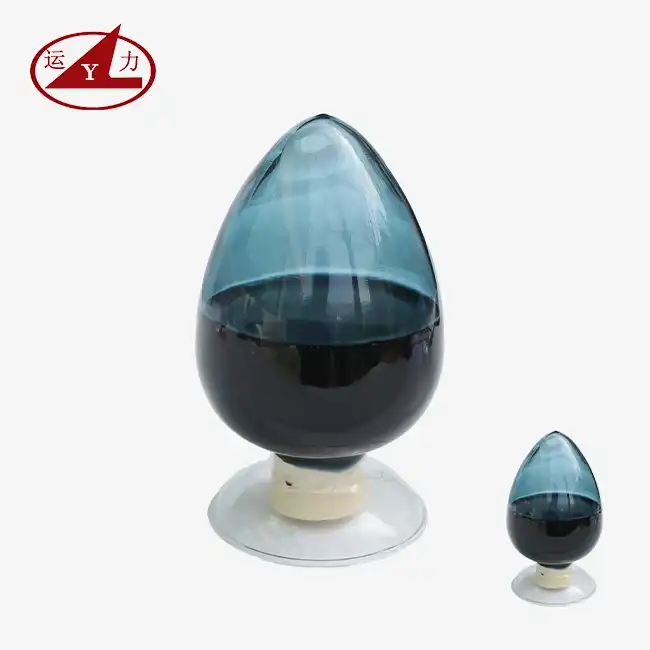
Chromium Chloride Hexahydrate (CrCl3·6H2O, CAS 10060-12-5) is a dark green crystalline compound serving critical roles in electroplating, catalyst production, textile dyeing, and pharmaceutical synthesis. Safe handling of this trivalent chromium compound requires understanding its hygroscopic nature, proper storage protocols, and exposure prevention measures. Unlike hexavalent chromium compounds, which present severe carcinogenic risks, this hydrated salt offers a safer alternative when managed correctly.
Purchasing managers and technical engineers must prioritize suppliers providing complete MSDS documentation, consistent purity specifications (≥99.5%), and proven contamination controls to minimize workplace hazards while maintaining production efficiency across surface treatment, battery materials, and fine chemical manufacturing operations.
Understanding Chromium Chloride Hexahydrate: Properties and Safety Basics
Chemical and Physical Characteristics
The molecular makeup of this substance has a direct effect on how it works in industry and how safe it is. It looks like dark green monoclinic crystals and has a melting point range of 86 to 90°C. Its molecular weight is 266.45 g/mol and its deliquescent qualities are strong. The substance easily takes in water from the air, which makes it harder to weigh accurately and can change the concentrations of solutions while they are being stored.
With a relative density of 2.76, it is heavier than many organic liquids and needs to be transported in a certain way. Complete solubility in water and ethanol allows for a wide range of applications, but its insolubility in ether restricts some biochemical routes. Solutions have acidic pH levels, usually between 2.0 and 3.0 in 5% watery mixtures. This means that processing facilities need equipment that doesn't rust.
Health Hazard Profile and Toxicity Data
Standard MSDS ratings say that this chromium salt poses mild health risks that need to be protected against. Fine crystalline dust can hurt the lungs and make you cough or feel pain in your bronchi if you breathe it in in places that don't have enough air flow. Contact with the skin can cause localised irritation, especially if it happens for a long time or if you already have a skin condition.
Exposure to the eyes is a bigger problem because acidic solutions can damage the lens and need medical help right away. Even though it's not likely to happen in the workplace, eating it could cause stomach problems and cause the body to absorb chromium. The compound doesn't come with the same strong cancer warnings as hexavalent chromium species, but long-term exposure at work should still be monitored by medical surveillance programs that check kidney function and skin sensitivity.
Storage Requirements and Environmental Controls
Product stability and worker safety are directly affected by the conditions of the warehouse. Because it absorbs water, it needs to be kept at temperatures below 30°C in airtight containers, ideally in bags that keep moisture out inside sealed drums. To keep things from sticking and breaking down crystals, the relative humidity should stay below 60%. To keep exothermic processes from happening, facilities must keep strong oxidising agents, alkalis, and reducing substances physically separate from each other.
In storage areas, ventilation systems should change the air at least 10 times an hour to get rid of any accidental releases. Acid-resistant flooring and spill berms are examples of secondary containment measures that keep container leaks from polluting drainage systems. Following the first-in, first-out rule for inventory management keeps things from being stored for more than 24 months. After that, they need to be tested again for purity and moisture content.
Personal Protective Equipment Requirements
Handling tasks need multiple layers of safety that are based on the risk of exposure. For everyday tasks like weighing, N95 particulate respirators are the first line of defence. For bulk transfers or spill cleanup, full-face air-purifying respirators with P100 filters are the next level up. Chemical-resistant gloves made of rubber or neoprene protect the skin well enough, and it's best to wear two pairs in situations where you will be touching something for a long time.
Safety glasses with side shields meet the basic standards for eye protection, but face shields are better for opening packages or mixing concentrated solutions because they cover more of the face. Lab coats or chemical-resistant aprons made from fabrics covered with polyethylene stop contamination of clothes and the subsequent spread to the skin. There must be emergency eyewash stations and safety showers within 10 seconds of all working areas. These must be checked once a week to make sure they have the right flow rates and water quality.
Comparing Chromium Chloride Hexahydrate with Related Compounds for Informed Procurement
Anhydrous vs. Hydrated Forms
Buying decisions are affected by knowing the difference between anhydrous chromium chloride and its Chromium Chloride Hexahydrate form. The anhydrous form (CrCl3) looks like violet crystals and dissolves much less easily in water. This makes it difficult for reactions that need to dissolve quickly. Usually, high-temperature chlorination processes are used to make it, which raises the cost of production by 30–40% compared to hydrated grades. On the other hand, the hexahydrate form dissolves easily at room temperature, which speeds up the processes of catalyst preparation and electroplating bath formulation.
The safety profiles are pretty much the same—both require the same PPE—but the hygroscopic hexahydrate needs stricter moisture control while it is being stored. Application suitability varies a lot: anhydrous grades work best for organic processes that are sensitive to water, while hexahydrate works best for electroplating in water and mordanting fabrics, both of which need to be compatible with water.
Purity Grade Impact on Performance and Safety
Purity specifications have a huge effect on both how operations go and how risks are handled. For pharmaceutical intermediate synthesis, materials that are laboratory-grade and have an iron content of less than 10 ppm are best because metal contamination can damage catalytic cycles or make API specifications less accurate. Industrial types that can handle 30 ppm iron work well for electroplating tasks, but high impurities may shorten the bath's life and make it necessary to filter it more often.
Heavy metal contaminants, like lead, cadmium, and arsenic, need to be checked to make sure they are less than 2 parts per million (ppm) in order for medicinal uses to meet government standards. If the amount of water-insoluble matter is more than 0.01%, it means that the production controls were not good. This can show up as surface flaws in plated finishing or catalyst deactivation in fixed-bed reactors. Buyers should ask for analysis papers that show the amount of sulphate present, since too much sulphate limits the brightness ranges of electroplating and lowers the efficiency of current flow in trivalent chromium systems.
Cost Analysis and Value Optimization
Different levels of purity, different types of packaging, and the complexity of the supply chain all affect how prices are set. Standard industrial-grade material costs between $8 and $12 per kilogram when bought in metric tonnes. High-purity pharmaceutical grades, on the other hand, cost $25 to $35 per kilogram because they go through more steps of processing and testing. Bulk liquid extracts, which are available at 40–50% w/w, are cheaper to ship because they don't contain any water, but they need special ISO tank handling equipment. There are different types of packaging that balance cost and protection.
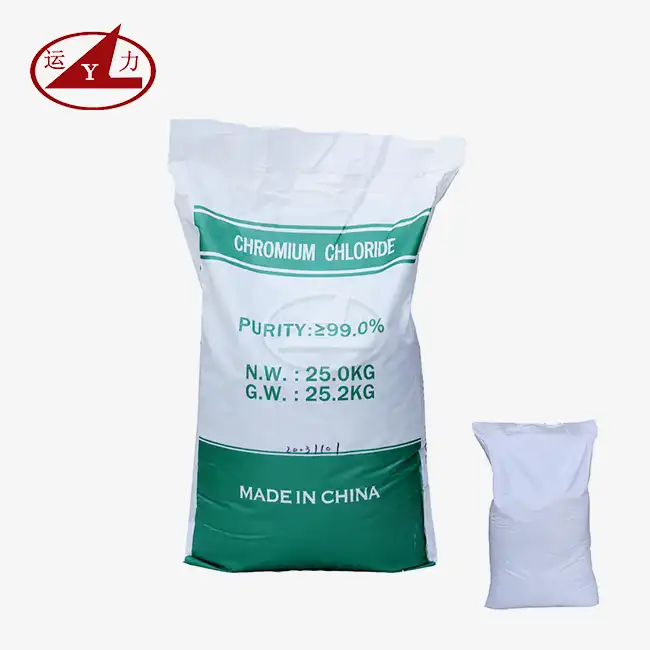
For everyday use, 25 kg polyethylene-lined bags are a cheap option, while moisture-proof drums with nitrogen blanketing keep ultra-pure grades safe for longer periods of time. Tiered pricing is often unlocked by making large commitments—quarterly contracts for 20+ metric tonnes can give 15-20% savings compared to spot purchases. This makes negotiating with suppliers very important for businesses that want to stay within their budgets and keep up with steady demand.

Best Practices for Safe Procurement and Supply Chain Handling
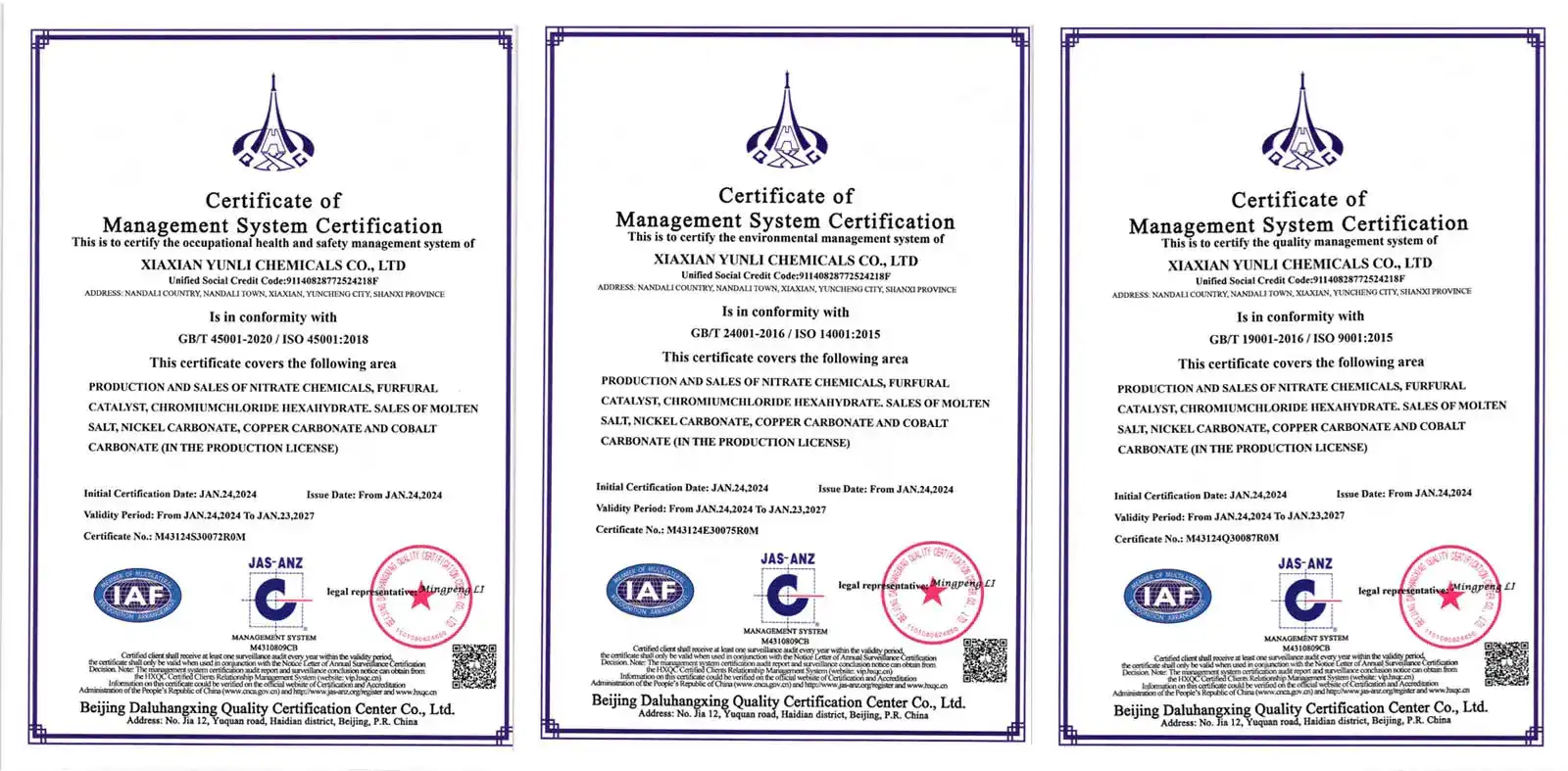
Sourcing methods need to find a mix between lowering costs and reducing risk across the whole supply chain. Yunli Chemical, which was founded in 2005 and has been making chemicals for more than 20 years, is a good example of the qualities that procurement professionals should look for in a supplier when they are looking for partners to work with on trivalent chromium compounds. The company's ISO 9001, ISO 14001, and OHSAS certifications show that they take care of quality and the environment in an organised way, which makes it easier for foreign buyers to know that they are following the rules.
As a provincial-level enterprise technology center, they have advanced research and development (R&D) capabilities that let them customise purity grades (with iron contents that can be adjusted to ≤10 ppm) and morphology (powder or crystals) to meet the needs of each application. Annual sales of more than 1 billion RMB and fixed assets worth 300 million RMB ensure the company's financial stability, which is necessary for long-term supply agreements and eases purchasing managers' worries about vendor continuity.
Supplier Evaluation and Certification Verification
Tough screening processes keep low-quality materials from getting into the output stream. Potential sellers must show up with up-to-date MSDS sheets that follow GHS classification rules and list the types of hazards, how to give first aid, and how to properly dispose of the materials. Chromium Chloride Hexahydrate is one such substance that requires special attention during these reviews, as its specific hazard profile and handling instructions must be clearly documented. Analytical skills are needed for proof. Suppliers with in-house labs equipped with ICP-MS and atomic absorption spectrometers can do quick batch testing, which speeds up the settlement of quality disputes.
Third-party certificates from ISO, SGS, or similar groups show that the process is consistent beyond what the company says it is. Even though they take a lot of time and money, site checks show how process controls manage impurities and make sure the environment is protected. References from current customers in similar industries give practical information about things like on-time delivery rates, how quickly technical support responds, and how consistent batches are with each other. These are all things that affect workplace safety indirectly by making things more predictable.
Logistics and Packaging Integrity
Transportation rules have a direct effect on the condition of the product when it arrives and on the safety of handling it afterward. Packaging that is accepted by the UN and meets the standards of Packing Group III for corrosive substances makes sure that rules are followed across international lines. Using aluminium foil laminates in moisture-barrier bags keeps things from breaking down during ocean freight, which is especially important for shipments going through humid areas. Standardised palletisation methods that use shrink-wrapped layers and corner protectors to keep items stable reduce damage from shifting that could compromise the seals on containers.
To speed up customs clearance and meet OSHA-equivalent workplace regulations, documentation packages must include commercial invoices, packing lists, certificates of origin, and safety data sheets in the languages used in the destination country. International shipments usually take 30 to 45 days after an order is confirmed. This means that inventory needs to be planned so that there are times for quality checking after arrival before materials can be sent to production floors.
Implementing Effective Safety and Handling Protocols in Your Facility
Risk Assessment and Exposure Control
Evaluations of workplace hazards should include numbers for breathing risks, skin touch chances, and environmental release scenarios. OSHA's permissible exposure limit of 0.5 mg/m³ as an 8-hour time-weighted average is followed by air sampling systems that measure chromium particulate concentrations. Engineering controls are more important than administrative measures. For example, local exhaust ventilation systems placed at dust-generating transfer points catch airborne particles before they reach breathing zones.
Closed-transfer systems that use mechanical conveyors or vacuum loaders get rid of the need for hand scooping, which releases emissions into the air. Using wet methods, like melting crystals in controlled addition tubes, stops dust from forming while making a solution. Designated handling zones with limited access keep untrained workers from accidentally being exposed, and clearly marked limits show where PPE is required.
Employee Training Programs
A thorough schooling gives workers the skills they need to do their jobs safely and handle situations properly. Chemical properties, especially hygroscopicity and acidic solution behaviour, recognising hazards through GHS pictogram interpretation, the right way to put on and take off safety gear, and emergency procedures like spill containment and first aid should all be part of the initial training.
Chromium Chloride Hexahydrate serves as a practical case study in such training, because its deliquescent nature and acidic aqueous reactions illustrate exactly why these chemical handling principles matter in real-world operations. Demonstrations using harmless substitutes help build muscle memory for important tasks like how to open containers and sort trash.
At once-a-year refresher sessions, new procedures are discussed, and incident case studies are looked over to stress the negative effects of cutting corners. Before letting someone handle things on their own, they have to pass both written and actual tests to show that they understand. Documentation systems that keep track of when training is finished meet the needs of legal audits and help with planning the staff when operations grow or new product grades are introduced.
Emergency Response Readiness
Being ready turns possible crises into managed incidents that cause less damage and less trouble with operations. Spill response kits should be kept near storage and use areas. They should have neutralising agents (such as calcium hydroxide or sodium bicarbonate), acid-resistant absorbent materials, non-sparking scoops, and chemical-resistant trash bags. Set procedures spell out the roles of the response team, when to evacuate, and how to notify outsiders when releases are too big for the internal containment system to handle.
First aid guidelines cover the most common ways of exposure: for skin contact, victims must be flushed with lots of water for 15 minutes right away before seeing a doctor; for eye exposures, they must be kept wet while being transported to the emergency room; and for inhalation victims, they must be moved to fresh air and given breathing support as needed. Reporting incidents helps find out what went wrong and what needs to be fixed. This can be done by changing procedures, getting better tools, or giving more training. This stops the problem from happening again and shows that safety is improving over time during surveys.
Conclusion
Managing Chromium Chloride Hexahydrate well during the buying, storing, and working stages requires combining expert know-how with organised safety rules. Understanding the compound's ability to absorb water, how purity affects it, and the risks of exposure helps with choosing a supplier and protecting yourself at work. Partnering with well-known makers that offer detailed paperwork, flexible specs, and tried-and-true methods of preventing contamination lowers the risk in the supply chain while keeping prices low.
Putting money into good ventilation systems, training for workers, and emergency plans can turn following the rules from a hassle to a competitive advantage. This protects the health of workers and keeps businesses running in fields that depend on this versatile trivalent chromium compound.
FAQ
What are the primary health risks associated with this compound?
The main risks of exposure are breathing in dust that irritates the lungs, getting skin that is sensitive directly, and getting solution splashes in the eyes that hurt them. Unlike hexavalent chromium, it doesn't come with strong cancer warnings, but long-term contact should still be closely watched by doctors to make sure kidney health and skin health.
How should facilities store this material to prevent degradation?
Use airtight, moisture-barrier packaging to keep storage temperatures below 30°C and relative humidity below 60%. Keep it away from oxidisers and alkalis, make sure there is enough air flow, and use extra storage to stop leaks. Rotate stock every 24 months and check older stock again for moisture content.
What documentation is required for international shipping?
For corrosive substances that are shipped, you need UN-approved packaging, MSDS in the language of the destination country, certificates of analysis, commercial invoices, packing lists, and certificates of origin. Customs processing goes smoothly as long as GHS labelling standards are followed and controlled substances are brought into the country of destination with the right permits.
Partner with Yunli Chemical for Reliable Chromium Chloride Hexahydrate Supply
Yunli Chemical provides highly pure Chromium Chloride Hexahydrate with iron levels that can be adjusted to ≤10 ppm. This meets the strict requirements for making pharmaceuticals and catalysts. Our 20-year history of production and approval as a provincial technology center guarantee stable quality, backed by full COA paperwork and ISO-compliant quality systems. We let you order in any amount, with no minimum order size, and we offer free samples of up to 500 grams.
You can also customise the packing, which includes watery concentrates, to meet your specific processing needs. Since we are both a straight manufacturer and exporter, we don't have to pay markups to middlemen. We also offer expert help during the purchase and implementation phases. You can email our team at wangjuan202301@outlook.com or visit yunlichemical.com to talk about your Chromium Chloride Hexahydrate needs with a provider who cares about safety, dependability, and price.

References
1. American Chemical Society. (2021). Reagent Chemicals: Specifications and Procedures for Chemicals and Standard Reference Materials. Washington, DC: ACS Publications.
2. International Labour Organization. (2020). Occupational Safety and Health in the Use of Inorganic Chromium Compounds. Geneva: ILO Press.
3. National Institute for Occupational Safety and Health. (2019). NIOSH Pocket Guide to Chemical Hazards: Chromium Compounds. Cincinnati: DHHS Publication.
4. Society for Chemical Hazard Communication. (2022). GHS Classification and Labeling Guide for Transition Metal Salts. Brussels: SCHC European Office.
5. United Nations Economic Commission for Europe. (2021). Recommendations on the Transport of Dangerous Goods: Model Regulations, Volume I. New York: UN Publishing.
6. World Health Organization. (2020). Environmental Health Criteria 61: Chromium—Industrial and Workplace Exposures. Geneva: WHO Press.