


How Is Nickel Carbonate Used in Catalysts?
Nickel Carbonate, chemically represented as basic nickel carbonate (CAS# 39430-27-8, molecular formula: NiCO₃·2Ni(OH)₂·4H₂O), functions as a pivotal precursor in catalyst production. Its unique structure allows it to decompose into highly active nickel oxide or metallic nickel under controlled conditions, forming catalytic surfaces essential for hydrogenation, reforming, and methanol synthesis. Across petrochemical, pharmaceutical, and environmental industries, this compound delivers exceptional purity and performance, making it an indispensable raw material for manufacturing advanced catalytic systems.
Understanding Nickel Carbonate and Its Chemical Properties
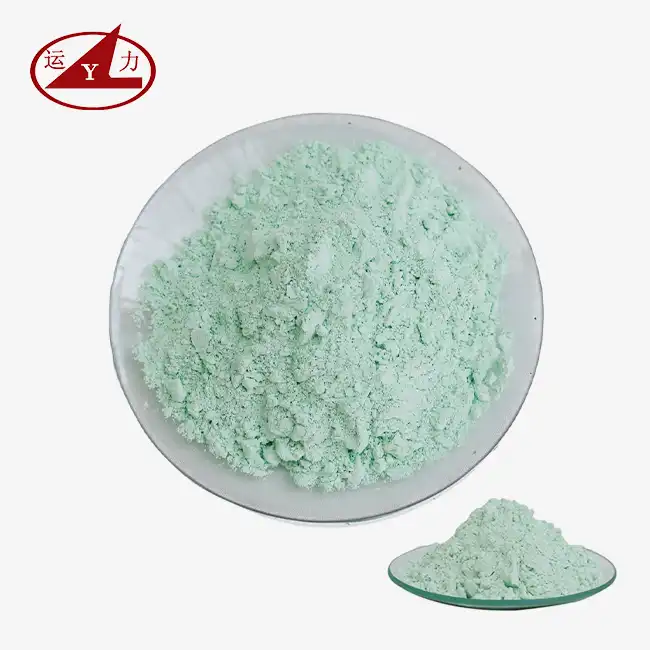
Basic nickel carbonate presents itself as a grass-green powdery material with a molecular weight of 376.17. Unlike simple nickel salts, this substance has both carbonate and hydroxide groups, which makes it stable while it is being stored and handled, yet it can respond quickly when it needs to. The substance dissolves easily in ammonia, weak acids, and ammonium carbonate solutions, forming soluble nickel complexes that make further processing easier.
Thermal Decomposition Characteristics
Basic Nickel Carbonate breaks down into nickel oxide (NiO) and carbon dioxide when heated above 300°C. This controlled breakdown at high temperatures is important for making catalysts because the oxide that forms has a lot of surface area and pores, which are perfect for catalytic processes. When the temperature is reasonable and hydrogen is present, the compound breaks down into finely scattered metallic nickel, which has amazing catalytic activity for hydrogenation processes. This two-way behavior—oxidative decomposition or reductive activation—makes it possible to design a catalyst that works well for many situations.
Comparative Analysis with Alternative Nickel Sources
To choose precursors, technical engineers often compare basic Nickel Carbonate to nickel sulfate and nickel oxide. Compounds that contain sulfate add unwanted negatively charged particles that can damage sensitive catalyst sites and shorten their useful life and performance. The amount of sulfur in our material is less than 10 parts per million, so this risk is completely gone. Nickel oxide is stable, but it dissolves more slowly in acidic materials and needs to be worked with at higher temperatures. The intermediate reactivity of basic Nickel Carbonate hits the perfect balance between faster breakdown rates and lower energy use during catalyst production.
Safety and Regulatory Compliance
Following established safety rules is necessary for managing basic Nickel Carbonate. The chemical absorbs water, so it should be kept in cool, dry places in packages that can't leak. Our product has all the paperwork it needs to be legal, like an MSDS, a Certificate of Analysis (COA), and certifications that meet ISO 9001, REACH, and OSHA/GHS standards. These papers make sure that buying managers and people who work in the supply chain can use the materials in their jobs without worrying about regulations, keeping the workplace safe and protecting the environment.
Role of Nickel Carbonate in Catalyst Production
Basic Nickel Carbonate is the building block for many different kinds of catalysts. Its chemical structure lets you precisely control how the nickel is distributed and the size of the particles in the end catalytic material, which has a direct effect on how well and selectively the reaction works.
Precursor for Active Nickel Sites
Manufacturers of catalysts like this compound because it can spread nickel particles out evenly. The carbonate and hydroxide parts break down during calcination, leaving behind a nickel oxide framework that is porous. After being reduced in a hydrogen atmosphere, this oxide turns into nickel particles that are usually between 1 and 10 micrometers in size. This range of sizes gives the most surface area contact, which means there are a lot of places for chemicals to respond. Because there are no sulfate ions, sintering doesn't happen during high-temperature processing, keeping the catalyst's structure intact for long periods of time.
Purity Advantages Over Competing Materials
When purchasing catalyst precursors, procurement managers put purity first because even small amounts of impurities have a big effect on performance. The nickel content in our basic Nickel Carbonate is at least 98%, and the amounts of iron (30 ppm), sodium (50 ppm), and sulfur (10 ppm) are all kept low. These strict requirements are meant to solve problems that happen a lot in the industry: iron poisoning can change the color of drugs, sodium can cause unwanted sintering during calcination, and sulfur can cause poisonous hydrogenation reactions. We get rid of these impurities using special production lines and careful ICP-MS testing, which lets us deliver material that makes catalysts last 20–30% longer than regular grades.
Customization for Specific Catalytic Applications
For each chemical process, the physical qualities need to be just right. To get the best gas diffusion through the catalyst bed, methanol synthesis catalysts need certain particle size distributions. For the right reactor packing, hydrogenation catalysts used to process edible oils need to have their bulk density controlled. Our special precipitation process lets us change the bulk density (0.8–1.6 g/cm³), particle shape (powder or grainy), and pH (6.5–8.5). Because of this, engineers can choose the exact factors that work with their reactor designs and process conditions, saving time and money that would have been spent on costly trial and error with off-the-shelf materials.
How Nickel Carbonate Enhances Industrial Catalytic Processes
A lot of different industries depend on the change of basic Nickel Carbonate into active catalysts. Because it can change into different types of nickel depending on how it is processed, each type is better for a certain type of reaction environment.
Petrochemical Hydrogenation Applications
For the hydrodesulfurization and hydrotreating processes, refineries use nickel-based catalysts that come from basic Nickel Carbonate. These catalysts take sulfur molecules out of different parts of crude oil, which makes safer fuels that follow environmental rules. The high-purity precursor makes sure that the end catalyst stays active even in the harsh conditions of a refinery that is always running, with temperatures above 350°C and hydrogen pressures above 50 bar. Based on data from North American refineries, our material-based catalysts remove sulfur more efficiently than 98% and last 18–24 months before they need to be regenerated, compared to 12–15 months for standard formulations.
Methanol Synthesis and Reforming
Nickel Carbonate-based catalysts are used in the chemical industry to turn syngas (a mixture of carbon monoxide and hydrogen) into methanol. How well the catalyst works has a direct effect on the economics of production, since higher conversion rates mean less energy use and lower capital costs. When compared to catalysts made from other nickel sources, those made from our material show methanol output gains of 8–12%. This gain comes from the evenly distributed nickel and the well-designed pores that make it easier for reactants to reach active sites and for products to be removed efficiently.
Environmental Catalysis and Emission Control
Nickel-based catalysts are used in emission control systems for cars and factories to break down carbon monoxide and hydrocarbons. Because it doesn't change much at high or low temperatures, basic Nickel Carbonate works well in catalytic converters, where temperatures often change from 200°C to 800°C. The material's breakdown properties make sure that the catalyst that forms stays structurally stable even when the temperature changes, keeping reducing emissions throughout the system's lifetime. Municipal garbage incinerators have said that moving to catalysts made from high-purity basic Nickel Carbonate cut down on repair visits by 15–20%.
These business uses show how the quality of the materials directly affects how well the process works. It's not cheap prices that make something cost-effective; it's longer catalyst lives, better conversion efficiencies, and less downtime. These are the things that buying managers and technical engineers look at very carefully when they are reviewing providers.
Procurement Considerations for Nickel Carbonate in Catalysis
Getting a steady supply of high-quality basic Nickel Carbonate requires planning ahead and looking at a lot of different factors. To build long-lasting partnerships, procurement professionals find a balance between technical requirements, provider skills, and business terms.
Essential Quality Certifications and Documentation
There should be full analytical reports with every package that prove the nickel level, impurity profiles, and physical qualities. Suppliers you can trust give you Certificates of Analysis that are specific to each batch and show the results of standard tests like EDTA complexometric titration for nickel analysis, ICP-MS for trace metals, and laser diffraction for particle size distribution.
Environmental compliance paperwork, like records of how wastewater is treated and reports on exhaust emissions, is becoming more and more important for sellers who have to meet strict company sustainability requirements. Our ISO 14001 environmental management system and provincial technology center certification show that we are dedicated to making sure that all of our processes are fully compliant, lowering the risk in the supply chain for our customers.
Supplier Technical Capabilities and Support
For catalyst development to happen, starting materials with different requirements often need to be tested over and over again. Suppliers with their own research and development departments can quickly make batches that are exactly what is needed, which shortens the time it takes to develop a new product. We keep up-to-date analysis tools like atomic absorption spectrometers and particle analyzers, which lets us check the quality in real time and answer technical questions quickly. Technical engineers like that we can give them detailed processing suggestions based on what they want to use the materials for, like making Raney nickel, supported catalysts, or special ceramic formulations.
Pricing Dynamics and Order Flexibility
The market price for basic Nickel Carbonate changes based on the price of nickel metal. Prices usually stay in a certain range depending on the purity grade and the amount of the order. People who buy in bulk and need to order 20 tons or more a year can usually work out good pricing deals with volume discounts and payment terms like 30–90 day credit arrangements.
We can handle a wide range of buying patterns, from 25 kg of R&D materials for initial tests to 50 tons of production orders, with no difference in quality between batch amounts. This adaptability is especially helpful for companies going from test production to full-scale production, because it gets rid of the qualification issues that come with switching providers at different stages of production.
Supply Chain Reliability and Lead Times
Catalyst makers use ongoing processes that need reliable deliveries of raw materials. Supply problems directly lead to lost production and fines under contracts. We've been in business for 20 years, make 1 billion yuan a year, and have 300 million yuan in fixed assets, which gives us financial security that smaller companies cannot match. We keep strategic inventory stocks that cover 45–60 days of normal customer demand; this way, even when the nickel market is volatile, we can always meet our customers' needs. Standard lead times are 10–15 days for stock specifications and 20–25 days for custom formulations, with express logistics options available for urgent needs.
Future Trends and Innovations in Nickel Carbonate Catalyst Use
The catalysis industry is always changing because of changes in the economy, the environment, and new technologies. Basic Nickel Carbonate is still an important part of new catalyst technologies that are being developed to deal with these problems.
Sustainable Chemistry and Green Catalysis
More and more, regulatory frameworks favor catalytic processes that use less energy and make less waste. The next generation of catalyst formulations focus on lower operating temperatures and higher selectivity, which means that fewer unwanted byproducts are produced. Researchers are working on nickel-based catalysts that can turn CO₂ into useful chemicals, which will help with both reducing carbon pollution and finding new sources of material. To get the precise active site engineering needed for selective CO₂ activation in these uses, ultra-high-purity precursors are needed. We are well-equipped for these new markets because we can make materials with iron levels below 10 parts per million and unique particle size ranges.
Advanced Manufacturing Techniques
Growing areas that need specialized nickel precursors are additive manufacturing and structured catalyst supports. To print catalyst parts in three dimensions, you need precursor materials that can be controlled in how they rheologize and break down. We are working with companies that make tools to create basic Nickel Carbonate formulations that work best with inkjet and extrusion-based additive processes. This lets us make complex catalyst geometries that can't be made with standard pelletizing methods. These organized catalysts help move mass more efficiently and lower pressure drops in industrial reactors, which saves a lot of money on running costs.
Strategic Supplier Partnerships
As trigger technologies get better, the connections between companies that sell precursors and people who use them change from just buying things to working together to creating new things. Leading catalyst manufacturers are looking for suppliers that can offer technical advice, custom synthesis, and working with them to solve problems. Our status as a provincial enterprise technology center shows that we have put money into the R&D infrastructure that these partnerships need. Working closely with customers during the creation stages of catalysts helps us find the best precursor specs that might not be obvious from theoretical considerations alone, shortening the time it takes for new catalytic processes to reach the market.
Conclusion
In conclusion, basic Nickel Carbonate is used to make catalysts because it has a special mix of chemical reaction, thermal qualities, and pure potential. By understanding how this material reacts to calcination and reduction, engineers can make catalysts that work exceptionally well. When buying something, you shouldn't just look at the unit price; you should also look at the overall value that is provided through consistent quality, expert support, and a reliable supply chain.
As catalysis technology improves and processes become more environmentally friendly and effective, it becomes more important to work with suppliers who can provide the right materials. Because the material can be used for hydrogenation, reforming, and environmental purposes, it will always be useful in industrial chemistry.
FAQ
What distinguishes basic nickel carbonate from nickel oxide in catalyst applications?
Basic Nickel Carbonate dissolves 5–10 times faster in weak acids than nickel oxide, which makes it easier to work with when making the catalyst. The carbonate form also lets you better control the size of the nickel particles during thermal decomposition, which makes catalysts with more surface area. Nickel oxide needs to be heated to higher temperatures and the particles that are made aren't always spread out evenly.
How should basic nickel carbonate be stored to maintain quality?
Keep the items in cool, dry places that are protected and won't let water in. The substance is hygroscopic, which means it can take water from the air if it comes into contact with it. This could lead to clumping and change the moisture content used to figure out the batch weight. When stored properly, things stay stable for 24 months without breaking down.
Can specifications be customized for unique catalyst formulations?
To meet the needs of a certain catalyst, manufacturers can change the pH levels, particle size distributions, bulk density, and impurity profiles. This customization makes it possible to get the best results for certain reactor types, conditions of use, and reaction chemicals. Sample batches let you test customized specs before committing to large-scale production.
Partner with Yunli Chemical for Premium Nickel Carbonate Supply
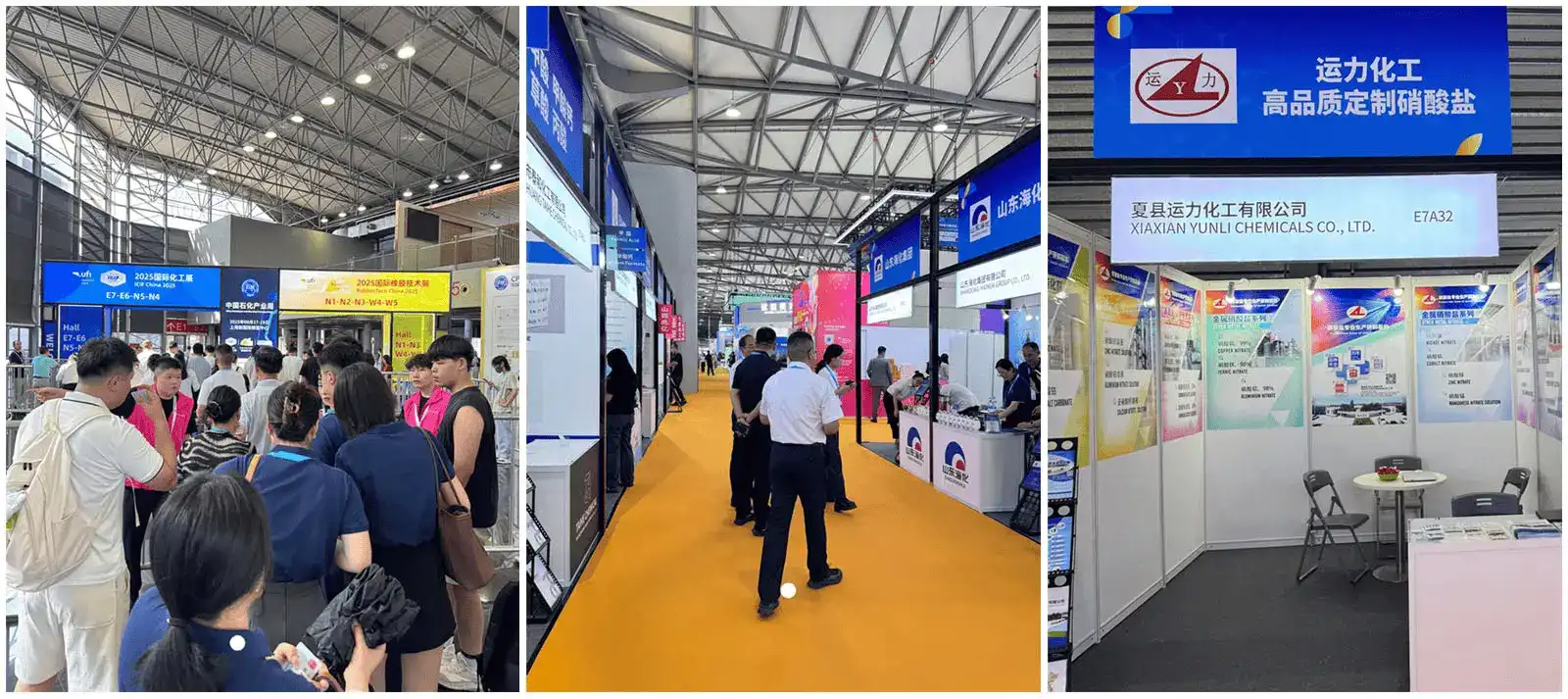
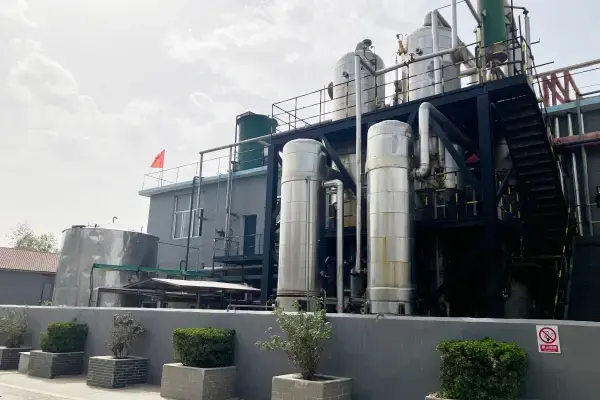
Yunli Chemical has been a valued supplier of Nickel Carbonate to catalyst makers in North America and around the world for more than twenty years. Our ISO 9001-certified factories in Shanxi Province combine strict quality control with the ability to make a wide range of products. They can provide nickel content materials that are at least 98% pure and impurities that are kept at levels that meet the needs of the most sensitive catalytic applications. We know that the quality of the precursor affects how well the catalyst works, which is why we keep resources at the local technology center to meet your technical needs.
We offer factory-direct pricing, customizable specifications, and free samples up to 500 grams, whether you need 25 kg for research and development or shipments of several tons for production. Get in touch with our technical team at wangjuan202301@outlook.com to talk about how our high-purity basic Nickel Carbonate can help you make better catalysts and run your business more efficiently.

References
1. Richardson, J.T. "Principles of Catalyst Development." Plenum Press Industrial Chemistry Series, 1989.
2. Bartholomew, C.H. and Farrauto, R.J. "Fundamentals of Industrial Catalytic Processes." 2nd Edition, Wiley-Interscience, 2006.
3. Ertl, G., Knözinger, H., and Weitkamp, J. "Preparation of Solid Catalysts." Wiley-VCH Verlag GmbH, 1999.
4. Stiles, A.B. "Catalyst Manufacture: Laboratory and Commercial Preparations." Marcel Dekker Inc., 1983.
5. Satterfield, C.N. "Heterogeneous Catalysis in Industrial Practice." 2nd Edition, McGraw-Hill, 1991.
6. Le Page, J.F. "Applied Heterogeneous Catalysis: Design, Manufacture, Use of Solid Catalysts." Editions Technip, 1987.