


Colour and synthesis of Copper Nitrate?
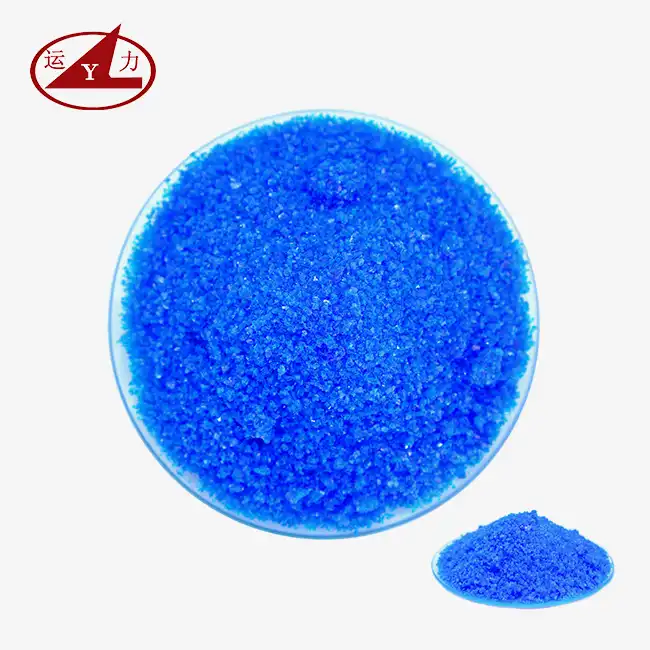
Copper Nitrate, particularly in its trihydrate form (Cu(NO₃)₂·3H₂O), is a deep blue chemical that is easily recognised. It is mostly made by carefully reacting metallic copper or copper oxide with nitric acid. The copper(II) ion coordination structure gives this hydrated crystalline compound its distinctive azure colour, which makes it easy to spot in industrial settings. To get pharmaceutical-grade purity while controlling nitrogen oxide emissions, the synthesis process needs to be very exact about the acid content and temperature. We know that purchasing managers looking at this chemical to use as a catalyst or for surface treatment need to be sure of the colour consistency and synthesis paperwork to make sure that the quality of each batch matches their production standards.
Understanding Global B2B Procurement Challenges in Chemical Supply Chains
Purchasing managers who need to find specific mineral salts are under more and more pressure in a number of areas. Since 2020, problems in the supply chain have gotten a lot worse. In some corridors, average lead times for speciality chemicals have gone from 4 to 6 weeks to 12 to 16 weeks. When your electroplating line counts on regular deliveries of Copper Nitrate, even a two-week delay means that output stops, which costs thousands of dollars every day.
Cost volatility is another problem that won't go away. Copper prices change based on how much is mined around the world and how much energy costs. Nitric acid prices are directly linked to ammonia markets. This makes price unpredictable, as quotes that are good for 30 days might not reflect the market at the time the buy order is executed. Consumption teams that are smart now include price ranges of 10 to 15 percent in their annual plans for oxidising agents and metal salts.
Regulatory compliance adds layers of complexity that are very different from one place to another. Copper Nitrate shipments going to California to be used in battery production must meet REACH pre-registration standards if they come from outside the U.S. origins, label them correctly for DOT Class 5.1 oxidisers, and give them Safety Data Sheets that meet OSHA HazCom 2012 guidelines. If you're missing even one compliance document, customs could hold your goods for weeks, and the EPA could look closely at facilities that handle oxidisers in large enough amounts. Even tighter rules apply to the electronics and pharmaceutical industries, which need Certificates of Analysis with heavy metal contamination data that can be tracked back to NIST standards.
Navigating Quality Consistency Across Suppliers
Quality inconsistency is one of the sneakiest problems in buying because it shows up later in the production process, not at the receiving check. If a batch of Copper Nitrate has 200 ppm of iron in it instead of the 30 ppm maximum that is allowed, it will poison catalyst formulations and make methanol production 15-20% less efficient. The cost goes up even more when you consider that because of the contamination, catalyst replacement cycles go from 18 months to 11 months faster.
More and more, technical experts want suppliers to be pre-qualified, which includes checks of quality control labs that happen on-site. Suppliers who have ICP-MS (Inductively Coupled Plasma Mass Spectrometry) and atomic absorption spectrometers can show that they can analyse and find trace contaminants at parts-per-million levels. This investment in equipment shows that a seller is dedicated to precision science over mass production of common goods.
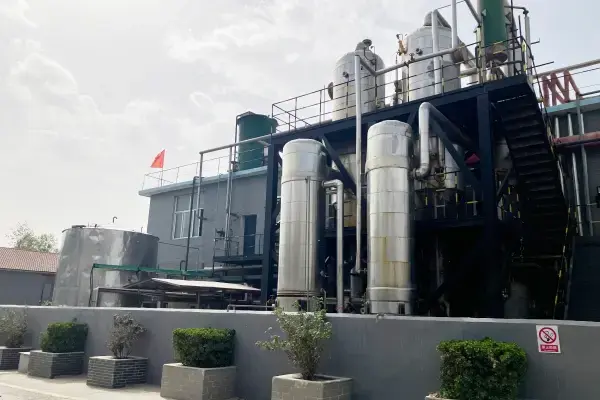
Strategic Sourcing and Supplier Relationship Management for Specialty Chemicals
It's not enough to just compare prices per kilogram on a worksheet to find the right Copper Nitrate provider. When you strategically source speciality chemicals, you need to look at things like technical know-how, output freedom, and the chance of forming a long-term relationship. Suppliers who do their own research and development can make unique ratios, change the pH levels to your specifications, or send you liquid solutions that do all of the dissolving for you.
Transparency and expert cooperation are key to good source relationship management in the chemical industry. Suppliers with provincial-level technology centers can change their crystallisation methods to meet the needs of new catalyst formulations that need Copper Nitrate with chloride content below 5 ppm instead of the usual 50 ppm. When you customise something this much, it costs more to move suppliers, which keeps your supply base stable and gives you a competitive edge in the market.
The Economics of Supplier Diversification
Risk management principles say that you should have at least two approved sources for important materials. However, getting chemicals often isn't possible because of practical issues. Usually, it takes between 6 and 9 months of testing in pilot batches, production trials, and stability studies to approve a new Copper Nitrate supplier. When you add up the cost of analytical testing, engineering time, and any production delays that might happen during trials, the qualification investment can go over $50,000.
Diversification and qualification costs should be balanced in smart buying strategies. This can be done by choosing primary sellers with a track record of success and keeping in touch with secondary sources on a regular basis. Buying 1-2 metric tonnes from different providers on a trial basis every year keeps those relationships going without having to pay for full re-qualification. During recent supply problems, this method came in very handy when buyers had pre-qualified backup sources that kept production going while competitors scrambled.
Leveraging Technology in Procurement Processes for Enhanced Efficiency
In the past five years, digital transformation has completely changed how chemicals are bought. E-procurement platforms now connect directly to supplier production scheduling systems, showing when batches will be finished and when they will be shipped in real time. When your Copper Nitrate order gets to the crystallisation stage, automated alerts let your logistics team plan production and warehouse space with a level of accuracy that has never been seen before.
Using AI in buying data to find ways to save money that would not be possible with manual analysis. If you run machine learning algorithms over three years' worth of purchase history, you might find that the price of Copper Nitrate is linked to the price of London Metal Exchange copper futures six weeks later than expected. This could help you buy when prices are low. These findings based on data have helped procurement teams cut the amount of money they spend on chemicals every year by 8–12% without lowering the quality or supply of the chemicals.
Blockchain technology could completely change how chemicals are tracked and how safety paperwork is kept. Imagine that you could scan a QR code on your Copper Nitrate drum and quickly get access to the full production chain, including the sources of the raw materials, the parameters for each batch of synthesis, the results of quality control tests, and records of the goods' movement from the plant to the receiving dock. At this level of openness, both regulatory requirements and internal quality assurance rules are met, and the work of managing documents is greatly simplified.
Automation Benefits in Hazardous Material Handling
Oxidisers like Copper Nitrate come with risks that can be reduced by automating the handling process. Automated inventory management systems keep an eye on the temperatures in storage, use weight sensors to check the soundness of containers, and use stability studies to mark when items should be thrown away. These systems make sure that people aren't exposed to possibly dangerous materials and that damaged products don't get into production lines by rotating them first-in, first-out.
Enhancing Compliance and Sustainability in Procurement of Inorganic Salts
To follow the rules when buying chemicals, you need to use organised methods that include following the rules at every stage of the deal. While ISO 9001 certification is a basic requirement for quality management, speciality chemical buyers are also looking for suppliers with ISO 14001 environmental certifications. This two-level approval shows that a company not only cares about the quality of their products, but also about how they affect the environment, by controlling things like air pollution and wastewater handling.
Copper products have special problems when it comes to following the rules for REACH (Registration, Evaluation, Authorisation, and Restriction of Chemicals). Copper Nitrate trihydrate needs to be registered as a substance, so European buyers need to make sure that their suppliers have valid REACH registrations with tonnage bands that match the volumes they buy. Noncompliance risks include having shipments turned away at EU borders and possibly being sued for bringing in drugs that aren't registered.
Sustainability factors are changing from goals to strict rules for buying things. Companies that make ESG (Environmental, Social, and Governance) pledges look at providers more and more based on their carbon impact measures, use of renewable energy, and programs to reduce waste. A company that makes Copper Nitrate and has wastewater treatment plants that collect and return nitric acid follows the principles of the circular economy, which are in line with the sustainability goals of buyers.
Practical Implementation of Green Chemistry Principles
Choosing sources with improved environmental controls has real benefits that go beyond just following the rules. When manufacturers use closed-loop nitrogen oxide scrubbing systems, they stop NOx from entering the air and get back nitric acid to use in other reactions. This not only makes the provider less harmful to the environment, but it also usually means more stable costs for inputs and more consistent products because of better process control.
Heavy metal limits are especially strict in the medicine and farming industries. Copper Nitrate that is going to be used in water-soluble fertiliser mixes has to stay below heavy metal limits, which are usually set at less than 10 parts per million (ppm) to meet organic farming standards. For these sensitive uses, it's important to find suppliers with heavy metal control programs that are written down and regular ICP-MS testing.
Conclusion
In today's complicated procurement world, finding Copper Nitrate requires more than just comparing quotes from different suppliers. You choose a supplier based on their technical skills, ability to follow regulations, supply chain resilience, and commitment to sustainability. This choice will affect the quality of your products and your business's ability to stay open for years to come. The best procurement plans find a good mix between competitive prices and the ability of suppliers to provide regular quality, detailed documentation, and quick expert support. Chemical procurement experts who take the time to carefully evaluate suppliers, keep strategic relationships, and use digital tools give their companies a long-term competitive edge in fields where the quality of the materials used directly affects how well the products work.
FAQ
Q1: What factors affect copper nitrate color consistency between batches?
A: Copper Nitrate trihydrate has a unique blue colour that is directly related to its crystalline structure and level of hydration. When batches are exposed to moisture absorption, they may look darker or more saturated because they have more water than the normal three molecules per formula unit. Temperature during crystallisation affects both the size of the crystals and how they bend light, which has a small effect on how colours are seen. Impurities, especially iron levels above 50 ppm, can give a colour yellow tints that show a problem with the quality. Reputable sellers keep humidity levels controlled during production and packing to make sure that colours look the same, which helps people who do quality checks see that the goods are of good quality.
Q2: How do synthesis methods impact copper nitrate purity for catalyst applications?
A: The synthesis route has a big impact on the profiles of trace contaminants that are important for catalytic performance. When you dissolve high-purity copper metal directly in diluted nitric acid, you get the best result with the least amount of alkali metal contamination. This makes it perfect for methanol synthesis catalysts where sodium or potassium levels above 10 ppm stop working. If the starting materials aren't properly cleaned, another way of making it from copper oxide or copper carbonate could add traces of calcium or magnesium. Suppliers who use recrystallisation purification steps can get pharmaceutical-grade purity with chloride content below 5 ppm and sulphate content below 10 ppm. These are important requirements for electronics manufacturing because ionic contamination can damage devices.
Partner with Yunli Chemical for Reliable Copper Nitrate Supply
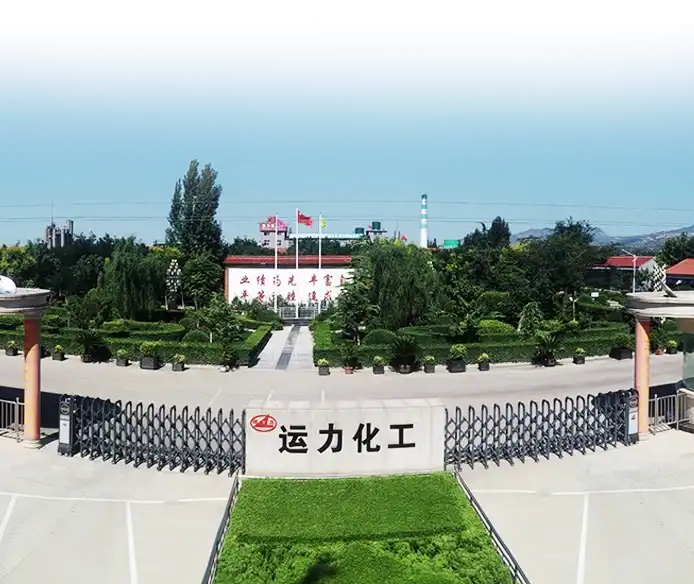
It has been twenty years since Yunli Chemical specialised in making high-purity Copper Nitrate trihydrate (CAS 10031-43-3) that meets strict industrial requirements. As a company that makes Copper Nitrate and has annual sales of more than 1 billion RMB and ISO 9001, ISO 14001, and OHSAS certifications, we take care of the supply chain issues that cause your production schedules to get thrown off. Our technology center at the provincial level lets you customise from normal 98% purity industrial grade to 99.99% ultra-high purity for catalyst uses. Depending on your process needs, the iron content can be kept to 30 parts per million (ppm) or less.
We keep a steady supply of goods on hand and offer flexible packing for lab numbers to bulk orders. Liquid formulations can cut your handling costs by up to 30%. Our direct factory supply model and ability to operate our own exports means that prices are clear and there are no markups for distributors. We also use ICP-MS and atomic absorption spectroscopy for strict quality control to make sure that every batch meets your exact specifications. Email our technical team at wangjuan202301@outlook.com to talk about your unique needs and get free samples of up to 500 grams for testing purposes.

References
1. Greenwood, N. N., & Earnshaw, A. (1997). Chemistry of the Elements (2nd ed.). Butterworth-Heinemann. Chapter on Copper Compounds and Coordination Chemistry.
2. Patnaik, P. (2003). Handbook of Inorganic Chemicals. McGraw-Hill Professional. Entry on Copper(II) Nitrate Trihydrate: Properties, Synthesis, and Industrial Applications.
3. Seidell, A., & Linke, W. F. (1965). Solubilities of Inorganic and Metal-Organic Compounds (4th ed.). American Chemical Society. Volume II: Copper Salt Solubility Data and Phase Diagrams.
4. Kirk-Othmer Encyclopedia of Chemical Technology (5th ed.). (2007). John Wiley & Sons. Article on Copper Compounds: Production, Specifications, and Commercial Uses.
5. Bretherick, L. (2007). Bretherick's Handbook of Reactive Chemical Hazards (7th ed.). Elsevier. Safety considerations for oxidizing copper salts in industrial environments.
6. Habashi, F. (2009). Recent Advances in Copper Hydrometallurgy. Metallurgical Society of CIM. Conference proceedings on copper salt synthesis optimization and environmental controls.