





Does nickel carbonate exist in nature
Nickel carbonate (NiCO₃) rarely appears in pure form in geological environments. Instead, naturally occurring nickel minerals typically exist as basic carbonate complexes, with nullaginite being the most recognized example—a scarce mineral found in nickel laterite deposits. Most industrial-grade nickel carbonate is synthetically produced from nickel-bearing ores through controlled chemical precipitation, ensuring consistent stoichiometry and purity. Understanding the distinction between natural occurrence and synthetic production matters deeply for procurement teams evaluating raw material sourcing strategies across electroplating, catalyst manufacturing, and advanced battery sectors.
Introduction
This book goes into great depth about Nickel Carbonate compounds, explaining how they show up in nature and answering important questions for business buyers. It is important for procurement managers, technical experts, and supply chain specialists to have accurate information about whether it is better to source natural deposits or manufactured materials in order to meet quality, safety, and cost goals.
We look at the chemical structure, how it applies to industry, and the best ways to source it so that you can make smart choices when choosing suppliers for electroplating, making catalysts, or battery-grade uses. We want to give you more confidence in choosing the right Nickel Carbonate variant that meets strict purity standards and regulatory needs by comparing natural mineral forms against industrial synthesis routes.
Understanding Nickel Carbonate: Chemical and Physical Properties
Molecular Structure and Composition
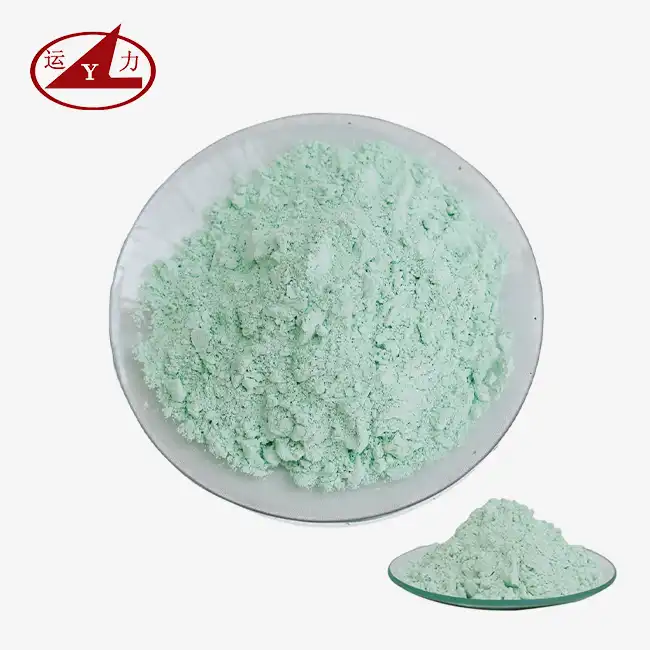
Basic Nickel Carbonate (CAS# 39430-27-8), which has a complicated molecular formula (NiCO₃·2Ni(OH)₂·4H₂O) and a molecular weight of 376.17 g/mol, is the most common type of Nickel Carbonate used in industrial applications. This hydrated hydroxycarbonate structure is very different from pure NiCO₃, which is still unstable and isn't usually separated commercially. The basic type shows up as grass-green powdery crystals, which makes it different from darker nickel oxides or blue nickel sulphate hexahydrate. These kinds of visual cues help quality control teams check goods as soon as they arrive, which lowers the chance of mistakes happening in the warehouse.
The substance doesn't dissolve well in water, but it dissolves easily in ammonia, weak acids, and solutions of ammonium carbonate. When heated above 300°C, thermal breakdown creates nickel oxide and releases carbon dioxide. This trait is used in processes that prepare catalysts. When hydrogen is reduced at a moderate temperature, the material changes into finely scattered metallic nickel. This makes it possible for it to be used as a starting material in catalytic systems. It is important to understand how these changes happen when planning processes for later steps in the process, like setting up an electroplating bath or activating a catalyst.
Safety Considerations and Regulatory Compliance
Nickel is a possible cancer, so following safety rules at work is important when working with basic Nickel Carbonate. Inhalation or skin exposure can be avoided by wearing the right personal safety equipment, such as respirators, gloves, and protective glasses. Storage areas need to have enough air flow, and things should be kept in sealed containers so that they don't absorb moisture and clump together. Each batch comes with technical data sheets (TDS) and material safety data sheets (MSDS) that explain what to do in an emergency and what the exposure limits are that are in line with OSHA and GHS guidelines.
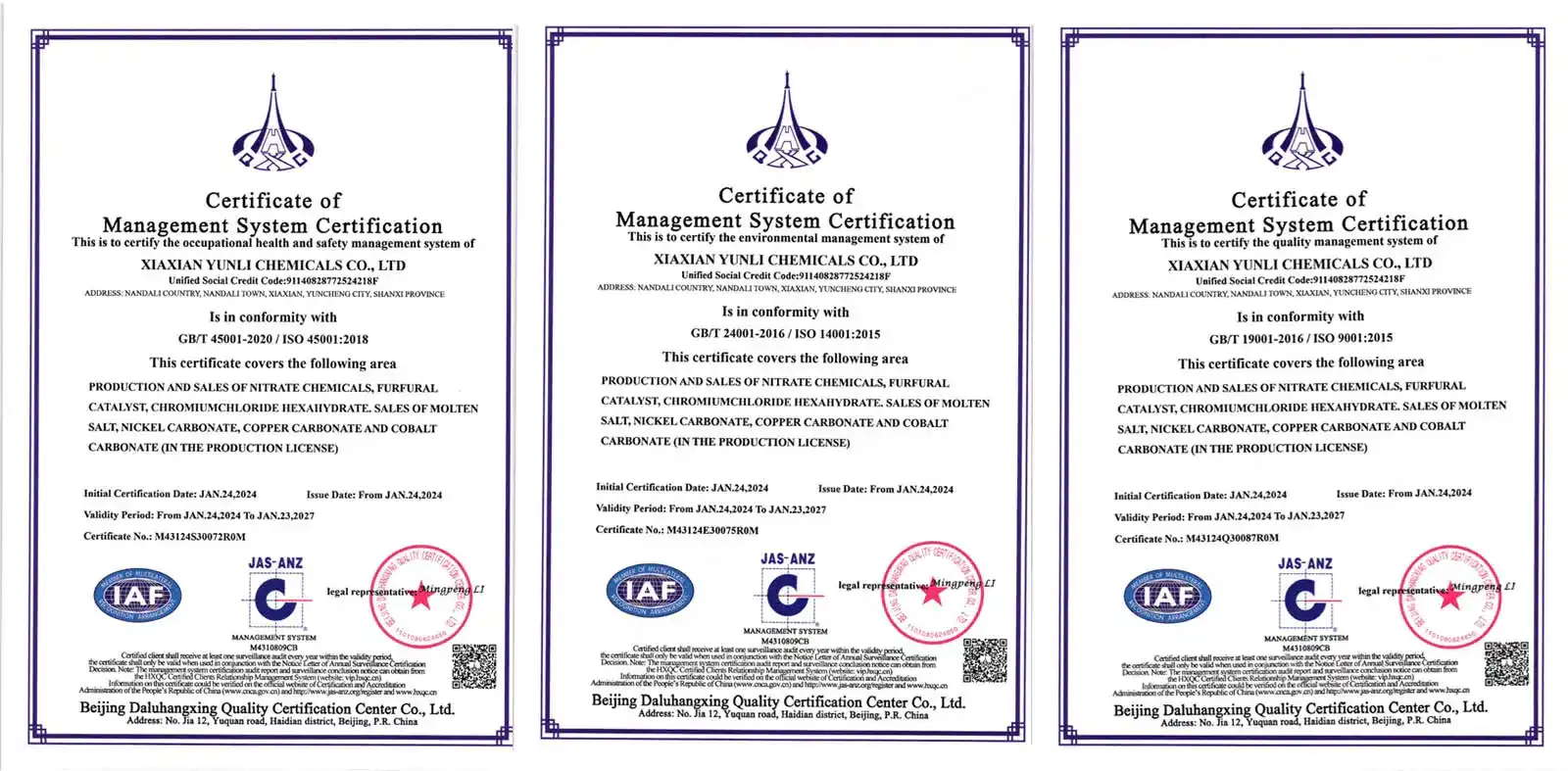
The United States has strict rules about keeping track of nickel compounds, like the EPA and REACH guidelines. Suppliers who offer full compliance certifications, such as ISO 14001 environmental management credentials, show that they are dedicated to safe manufacturing practices. When looking at possible partners, make sure that the way they treat trash includes nitrate leftovers and exhaust fumes. This will help reduce environmental risks that could affect your supply chain.
Does Nickel Carbonate Naturally Occur? Geological and Industrial Perspectives
Natural Mineral Forms
Nullaginite is the main naturally occurring Nickel Carbonate mineral. It was found in the Nullagine region of Western Australia. This uncommon mineral has a structure similar to NiCO₃·nH₂O. It usually forms in oxidised zones of ultramafic nickel deposits, where groundwater that is high in dissolved carbon dioxide mixes with silicate minerals that contain nickel. Other places in New Caledonia and Russia have reported small amounts, but industrial extraction is still not possible because of the low quantities and complicated matrix compositions.
Geological studies show that most "natural" Nickel Carbonates are actually mixed hydroxycarbonates that are found in laterite patterns, often growing with goethite and garnierite. It is more important for mining companies that want to reach these sources to get nickel from sulphide ores or laterite clays than to separate carbonate minerals. Natural deposits are not good for precise uses like electronics plating or pharmaceutical intermediates because they have an uneven stoichiometry and high levels of impurities like iron, magnesium, and cobalt.
Synthetic Production Methods
Controlled precipitation techniques make sure that the same thing can be made over and over again on an industrial scale. Nickel sulphate or chloride solutions are often mixed with sodium carbonate in an alkaline environment. The temperature and pH are then changed to get the particle sizes and basicity ratios that are wanted. Advanced manufacturers use continuous stirred-tank reactors that keep an eye on the content of nickel ions and the rate of carbonation in real time. This makes sure that the goods they make meet strict Fe ≤30ppm and Na ≤50ppm standards.
Synthetic basic Nickel Carbonate has a number of benefits over natural minerals in terms of acquisition. The purity levels always hit at least 98% Ni, which gets rid of any small amounts of contaminants that could damage catalyst sites or lead to plating flaws. The shape can be changed from fine powders (1–10µm) to granules, so it can work with a variety of processing equipment, like screw feeds or air conveyors. Consistency from batch to batch stops formulation shift in catalyst recipes or electroplating water chemistry. This lowers the number of rejects and increases the efficiency of operations. When you buy synthetic material from certified manufacturers, you can track it using lot numbering systems, which is important for audit trails in regulated industries.
Industrial Applications of Nickel Carbonate and Its Competitive Advantages
Basic Nickel Carbonate is very important in many areas where nickel needs to be added without adding unnecessary anions like sulphate or chloride. It is the basic ingredient used to make hydrogenation catalysts, which are used to refine petrochemicals and process food oils. During calcination, the carbonate structure breaks down cleanly, leaving behind porous nickel oxide scaffolds with a lot of surface area that are perfect for reactants to stick to. Raney nickel catalysts are valued by their controlled reduction behaviour, which creates finely spread metallic nickel particles that are more effective as catalysts than oxide-derived options.
In sulfamate and Watts-type baths used for electroplating, basic Nickel Carbonate is used as a pH regulator. Adding carbonate neutralises too much acidity from anodic reactions without adding corrosive anions, while adding nickel sulphate increases the buildup of sulphate ions and stress in the deposited layers. This feature is especially helpful for companies that make printed circuit boards because it keeps plating conditions fixed over long production runs and reduces the buildup of anode sludge that blocks filter systems.
Comparing basic Nickel Carbonate against alternative salts reveals distinct performance profiles:
Versus Nickel Sulfate: Carbonate keeps sulphate from building up in closed-loop plating baths, which makes solutions last 20–30% longer. A lower sulphur level (<10ppm) keeps downstream catalyst uses from becoming poisoned, since even a small amount of sulphur can stop active sites from working.
Nickel Carbonate offers a distinct advantage versus nickel hydroxide: the carbonate form dissolves more quickly in weak acids, which makes it easier to make nickel acetate or octoate for chemical synthesis. Nickel Carbonate’s faster dissolution rate directly addresses the main drawback of the hydroxide, because hydroxide needs more acidic conditions, which makes the process more complicated and raises the risk of equipment corrosion. Thus, Nickel Carbonate is often the preferred precursor when mild reaction conditions and simpler handling are required.
Versus Nickel Oxide: It dissolves directly in ammonia-based solutions, making it better for making nickel coordination complexes that are used in ceramic pigments. To dissolve oxide, longer boiling times and higher ammonia amounts are needed, which drives up the cost of energy.
When weighing the cost of materials against the benefits of making the process more efficient, these technical differences help with procurement decisions. An electroplater that needs to change the bath often might think that the higher unit price of carbonate is worth it because it cuts down on downtime and chemical use, but a bulk catalyst producer may want to get the most nickel per tonne, so they may choose hydroxide precursors.
How to Source and Procure Nickel Carbonate for Your Business
Evaluating Supplier Credentials
Thoroughly screening suppliers is the first step to successful buying. In addition to price, you should also look at how the product is made, specifically whether the manufacturer has dedicated production lines that keep other nickel salts from getting into the product. Facilities with ISO 9001 certification show that they handle quality in a systematic way, while ISO 14001 and OHSAS certifications show that they are safe and responsible for the environment, which lowers their legal risk.
Ask for proof of the methods used for pollution control. Trace element analysis is done by reputable providers using ICP-MS or atomic absorption spectrometry. They provide Certificates of Analysis (COA) that show Fe, Cu, Pb, and Zn amounts are below certain limits. Flame photometry shows that how well sodium is washed directly affects how well a product works in ceramics and plating, where leftover alkali metals can cause haze to form or sintering flaws.
Regional Supply Chain Considerations
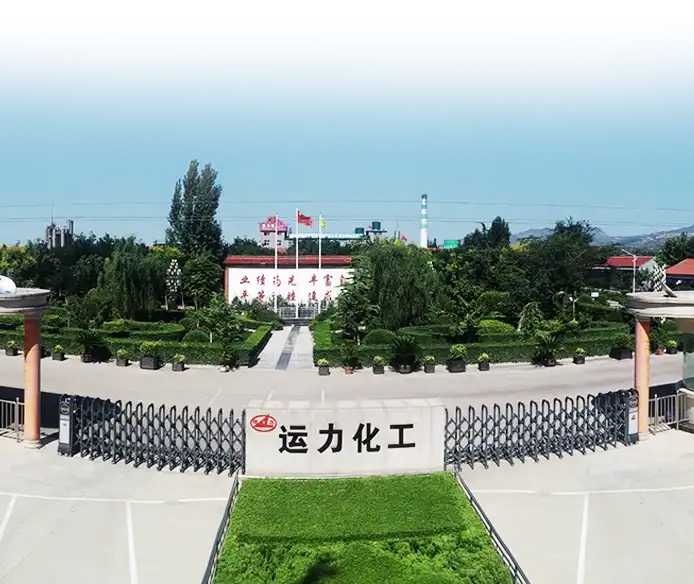
Chinese manufacturers make most of the world's nickel, and their competitive prices come from the fact that they also refine the nickel themselves. Shanxi Province is home to well-known companies like Yunli Chemical, which take advantage of its closeness to coal-chemical feedstocks and well-developed infrastructure for treating waste water. Flexible minimum order quantities and quick sample turnaround are important benefits for buyers who want to make sure that materials will work together before signing annual contracts.
European providers often market themselves as high-end options by focusing on thorough batch testing and REACH pre-registration. Even though the unit costs are higher, clients in the pharmaceutical or electronics materials industries may put regulatory harmony and audit-ready paperwork ahead of price. North American distributors usually buy from Asian manufacturers. This means that they have to pay more for shipping, but they get better technical support and faster delivery for smaller orders.
Structuring Purchase Agreements
To negotiate large contracts, you have to find a balance between stable prices and a steady quantity of goods. Annual contracts with quarterly volume promises lock in good rates while letting production plans change demand. Include sections that say what the purity limits are, especially for important impurities that could affect your process, and spell out the testing procedures that will be used to settle any disagreements. Customisation choices for packaging, like multi-layer moisture barrier bags or special labelling for hazmat compliance, should be made clear from the start so that you don't end up with shipments that don't meet your needs.
Payment terms depend on how long the supplier has been in business and how big the order is. Newer producers may require letters of credit, but established makers often offer net-30 or net-60 terms after initial trial orders show they can be trusted. Bench-scale validation can be done without spending any money if you ask for free samples (usually 25–500 grams), but owners will have to pay for faster shipping for bigger sample amounts needed for pilot trials.
Trust, Quality Assurance, and Long-Term Supplier Relationships
Clear communication and shared quality standards are key to making partnerships last. Plan virtual or in-person facility checks to look at how production works, what the lab can do, and how the setting is controlled. By looking at how the raw materials are received and mixed in batches, you can tell if the seller keeps their inventory separated to avoid grade mix-ups, which can happen when makers work with more than one nickel salt at the same time. Nickel Carbonate is a common example of such a salt, so verifying its dedicated storage and handling procedures becomes especially critical during these checks to prevent cross-contamination with other nickel compounds.
Quality assurance is more than just checking the materials that come in. Set up seller scorecards to keep track of things like on-time delivery rates, COA accuracy compared to third-party tests, and how quickly suppliers respond to reports of nonconformance. Suppliers who take proactive corrective actions, like changing the process after a single impurity excursion, show that they have the mindset of continuous improvement that is needed for long-term collaboration.
Technical support is very helpful, especially when trying to fix problems with applications. Chemical engineers with experience working for suppliers can give advice on how to dissolve substances, how to keep them stable while the humidity changes, or how to make the particles the right size for a certain piece of equipment. Having access to this kind of knowledge cuts down on the number of times a product has to be tried and failed, which speeds up the time it takes to market for new catalyst formulas or plating bath chemicals.
Joining forces for more than one year allows for joint research and development. When you share your plan for higher-purity needs or new uses, suppliers can invest in process improvements that are good for both of you. Custom particle size distributions for pneumatic conveying systems or ultra-low sodium versions (<20ppm) aimed at the Japanese electronics market could be part of co-development deals. Because of these partnerships, your suppliers go from being transactional vendors to strategic partners who help you stand out from the competition.
Conclusion
Nickel Carbonate is hard to find in nature, so synthetic production is the best way to get it for commercial uses that need stability and purity. When choosing between regional providers, procurement professionals have to weigh the costs, quality, and supply security. They also have to keep in mind that small price differences are often small compared to the total cost of poor quality or supply outages.
A thorough review of suppliers, focusing on their analytical skills, compliance certifications, and level of technical support, is needed to build relationships that provide reliable material performance in electroplating, catalyst synthesis, and advanced production processes. By choosing suppliers strategically and managing relationships with them, your company can make sure it always has a steady supply of high-quality Nickel Carbonate. This is important for maintaining business excellence.
FAQ
Does Pure Nickel Carbonate (NiCO₃) Exist Commercially?
It is still not possible to make large amounts of pure anhydrous Nickel Carbonate because it is unstable. The standard in industry is basic Nickel Carbonate, which has molecules of hydroxide and water in its crystal structure. This mix keeps things stable while they are being stored or moved, and it reacts in a predictable way in later uses.
How Does Particle Size Affect Processing?
Smaller particles (1–5µm) breakdown more quickly in acidic media. This cuts down on the time needed to prepare plate baths, but it could be dangerous to handle the dust. Coarser granules (5–10µm) are easier for automated feeding systems to work with, but they take longer to dissolve. To get the most out of your operations, specify particle size ranges that work with your mixing equipment and safety rules.
What Impurities Cause the Most Process Issues?
When there is more than 30ppm of iron in the air, it can make electroplated layers darker and stop the catalyst from working properly by blocking sites. Too much sodium (>50ppm) makes the material sinter during calcination, which breaks down important pore structures for the catalytic surface area. Even small amounts of sulphur can damage hydrogenation catalysts in a way that can't be fixed. Instead of accepting general purity percentages, you should always ask for COA data that is specific to the impurity.
Partner with Yunli Chemical for Reliable Nickel Carbonate Supply
With more than 20 years of experience, Yunli Chemical makes high-purity basic Nickel Carbonate that is perfect for tough industrial uses. Our factory in Shanxi has ISO 9001, ISO 14001, and OHSAS certifications, which make sure that every batch meets strict standards for quality and the environment. With over one billion RMB in yearly chemical sales production capacity and 300 million RMB in fixed assets, we provide the supply security you need to keep your business running.
As a Nickel Carbonate maker, we offer direct factory prices without any markups from middlemen. We also offer customisable solutions with pH ranges that can be changed (6.5–8.5), optimised particle shape, and ultra-low impurity grades (Fe ≤10ppm available). If you need sulfate-free versions for electroplating or high-surface-area ingredients for catalyst synthesis, our provincial-level technology center can help you work together on research and development for speciality formulas. Flexible buying allows for R&D numbers as low as 25 kg and bulk orders as high as 50 tonnes. Free samples of up to 500 grams allow for risk-free testing.
Email our technical sales team at wangjuan202301@outlook.com to talk about your specific needs. We promise on-time delivery, full MSDS/COA paperwork, and quick, helpful support after the sale to help with any application problems. Visit yunlichemical.com to see our full line of products and learn how forming a smart relationship with a well-known Nickel Carbonate provider can help you save time and money on buying things and get better products.

References
1. Bolinski, M., & Vaughan, D. J. (2018). Nickel Minerals and Occurrences in Laterite Deposits: A Geochemical Perspective. Mineralogical Society Monographs.
2. Chen, X., & Liu, H. (2020). Synthetic Methods and Industrial Applications of Basic Nickel Carbonate. Journal of Chemical Engineering Processes.
3. European Chemicals Agency. (2021). Substance Information for Nickel Compounds under REACH. ECHA Publications.
4. Thompson, R. W., & Davis, L. K. (2019). Electroplating Bath Chemistry: The Role of Nickel Salts in pH Control. Surface Finishing Technology Review.
5. Yamamoto, T., & Suzuki, K. (2022). Catalyst Precursor Materials: Comparative Analysis of Nickel Carbonate vs. Nickel Hydroxide. Catalysis Today.
6. Occupational Safety and Health Administration. (2023). Guidelines for Handling Nickel Compounds in Industrial Settings. OSHA Technical Manual.







