

How To Distinguish Between Aluminum Nitrate And Nickel Nitrate
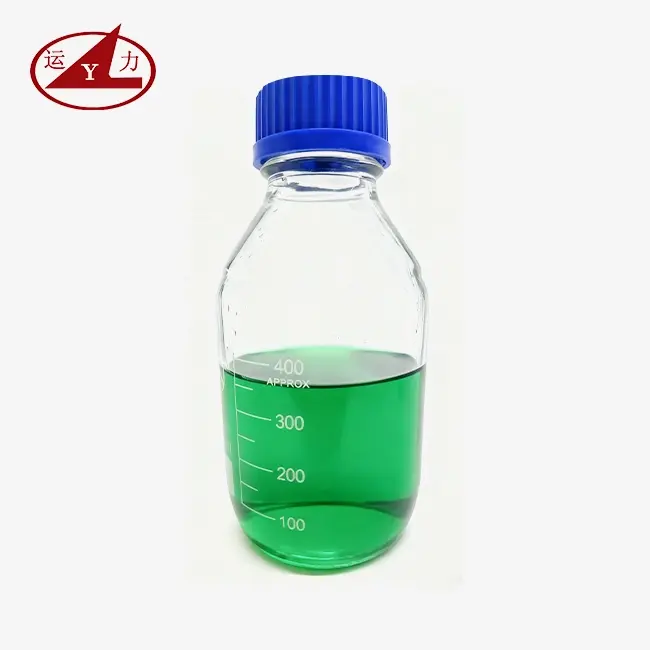
It is important to know the difference between Aluminum Nitrate and Nickel Nitrate so that you don't make mistakes when you buy things for business. Aluminum Nitrate crystals are clear or white when looked at directly, while Nickel Nitrate crystals have a unique green shape. Aluminum Nitrate (Al(NO₃)₃) and Nickel Nitrate hexahydrate (Ni(NO₃)₂·6H₂O) have different chemical structures. They also melt at different temperatures, dissolve in different ways, and oxidize in different ways. Correct identification keeps the product's quality safe, makes sure that rules are followed, and stops production interruptions that cost a lot of money.
Understanding Aluminum Nitrate and Nickel Nitrate Basics
Both Aluminum Nitrate and Nickel Nitrate are used in different fields because their chemical structures and behaviors are different. The solid form of aluminum nitrate (Al(NO₃)₃·9H₂O) is generally clear or white, and it melts at room temperature. Most of the time, it is used to clean water, tan leather, color materials, and make clay paint. Because it is acidic and easy to dissolve, it can be used to change the pH and speed up the precipitation process.
Key Characteristics of Nickel Nitrate Hexahydrate
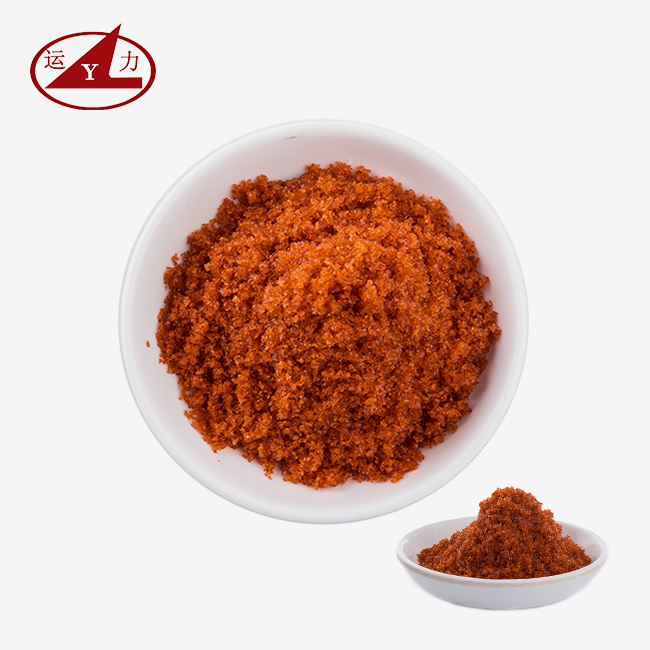
Nickel Nitrate hexahydrate (Ni(NO₃)₂·6H₂O, CAS 13478-00-7) is made up of green, simple crystals with a molecular weight of 290.81. It is very hygroscopic, which means it can easily take in water from the air. If you keep it in the wrong way, it will melt at 56.7°C and turn into its own water of crystallization. Yunli Chemical's top-notch Nickel Nitrate is promised to be more than 99.5% pure. The only impurities that are controlled are iron (≤30ppm), sodium (≤50ppm), and chloride (≤100ppm).
Industrial Application Differences
In business, the two drugs are used in very different ways. Nickel Nitrate hexahydrate is a crucial component of nickel soldering, nickel-based catalysts for industrial hydrogenation, battery cathode materials for lithium-ion cells, and ceramic color glazes. It's very easy to dissolve in water (238.5 g per 100 mL at 0°C), which lets the ions spread out evenly during the co-precipitation and catalyst impregnation steps. Aluminum Nitrate, on the other hand, is used to make water clean, to change the color of things, and as a chemical building block in certain things.
Analytical Methods to Differentiate Aluminum Nitrate and Nickel Nitrate
There are many ways for procurement professionals to check information, ranging from simple tests done in the field to more complex studies done in the lab. Each way has its own pros and cons that depend on the resources you have access to and the amount of certainty you need to identify Nickel Nitrate correctly.
Visual and Physical Inspection Techniques
Use of color difference is the fastest way to screen. Since aluminum nitrate crystals don't have any color pigments, they appear clear or white when lit normally. Nickel Nitrate has a unique lime-green to blue-green color because it contains Ni²⁺ ions. Aluminum Nitrate solutions don't have any color, but Nickel Nitrate solutions have green tints that can be seen. This color difference is still reliable even when the compounds are in watery solutions that have been diluted.
We can learn more about crystals by looking at their shapes. It is possible to shape aluminum nitrate into cubes or prisms. It melts at 73°C when it is in its nonahydrate form. Nickel Nitrate forms single crystals that are not very stable at high temperatures; around 56.7°C, they begin to break down. Nickel Nitrate slowly loses water molecules when it comes into contact with dry air. At 100°C, it changes from a tetrahydrate form to an anhydrous form.
Chemical Reagent Testing Methods
A quick way to get a feel for something is to test it with flame. To make a flame glow, a platinum wire is used to add a small amount of Nickel Nitrate. This gives the flame the green color that nickel ions usually have. But aluminum compounds don't change color much in flame tests. They may give off a faintly white smoke, though. There are big differences in the pH of regulated water solutions when you test them. Any Nickel Nitrate solution that is 1% will have a pH between 2.5 and 3.5 because water breaks down the nickel cations. Soils with aluminum nitrate in them are also acidic, but their pH levels can be a little different based on how strong they are and how much water is in them. When doing a quantitative pH analysis with calibrated meters, it is easier to check each batch during receiving inspections.
Instrumental Analysis for Definitive Identification
Modern testing tools make it easy to do chemical fingerprinting. ICP-MS, which stands for Inductively Coupled Plasma Mass Spectrometry, is a very exact way to measure the amount of metal ions present. Parts per billion are the smallest amount of change that it can find between aluminum and nickel. At the local level, Yunli Chemical runs a business technology center that has ICP-MS and atomic absorption spectrometers. This lets them make 4N-grade materials that are very pure and have compositional data that has been checked.
X-ray Fluorescence (XRF) analysis is a quick and safe way to check the elements in packages as they come in. The method finds X-ray emission bands that are unique to aluminum (Z=13) and nickel (Z=28). This quickly and easily proves the chemical identity without having to prepare the sample. With infrared (IR) spectroscopy, different vibrational modes are linked to nitrate anions and water crystallization. These modes show that the chemical setting of nickel and aluminum coordination circles is different.
The d-d electronic shifts in nickel are used in UV-Visible spectrophotometry to find the green color. Between 395 nm and 720 nm, this range of transitions soaks up visible light. Since aluminum compounds don't have any d-orbital electrons, they don't soak up visible light the same way other compounds do. It is best to use this method when checking Nickel Nitrate solutions that are liquid, since a direct visual comparison might not be as clear.
Practical Procurement Considerations for B2B Buyers
Making sellers go through strict checks can cut down on chemical misidentification or pollution risks for products like Nickel Nitrate. The people in charge of purchasing and the supply chain need to set up full quality assurance systems. These systems should include going over paperwork, using sample methods, and planning what to do if something goes wrong.
Documentation and Certification Requirements
There should be a Certificate of Analysis (CoA) for each package that is unique to that batch and lists the purity percentages, trace impurity levels, and goal standards that were met. When you buy Nickel Nitrate from Yunli Chemical, the CoA includes minor metals like iron, sodium, chloride, and others, as well as the lot number to make it easy to keep track of. Material Safety Data Sheets (MSDS or SDS) have important safety data on them. One example is Nickel Nitrate, which is a UN 2725 Class 5.1 oxidizer and needs to be handled with extra care.
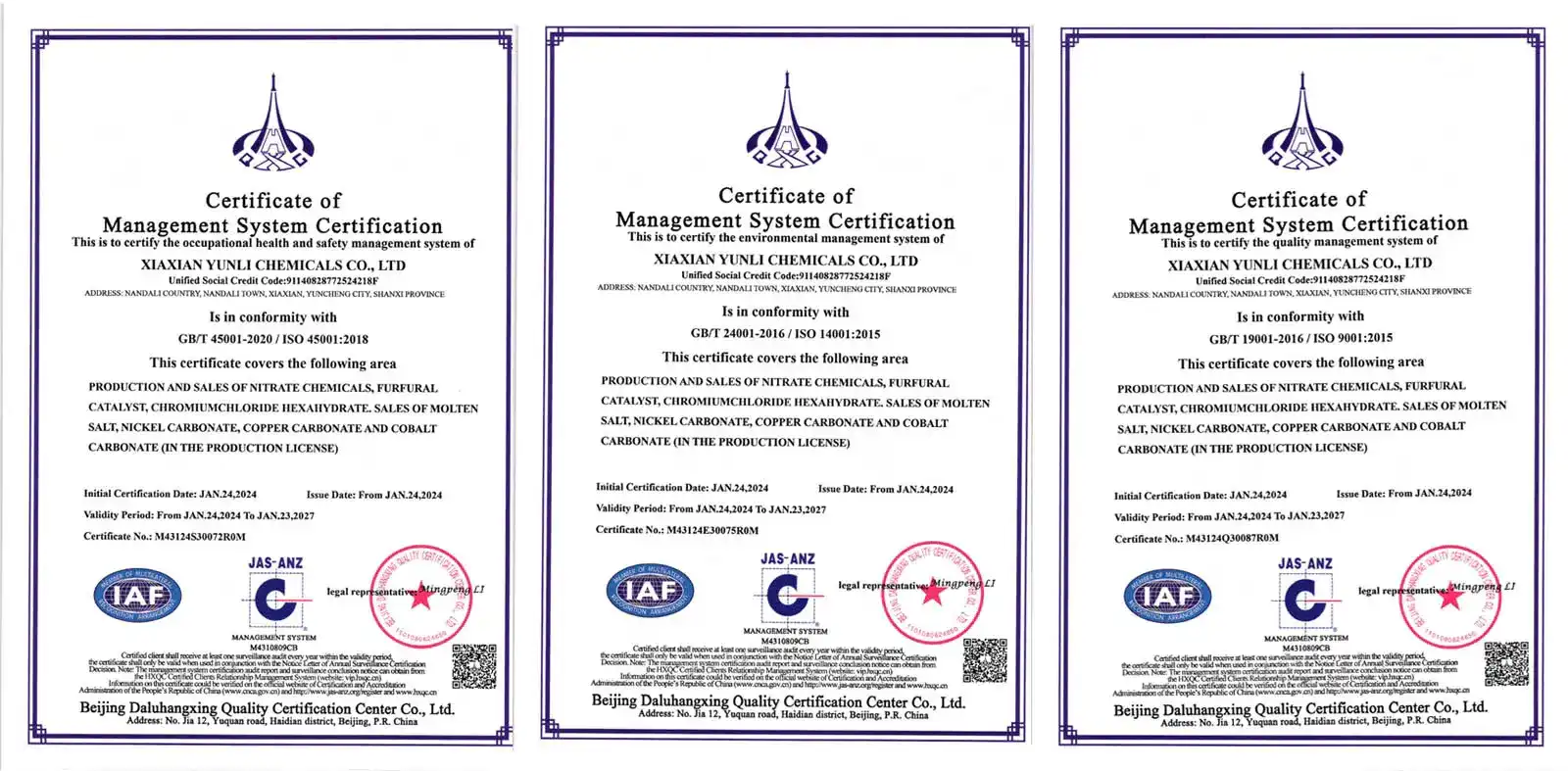
The paperwork that is needed to follow the rules varies by destination market. Lists made under the Toxic Substances Control Act (TSCA) say that things sent to the US must match them. People who buy chemicals in the European Union need to show proof that they have registered them with REACH (Registration, Evaluation, Authorization, and Restriction of Chemicals). Other certifications, such as ISO 9001 for quality management, ISO 14001 for environmental systems, and RoHS compliance, show that you can trust the supplier and that the products are always made the same way.
On-Site Sampling and Quality Control Protocols
Before materials are used in production, they are checked to make sure that each batch is the same using sample sampling methods. Picking samples at random from different bins or spots on a stack lowers the chance of bias and finds any differences that might be in the batch. Simple field tests like color checks, pH strip readings, and solubility checks should be looked at more closely in the lab right away if something doesn't seem right.
How chemicals are kept has a direct effect on how well they work. Due to its hygroscopic nature, Nickel Nitrate needs to be kept in containers that are closed, keep out moisture, and keep the humidity below 30°C. For a long time, hot temperatures or air can cause something to clump, lose water, and even break down thermally. While Nickel Nitrate is being stored, it should be kept away from organic materials to avoid starting a fire. Chemicals like aluminum nitrate don't get mixed up by accident when they have labels with their names, CAS numbers, warning symbols, and batch numbers that are easy to read.
Hazardous Material Regulations and Safety Standards
There are different amounts of danger for each drug, so safety rules need to be changed for each one. Nickel Nitrate, a potent oxidizer, is known to be bad for reproduction because it contains nickel ions. If you work with powders, you should wear gloves that can protect your hands from chemicals, safety glasses, and masks that protect your eyes and nose. Plans for what to do in case of an emergency should include possible spill scenarios. It should also be easy to get to the right neutralizing agents and containment materials.
Transportation must follow the rules set by the International Maritime Dangerous Goods (IMDG), the International Air Transport Association (IATA), and the Department of Transportation (DOT). When it comes to Class 5.1 oxidizers, the package has to meet UN guidelines. Most of the time, this means using rigid containers with extra protection and the right labels. You can get DG-certified packaging and all the shipping paperwork you need from Yunli Chemical. This makes it easier for businesses to run in other countries.
Use Case Scenarios: Differentiating Challenges and Solutions
Real-life problems with buying chemicals show how important it is to choose the right ones like Nickel Nitrate and how businesses can be more successful.
Case Study: Production Delays from Misidentified Batches
Receiving aluminum nitrate rather than the anticipated Nickel Nitrate at a North American electroplating plant resulted in unexpected covering problems. The first test of the white crystalline substance was done with dim warehouse lighting. It passed, but it didn't turn a typical green color when the solution was being made. Other things had to be rushed in, which meant production had to stop for 72 hours. This led to fines under the contract and unhappy clients.
The receiving inspection procedures were not good enough, as shown by research done after the fact. After that, the company did enough tests to make sure the colors were correct under normal lighting, the pH of the solutions they made, and spot checks with portable XRF analyzers. As a result, third-party CoA confirmation and batch photos showing how the crystals look were added to the list of things that sellers had to do. The problem didn't happen again because of these fixes, and the client's trust was restored.
Case Study: Enhanced Supplier Audits Improving Quality Consistency
They bought Nickel Nitrate and found that the amount of iron pollution changed from batch to batch. The company is from Europe and makes hydrogenation catalysts. The specs said that the iron content could be less than 50ppm, but when it changed from 20ppm to 45ppm, the catalyst didn't work right and the process had to be changed a lot of times.
To start, the buying team did a full check of each supplier. They looked at where the raw materials came from, how they managed production, and how well they could test for quality. Things got better right away when Yunli Chemical took over as the main supplier. Yunli has been making things for more than twenty years, has ISO-certified management systems, and is home to a state enterprise technology center. They always provide Nickel Nitrate hexahydrate with an iron level below 30ppm. The company has developed highly accurate and efficient ways to clean its materials so it can make materials for electronics and batteries that meet the highest standards of purity.
Rapid On-Site Testing Integration
People who sell chemicals to many different types of businesses needed easy, cheap ways to be sure that different nitrate products were real. A portable UV-Vis spectrophotometer was bought so that workers in the field could quickly check packages as they came in. Colorless aluminum nitrate solutions had spectral fingerprints that were very different from one another, whereas Nickel Nitrate solutions had clear absorption peaks that quickly established their identity. This quality check, eye inspection, and pH measurement made up a three-level verification system that found mistakes on the labels before they were sent to the warehouse. In the past 24 months, customers never complained to the wholesaler that goods were mislabeled. This helped the company build its reputation and allow it to charge higher prices.
Summary and Best Practices for Distinguishing Aluminum Nitrate from Nickel Nitrate
A full quality control system needs more than one way to name things in order to tell the difference between Aluminum Nitrate and Nickel Nitrate. A quick way to screen is to look at the colors. For example, green crystals are likely to be nickel compounds, while white or neutral materials are likely to be aluminum salts. Using chemical tests like flame coloration and pH profiling can help you make quick field proof decisions about what to receive.
Advanced instruments like ICP-MS, XRF, and UV-Vis spectroscopy can give a clear chemical analysis when the stakes are high enough. The best ways to buy things stress checking out sellers' papers, visiting their facilities, and trying their goods to make sure they are reliable. If you want to change the purity requirements, Yunli Chemical is a great example of a supplier. They offer flexible packaging options like 25 kg moisture-proof bags and 1MT IBC tanks, and they don't have a minimum order quantity for testing samples.
In order to keep chemicals whole, they need to be kept in a way that takes into account how they react to moisture and temperature. Fewer problems in the supply chain happen when buyers and sellers work together and talk to each other often. You can also get technical help, and customer service responds quickly. Professionals in procurement make sure they can always get their hands on high-purity chemicals that have been correctly identified. To do this, they use both rigorous analysis and smart agreements with suppliers.
Conclusion
Distinguishing Aluminum Nitrate from Nickel Nitrate is essential for ensuring product quality, operational efficiency, and regulatory compliance in industrial procurement. Although visual characteristics such as crystal color provide a useful initial indication, accurate identification should combine field tests with advanced analytical techniques, including XRF, ICP-MS, and UV-Vis spectroscopy. In addition, rigorous supplier qualification, batch-specific documentation, proper storage, and standardized quality control procedures significantly reduce the risk of misidentification and production disruptions. By implementing a comprehensive verification strategy and partnering with reliable suppliers, businesses can improve supply chain reliability, maintain consistent product performance, and support safe, efficient manufacturing operations.
FAQ
Q1: Can visual inspection alone reliably differentiate these compounds?
A: Color assessment by sight is a good first step, but it should never be the only way to figure out what something is, especially when identifying Nickel Nitrate. Even though the white crystals of aluminum nitrate are very different from the green crystalline structure of Nickel Nitrate, it is still too dangerous to depend on looks alone. Light, crystal size, and the presence of small impurities can all change how colors are seen. It is much more accurate to identify things when you use more than one method, such as pH tests or flame analysis, along with your own eyes. This also helps you avoid making mistakes that cost a lot of money.
Q2: What rapid tests work best for field verification?
A: Flame testing doesn't take long and doesn't need many tools. For nickel compounds, a clean spark turns them green. For aluminum salts, however, the color doesn't change much. You can get numbers right away when you use handheld meters or indicator strips to check the pH of water solutions that aren't very concentrated. Nickel Nitrate liquids typically have a pH of 2.5 to 3.5, while aluminum nitrate has a similar acidity. When the number of sales and quality risk profiles are high enough to warrant the cost of a bigger machine, portable XRF analyzers can quickly find elements.
Q3: How can buyers verify supplier credibility effectively?
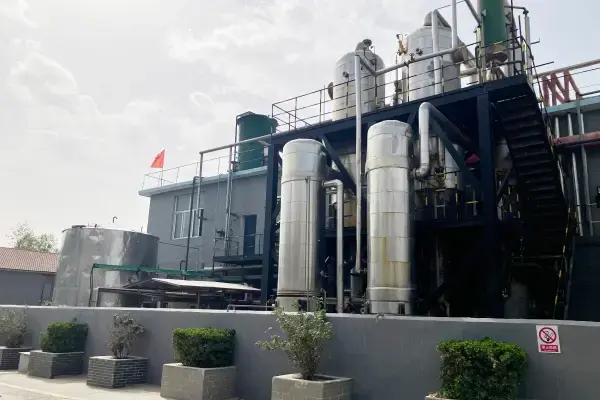
A: Ask for full proof, such as CoA reports that are specific to each batch, SDS sheets, and proof that they have regulatory compliance certificates from groups like ISO 9001, REACH, and TSCA. During site checks, look at the labs for quality control, the analysis tools, and the process controls. People are welcome to visit Yunli Chemical's production complex in Shanxi Province. The complex shows off the technology center's resources and high-tech testing tools. Yunli gives away free trial samples of up to 500 grams, which can be used to see how well it works before placing large orders or signing a long-term supply agreement.
Partner with Yunli Chemical: Your Trusted Nickel Nitrate Supplier
Yunli Chemical can help you buy Nickel Nitrate hexahydrate. For twenty years, they've been making good things. ISO 9001, ISO 14001, and OHSAS have all approved what we do. They make sure the quality stays the same by keeping the iron level at ≤30ppm, the sodium level at ≤50ppm, and the chloride level at any level you choose. There are no markups for brokers when you buy from the mill directly, and you can get a wide range of concentrations and packing options to meet your needs.
Our local business technology center can help you come up with new catalysts, better etching methods, and better battery materials by giving you expert advice. We provide the stable supply that is needed to keep production running smoothly. Our annual sales are more than 1 billion yuan, and our fixed assets are worth 300 million yuan. You can send free samples of up to 500 grams, so there is no risk in approving the process. Please email wangjuan202301@outlook.com to talk to our experienced staff about your needs and see how Yunli Chemical can help you in terms of quality, service, and technical relationship.

References
1. Smith, J. R., & Thompson, M. L. (2021). Industrial Nitrate Compounds: Properties, Applications, and Analytical Methods. Chemical Manufacturing Press.
2. Chen, H., & Rodriguez, P. (2020). "Quality Control Strategies in Chemical Procurement: A Case Study Analysis." Journal of Supply Chain Management in Chemical Industries, 15(3), 234-251.
3. National Institute of Standards and Technology. (2022). Standard Reference Materials for Inorganic Compounds: Characterization and Certification. NIST Special Publication 260-Series.
4. European Chemicals Agency. (2023). Guidance on Chemical Identification and Safety Assessment for Metal Salts. ECHA Regulatory Framework Document.
5. Williams, A. K., & Patel, S. V. (2019). "Spectroscopic Methods for Rapid Identification of Transition Metal Nitrates in Industrial Settings." Analytical Chemistry in Manufacturing, 42(7), 1876-1892.
6. International Organization for Standardization. (2020). ISO 6353-1: Reagents for Chemical Analysis – Part 1: General Test Methods. ISO Standards Catalogue.