


Ferric Nitrate Solution Liquid Uses in Metal Treatment and More
Ferric nitrate solution liquid (CAS# 7782-61-8, Fe(NO₃)₃·9H₂O) is a high-performance iron salt reagent deployed across metal treatment, catalyst manufacturing, and water remediation. As industries shift toward automated dosing and chloride-free chemistries, this ready-to-use liquid format eliminates the dissolution step required by solid crystals, reducing labor and improving batch consistency. Procurement engineers at mid-to-large manufacturers increasingly specify it for its tunable concentration, low impurity profile, and compatibility with continuous-flow reactors — making it a strategically important input chemical across multiple sectors.

Understanding Ferric Nitrate Solution Liquid: Properties and Safety
Chemical Identity and Key Specifications
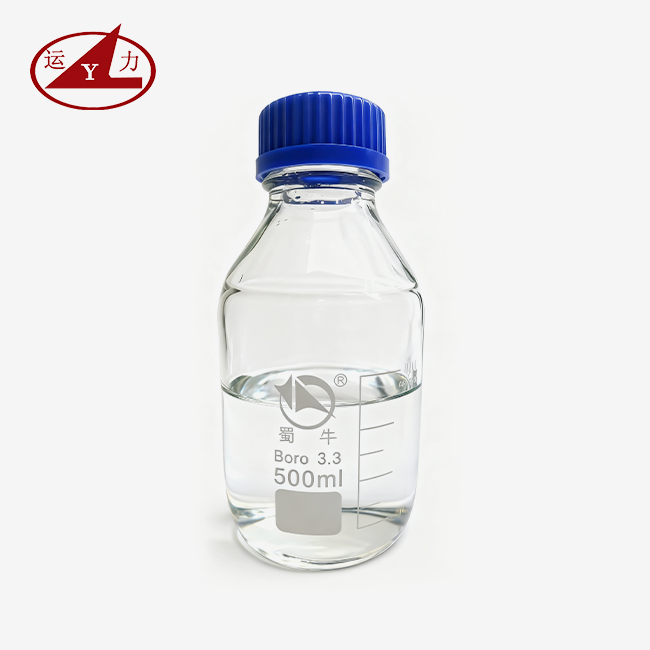
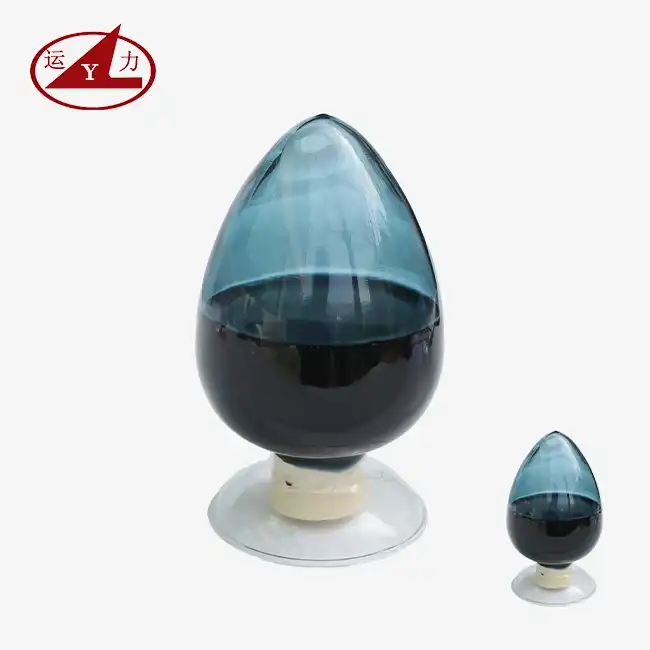
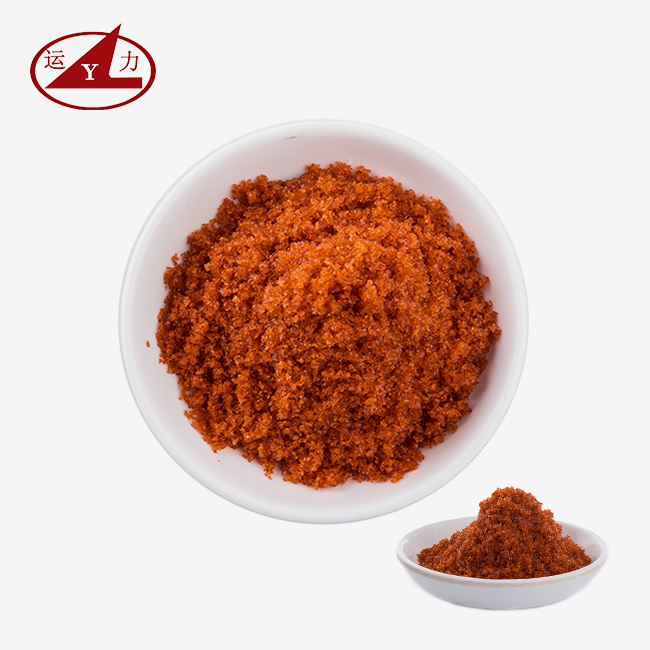
Iron nitrate nonahydrate is the solid parent molecule. It is a purple-to-reddish crystal that has a molecular weight of 404.01, a freezing point of 47.2°C, and a specific density of 1.68. It breaks down at about 125°C and is very liquid, dissolving easily in water, ethanol, and acetone. It is usually a clear, reddish-brown liquid with a specific gravity of 1.25–1.45 g/cm³ at 20°C when it is liquid.
Yunli Chemical's industrial-grade liquid must have a customizable concentration range of 40–50%, a pH of 3.0–3.5, and impurity levels of Fe ≤30 ppm, Na ≤50 ppm, and heavy metals ≤5 ppm. These limits are checked by ICP-MS and atomic absorption spectrometry on a batch-by-batch basis.
Safety Handling and Storage Requirements
Depending on the form and location, ferric nitrate solution has a shipping rating of either Class 5.1 (oxidizer) or Class 8 (corrosive). Organic materials can catch fire or explode if they come into contact with the solution, which is also bad for your skin. Handlers must always wear gloves that can handle acid, face shields, and chemical-splash masks.
It is highly suggested that the material be stored in HDPE or XLPE containers. SS304/SS316 tanks are not ideal for long-term use because they contain free nitric acid. When sealed and kept in a cool, UV-protected space, the shelf life is about 12 to 24 months. For 45% of solutions, there is a risk of freezing below 5°C, so temperature-controlled logistics are needed for winter shipments.
Core Uses of Ferric Nitrate Solution Liquid in Metal Treatment and Beyond
Unlike iron salts that can only be used for one thing, this substance can be used for many things. In its liquid form, it can be easily added to automated production lines and consistently performs well in three main industrial categories.
Precision Metal Etching and Surface Treatment
In the making of electronics and jewelry, iron(III) nitrate solution selectively oxidizes silver and silver alloys without leaving behind the chloride residue (called "smut") that ferric chloride does. This clean etching action keeps the details of fine lines on decorative surfaces and circuit boards. The solution does more than just etch. It also helps with surface passivation and rust removal, where it chemically stabilizes metal oxide layers to stop further corrosion. This is why it is classified as both a corrosion inhibitor and a metal conditioner.
Catalyst Manufacturing and Chemical Synthesis
Liquid iron nitrate is one of the main ingredients used to make heterogeneous catalysts, such as those that make methanol and hydrogen. The liquid form lets you precisely control the hydrolysis process during sol-gel processing, which changes the iron oxide particle size distribution—an important factor in battery anode materials and superparamagnetic nanoparticle uses. Yunli Chemical's method makes sure that the iron is spread out evenly, which lowers the risk of copper-catalyst poisoning in systems with more than one part. For ferric nitrate solution liquid, this level of control and uniformity is what makes it indispensable in catalyst manufacturing, advanced materials research and precision industrial processes.
Water Treatment and Environmental Remediation
Municipal wastewater treatment plants use ferric nitrate liquid to do two things: the nitrate anion gives bacteria an electron acceptor, which stops septicity; and the ferric ions precipitate sulfides and phosphorus, which controls both the H₂S smell and eutrophication in the sewage outflow. This process works faster than biological treatments, which means it can be used for emergency doses to control smells in sewer networks.

Comparing Ferric Nitrate Solution Liquid with Other Iron Salt Solutions
To choose the right iron salt, you need to know the pros and cons of its reactivity, waste profile, and interaction with other processes. Take a look at how ferric nitrate stacks up against the most popular alternatives:
- vs. Ferric Chloride: Ferric chloride is generally less expensive for basic coagulation tasks, but introduces chloride ions that raise effluent conductivity and cause pitting corrosion in electronics applications. Iron nitrate eliminates chloride contamination entirely, making it the preferred choice wherever halide-free chemistry is specified.
- vs. Ferric Sulfate: Ferric sulfate is widely used in water treatment but contributes sulfate loading to treated water. In catalyst synthesis, residual sulfate acts as a poison for certain active metal sites. Iron nitrate decomposes cleanly to iron oxide upon calcination, leaving no sulfur residues.
- vs. Ferrous Nitrate (Fe²⁺): Ferrous compounds require oxidation to achieve the Fe³⁺ state needed for most etching and flocculation reactions. Ferric nitrate solution delivers the active Fe³⁺ oxidant directly, saving processing steps and improving reaction reproducibility.
In contrast to ferric chloride, In general, ferric chloride is less expensive for simple coagulation tasks. However, it releases chloride ions that increase the conductivity of effluent and cause pitting corrosion in electronics. Because iron nitrate completely gets rid of chloride contamination, it is the best choice when halide-free chemistry is needed.
Procurement Considerations: Buying the Right Iron Nitrate Solution
For business-to-business purchases, quality assurance paperwork is a must. A Certificate of Analysis (COA) should be sent with every delivery, which shows the amount of iron, free acid, chloride, and heavy metals present. Insoluble matter shouldn't be more than 0.01% so that dose pumps and spray tubes don't get clogged.
Different export destinations have different rules that must be followed. Products that are sent to the US market must follow the DOT oxidizer transport regulations (UN 3264/UN 1466 series), and people who are buying electronics should make sure that the products they are looking at are RoHS compliant for heavy metals like Pb, As, and Zn. This is usually done with an ICP-OES.
For industrial buyers who buy in bulk, flexible packaging is important. When buying on an industrial scale, IBC tanks or bulk trucks are usually best, while 25 kg drums are best for R&D and pilot-scale activities. Lead time is cut down by a lot when suppliers can change the concentration on-site, especially for custom specs that aren't in the 40–50% normal range. This flexibility is especially valuable for ferric nitrate solution liquid, where bulk buyers need packaging formats and concentration options that match both large-scale production and pilot testing.
Best Practices for Handling, Storage, and Dilution
Handling standards that are followed to the letter are necessary for consistent process results. The following actions can be taken in both the lab and the plant:
- PPE requirements: Acid-resistant nitrile or butyl rubber gloves, full face shield, chemical splash goggles, and PVC apron are mandatory. In poorly ventilated spaces, an air-purifying respirator rated for acid mists should be added.
- Spill response: Neutralize with dry sodium bicarbonate, absorb with inert material (sand or vermiculite), and transfer to a labeled waste container. Do not flush directly to a drain without treatment authorization.
- Dilution protocol: Always add the concentrated solution to water — never the reverse — under controlled agitation. Monitor temperature during dilution, as the exothermic reaction can destabilize the solution if conducted too rapidly.
Together, these protocols protect both people and things. Facilities that use automated dilution systems with inline pH monitoring report less batch variation and less reagent waste compared to those that do things by hand.
Conclusion
Iron(III) nitrate in liquid form has a great mix of accuracy, purity, and process efficiency that solid iron salts can't match. Because it doesn't contain chloride, can be mixed with computerized dosing systems, and has a quantity that can be changed, it works well for companies that make catalysts, electronics, and water treatment plants that have to follow strict quality standards. As buying teams put supply chain stability and product performance at the top of their lists, working with a certified, technically skilled manufacturer becomes just as important as the standard itself. For ferric nitrate solution liquid, this combination of purity, automation compatibility and flexible concentration is what makes it the preferred choice for precision-driven industrial applications.
FAQ
Can I store ferric nitrate solution in a stainless steel tank?
Stainless steel (SS304/SS316) shouldn't be stored for a long time. Over time, the solution's acidic properties and free nitric acid will eat away at steel. HDPE, XLPE, or steel tanks lined with rubber have been shown to be effective ways to hold things.
How does iron nitrate compare to ferric chloride for silver etching?
Iron nitrate makes scratch patterns that are cleaner and don't leave behind any chloride. Even though it costs more per unit, it is the best choice for high-precision electronics and jewelry where surface clarity is very important.
What certifications should I request from a supplier?
Before you buy anything, make sure you get a COA, an SDS, and ISO 9001 approval. For electronic uses, you should ask for RoHS compliance data. Documentation that shows environmental compliance (ISO 14001) is useful for businesses that are controlled.
What is the transport classification?
Depending on the concentration and local rules, it is labeled as either Class 5.1 (Oxidizer) or Class 8 (Corrosive). All shipments must be packed in UN-rated boxes and have the right labels on them.
Does concentration affect freezing risk during transport?
About 0 to 5°C is when a 45% solution can start to crystallize. In cold weather, this risk can be reduced by switching to a 40% version or using warming ISO tanks.
Partner With Yunli Chemical — Your Trusted Ferric Nitrate Solution Liquid Manufacturer
Yunli Chemical has been selling precision-grade iron nitrate products for more than 20 years. The company makes more than 1 billion yuan a year and is certified by ISO 9001, ISO 14001, and OHSAS. Our ferric nitrate solution liquid can be made in any quantity you need, and heavy metal impurities are kept below 5 ppm, which we can prove with our own in-house ICP-MS. No MOQ, free samples up to 500g, and prices that come straight from the factory, with no markups for middlemen. To get a COA and price right away, email us at wangjuan202301@outlook.com.

References
1. Cotton, F. A., & Wilkinson, G. Advanced Inorganic Chemistry. Wiley-Interscience, 1988.
2. Stumm, W., & Morgan, J. J. Aquatic Chemistry: Chemical Equilibria and Rates in Natural Waters. Wiley, 1996.
3. Richardson, J. T., Paripatyadar, S. A., & Shen, J. C. "Dynamics of iron oxide catalyst reduction." Journal of Catalysis, 1990.
4. Pourbaix, M. Atlas of Electrochemical Equilibria in Aqueous Solutions. NACE International, 1974.
5. Tchobanoglous, G., Burton, F. L., & Stensel, H. D. Wastewater Engineering: Treatment and Resource Recovery. McGraw-Hill, 2013.
6. Moyes, R. B., & Wells, P. B. "The role of iron in heterogeneous catalysis." Advances in Catalysis, 1979.