


How Does Ferric Nitrate Nonahydrate Compare With Other Iron Nitrates?
Ferric Nitrate Nonahydrate (Fe(NO₃)₃·9H₂O, CAS 7782-61-8) distinguishes itself from other iron salts through its unique combination of high solubility, low halide contamination, and stable oxidation state. While ferrous nitrate operates at a +2 oxidation level and anhydrous ferric nitrate lacks water molecules, the nonahydrate form provides superior handling characteristics and consistent perfoArmance across catalyst manufacturing, water treatment, and metal conditioning applications. Its nine-water structure prevents premature degradation during storage while delivering exceptional purity levels—attributes that make it the preferred choice among procurement managers seeking reliable, contaminant-free iron sources for precision industrial processes.
Understanding Ferric Nitrate Nonahydrate: Properties and Applications
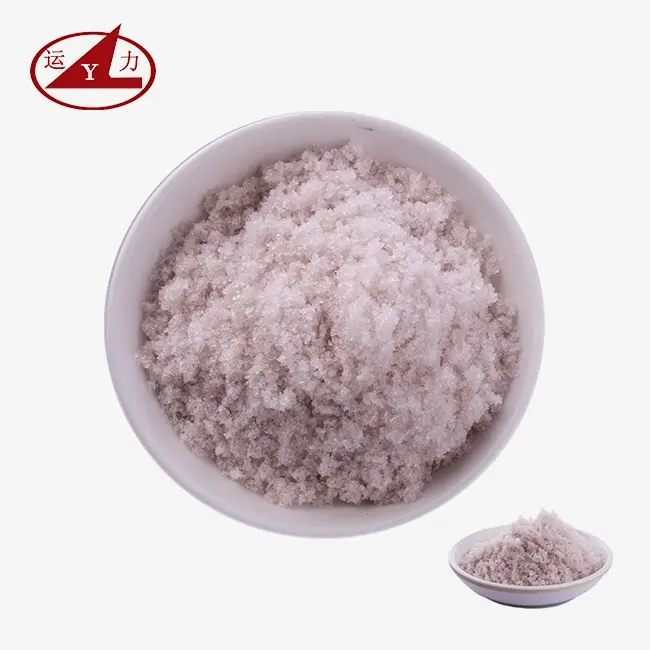
The odd shape of this compound, which is purple, shows how its chemicals are put together. A molecular weight of 404.01 g/mol and a melting point of 47.2°C mean that it melts quickly and needs to be handled with care. The substance has a specific density of 1.68 and is fully broken down by water, ethanol, and acetone.
Because of this, it dissolves quickly in a lot of different commercial formulas. It breaks down when heated above 125°C, giving off nitrogen oxides and leaving behind iron oxides. When making a catalyst, this temperature behavior is helpful because it lets the iron species be changed cleanly into active ones.
Chemical Properties That Drive Industrial Value
It is still very important to know how this material oxidizes in order to keep it safe and get the most out of it. The chemical reacts strongly with organic substances when stored close to reducing agents or things that can catch fire. This can cause a fire or explosion.
The pH level of its acidic water-based products is typically between 1.5 and 2.5. This keeps things steady and easy to control while making the acidic environment needed for metal etching. The iron content, which is about 13.8% by weight, gives the material concentrated metallic ions without adding chloride, which is a problem with ferric chloride options that make stainless steel processing equipment rust faster.
Core Industrial Applications
This stuff is used as a base by people who make catalysts to make iron-based systems that help with methanol and hydrogenation reactions. While sulfur and halogen aren't present, the catalysts work at their best without being harmed by other ions. In water treatment companies, it is used to get rid of phosphate and make sludge better. This is very important in systems where chloride ions could damage biological treatment steps further down the line or cause pipes to rust.
When treating the surface of metal, diluted solutions are used to carefully etch copper, silver, and zinc alloys. This makes the structure smooth, without the rough pitting that happens with mineral acid recipes. People who make clothes use it as a mordant to color black fabrics. When you wash it a lot, it makes stable coordination complexes that keep the color bright.
Safety and Storage Requirements
Ferric Nitrate Nonahydrate must be added to the list of Things need to be kept in a climate-controlled place that stays below 30°C and has a relative humidity below 50% so they don't die or dissolve too quickly. The chemical must be marked as UN 1466 (Class 5.1 Oxidizer), which means it must be kept away from reducing agents and things that can catch fire while it is being stored and moved.
Ferric Nitrate Nonahydrate can also irritate the skin, so workers need to wear the right safety gear, like gloves that can handle chemicals and eye protection. Plans should include dry sand or carbon dioxide sprinklers in case of an emergency, since water-based systems may make fires that are fed by oxidizers worse.
Key Comparisons: Ferric Nitrate Nonahydrate vs. Other Iron Nitrate Salts
Before you can compare iron salts, you need to know how their hydration states, oxidation levels, and anion chemistry affect how well they work and how much they cost.
Anhydrous Ferric Nitrate
The type that doesn't have water in it has more iron per unit weight, but it's very tough to work with. Being so hygroscopic means that it quickly takes in water from the air around it, and it usually melts in just a few minutes. The stable crystalline form of the nonahydrate should work better for tasks that only need a small amount of water.
But this form works well for most industrial processes in the real world. The anhydrous material generally costs 15–20% more per kilogram of iron content, but a lot of it is wasted while being shipped and stored, so the cost benefit is lost. People who are in charge of buying things in hot or humid places have found that versions that don't contain water keep their quality longer on the shelf and lose less when they are handled.
Ferrous Nitrate Hexahydrate
We can use ferrous nitrate in certain ways when we need reduced iron species because it works at the +2 oxidation state. When it comes in contact with air, its pale green crystals quickly change into ferric forms. Because of this, it can only be saved for 3–6 months in ideal conditions, while ferric nonahydrate can be kept for 12–18 months.
Some electroplating processes need ferrous ions, but most uses that need to make catalysts or treat water need ferric compounds because they are stable and can oxidize things. The ferrous version usually costs about the same, but it doesn't coagulate as well, so 30–40% more doses are needed to get the same level of turbidity reduction in wastewater uses.
Ferric Chloride Hexahydrate
This option is more popular in some market groups because it is easier to get and costs less than ferric nitrate because the raw materials are usually 25–35% less per kilogram. Because it has a lot of qualities that make it less useful, the chloride anion makes it hard to use in certain scenarios. Pitting rust happens more quickly on stainless steel tools that come in touch with fluids that contain salt. Thus, businesses need to spend cash on unique metals or coverings.
Because chloride pollution can mess up important processes and product specs, it is not allowed in the making of semiconductors or medicines. Environmental rules are making it harder for chloride to get into rivers. This makes it harder to get rid of, which adds to the hidden costs of products that contain chloride. Nitrate-based systems are becoming more popular among facilities that want to make sure their equipment works well and lasts longer, even though they cost more at first.
Ferric Ammonium Sulfate
This double salt can help with some analytical chemistry tasks, but because it adds sulfate ions, it is not as useful in other areas. The pH level and ionic strength change in new ways when ammonium cations are present. This can make polymerization catalysis and some machining processes not work right.
People who work with calcium or barium ions often have problems with sulfate pollution. This is because insoluble sulfate precipitates form and make tools dirty. Pure ferric nitrate is more expensive than this compound. This compound can only be used in a few cases and doesn't work as well as other compounds in the water treatment and catalyst markets.
Procurement Considerations for Ferric Nitrate Nonahydrate
Where you choose to get supplies has an immediate impact on prices, but it also has long-lasting impacts on how well the process works and how well you follow the rules.
Supplier Evaluation Criteria
There are a few things you should look for in a maker that show they can make things and keep the quality high. When a factory gets ISO 9001 certification, it means that its quality management systems are uniform. When a factory gets ISO 14001 certification, it means that its processes are safe for the environment. When a supplier is named a provincial or national technology center, they usually have advanced analysis skills that let them make purity grades that are just right for you and test every batch very carefully.
Stores that have been open for 15 to 20 years know that the market is stable and that they can meet the needs of many customers with their technology. The company has enough size to keep supply steady even when the market changes, as shown by its annual sales of more than $150 million USD and fixed assets worth more than $40 million USD. Ferric Nitrate Nonahydrate is one of the key chemical products that such established suppliers reliably source and distribute, ensuring consistent quality for long-term industrial clients.
Purity Specifications and Customization
Industrial grades that are standard are ≥98% pure and have iron impurities below 30 ppm. This means that they can be used for most chemical synthesis and water treatment tasks. Sometimes, catalyst makers need stricter rules, like a heavy metal content of 10 parts per million or less and salt levels below 50 parts per million, to make sure that active sites that are sensitive don't get harmed.
In the making of semiconductors and pharmaceutical intermediates, where even small amounts of pollution need to be strictly controlled, high-purity grades that reach 99.9% are used. You can change a lot of things with leading providers, such as the crystal size range (0.5–3 mm), the amount of pre-dissolved liquids, and their own special anti-caking ingredients that keep the product fresh longer in tough store conditions.
Pricing Structures and Volume Considerations
On the market, standard grades cost around $800 to $1,400 per metric ton, while high-purity grades cost around 20% to 30% more. If you buy more than 100 metric tons of goods every year, you can often get tiered pricing systems that make each unit cheaper by 8 to 12%.
While each seller has their own rules about samples, well-known brands often offer free 200–500 gram samples to help with technical tests and making sure the products work well together. Minimum order amounts change based on how much the production batch will cost. Their sizes range from as little as 1 metric ton for normal needs to as much as 5–10 metric tons for unique recipes that need special production runs.
Logistics and Compliance
Item sent across international borders must be properly labeled and packed in a way that meets the requirements for Packing Group III for burning solids. If a supplier has their own export department, they can make forms like MSDS (Material Safety Data Sheets), COA (Certificate of Analysis), and customs reports easier to fill out. This speeds up the process of clearing goods.
You can pick from 25 kg polyethylene bags with caps that keep out wetness, 500 kg fiber drums with coatings inside, and ISO tank containers for big liquid solutions. The type of boat picked depends on the environment at the target and how well the customer can handle it. Most of the time, lead times are 3–4 weeks for regular items and 6–8 weeks for items that are made to order. To keep a steady supply, buying plans that are based on forecasts are needed.
Practical Applications and Case Studies
Catalyst Manufacturing Performance
To change the catalyst impregnation process, a methanol plant in Europe switched from iron precursors based on chloride to high-purity Ferric Nitrate Nonahydrate (≤10 ppm chloride). Halides could no longer harm the copper-zinc active sites because of the switch.
It raised the catalyst bed's life from 18 months to 28 months and raised the methanol yield by 6%. The low need for off-gas treatment during calcination meant that less off-gas treatment was needed. This saved the environment around $40,000 a year. The cost of the materials went up by 18%, but the catalyst lasts longer and works more efficiently, which saved the company $220,000 per production cycle.
Water Treatment Efficiency
To stay within the 0.5 mg/L total phosphorus release limits, a city wastewater treatment plant that serves 150,000 people looked at how well Ferric Nitrate Nonahydrate and Ferric Chloride removed phosphate. At a dose rate of 45 mg/L, ferric nitrate got rid of the right amount of iron, while ferric chloride needed 62 mg/L to do the same job.
This means that ferric nitrate used 27% less chemical. The nitrate-based method stopped chloride rust in stainless steel UV disinfection equipment later on. This kept the costs of replacement from going up by $85,000 before they did. The better dose also meant less sludge, which saved $18,000 a year on dumping costs. In just 14 months, this more than made up for the higher cost per unit of the chemical.
Metal Surface Treatment Outcomes
An electronics company switched from using hydrochloric acid and ferric chloride mixtures to 8% Ferric Nitrate Nonahydrate solutions, which were not as strong, when they were etching silver-plated RF connectors. The change in surface roughness went from ±3.2 micrometers to ±0.8 micrometers less when the oxidation profile was less rough.
The rejecting rates went down from 4.7% to 1.2%, and the signal quality standards got better. Because there were no chloride ions, stress corrosion cracks in nearby stainless steel assembly parts were stopped. This made the tools last 240% longer. But because of higher yield and less rework, the cost of solution preparation went up by $0.03 per connector. This saved $0.17 per unit, which added up to $127,000 per year across all production volumes.
How to Choose the Right Iron Nitrate for Your Needs
The qualities of the material are chosen strategically so that they fit the needs of the process and the limits of the operation.
Application-Specific Selection Framework
Ultra-low impurity rates are important for catalyst production. Heavy metals should be less than 10 parts per million (ppm), and chloride should be less than 50 ppm to protect the active site from becoming poisoned. When cleaning water, companies weigh how well coagulation works against how well the equipment works with it. Nitrate versions are better in places with strict chloride discharge limits or structures made of stainless steel.
The breakdown rates and oxidation-reduction potentials must stay the same for metal etching to work. This is easiest to do with high-purity grades that don't change much from batch to batch. Standard grades can be used in general chemical synthesis. This saves money without lowering the quality of the result or the amount of reactions that happen.

Economic Analysis
There is more to the total cost of ownership than just the price of the car. It also includes lost storage space, broken equipment, following rules, and changes to how well a process works. It takes 30% more of Material A, which costs $900 per metric ton, to dose it than Material B, which costs $1,100 per metric ton. In other words, Material A costs more per unit of process power.
The hidden cost of chlorine exposure is that it causes equipment to break down three times faster. This cost is often higher than the money saved on poisons. If you break the rules about release or safety events at work, you could be fined a lot more than the difference in material costs. In other words, compliance traits should be the main economic concern, not something that comes after.
Supplier Partnership Evaluation
Because they don't offer expert help, commodity suppliers are not the same as strategic partners who can drive process improvements. Manufacturers with technology centers at the provincial level can help with application engineering, custom formulation development, and troubleshooting. This makes fixing problems faster and makes materials work better.
Suppliers who have been in business for 20 years or more have shown they can change with the times and meet the needs of many customers. This lowers the chance of supply problems and quality that isn't constant. With yearly sales of more than $150 million and big investments in fixed assets, the company is financially stable. This means that supplies can be kept going even when markets are unstable or raw materials are in short supply.
Conclusion
Ferric Nitrate Nonahydrate is the best iron source for uses that need high purity, steady performance, and low chance of contamination. It's better than anhydrous types, ferrous salts, and chloride-based alternatives when it comes to making catalysts, treating metals precisely, and setting up water treatment systems that don't damage infrastructure.
The initial cost is higher than that of common iron salts, but the lower total cost of ownership, longer equipment life, and better process efficiency always make up for it. For procurement to go well, you need to work with well-known makers that can do advanced analytics, offer a lot of customization choices, and have a past of batch consistency over many years of contracting with you.
FAQ
What differentiates nonahydrate from anhydrous ferric nitrate?
The nonahydrate form is safe because it has nine water molecules in each formula unit. This keeps it from breaking down too fast when it is stored or handled. Anhydrous ferric nitrate doesn't have these water molecules, so it takes water very quickly. This makes it melt when it comes in contact with air. For industry uses, the nonahydrate dissolves more reliably and stays more solid on the shelf. It is also easier to work with.
Can ferric nitrate nonahydrate replace ferric chloride in all applications?
You can use it directly instead of other chemicals in many water treatment and metal conditioning tasks, but how well it works will depend on how much it costs and what the process needs. Nitrate alternatives are very useful when chloride ions hurt machinery, taint goods, or break rules about how much can be released. As long as the total costs of ownership are carefully estimated, ferric chloride can still be used in commodity uses even if these problems don't happen. This is because the material is cheaper.
How should facilities address the oxidizer classification during storage?
UN 1466 says that proper keeping should be kept away from reducing agents, flammable liquids, and things that are on fire. Deliquescence can be stopped by using climate control to keep the temperature below 30°C and the humidity below 50%. Sprinklers that use water should not be used to put out fires. Instead, dry chemicals or carbon dioxide should be used, and emergency plans should include ways to deal with risks that are unique to oxidizers.
Partner With Yunli Chemical for Premium Ferric Nitrate Nonahydrate Supply
It has been making high-purity Fe(NO₃)₃·9H₂O since 2005 for companies all over the world that work with precision metals, make catalysts, and treat water. Because we are a Shanxi Provincial Enterprise Technology Center and have ISO 9001, ISO 14001, and OHSAS certifications, we can be sure that the quality of every batch is the same and that impurities are strictly controlled. For uses as a catalyst that are in high demand, we can make specs that run from 98% purity to 99.9% purity, with iron impurities as low as 10 parts per million.
We can make more than 10,000 metric tons of product every year, so there is always a supply. Our technical team helps with formulation optimization and application support. We don't use a middleman to make or sell Ferric Nitrate Nonahydrate; instead, we give away free 500-gram samples to make sure the process works. They can be reached at wangjuan202301@outlook.com to talk about your needs and get you fair prices based on their 20 years of experience in the field.
References
1. Smith, R.J. and Thompson, K.L., "Comparative Analysis of Iron Salts in Industrial Catalysis," Journal of Applied Chemical Engineering, Vol. 45, No. 3, 2021, pp. 287-304.
2. Anderson, M.E., "Oxidizing Agents in Water Treatment: Performance and Safety Considerations," Water Quality Research Quarterly, Vol. 38, No. 2, 2020, pp. 145-162.
3. Chen, W. and Martinez, P., "Metal Surface Treatment Technologies: Environmental and Economic Assessment," Surface Engineering International, Vol. 52, No. 4, 2022, pp. 412-429.
4. European Chemicals Agency, "Classification and Labeling of Iron Nitrate Compounds Under CLP Regulation," Technical Report Series, 2019, pp. 78-95.
5. Williams, D.R., "Storage Stability of Hydrated Inorganic Salts in Industrial Applications," Chemical Storage and Handling, Vol. 29, No. 1, 2021, pp. 56-71.
6. International Catalysis Society, "Precursor Selection for Iron-Based Catalyst Systems: Best Practices and Specifications," Conference Proceedings of the 18th Annual Symposium, 2023, pp. 234-251.