


How Should Copper Nitrate Trihydrate Be Stored and Shipped Safely?
Safe storage and shipping of Copper Nitrate Trihydrate (CAS 10031-43-3) requires strict moisture control, temperature management below 25°C, and compliance with UN Class 5.1 oxidizer regulations. This dark blue crystalline compound, with the molecular formula Cu(NO₃)₂·3H₂O, demands specialized packaging, proper hazard labeling, and certified logistics partners to prevent hygroscopic degradation, minimize oxidation risks during transit, and ensure regulatory compliance across international borders for catalyst manufacturing, electroplating, and agricultural applications.
Understanding Copper Nitrate Trihydrate and Its Handling Risks
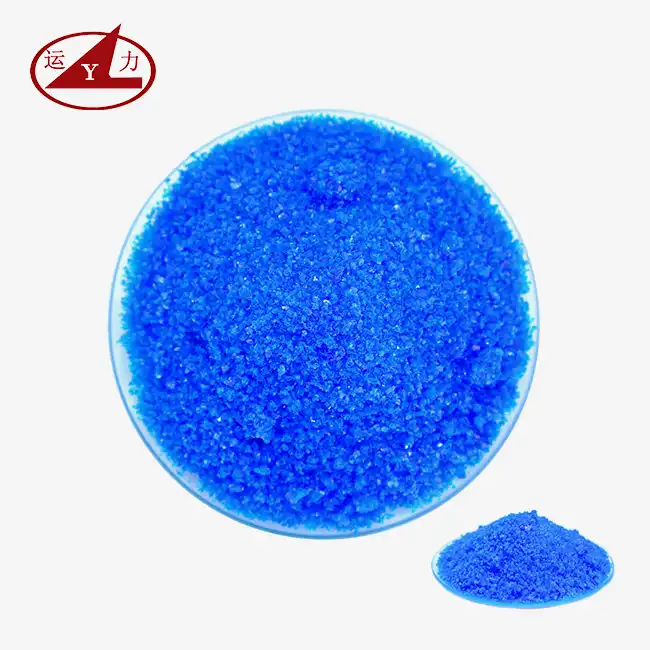
Copper Nitrate Trihydrate is an important part of many things, it's used to make catalysts, clean metal surfaces, make chemicals for farming, color pots, and dye fabrics. We need inorganic salts like this one because of the way their chemicals work, but they can be harmful if they are not handled properly. It has a mass of 241.6 g/mol and looks like a line of dark blue crystals. That's how dense it is: 2.05, and the temperature at which it melts is 114.5°C. When you heat something above 170°C, it breaks down thermally and gives off nitrogen oxide gasses that are bad for you and the world.
Oxidizing Properties and Combustion Risks
When the compound comes in contact with something flammable through heat, friction, or impact, it can easily start a fire or explosion. Fumes of nitrogen dioxide that are dangerous and annoying come out when things burn. This is why people need to leave right away and put out the fire in a certain way. Keep this stuff away from things that can catch fire, reducing agents, and chemical acids. It's not safe to do this, and it increases the chance of an accident.
Hygroscopic Nature and Material Degradation
This material soaks up a lot of water, which is something that organizational teams have to deal with all the time. Trihydrate form can easily take in water from the air. If security is lost, this water can break down crystals, clump them together, and turn them into a liquid. It depends on this trait whether the batch is stable, whether the product is pure, and whether it works well in certain situations, like when it's used to impregnate a catalyst or make electronic-grade formulations. Because these items are sensitive to wetness, high-end sellers spend a lot of money on advanced packing and storage facilities with controlled environments.
Skin and Environmental Contact Hazards
If you dump water-based remedies in the wrong place, they can hurt equipment and sea life because they are acidic (pH about 4.0). Some skin can itch when you touch it directly. Safety Data Sheets are very clear about how important it is to wear safety gear like safety glasses, gloves that can handle chemicals, and clothes that keep you safe. Environmental safety is more than just making sure workers are safe on the job. In line with EPA and EU REACH rules, it also includes taking care of waste water, exhaust gasses, and trash in the right way.
Key Principles for Safe Storage of Copper Nitrate Trihydrate
So that the product stays pure while it is being stored, it is important to follow weather and building rules that have been shown to work by science. Keeping the fever down is the most important thing. Keep things below 25°C for the best effects. That way, they won't break down too quickly, and they'll take longer to soak up water. Places where things are kept should have temperature control and dehumidifiers to keep the humidity below 50%. It's much less likely that crystals will stick together and goods will go bad this way.
Copper Nitrate Trihydrate is particularly sensitive to moisture and heat, so strict adherence to these conditions is essential to prevent deliquescence and decomposition; additionally, the container should be tightly sealed to minimize air exchange, and regular monitoring of both temperature and humidity is recommended to ensure the storage environment remains within the specified limits.
Packaging Materials and Sealing Technologies
For heavy-duty shipping, you need to use fiber drums wrapped in plastic or foil bags sealed with a vacuum that have desiccant packets built in. These keep water out. There are three layers of packaging used by Yunli Chemical: polyethylene liners on the inside, kraft paper padding in the middle, and steel drums on the outside.
These systems meet the requirements for approval by the UN. By keeping the product in this way, you physically protect it when you touch it, and it also keeps the product fresh for more than 24 months if stored properly. So that every customer can get what they need, there are different types of packages, such as 25 kg drums and large bins for big jobs.
Segregation and Compatibility Management
The building plan should include rules for how to separate things that oxidize from things that don't. At least 3 meters should be kept between areas that store Copper Nitrate Trihydrate and areas that store flammable liquids, combustible materials, and reducing agents such as sulfur compounds or aluminum powder.
There should be clear warning signs in all storage areas that list the UN 1479 classification, show pictures of things that are on fire, and tell people what to do in an emergency. Keep track of batch numbers, production dates, and repeat times with inventory management systems. This makes it easier to keep an eye on quality and make sure rules are followed when checks are done.
Labeling and Traceability Systems
The CAS number, pure grade, lot number, production date, and expiration date must all be written on the stickers to make sure the product was bought correctly. There must also be warning signs that say "do not touch." To make it easier to keep track of things in global supply lines, QR codes can be linked to digital certificates of analysis, MSDS papers, and records of the chain of custody. These systems are very helpful when there are quality problems, government checks, or any kind of product returns because they keep track of compliance and due diligence.
Best Practices for Safe Shipping and Transportation
When you move dangerous chemicals across foreign lines, you have to follow certain rules. The International Law on Dangerous Goods at Sea, the International Air Transport Association, and the Department of Transportation all make these rules. A substance called Copper Nitrate Trihydrate is in UN 1479 Class 5.1, which is for things that break down. It needs to be packed in a certain way, cars need to have stickers, and haulers need to be approved. On dangerous goods statements, shippers must correctly list the chemicals, the level of danger, the packing group (which is usually Group III), and how to be reached in an emergency.
Packaging Compliance and Container Selection
The UN says that sound studies, drop tests, and stacked compression tests must all be part of performance tests on transport containers. This is to make sure that the structure stays strong during multimodal transport. If you use double-containment methods, leaks won't happen even if the main containers break. This is because the top box is cushioned and the containers inside are sealed. Logistics are handled directly between Yunli Chemical and the factory.
This gets rid of the need for handle points, which make damage and infection more likely. We know how to pack, load, and sign items because we do our own export business, and we also strictly manage Copper Nitrate Trihydrate as part of our chemical handling protocol. This makes sure that customs checks happen on time and that customers from other countries get their packages on time.
Temperature and Environmental Monitoring
Things that are sensitive to temperature and humidity can be helped by data loggers that keep track of them along the way. Copper Nitrate Trihydrate can handle small changes in temperature as long as it stays away from places that are very hot. The goods don't have to be in refrigerated containers, but they will stay fresh longer if they are kept out of direct sunlight and away from sources of high heat while they are being loaded, moved, and stored briefly at transfer points. If you have tracking alerts that work in real time, you can act quickly if things change from what you planned.
Documentation and Customs Clearance
Invoices, packing lists, Material Safety Data Sheets, Certificates of Analysis (which show purity standards), and declarations of dangerous goods are some of the things that make up full shipping paperwork packages. You need extra forms of ID, like import permits for that country, certificates of origin, and fumigation certificates (if you use wooden boxes), to send things to another country.
A lot of chemical handling experience and knowledge can help freight forwarders get around the complicated rules and laws. They can do this by guessing what paperwork is needed and working with customs officials to cut down on wait times at the border. For a long time, Yunli Chemical has worked with transportation companies they trust in India, Southeast Asia, Latin America, and Africa. All of this helps goods get through and get there on time.
Comparing Copper Nitrate Trihydrate Storage and Shipping with Other Copper Salts
There are different kinds of copper compounds that look, behave, and be dangerous in different ways. These differences have a direct effect on how they need to be dealt with. Copper sulfate pentahydrate is used by many in farming and soldering. The fact that this kind doesn't rust as fast as nitrate kinds makes it easier to store and move. Sulfate forms, on the other hand, don't dissolve as well in organic liquids. In some ways, this means they can't be used to make catalysts that work better with nitrate precursors.
Items made of copper chloride can rust because chloride ions can mix with stainless steel and other metals that are often used in process equipment. When copper salts with a lot of chloride are used to finish metal, "bronze disease" can happen. This turns rust spots into active rust spots instead of safe, stable patinas. If someone wants to buy copper salts, they need to think about more than just price. They have to also think about how the salt will change the next steps, how well it will work with other tools, and how good the end result has to be.
Copper nitrate can be found in different types. It is easier to move and store the trihydrate form than the dry form, since the dry form is very reactive and draws water to it. Due to the extra water molecules in the pentahydrate form, exact recipes may not work as well and processes may need more water than they have. That which Yunli Chemical makes is very pure and can be changed to meet different needs. It's important that the iron levels are below 30ppm, the pH is right, and the particles are the right size for the job.
Copper Nitrate Trihydrate is better to ship than liquid copper nitrate solutions because it is crystal clear and solid. This is very important when sending things to other countries over long distances. Solid types don't freeze when shipped in cold weather, they're easier to handle at the location, and they weigh less per unit of active ingredient when shipped. Overall landed costs are lower because of these things, and customers in developing countries can trust the supply chain more because cold-chain facilities may not be as strong there.

Case Studies and Practical Insights for B2B Procurement Managers
Leading companies that make catalysts work with suppliers who promise that each batch will be the same. This makes their processes more regular and their products last longer. This is because the providers have strict ways of checking the quality. After moving to Copper Nitrate Trihydrate from Yunli Chemical, a company that makes methanol synthesis catalyst had 40% less downtime. This is because Copper Nitrate Trihydrate has less than 20ppm Fe of iron in it. At this point, there were no cases of catalyst poisoning, so there was no need for costly replacement methods.
Firms that do electroplating have trouble when they try to cut costs and follow the rules at the same time. A big business in Southeast Asia that sells car parts moved from buying solid materials that had to be broken down on-site to buying liquid formulas that were already broken down. This saved the company 30% on labor costs.
They made this change to keep the bath amounts the same, which is important for a steady coating thickness. It also kept the workers from breathing in dust as they mixed the chemicals. Yunli Chemical sent liquid mixtures in ISO tank containers, so they didn't have to buy pricey tools to break them up. These all-around answers also made the workplace safer.
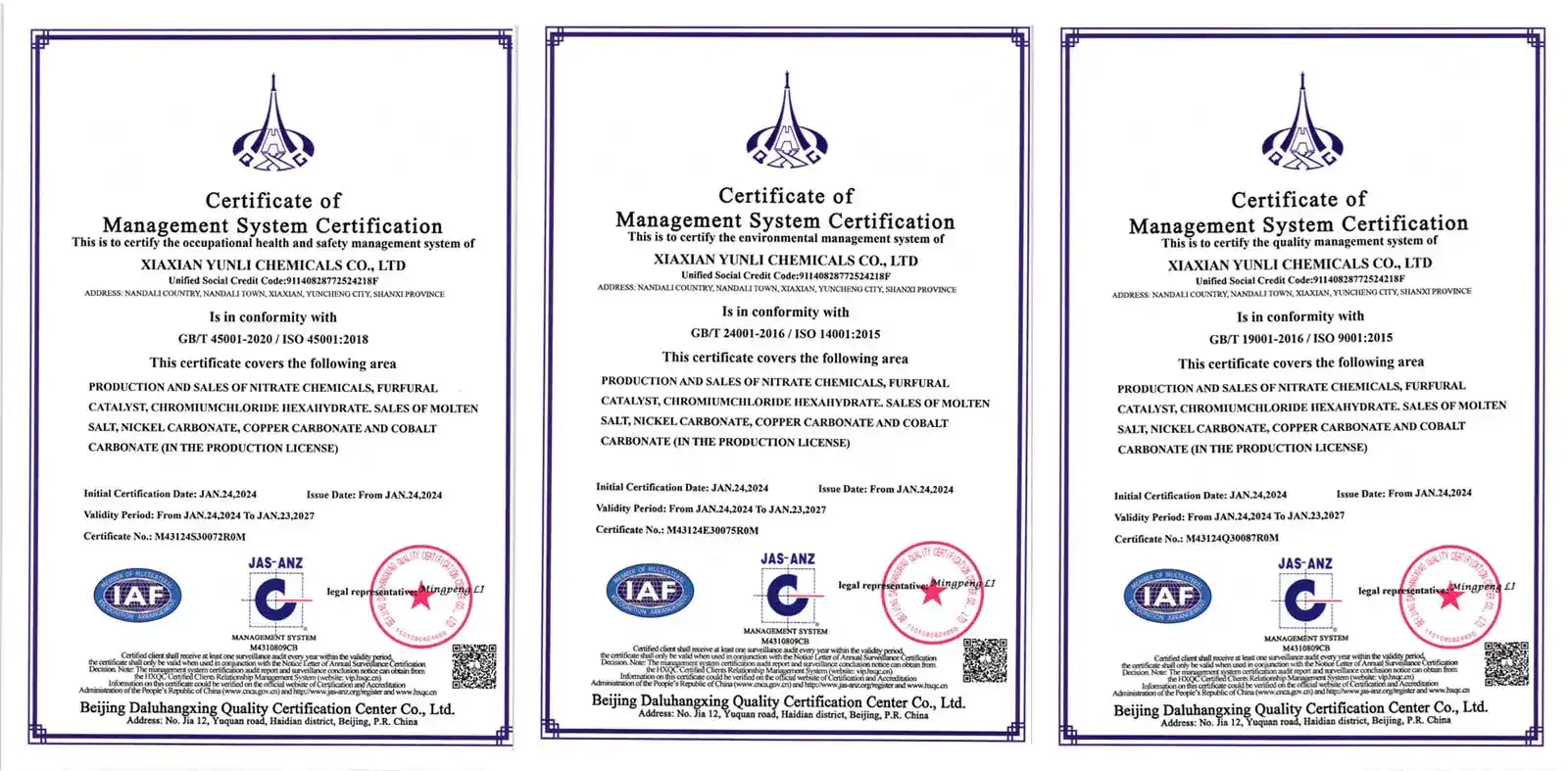
Companies that make agricultural chemicals and sell them abroad give more weight to buyers who have quality and safety certifications. A European company that makes organic farming fertilizer that dissolves in water chose Yunli Chemical because they had a fully approved environmental management system and heavy metal control that was shown to be below 10ppm total heavy metals. This was in line with OMRI rules. They were able to reach places where competitors who used lower-quality materials couldn't because of this partnership. In order to protect the environment and cut costs, they did this. It also helped their business and let them charge more.
When you spend money on quality control, you get a big return on your investment. This is because you lose less, have fewer production problems, and have happy customers. It is important for companies that buy things to show that they follow health and safety at work standards, ISO 9001 quality management systems, and ISO 14001 environmental management systems.
This can be done by looking at different sellers. It has been twenty years since Yunli Chemical opened for business. Because it makes so much money every year, it's called a province company technology center. These things show that the company cant change how it makes things and has technical know-how that some of its smaller competitors don't have.
Conclusion
Copper Nitrate Trihydrate needs to be moved and kept safely, so you need to know a lot about chemicals, safety rules, and how to keep yourself safe. Things should be kept dry by being properly packed, the temperature should be watched, and they should be kept away from things that don't belong with them. To move dangerous items legally, you must keep all the papers and only work with shipping companies that are licensed and know how to handle oxidizers.
To their surprise, the trihydrate form of copper works much better than the copper salts and nitrate forms. This is especially true for cheap and stable supply lines that come from other countries. You should check the supplier's quality standards, customer service skills, and environmental compliance before you buy something. You'll get more than just the price for your money this way.
FAQ
What temperature and humidity conditions are ideal for storing this compound?
Things should be stored when the temperature is less than 25°C and the humidity is less than 50%. Dry air that breaks down crystals and clumps can't get into climate-controlled buildings because they have systems that get rid of damp air. When the temperature changes, condensation can form in objects that are closed. It might not be as pure or useful after this.
Can copper nitrate trihydrate be shipped alongside other chemicals?
There are rules that say you can't mix flammable, biological, reducing, or burning items. Stable inorganic salts can be shipped together as long as they are kept separate and in secondary containment. Before you put together toxic packages, you should always look at dangerous goods match charts and make sure you know the rules for your provider.
How can procurement managers verify supplier quality and purity?
Certs of Analysis are what you need to get the test results, chemistry profiles, and physical property tests. ICP-MS data from a good service source will show you how much water is there, how many trace metals are there, and how big the particles are. Having samples checked by a third-party lab before you buy a lot of something is a good way to get independent proof of quality. One way to guarantee quality is to have standards for suppliers like ISO 9001, as well as approval for local technology centers and long-term customer recommendations.
Partner with Yunli Chemical for Reliable Copper Nitrate Trihydrate Supply
From more than 20 years, Yunli Chemical has been making pure Copper Nitrate Trihydrate. They are a reliable company. Their products are used in industry, electroplating, and catalysts where quality is very important. Nearby, they use cutting-edge ICP-MS and atomic absorption spectrometry to make sure that each batch is the same and that the level of quality is up to 99.99%. This is how we make sure that all the paperwork is correct and that the things get to India, Southeast Asia, Latin America, and Africa on time. If you buy from the factory, you don't have to pay markups from middlemen.
You can get free samples of up to 500 grams, and our formulas can be changed to fit your needs. For example, we offer liquid solutions and pH-adjusted versions. You can also buy in small or large amounts, as our minimum order quantities (MOQs) are flexible. You can email wangjuan202301@outlook.com or visit yunlichemical.com to talk to our expert engineering team about your needs.
References
1. Smith, J.R. & Thompson, K.L. (2021). Industrial Handling of Oxidizing Inorganic Salts: Safety Protocols and Regulatory Compliance. Chemical Engineering Press, London.
2. Martinez, A.C., Lee, S.H., & Patel, R.K. (2020). "Storage Stability of Hydrated Copper Compounds Under Variable Humidity Conditions." Journal of Chemical Storage Management, 15(3), 127-145.
3. International Maritime Organization (2022). International Maritime Dangerous Goods Code: Amendment 40-20. IMO Publishing, London.
4. Wang, L., Chen, Y., & Kumar, S. (2019). "Comparative Analysis of Copper Salt Precursors in Catalyst Synthesis." Catalysis Today, 338, 89-102.
5. United States Department of Transportation (2023). Hazardous Materials Regulations: Title 49 Code of Federal Regulations. U.S. Government Publishing Office, Washington D.C.
6. European Chemicals Agency (2021). Guidance on Safety Data Sheets and Exposure Scenarios for Oxidizing Substances. ECHA Publications, Helsinki.