


How does ferric nitrate nonahydrate get it color?
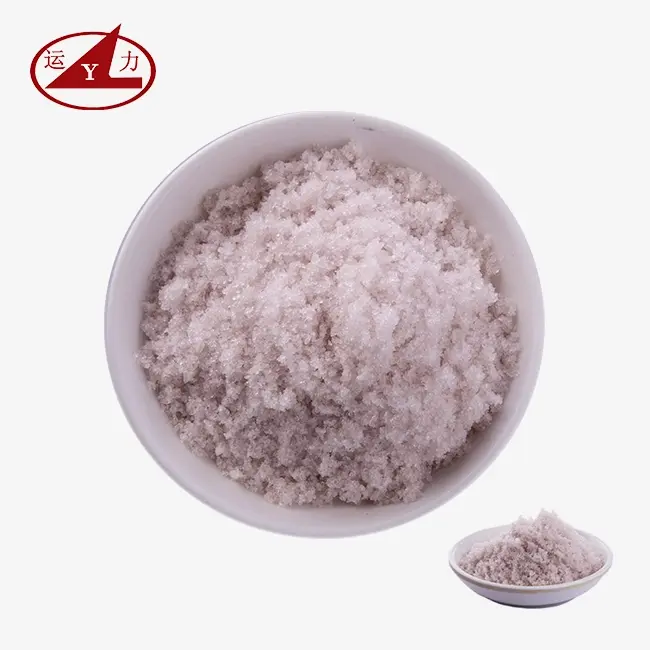
Ferric Nitrate Nonahydrate has a unique purple to violet colouration because of the electronic configuration of the trivalent iron ions (Fe³⁺) within its crystalline structure. When these Fe³⁺ ions are hit by light, electrons in their partially filled 3d orbitals absorb some wavelengths in the visible spectrum. These wavelengths are mostly in the yellow-green range. This selective absorption lets us see colours that go with them, mostly purple and violet shades, through and off of them. The colour is changed even more by nine coordinated water molecules that change the ligand field around the iron center. This keeps the electronic changes stable that give Fe(NO₃)₃·9H₂O its unique look.
Understanding Ferric Nitrate Nonahydrate: Chemical and Physical Properties
Ferric Nitrate Nonahydrate can be written as Fe(NO₃)₃·9H₂O, which means that each iron ion is surrounded by three nitrate groups and nine water molecules. You can tell a lot about how stable and easy to work with the product is by how much water it has. The substance has a molecular weight of 404.01 g/mol and looks like purple crystals that melt at 47.2°C. It has a density of 1.68 g/cm³. It's easy to dissolve in water, ethanol, and acetone because of these physical properties. This is helpful when the substance needs to dissolve quickly and spread out evenly in reaction media.
The Role of Hydration in Crystalline Structure
The nine water molecules in Fe(NO₃)₃·9H₂O do more than just fill up space. They work directly with the ferric ion's coordination sphere, making octahedral or twisted octahedral forms that change the chemical and optical properties of the combination. It is safer to work with iron salts when you add water to them because the water stabilises the crystal lattice and makes it harder for the iron center to oxidise. When heated above 125°C, the material breaks down, releasing nitrogen oxides and water vapour while leaving behind iron oxide. To get catalysts ready, this way of breaking things down is used. It's important to use clean heat conversion to keep the active areas clean.
Key Physical Indicators for Quality Assessment
There are a number of things that purchasing managers and technical engineers can measure that help them decide how good a product is. It is normal for industries to use pure levels of 98% or more. Very high purity grades of 99.9% are needed for sensitive processes like making electronic materials and catalysts. Profiles of impurities are important signs. These include iron content (≤30ppm as metallic Fe), chloride levels (≤100ppm), and sodium contamination. Colour intensity and crystal shape are also used to check the quality visually during the incoming inspection. If goods change colour, melt, or clump together too much, it means they were stored incorrectly or were contaminated, which can make them less useful in the future.
The Chemical Basis Behind the Color of Ferric Nitrate Nonahydrate
We need to look at the quantum chemistry of transition metal complexes to understand how this iron salt changes colour. The Fe³⁺ ion has a 3d⁵ electronic structure, which means that its five electrons are spread out over five d-orbitals. These d-orbitals come together when ligands like water molecules and nitrate ions bring them together. This is called crystal field splitting. Electric charges between the orbitals cause their energy levels to split.
Electronic Transitions and Light Absorption
Electrons can move from d-orbitals with less energy to ones with more energy when photons give them enough energy. The energy gap for Ferric Nitrate Nonahydrate is made up of wavelengths that are around 500–580 nm long and are yellow-green in colour. When these wavelengths are taken in, they send the colours purple and violet to our eyes. As more and different types of ligands are added to the iron center, the ligand field's strength changes. This changes the colour and level of intensity.
Charge-Transfer Complexes and Color Intensity
You can also look at charge-transfer complexes between Fe³⁺ and nitrate ions, which are another important part of how bright the colour is. Electrons can move from the nitrate ligand to the metal center or the other way around when light hits these groups. Most of the time, these changes in charge transfer happen at higher energies (shorter wavelengths), but they can increase the absorption profile, which makes the colour look darker. There are nine water molecules that keep these interactions stable. This stops any bad effects and makes sure that the optical properties don't change from one batch of materials to the next.
Environmental Factors Affecting Color Stability
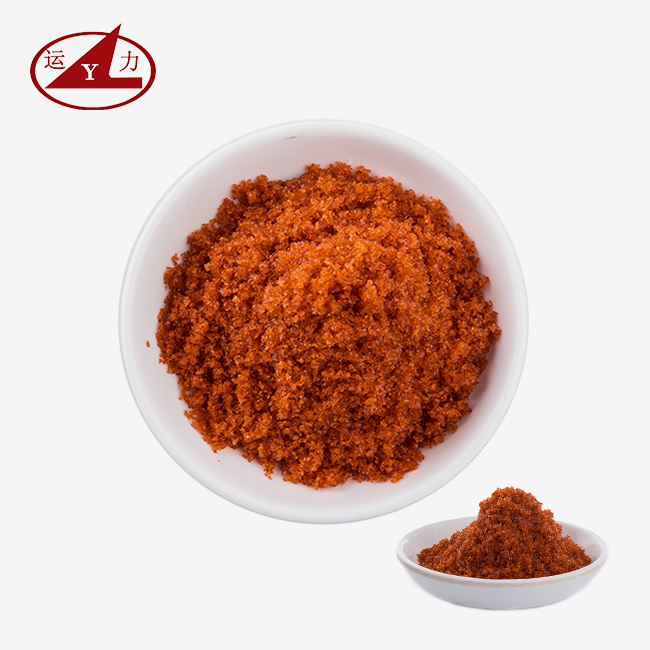
Ferric Nitrate Nonahydrate crystals can change how they look when they are exposed to heat, moisture, and light. A solid can melt when there is a lot of moisture in the air. When a solid takes in water from the air and dissolves in its own clear water, it turns into a thick liquid. Often, this phase change takes place at the same time that the purple crystals turn into a dark or orange solution. There are times when something being in the sun for a long time can change its colour by lowering Fe³⁺ to Fe²⁺ through photochemical processes. It is clear from these things how important it is to store things correctly—in cool, dry, dark places to keep the colour and chemicals safe.
Comparing Ferric Nitrate Nonahydrate with Similar Iron Salts
A lot of the time, buying workers compare several iron salts to pick the best one. Other chemicals, such as ferric chloride (FeCl₃) and ferric sulphate (Fe₂(SO₄)₃), are sometimes used instead, but they are not as good because they have different chemical qualities and colour patterns.
Color Variations Among Iron Salts
Ferric chloride can be seen as either yellow-brown crystals or a dark brown fluid. This is because chloride ions make different ligand fields. Iron sulphate can be a greyish white colour or a pale yellow colour. This shows that its charge-transfer interactions are not as strong. Most iron salts are not bright purple. The only one that is is Ferric Nitrate Nonahydrate. It's simple to understand what it is and how good it is. There are big differences between these because the type of anion (nitrate vs. chloride or sulphate) changes the electric field around the iron center in a basic way.
Impact of Purity and Grade on Functional Performance
Industrial-grade iron salts are made to be cheap, and they can be used to do things like clean up wastewater and stop corrosion in large areas. You have to be very careful with impurities in lab- or catalyst-grade materials so that they don't damage catalytic sites or mess up precision synthesis. If halide gets into stainless steel equipment, it can rust. High-purity Ferric Nitrate Nonahydrate with controlled chloride and sulphate levels keeps this from happening. This makes it better for etching, getting metal ready, and making pharmaceutical intermediates, all of which need tools that last a long time and clean products.
Choosing the Right Iron Salt for Your Process
When picking a product, you should think about how well it works with chemicals, how much it costs, and how well it follows the law. Ferric Nitrate Nonahydrate is better when nitrate ions are not needed or are helpful for the process. Also, it is better to stay away from chloride and sulphate because they can rust or make things dirty. Certifications for suppliers, like ISO 9001, ISO 14001, and RoHS/REACH compliance, make sure that quality standards and environmental concerns are always met. It's easier to compare goods and less likely that you'll buy the wrong one when the datasheets have a lot of information about purity, impurity profiles, and physical qualities.
Practical Considerations for Handling and Storing Ferric Nitrate Nonahydrate
To keep the quality and colour of Ferric Nitrate Nonahydrate the same all along the supply chain, it must be handled and stored according to set rules. Bad management can lead to damage to property, risks to safety, and goods that don't work well when they're used.
Recommended Environmental Conditions
Stored items should be kept below 25°C to avoid melting and deliquescence. The relative humidity needs to stay below 60% so that the material doesn't take in too much water, which can cause it to harden or melt. To keep the stuff inside the container from mixing with air outside, it should be tightly covered with polyethylene or metal foil composites that act as moisture barriers. The chemical is a Class 5.1 oxidiser (UN 1466), so it needs to be kept away from organic chemicals, things that can catch fire, and reducing agents. Operation risks should be kept to a minimum by making sure there is enough air flow and fire suppression.
Safety Protocols and Regulatory Compliance
MSDS sheets describe different kinds of dangers, how to give first aid, and what to do in an emergency. People who work with Ferric Nitrate Nonahydrate need to wear protective gear like gloves, goggles, and lab coats because it can damage skin and mucous membranes. Neutral absorbents should be used right away to clean up spills, and things that can catch fire should be kept away from the spill. Following the rules set by OSHA, the EPA, and international transport helps keep logistics safe and lowers your risk of being sued. Getting goods through customs and regulatory checks goes more quickly when sellers give full MSDS paperwork, Certificates of Analysis (COA), and environmental compliance reports.
Packaging and Shipping Best Practices
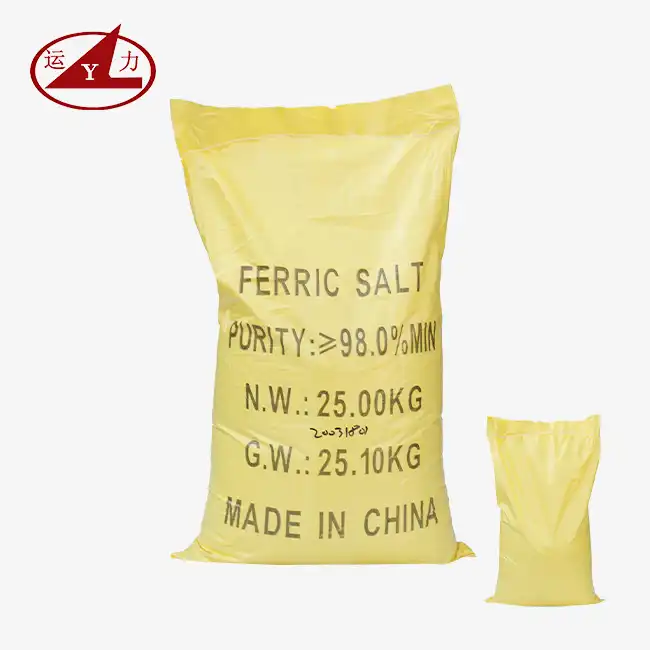
For industrial shipping, 25 kg polyethylene bags or 500 kg drums are usually used. These are both made to keep wetness out while they're being shipped. When buying things from other countries, ISO tank containers save you money and keep your things safer when you buy a lot of them. GHS rules say that the signs on the boxes should be very clear and show the danger class, the CAS number (7782-61-8), and how to handle the thing. Shipping that keeps things at the right temperature may be needed in places with extreme weather. When you work with logistics partners who know how to move dangerous goods, you can avoid delays and make sure that the rules for international shipping are followed.
Procurement Guide: Buying High-Quality Ferric Nitrate Nonahydrate
To find Ferric Nitrate Nonahydrate that is always of good quality, you need to think carefully about where to get it, how to get it, and the technical standards. Buyers who want to keep working with the same suppliers for a long time should look for ones that offer technical support, strong quality assurance systems, and flexible customisation.
Evaluating Supplier Credentials and Product Specifications
A supplier with a good name will have certificates like ISO 9001 for quality management, ISO 14001 for environmental systems, and OHSAS for health and safety at work. A local or national technology center approval shows that the center can do high-level research and development (R&D) and make custom formulations that are pure. It should be clear from the product datasheets what the purity level is (≥98% to 99.9%), what the impurity levels are (iron, chloride, and sodium), what the pH ranges are, and what the physical forms are (crystalline solids or liquids that have already been dissolved). Verification by a third-party lab during the trial sample step lowers risk and builds trust before big orders are placed.
Pricing, MOQ, and Sample Request Procedures
In the industrial world, prices rely on the purity level, the quantity ordered, and any tailoring needs. Materials of a standard grade may not cost too much, but materials with an ultra-high purity level or special formulas do. The MOQ (minimum order quantity) that each seller sets is different. Companies that are well-known and can make a lot of goods usually give customers a lot of options, like free samples up to 500 grams and no minimum order quantity limits. Before buying a lot of it, technical teams can test a sample to make sure it works with their current processes, that the colour stays the same, and that the limits for impurities are met. The best way to get the most for your money without affecting the stability of the supply chain is to talk about payment terms, rebate plans, and long-term contract rewards.
Logistics and Global Supply Chain Management
Logistics must work well so that goods stay whole as they travel across foreign lines. Cutting out middlemen and going straight to the plant cuts costs and makes it easier to keep track of products. People who run their own export businesses make sure they know the rules for shipping, the paperwork needed for customs, and how to handle dangerous goods. Packaging options that are specific to the destination, such as custom labelling, aqueous solutions with more than one concentration, and anti-caking additives, make things easier and speed up the process later on. Suppliers that ship on time, have helpful customer service, and offer support throughout a product's lifecycle are more trusted, and they help businesses build long-term relationships with them.
Conclusion
Ferric Nitrate Nonahydrate is a special purple colour that comes from the way the Fe³⁺ ions interact with the nitrate and water ligands and how their electronic configurations are set up. Buyers can make smart decisions if they know the chemical cause of this colouration, as well as the physical properties of the product and how to handle it. When you compare it to other iron salts that are similar, you can see that it works better when you need high purity and low chloride contamination. To keep goods pure and make sure they work reliably across all industries, it's important to store them safely, follow safety rules, and check out sources.
FAQ
Q1: Why does ferric nitrate nonahydrate sometimes appear as a liquid?
A: The mixture is very easy to drain because its freezing point is close to 47°C. It either soaks up water from the air or turns into its own crystal water when it's hot or humid (above 30°C). It goes from solid purple crystals to a thick, amber-colored liquid. If you keep the storage place cool and dry, you can stop this phase change.
Q2: Can ferric nitrate nonahydrate replace ferric chloride in all applications?
A: Changes are made based on what the process needs. Ferric Nitrate Nonahydrate is a better choice if chloride ions damage stainless steel tools or make product specs wrong. Both salts can clump together and oxidise, but nitrate-based versions work better in sensitive electronic, medicinal, and catalyst applications where it's important to keep impurities under control.
Q3: What is the shelf life under optimal storage?
A: When covered with moisture-barrier covers and kept below 25°C with controlled humidity, Ferric Nitrate Nonahydrate remains chemically and physically stable for 12 to 24 months. Clumping can happen over time, but it usually doesn't change how reactive something is unless there has been a lot of pollution or hydrolysis.
Q4: Is this material hazardous during transport?
A: This item is marked with the number UN 1466, which means it is a Class 5.1 oxidiser and is in Packing Group III. It should be kept away from reducing agents and organics that can catch fire, moved according to rules for dangerous goods, and come with the right paperwork to make sure it meets international shipping standards.
Partner with Yunli Chemical for Reliable Ferric Nitrate Nonahydrate Supply
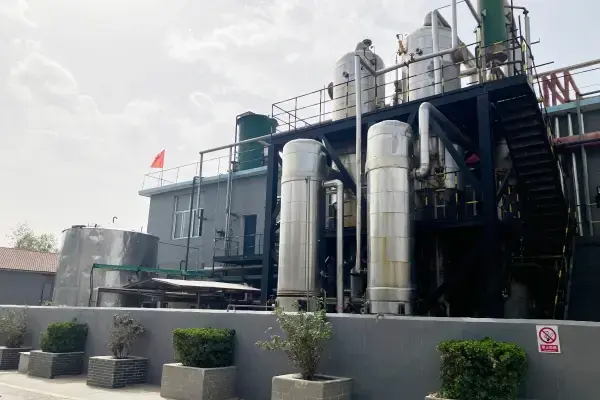
Yunli Chemical has been making Ferric Nitrate Nonahydrate for more than twenty years and is a reputable company that brings in more than RMB 1 billion a year. Our factory in Shanxi is certified by ISO 9001, ISO 14001, and OHSAS. This means that strict quality control and environmental protection are used at all stages of production. We focus on ultra-high purity grades (≥98% to 99.9%) that have impurity profiles that can be changed to meet the needs of making catalysts, electroplating, mordanting cloth, and making pharmaceutical intermediates. We cut out the middlemen and don't have a minimum order size, so it's easy for people to buy things from us.
We also offer free samples of up to 500 grams. This helps us get our goods to you quickly and at a low cost. Across the province, our corporate technology center helps with cutting edge research and development, custom water solutions, and flexible packaging for a wide range of businesses. Contact us at wangjuan202301@outlook.com to request product details, talk about your technical needs, and learn how our Ferric Nitrate Nonahydrate can help you improve the quality of your products and make your production more efficient.

References
1. Cotton, F.A., Wilkinson, G., Murillo, C.A., and Bochmann, M. (1999). Advanced Inorganic Chemistry, 6th Edition. John Wiley & Sons, New York.
2. Greenwood, N.N., and Earnshaw, A. (1997). Chemistry of the Elements, 2nd Edition. Butterworth-Heinemann, Oxford.
3. Figgis, B.N., and Hitchman, M.A. (2000). Ligand Field Theory and Its Applications. Wiley-VCH, New York.
4. Pourbaix, M. (1974). Atlas of Electrochemical Equilibria in Aqueous Solutions. National Association of Corrosion Engineers, Houston.
5. Snoeyink, V.L., and Jenkins, D. (1980). Water Chemistry. John Wiley & Sons, New York.
6. Holleman, A.F., and Wiberg, E. (2001). Inorganic Chemistry. Academic Press, San Diego.