


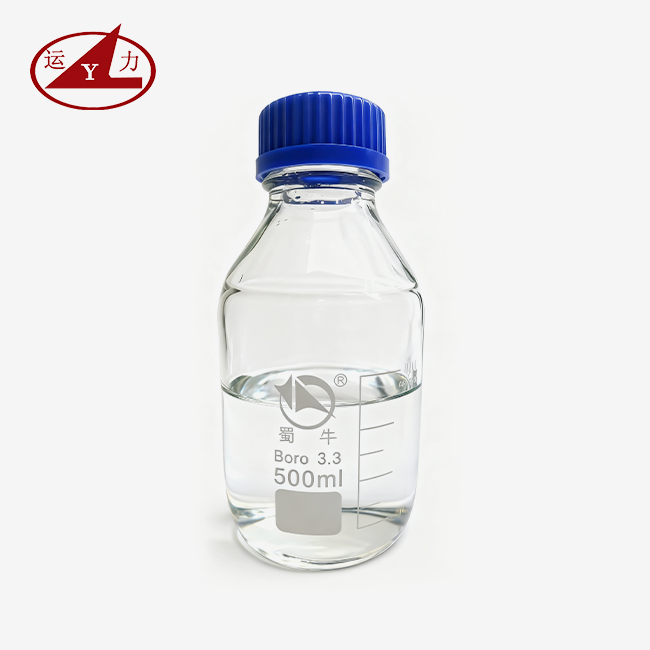
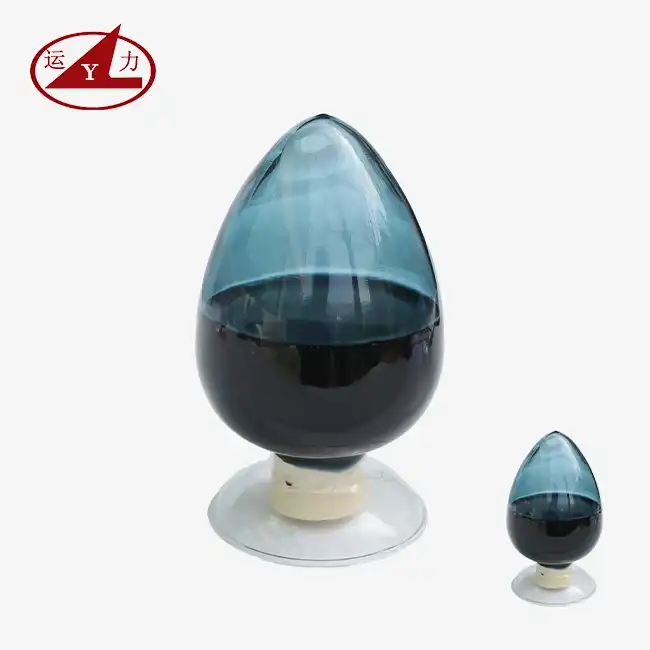
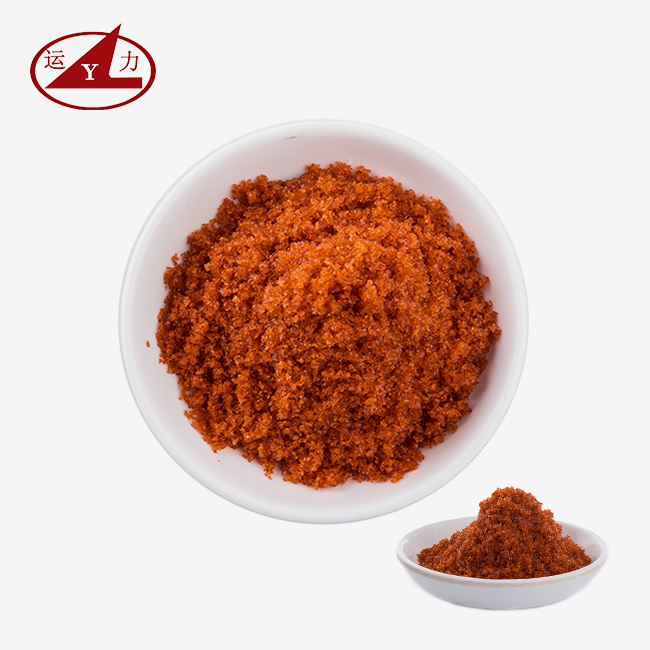
How is copper nitrate formed?
Solid copper is mixed directly with nitric acid to make cupric nitrate and nitrogen fumes. This is the main way that Copper Nitrate is made. Copper Nitrate trihydrate (Cu(NO₃)₂·3H₂O), a dark blue material that can be used to make catalysts, treat surfaces, and grow, is made when these chemicals change. The process of making something relies on how much acid is used, how well the temperature is managed, and how the reaction is set up. All of these things have a direct effect on how good the product is and how well it works on a large scale. People who buy things can find good sources who can give them regular, high-quality supplies if they know about these formation processes.
Understanding Copper Nitrate: Fundamental Properties and Composition
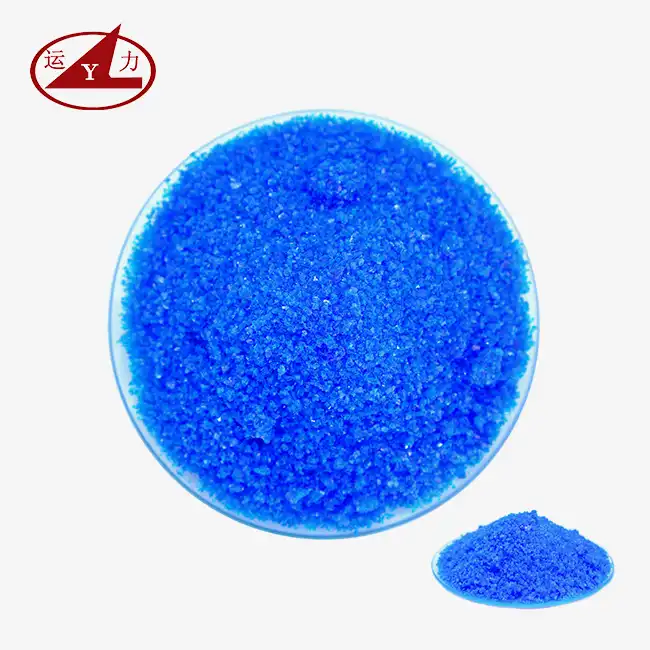
Copper Nitrate trihydrate is a dark blue solid. Its molecular formula is Cu(NO₃)₂·3H₂O, and its molecular weight is 241.6 g/mol. Each unit of Copper Nitrate in the material is made up of three water molecules. It can soak up water from the air and dissolve because of this. Because it absorbs water, the material needs to be carefully kept in sealed containers so it doesn't melt and stays the same throughout the supply chain.
Physical Characteristics and Stability
Together, they have a specific mass of 2.05 and melt at 114.5°C. At about 170°C, it starts to break down. It breaks down quickly in water and ethanol (137.8 g/100 ml at 0°C in water), which makes it useful for mixing with both water and alcohol. At a pH of about 4.0, the fluid is acidic when it breaks down. This changes how it works in different business situations. This stuff oxidizes, so when mixed with biological stuff, it can make the fire worse. So, it needs to be treated carefully so that it doesn't catch fire while it's being shipped or used.
Safety Profile and Handling Requirements
UN 1477 (Class 5.1) lists Copper Nitrate trihydrate as a potent oxidant. Moving and storing it can be dangerous. If you heat or burn the material, toxic nitrogen oxide fumes come out, so companies need to have good ventilation systems. People who work with the material must wear safety gear because feeling it can make the skin itch. For buying managers to make sure everyone is safe at work and following the rules, they need all the necessary paperwork, such as MSDS licenses and licenses of analysis. The papers show that the service providers follow quality and environmental rules that are important for making connections that last a long time.
The Chemistry Behind Copper Nitrate Formation
Most chemicals are made in factories by mixing copper metal with concentrated nitric acid in a controlled setting. 3Cu + 8HNO₃ → 3Cu(NO₃)₂ + 2NO + 4H₂O is the chemical equation that balances this change. Exothermic means that this process gives off a lot of heat that needs to be managed with systems that track temperatures and cool things down. As soon as the waste comes in contact with air, it quickly changes into nitrogen dioxide (NO₂). This is what gives off the brown fumes that come from this method of production.
Alternative Formation Pathways
Laboratory settings sometimes employ copper oxide or copper carbonate as starting materials, combining them with weak nitric acid to make Copper Nitrate with less powerful conditions: CuO + 2HNO₃ → Cu(NO₃)₂ + H₂O. For small batches, this method gives better control and makes less dangerous gases, but it is still not as cheap for making many things. Another way is to use copper hydroxide precipitation and then treat it with nitric acid. This can be used to make ultra-pure types that are needed for things like electronics and drug intermediates. These options involve giving up some things in order to meet clean standards, cut costs, or protect the environment. Each of these choices has an impact on the supplier's skills.
Critical Parameters Influencing Product Quality
How well the process works and how pure the end result is are both affected by a number of things that can be changed. The acid level should be between 30% and 70% to get the best yield without making too much NOₓ. During the reaction phase, keeping the temperature between 40°C and 60°C stops the process from going too far and makes sure that all of the copper fuel is broken down.
It is very important to keep pollutants under control for high-performance uses. Catalysts stay stable when iron levels are below 30 ppm, and metal cleaning methods don't rust when chloride levels are below 10 ppm. Suppliers who have advanced analysis tools like ICP-MS and atomic absorption spectrometers can use tight testing methods to make sure that stability from batch to batch is kept. This directly answers the worries of end customers in the business about the stability of quality.
Comparing Copper Nitrate with Other Copper Compounds for Industrial Uses
Copper Nitrate is frequently compared to copper sulfate pentahydrate, copper chloride, and copper oxide when purchasing products. Each material has its own pros and cons that depend on the product and its price. The most common crop pesticide is copper sulfate, which is cheaper and already has a good way of getting around. But it has sulfate ions in it, which can mess up some chemistry processes. Copper chloride is easy to remove, but it can get on stainless steel tools and bronze patination work, which is not good.
Application-Specific Advantages
Copper Nitrate stands out because it is easy to break down when it is hot. If you heat it up, it turns into copper oxide right away, leaving no sulfur or halogen behind. This is very useful for making catalysts, since tiny bits can stop active sites from doing their job. Because the substance dissolves fully, it can fill up alumina and silica, which are both porous support materials. This makes surfaces that are catalytic, which are needed for hydrogenation processes in petrochemicals. Copper Nitrate is easy to mix with NPK blends in water-soluble fertilizers to add micronutrients without the problems caused by sulfate-based choices' acidity.
To create copper-black dye shades, Copper Nitrate is used in the textile industry as a mordant. Because of how it is handled, the colors last longer in light than with copper acetate. Builders who finish metal like to use it for patination because it gives brass and copper coats that are stable and won't break down in the weather. Because they are used for these specific things, high-purity types can be more expensive. This makes markets where quality is more important than price. Copper Nitrate is a useful substance for buyers who care more about scientific performance than market price, as it makes the final product better and makes processing it easier.
Procuring Copper Nitrate: Practical Considerations for B2B Clients
Look at more than just unit price to find companies you can trust. Manufacturing capacity tells you if a seller can consistently meet orders for a certain number of tons without having to worry about how to share during times of high demand. The supply chain is more stable for big businesses that make more than $150 million a year and have fixed assets that keep production lines running. Smaller companies, on the other hand, could run out of tools or raw materials. When a company gets ISO 9001 for quality management, ISO 14001 for environmental compliance, or OHSAS for safety at work, it shows that it is developed and takes risks seriously.
Packaging and Logistics Optimization
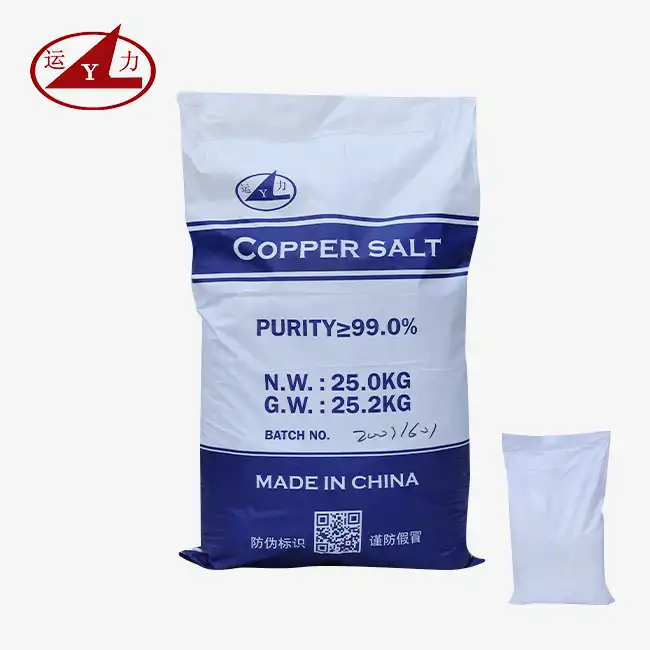
Standard forms for packing are 50 kg fiber drums, 25 kg woven bags with plastic liners, and 1000 kg giant bags that can be handled in a number of different ways. Since the material melts quickly, it's important to use packing that keeps out moisture. Desiccant packages in vacuum-sealed bags keep materials from melting while they're being shipped, which makes it harder to move and dose materials. Because liquid recipes don't need to be dissolved on-site, they can be used right away. You'll save about 30% of your time and money, and the workplace will be safer because less dust will be there. You don't need any extra tools to get custom concentration solutions with strengths between 20% and 45% ready to use in production processes.
Copper Nitrate is an explosive, so when moving it, carriers must adhere to specific regulations and consider insurance. This means that the dangerous stuff needs to be recorded correctly. Shipping companies you can trust will give you all the information you need, like UN labels, emergency response guides, and regulatory forms that are specific to the area that make it easier to get through customs. Lead times for delivering containerized goods from Asia to North America are usually three to four weeks. When you source locally, shipping times are cut down to 7-10 days, but the price goes up. Strategic buyers choose a supply area by weighing the benefits of lower costs against the costs of having stockpiles and the need for production schedules that can be changed at short notice.
Evaluating Supplier Technical Capabilities
One thing that makes tier-one providers different from basic wholesalers is that they can help with more advanced technology. Technology centers at the local level and in-house research and development labs make it possible to change particle sizes (20-80 mesh), recipes to fit specific reaction conditions (pH 3.5-4.2), and 99.99% pure ultra-low impurity grades. Making 4N-grade materials opens up new opportunities in fields like medicine and tech production, where even small amounts of pollution can mess up tricky steps. If a supplier gives away free samples of up to 500 grams, customers can try it out a lot before they decide to buy a lot. This makes moving providers less risky from a financial point of view.
We can give detailed Certificates of Analysis with every package so that customers can be sure of the quality of the goods they buy. The test results, the level of salt, the amount of insoluble matter, and the heavy metal profiles are all written on these papers. Readers of spectroscopic data, such as ICP-OES results for iron, lead, and nickel, can make sure that the material meets their own requirements before accepting it. With the help of technical consulting services, experts can fix problems with apps and get the most out of them. In the end, this makes suppliers faithful and builds ties that go beyond business. That's why it makes sense to work with well-known makers instead of selling through agents who don't know much about the goods.
Conclusion
Controlled nitric acid methods can be used to produce Copper Nitrate, a useful industrial compound. Specialty chemicals are made from it, and it is also used to treat metal surfaces. Its unique ability to fully dissolve, break down cleanly, and oxidize makes it better at what it does in tough settings than other copper compounds. A company should work with providers that can show steady production, good analysis, and expert help that goes beyond just looking at prices for procurement to go well. To make sure the supply chain is reliable and that the strict cleanliness and paperwork needs of controlled industries are met, licenses, customizable options, and transportation facilities are checked.
FAQ
What safety precautions are mandatory when handling copper nitrate trihydrate?
Workers must wear protection clothing, safety glasses, and gloves that can handle poisons so that they don't get on their skin or eyes. Rooms where people work need to have enough air flow to get rid of the nitrogen oxide fumes that are made when things are heated or broken down. In order to avoid the fire risks that come with oxidizer compounds, Copper Nitrate must be kept away from reducing agents, organic solvents, and things that can catch fire. In case of an emergency, you should have a plan for how to contain a spill with inert absorbents and carefully get rid of it with approved hazardous waste workers.
Can copper nitrate be synthesized on-site for manufacturing operations?
On-site synthesis is technically possible, but it is very dangerous and bad for the ecosystem. EPA pollution rules say that the process must make dangerous NOₓ gases that need to be cleaned up and the air quality checked. A lot of money has to be spent on infrastructure for dealing with acids and devices for reducing wastewater. It's cheaper for most businesses to buy from specialized makers than to build their own plants. This is because economies of scale and knowing how to follow environmental rules lower the total cost of ownership.
How does solubility affect copper nitrate's industrial applications?
Very good solubility in water and ethanol makes it easy to spread evenly in liquid recipes and lets you process it quickly in water. This quality is very important for catalyst impregnation because it affects how evenly the active sites are spread out. When electroplating pools are fully dissolved, grit can't form, which is bad for the surface. For fertilizer uses, nutrients are available as soon as you water, which makes vitamin uptake more efficient than with copper sources, which are less soluble and plants need to touch the earth more to get to them.

Partner with Yunli Chemical for High-Purity Copper Nitrate Supply
When you need Copper Nitrate trihydrate, you can trust Yunli Chemical. The company has been making this item for more than 20 years and has ISO-certified quality systems. From normal industrial quality to 99.99% high-purity materials, our technology center at the regional level can make a variety of purity grades just for you. All of these come with full MSDS paperwork and Certificates of Analysis that are specific to each batch. We do not have a minimum order size, and we offer free samples of up to 500 grams so that you can fully test them before making a full buy.
As a straight plant supplier, we cut out the middlemen, which keeps prices low. This makes sure that businesses like electroplating, making catalysts, and specialty chemicals can keep getting the expert help and supply security they need. Send us an email at wangjuan202301@outlook.com to talk about your specific Copper Nitrate needs and find out how our range of flexible packing options, custom concentration solutions, and reliable shipping plans can improve the way your supply chain works.
References
1. Smith, J.R., & Williams, K.T. (2019). Industrial Synthesis of Inorganic Nitrates: Methods and Applications. Academic Press.
2. Peterson, L.M. (2020). Oxidizing Agents in Chemical Manufacturing: Safety and Handling Protocols. Journal of Industrial Chemistry, 45(3), 112-128.
3. Chen, Y., & Rodriguez, M. (2021). Copper Compounds in Catalyst Technology: Comparative Performance Analysis. Catalysis Reviews: Science and Engineering, 63(2), 245-289.
4. National Institute for Occupational Safety and Health. (2022). Guidelines for Safe Handling of Oxidizing Materials in Manufacturing Environments. U.S. Department of Health and Human Services.
5. Thompson, A.K. (2018). Solubility and Reactivity of Metal Nitrates in Industrial Processes. Chemical Engineering Fundamentals, 52(4), 334-351.
6. International Organization for Standardization. (2021). Quality Management Systems for Chemical Manufacturing: Implementation and Compliance. ISO Technical Report 9001-2021.