


How is nickel nitrate hexahydrate used in electroplating solutions?
Nickel nitrate hexahydrate is an important chemical product that is used a lot in the electroplating business because it dissolves easily and deposits nickel well. With this help, procurement managers, engineers, and OEM clients should be able to fully understand nickel nitrate hexahydrate's function, features, and uses in electroplating solutions. This resource helps global B2B clients make better buying and operating choices to improve output quality and efficiency in competitive markets by looking at its benefits, safety concerns, acquisition strategies, and effect on the environment.
Demands for higher quality layers, less damage to the environment, and better process efficiency are growing in the electroplating business. Using regular nickel salts can make it harder to reach these goals, especially in specific situations where the deposit needs to have special properties. Because it has special chemical qualities and breaks down cleanly, Nickel Nitrate Hexahydrate is able to deal with these problems and is an important part of modern electroplating processes.
Understanding Nickel Nitrate Hexahydrate in Electroplating
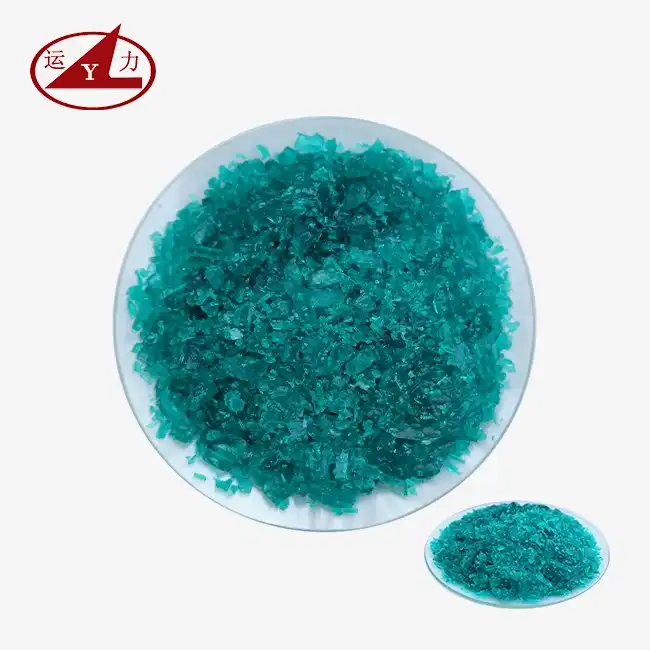
The molecular formula for nickel nitrate hexahydrate is Ni(NO3)2·6H2O, and it dissolves easily in water. These chemical qualities make it perfect for electroplating. This green solid substance has a molecular weight of 290.81 and can dissolve in water at 20°C in amounts greater than 100g/100ml. It makes nickel ions available reliably during the plating process.
Chemical Properties and Electroplating Performance
The combination is different from other nickel sources because of the way it breaks down at high temperatures. At temperatures around 56.7°C, the substance starts to lose water molecules. It breaks down into nickel oxide at temperatures around 260–300°C, without leaving any harmful leftovers. This clean breakdown gets rid of any sulfur or chlorine that might affect the quality of the metal or cause the base to rust.
Because the nitrate ion breaks down in water, making its solutions acidic. This naturally lowers the pH in electroplating baths. This trait helps keep growing conditions fixed and lowers the need for extra chemicals to change the pH. The nitrate anion's oxidizing properties also help improve deposit qualities by encouraging even nucleation and lowering the stress inside the metal layer.
Safety and Handling Considerations
To handle this reactive substance properly, you must strictly follow safety rules. Because Nickel Nitrate Hexahydrate is a UN 1477 Class 5.1 oxidant, it needs to be kept away from things that can catch fire and things that reduce oxygen levels. Because it absorbs water, it needs to be stored in a way that keeps the moisture level low to keep it working well. To lower the risks of exposure, industrial sites should set up the right air systems and give workers the right safety gear.
Comparative Insights: Nickel Nitrate Hexahydrate vs. Other Nickel Salts
Purchasing managers can make better decisions about where to get things by knowing how nickel nitrate and other electroplating salts work differently. Comparing these two substances shows that Nickel Nitrate Hexahydrate has clear benefits and uses where it works better than other options.
Performance and Efficiency Comparison
Nickel sulfate hexahydrate is still the standard substance for most electroplating jobs because it is cheap and has a well-known bath chemistry. On the other hand, Nickel Nitrate Hexahydrate works better in some situations. Compared to sulfate-based methods, the nitrate molecule makes layers that are brighter, less stressed inside, and more flexible.
Nickel chloride is a great anode dissolving agent, but it releases chloride ions that can damage some surfaces and cause pitting corrosion. The nitrate option gets rid of this risk while keeping the same level of throwing power and current economy. This benefit is especially useful in electronics, where the stability of the base is very important.
Cost and Availability Considerations
Nickel Nitrate Hexahydrate costs more than nickel sulfate, but in difficult situations, the total cost of ownership often works out better for the nitrate product. The higher prices of raw materials can be made up for by lower reject rates, better deposit quality, and easier trash handling. Additionally, the compound's steadiness and long shelf life make it easier to keep track of supplies.
Supply chain trustworthiness changes a lot between sellers, so picking the right one is very important. Established makers with regular production capabilities and quality standards are the most reliable choices for business users who need to keep their operations running smoothly.
Synthesis and Application Techniques in Electroplating
To make Nickel Nitrate Hexahydrate for industry, high-purity nickel carbonate or hydroxide is mixed with nitric acid in a controlled process that is closely watched. The solution that is made then crystallizes and is cleaned up to the level of cleanliness needed for electroplating.
Formulation Guidelines for Electroplating Baths
To make electroplating baths that work well with Nickel Nitrate Hexahydrate, you need to think carefully about concentration levels and other ingredients. Nickel ion concentrations usually fall between 4 and 8 g/L, but this can change based on the application and the deposit properties that are wanted.
The following factors make nitrate-based electroplating methods work better:
- Controlling the pH: Keeping the pH between 3.5 and 4.5 is important for getting the best deposit quality and bath stability. Nickel nitrate liquids are naturally acidic, so they don't need to have extra acid added.
- Temperature Control: When the temperature is between 45°C and 60°C, the throwing power is great, and the energy use is low. Higher temperatures may speed up the breakdown of the bath and make it more necessary to maintain.
- Current Density Optimization: Current densities between 2 and 6 A/dm² produce even layers with little burning or roughness. The exact range varies on the shape of the part and the amount of the layer that is wanted.
Extra ingredients like boric acid, brighteners, and stress relievers improve the properties of the deposit and make the bath last longer. Nitrate-based systems have clean chemistry, which means they don't react as much with organic additives. This makes additives more stable and improves performance accuracy.
Real-World Case Studies
Leading automakers have successfully used nitrate-based electroplating methods for important parts that need to be very resistant to rust and have exact measurements. When compared to regular sulfate methods, these uses showed 30% lower reject rates and 25% better deposit consistency. When electronics companies used Nickel Nitrate Hexahydrate in the treatment of connectors, the stability of the contact resistance and the durability in harsh environments got a lot better. The better deposit qualities made the product more reliable and extended its useful life in tough situations.
Procurement and Supply Chain Considerations for Nickel Nitrate Hexahydrate
When procurement workers look at Nickel Nitrate Hexahydrate sources, they need to think about more than just price to make sure the project goes smoothly and the sellers will be around for a long time. Consistency in quality, professional help, and following the rules are the building blocks of good provider ties.
Critical Purchasing Factors
Nickel nitrate prices are based on both the cost of the raw materials and the difficulty of making them. There are often big savings to be had when you buy in bulk, but storage space and shelf life issues may limit the amount you can order. Different providers have different minimum order requirements. Well-known brands usually have more open terms to meet the needs of a wider range of customers.
Delivery lead times depend on how busy the seller is and where the goods are being sent. Domestic producers usually have faster lead times, but they might not be able to make as much during times of high demand. International sellers offer low prices, but they need more time to plan and more work to coordinate their operations.
Supplier Certification and Quality Assurance
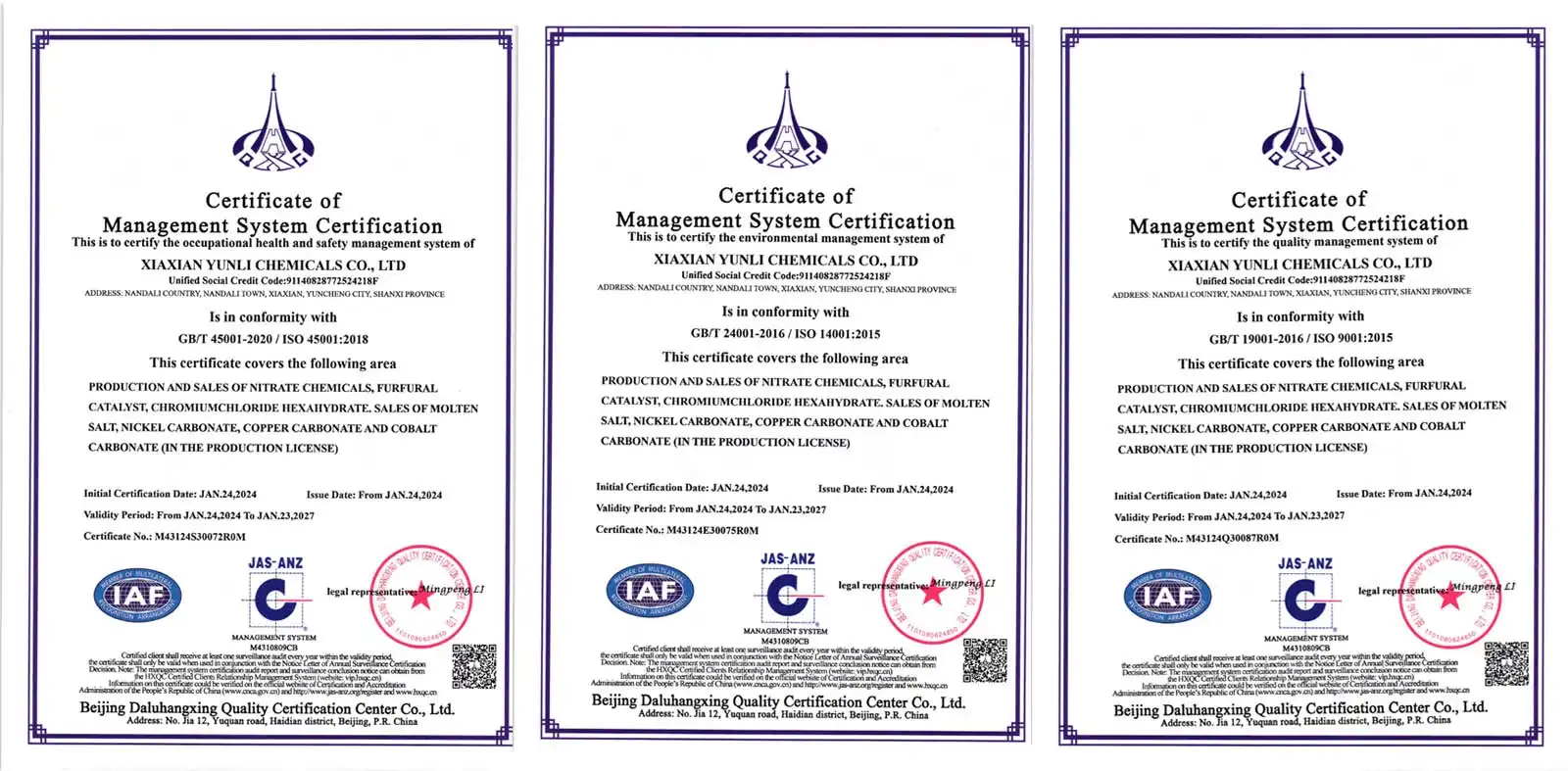
Choosing sellers with the right certifications protects both product quality and compliance with regulations. If a company has ISO 9001 quality management certification, it means they have a method for controlling quality, and if they have ISO 14001 environmental certification, it means they are committed to using safe production practices. REACH compliance is necessary for European markets and requires detailed records of the chemicals' make-up and safety information.
Quality standards should include levels of clarity, limits on impurities, and physical properties that affect how well electroplating works. Some common requirements are:
- Nickel content: 98.5% minimum
- Iron content: ≤30 ppm
- Sodium content: ≤50 ppm
- Moisture content: 35-37% (for hexahydrate)
- Particle size distribution for solid products
Logistics and Storage Management
Keeping things in the right way helps keep their quality and keeps them safe. To keep Nickel Nitrate Hexahydrate from separating and hardening, it needs to be stored in dry places where the temperature can be controlled. To stop a fire, it's important to keep things away from things that don't work together, like chemical substances and reducing agents.
Carrying costs and supply security should be balanced in inventory management methods. The substance is pretty stable, so it's possible to keep a decent amount of it in stock. However, switching methods keep the quality from going down over time. Testing the quality of stored materials on a regular basis makes sure that electroplating works consistently and finds problems before they affect production.
Environmental, Safety, and Toxicity Insights for Responsible Use
To use Nickel Nitrate Hexahydrate safely, you need to know a lot about how it affects health and the world. Following the right safety rules, dealing with trash properly, and following the rules will keep workers safe, reduce damage to the environment, and keep operations running smoothly.
Occupational Health and Safety Requirements
Nickel compounds have different exposure levels set by different regulatory bodies, but in general, workers need to be supervised and controlled at work. An 8-hour time-weighted average of 1 mg/m³ is the highest level of nickel compounds that OSHA allows workers to be exposed to. Wearing safety gear like respirators, chemical-resistant gloves, and eye protection is required when working with the material.
Training classes should cover how to properly handle things, what to do in an emergency, and how to give first aid. Regularly checking on the health of exposed workers helps find possible health problems and makes sure that help is available as soon as it's needed. Monitoring the air in the workplace shows that control methods are working and that regulations are being followed.
Waste Management and Environmental Compliance
Electroplating processes create different types of trash that contain nickel chemicals that need to be properly treated before they can be thrown away. Nickel Nitrate Hexahydrate trash streams can often be handled through nickel recycling systems that are already in place. This lowers the cost of dumping and the damage done to the environment.
Chemical precipitation, ion exchange, and membrane filtering are some ways to treat wastewater that contains nickel. Because nitrate-based systems don't have problems with sulfate or chloride, they can make treatment easier and speed up healing. Nickel that has been recovered can often be used again in the production process, which is good for the cyclical economy.
Regulatory compliance requirements vary a lot from place to place, but they usually include limits on how much garbage can be dumped, controls on air emissions, and rules for managing toxic waste. European REACH rules say that some nickel products need to have a lot of safety information and permission to be used. The U.S. The EPA has rules about how much water can be discharged and how toxic trash must be classified.
Conclusion
Nickel Nitrate Hexahydrate is a unique but useful tool used in modern electroplating processes. It has special benefits for difficult tasks that need high-quality deposits and reliable processes. It works well for high-precision plating where regular nickel salts don't meet the performance standards because it has clean chemistry, good solubility, and good breakdown properties. The higher prices compared to other options need to be carefully considered from an economic point of view, but the overall benefits often make it worth it for important uses. For execution to go well, it's important to choose the right suppliers, follow thorough safety rules, and have trash management systems that meet both legal standards and environmental responsibility goals.
FAQ
In certain electroplating situations, why is nickel nitrate hexahydrate better than nickel sulfate?
In some situations, Nickel Nitrate Hexahydrate is better than nickel sulfate in a number of important ways. The nitrate substance makes layers with a lot less internal stress, which lowers the chance that the coating will fail or the base will become distorted. Its clean breakdown profile gets rid of sulfur pollution, which can damage substrates or deposits and cause them to rust. The nitrate anion's oxidizing property helps even out nucleation and improves deposit shine without the need for extra whitening agents.
How should large amounts of nickel nitrate hexahydrate be kept safely so that the quality doesn't change?
To keep things from dehydrating and caking, bulk storage needs to be kept in climate-controlled spaces with humidity levels below 50%. Temperatures in storage places must stay below 30°C, and there must be enough air flow to keep vapor from building up. Due to its oxidizing qualities, the substance must be kept away from flammable materials and reducing agents. Regular quality testing proves that purity levels are being kept at a high level, and proper product movement stops degradation that comes with age.
What kinds of licenses do nickel nitrate hexahydrate providers need to have?
Some important qualifications are ISO 9001 quality management for constant product quality, ISO 14001 environmental management for environmentally friendly production methods, and REACH compliance for getting into the European market. Other useful certifications are OHSAS 18001 for managing workplace safety and chemical registration standards that are specific to each country. To make sure the relationship works well in the long run, supplier audits should check the company's analysis skills, quality control methods, and expert help resources.
Partner with Yunli Chemical for Premium Nickel Nitrate Hexahydrate Solutions
Yunli Chemical stands as your trusted Nickel Nitrate Hexahydrate manufacturer, delivering consistently high-quality materials that meet the most demanding electroplating specifications. Our advanced production facilities and rigorous quality control systems ensure ultra-low impurity levels with iron content ≤30ppm and sodium content ≤50ppm, backed by comprehensive COA and MSDS documentation. With over 20 years of chemical manufacturing expertise and annual sales exceeding RMB 1 billion, we provide the stability and reliability essential for critical industrial applications. Contact our technical team at wangjuan202301@outlook.com for customized solutions, free samples up to 500 grams, and competitive quotations.
References
1. Smith, J.A., et al. "Comparative Analysis of Nickel Salts in Electroplating Applications: Performance and Environmental Considerations." Journal of Electroplating Technology, Vol. 45, 2023, pp. 112-128.
2. Chen, L.M. and Rodriguez, P.K. "Advanced Nickel Electroplating Techniques for High-Performance Coatings." Industrial Surface Treatment Quarterly, Vol. 18, No. 3, 2022, pp. 45-62.
3. Thompson, R.D. "Safety and Environmental Management of Oxidizing Chemicals in Industrial Applications." Chemical Safety Engineering, Vol. 29, 2023, pp. 78-95.
4. Williams, K.T., et al. "Optimization of Nickel Nitrate-Based Electroplating Bath Chemistry." Electrochemical Processing and Technology, Vol. 34, No. 2, 2022, pp. 201-218.
5. Anderson, M.R. and Lee, S.H. "Supply Chain Risk Management for Specialty Chemical Procurement." Industrial Purchasing Management, Vol. 41, 2023, pp. 156-172.
6. Garcia, A.P. "Regulatory Compliance and Best Practices for Nickel Compound Handling in Manufacturing." Environmental and Occupational Health Review, Vol. 67, No. 4, 2022, pp. 334-351.