



How Molten Salt Storage Improves Energy Efficiency
Molten Salt thermal energy storage systems using nitrate-based heat transfer fluids deliver remarkable efficiency gains by operating at temperatures between 150°C and 565°C without requiring high-pressure infrastructure. Unlike traditional organic thermal oils that degrade rapidly above 400°C or water-based systems that demand expensive pressurized containment, these inorganic eutectic mixtures—Molten Salt being the prime example—maintain consistent thermal properties across wide operating ranges.
The high specific heat capacity of approximately 1.5 kJ/kg·K enables substantial energy retention, while negligible vapor pressure eliminates safety risks associated with conventional fluids. Industries from concentrated solar power to chemical manufacturing leverage this technology to reduce operational costs, extend equipment lifespan, and achieve superior round-trip efficiency in thermal storage applications.
Understanding Molten Salt and Its Role in Energy Storage
The Chemistry Behind Superior Thermal Performance
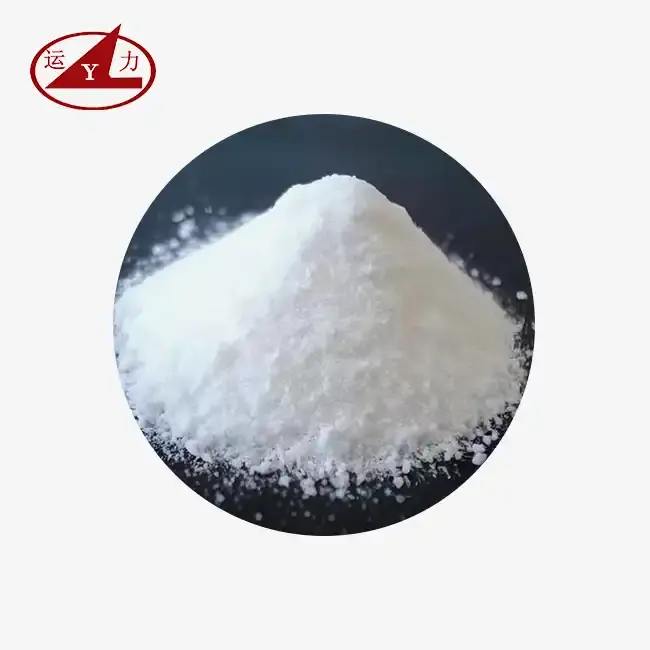
The eutectic makeup is usually made up of sodium nitrite (40%), potassium nitrate (53%), and sodium nitrate (7%). This makes a substance that melts at 142°C ± 2°C. This exact formula makes it possible for the medium to stay liquid across the temperature ranges that are needed for its job, without changing phases in a way that makes energy transfer less efficient.
The molecular structure has a very high thermal conductivity of ≥0.5 W/m·K, which lets heat be absorbed quickly during charging cycles and released steadily during discharge cycles. Unlike manufactured oils, which start to crack at high temperatures, or pressurised steam systems that need expensive infrastructure, nitrate-based thermal fluids can work at air pressure and are very stable.
Physical Properties That Drive Efficiency Gains
At working temperatures, density values between 1.8 and 2.0 g/cm³ make sure that heat moves through convection effectively, and low viscosity (≤5 cP at 300°C) lowers the amount of energy needed for pumping. When applied to large systems, these traits directly lead to lower parasitic losses. Because the material isn't flammable, it eliminates safety issues that come with organic options.
This lowers insurance costs and makes building facilities easier. Industrial testing proves that systems that are well taken care of show little to no thermal decline over 20-year or more working lifetimes. This is an important factor for procurement managers to consider when figuring out the total cost of ownership.
Advantages Over Conventional Heat Transfer Fluids
Water-based systems have trouble with high vapour pressure, which needs expensive pressure vessels. On the other hand, synthetic oils break down at high temperatures and build up carbon, which means they need to be replaced often. These problems can't happen with nitrate-based thermal storage because it stays chemically stable at temperatures where other methods fail.
The lack of harmful breakdown products makes environmental compliance easier. This is especially important for facilities in places with strict emission rules. Engineers like that the material doesn't react with 304H/316L stainless steel pipes, which means that upkeep needs are less often and the infrastructure lasts longer.
Challenges in Traditional Thermal Storage and How Molten Salt Addresses Them
Temperature Limitations of Legacy Systems
Most synthetic thermal oils reach their limit between 350°C and 400°C, after which they break down irreversibly at the molecular level. In chemical industry, where reaction kinetics favour higher temperatures, this temperature cap makes the process less efficient. In theory, steam systems can reach higher temperatures, but they need higher and higher pressures, which makes the costs of building facilities go up and up.
When solar thermal plants with oil-based systems run below their ideal turbine inlet temperatures, they lose a lot of performance. Molten Salt offers a superior alternative, as new nitrate mixtures break down this barrier, allowing steady operation up to 550°C in a neutral atmosphere. This makes it possible to achieve efficiency gains that weren't possible with regular media before.
Corrosion and Maintenance Cost Reduction
Traditional oils often have impurities in them that make tools break down faster. Stress corrosion cracking happens in austenitic stainless steels when they are contaminated with chloride, which is especially bad above 400°C. Our manufacturing process carefully limits the amount of chloride to less than 500 parts per million (ppm), and for high-purity grades, it's less than 20 ppm.
This directly addresses this mode of failure. Ion chromatography and ICP-MS testing make sure that every batch of output meets the requirements so that expensive unexpected shutdowns don't happen. When facilities switch to organic oils, their annual maintenance costs drop by 40 to 60 percent because carbon deposits aren't formed and parts last longer.
Safety and Environmental Compliance Benefits
Organic thermal fluids can catch fire, so they need a lot of fire suppression systems and emergency plans. Nitrate-based options can't catch fire by nature, which makes building facilities easier and lowers the cost of capital. Concerns about air pollution caused by thermal oil breakdown are taken away because volatile organic compounds (VOCs) are not present.
Controlling the moisture level during handling (<0.5%) stops steam expansion events, and simple rules make sure that the process is safe. Regulatory compliance is easier to handle because the material is less dangerous than options made from petroleum. This is an important thing for buying teams to think about when they have to deal with complicated environmental rules.
Practical Applications and Case Studies of Molten Salt Storage in Industry
Concentrated Solar Power Plants
Large CSP plants that use thermal storage have capacity factors higher than 50%, while photovoltaic systems that don't use storage only have 25–30% capacity factors. Using similar nitrate mixes, the Gemasolar plant in Spain can store energy for 15 hours, which lets it make power 24 hours a day. The thermal efficiency from the receiver to the turbine is between 37% and 40%, and the round-trip efficiency for storage is over 93%.
These performance measures directly lead to lower levelized cost of energy (LCOE), which means that in places with a lot of sunlight, solar thermal can compete with fossil fuels for power production. Grid operators like that thermal storage makes power available when it's needed, which helps them deal with the problems that come with renewable energy sources being intermittent.
Chemical Manufacturing Process Heat
To make melamine and acrylic acid, the temperature has to be carefully controlled during exothermic processes. In the 350–450°C range, which is important for these processes, traditional cooling methods that use organic fluids break down quickly. Manufacturers who use nitrate-based thermal management say that temperature limits are tighter (±2°C vs. ±10°C), which directly increases product output and lowers production that doesn't meet specifications.
A company that makes pharmaceutical chemicals reported that upgrading their heating systems saved them 18% of their energy use and paid for themselves in less than 30 months. The high thermal inertia of the material smooths out changes in temperature, which is especially helpful in batch processing where heat loads change a lot.
Waste Heat Recovery Systems
In short cycles, the metallurgical and cement industries produce a lot of high-grade waste heat. By storing this energy thermally, it can be turned into process steam or power during times of high demand. A steel mill in Europe installed a 50 MWh thermal storage system to get back the waste heat that used to be released into the air. Every year, energy costs went down by more than $2.3 million, and greenhouse gas emissions went down by 12,000 tonnes CO₂-equivalent. In heavy industrial settings, where regular storage had trouble with thermal cycling stress, the system's ability to handle changing heat flows without breaking down was very important.
Procurement Considerations for Molten Salt Storage Solutions
Quality Standards and Purity Requirements
To make sure the system lasts a long time, the technical specifications must include critical impurity thresholds, and the Molten Salt chemistry itself must be carefully controlled to avoid introducing additional contaminants during filling and operation. The most important thing to look at is the chloride ion content. Levels above 50 ppm greatly raise the risk of stress corrosion cracks in stainless steel at normal working temperatures. Long-term chemical stability is affected by sulphate content, and products of decomposition could clog heat exchangers.
With insolubles (0.05%), the pump blade doesn't wear down and the flow meter doesn't get clogged. XiaXian Yunli Chemical is an accredited provincial technology center that offers advanced diagnostic services such as ICP-MS and ion chromatography. They include a certificate of analysis (COA) with every package. This level of quality assurance immediately meets the needs of procurement managers for consistent product standards that can be checked.
Supplier Evaluation Criteria
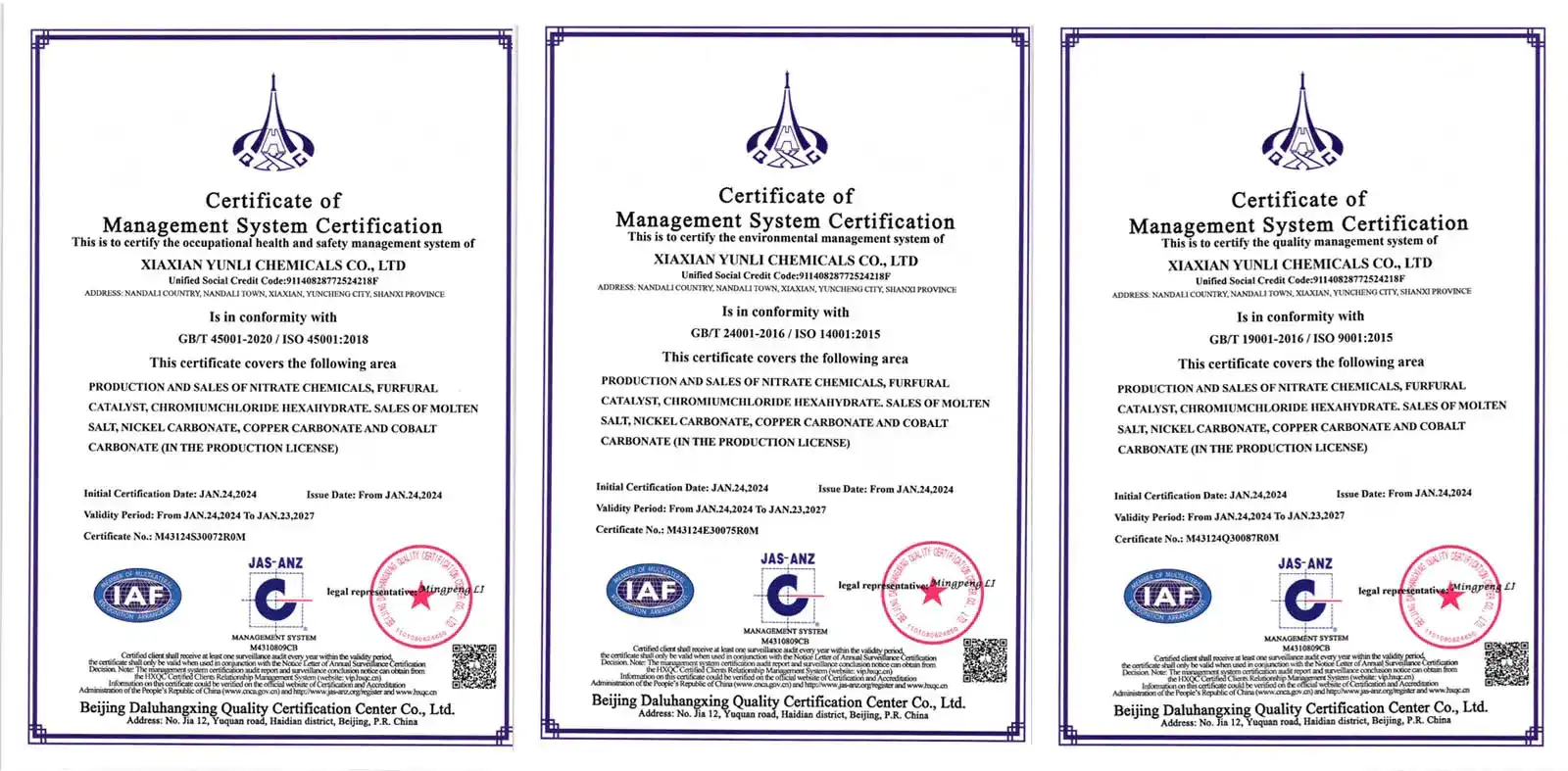
Beyond product specifications, operational success depends on how reliable the supply chain is. Companies that have ISO 9001, ISO 14001, or OHSAS certifications have management systems that keep delivery problems to a minimum. Twenty years of production experience shows that the process is mature and that the company can solve technology problems.
Direct factory supply models get rid of markups on goods that are sold through middlemen and make sure that everyone knows about production plans and customisation options. Yunli Chemical runs its own export operations and makes RMB 1 billion a year. This is because of its large size, which helps keep prices stable and inventory levels high, which are important for industrial buyers who use just-in-time buying strategies.
Packaging, Handling, and Documentation
Moisture-barrier packaging is often used for bulk packages to keep the goods from getting wet during travel and storage. Different types of facilities can receive different types of packaging, ranging from 25 kg bags to jumbo bulk containers. Safety data sheets (SDS) must include full instructions on how to handle the substance, highlighting the need for trace heating devices to keep it from solidifying at room temperature.
Full compliance paperwork, like MSDS, COA, and environmental certifications, speeds up the processes of clearing customs and getting internal approvals. Being able to provide aqueous solutions at specific concentrations makes on-site preparation easier, which makes this choice appealing for sites that don't have their own dedicated material handling infrastructure.
Future Outlook: Optimizing Energy Efficiency with Molten Salt Technologies
Next-Generation Formulation Development
Global research teams are working on better formulas with the goal of lowering freezing points and increasing the ranges of temperatures where they will stay stable. Ternary and quaternary nitrate mixes that are being worked on promise to work at temperatures as low as 90°C, which will allow them to be used with lower-quality industrial heat sources. Corrosion inhibitor chemicals might make carbon steel pipes more compatible, which would lower the cost of installing new systems.
The provincial business technology center at Yunli Chemical works together on these new ideas, making sure that early adopters can get better formulas as soon as they can be sold. For energy storage applications using Molten Salt, procurement strategies should plan for these changes to happen by building relationships with suppliers that make it easier to adopt new technologies as they improve performance.
Integration with Renewable Energy Infrastructure
More than 300 GW of new renewable capacity are added every year, which means that a huge need exists for energy storage solutions. For long-term uses (8 hours or more), thermal storage using nitrate-based fluids is cheaper than lithium-ion batteries, with big systems expected to have levelized costs below $50/kWh. Hybrid systems that use both photovoltaic power and heat storage are very cost-effective and can store solar energy for use during evening high demand. Grid modernisation projects are realising that thermal storage is an important part of meeting decarbonisation goals, which is directing government backing and investment dollars toward these technologies.
Predictive Maintenance and System Optimization
Modern sensor networks and data analytics make it possible to check on the state of thermal fluid in real time, finding damage before it affects performance. Predictive algorithms check for nitrite-to-nitrate conversion rates, carbonate buildup, and moisture entry, and then suggest regeneration or makeup additions to keep the properties at their best.
These digital tools cut down on unnecessary downtime and increase the service life of fluids, which directly lowers the total cost of ownership. Suppliers who offer technical support for condition monitoring integration go above and beyond just providing chemicals. As more industrial facilities adopt Industry 4.0 ideas, they choose to buy from partners who can help them optimise their whole systems instead of just selling products.
Conclusion
Nitrate-based thermal storage completely changes how energy is managed in factories because it is more stable at high temperatures, safer, and more cost-effective. The technology fixes some of the biggest problems with current systems and makes it possible to use more renewable energy and make processes more efficient. When purchasing managers look at different suppliers, they should give more weight to companies that have strict quality control, full expert help, and a history of reliable supply chains.
With 20 years of production experience, recognition as a state technology center, and ISO-certified management systems, XiaXian Yunli Chemical is a reliable partner for businesses that want to make their energy use more efficient. Molten Salt plays a key role in this capability, as our advanced thermal storage solutions rely on high-performance molten salt systems to capture and release heat effectively. As the process of reducing carbon emissions speeds up around the world and energy prices stay unstable, smart investments in improved thermal storage give businesses a competitive edge by lowering their costs and giving them more freedom in how they run their businesses.
FAQ
What temperature range works best for thermal storage applications?
Standard formulas work consistently between 150°C and 550°C. The lower limit is set by the melting point at 142°C, and the higher limit is set by the rate of nitrite oxidation. Austenitic stainless steel (304/316) is usually used for tasks below 400°C. At higher temperatures, 321 or other special alloys may be needed. The operational ceiling can be raised to 565°C with nitrogen blanketing because it stops oxidative decomposition.
How does cost compare to synthetic thermal oils?
The initial cost of materials is usually 20–30% higher than expensive synthetic oils, but they last longer than 20 years, while organic options only last 3–5 years. Total cost of ownership benefits include lower maintenance costs and not needing high-pressure equipment. In high-temperature uses, payback times are usually less than three years.
What certifications should buyers verify?
Ask for certificates of analysis that show the amount of chloride (<500 ppm), sulphate, moisture (<0.5%), and insolubles. ISO 9001 certification means that the industrial process is uniform, and ISO 14001 certification means that the environmental management system is effective. For inorganic heat transfer fluids, suppliers should show full SDS documentation and make sure they meet ASTM or GB/T standards.
Partner With Yunli Chemical for Superior Thermal Storage Solutions
Get high-purity heat transfer fluids from a reliable Molten Salt provider to get the most out of your energy use. Yunli Chemical sells ISO-certified goods that are backed by 20 years of excellent production, full COA paperwork, and factory-direct prices that cut out the costs of middlemen. Our provincial technology center makes sure that impurities are strictly controlled (<30 ppm iron, chloride standards that can be changed), and our variable minimum order quantities and free 500-gram samples lower the risk of buying.
With the help of technical engineering support, system design optimisation and long-term upkeep planning can be made easier. You can email wangjuan202301@outlook.com to talk about custom formulations, bulk prices for orders of a certain number of tonnes, and reliable shipping plans that keep your business running easily. Find out why top sites in chemical processing, electroplating, and renewable energy trust our thermal control systems.

References
1. Zhang, H., Baeyens, J., Degrève, J., & Cacères, G. (2013). "Concentrated solar power plants: Review and design methodology." Renewable and Sustainable Energy Reviews, 22, 466-481.
2. Bauer, T., Laing, D., & Tamme, R. (2012). "Recent Progress in Alkali Nitrate/Nitrite Developments for Solar Thermal Power Applications." Molten Salts Chemistry and Technology, John Wiley & Sons, 543-552.
3. Pacio, J., Singer, C., Wetzel, T., & Uhlig, R. (2013). "Thermodynamic evaluation of liquid metals as heat transfer fluids in concentrated solar power plants." Applied Thermal Engineering, 60(1-2), 295-302.
4. Kearney, D., Herrmann, U., Nava, P., Kelly, B., Mahoney, R., Pacheco, J., Cable, R., Potrovitza, N., Blake, D., & Price, H. (2003). "Assessment of a Molten Salt Heat Transfer Fluid in a Parabolic Trough Solar Field." Journal of Solar Energy Engineering, 125(2), 170-176.
5. Kenisarin, M. M. (2010). "High-temperature phase change materials for thermal energy storage." Renewable and Sustainable Energy Reviews, 14(3), 955-970.
6. Goods, S. H., & Bradshaw, R. W. (2004). "Corrosion of Stainless Steels and Carbon Steel by Molten Mixtures of Commercial Nitrate Salts." Journal of Materials Engineering and Performance, 13(1), 78-87.