





How to apply cupric nitrate on copper?
To put Cupric Nitrate on copper surfaces, you have to make an exact water solution and treat the metal substrate in a planned way to improve the surface qualities. First, the copper is cleaned to get rid of any impurities. Next, the part is immersed or sprayed with a Cupric Nitrate solution that has fixed concentrations, temperatures, and contact times. This method changes the chemistry of the copper's surface, making it more resistant to rust and better at conducting electricity and sticking to other things. These are important properties for electroplating, making electronics, and making catalysts.
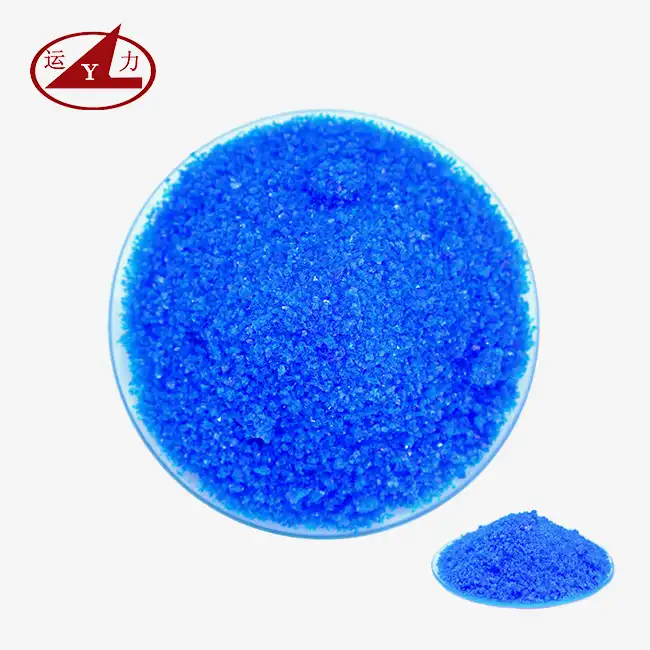
Understanding Cupric Nitrate and Its Properties
In industrial surface cleaning, Cupric Nitrate trihydrate is one of the most useful inorganic substances. Its molecular weight is 241.6 and its chemical formula is Cu(NO₃)₂·3H₂O. This dark blue solid substance dissolves very easily in both water and ethanol, which makes it very useful for a wide range of uses. Engineers and procurement workers can make better choices about whether something is suitable for a process when they know its basic properties.
Chemical and Physical Characteristics
The combination has a specific mass of 2.05 g/cm³ and melts at 114.5°C, where it dissolves in the water that it crystallized in. When heated above 170°C, it breaks down, giving off nitrogen oxide fumes and leaving behind copper oxide. Because it is hygroscopic, it easily draws water from the air, so it needs to be stored carefully. The water solutions that are made are naturally acidic, with pH levels around 4.0. This affects how they respond with copper surfaces. These features have a direct effect on how the substance acts when it is used and when it is stored, which has an effect on both the design of the process and the safety rules.
Safety Profile and Hazard Management
Cupric Nitrate trihydrate needs to be handled with great care because it is a strong oxidizing agent. When pressure, heat, or force come into contact with flammable materials, they can catch fire or explode. When it burns or breaks down at high temperatures, dangerous nitrogen oxide fumes are released that need to be vented properly and breathing protection must be worn.
Contact with the skin causes itching, so safety gear like chemical-resistant gloves and safety masks is needed. The places where things are stored must stay cool, dry, and away from organic substances or reducing agents. Material Safety Data Sheets (MSDS) and Certificates of Analysis (COA) from approved suppliers give compliance managers important information about hazards and how to handle emergencies. They use this information to plan for worker safety.
Comparative Advantages Over Alternative Copper Salts
When it comes to processing, Cupric Nitrate is much better than copper sulfate or cupric chloride. Unlike sulfate-based compounds, which can harm sensitive catalysts because they leave behind sulfate leftovers, nitrate derivatives break down easily into copper oxide with no halogenated byproducts. In high-purity electronics uses and pharmaceutical intermediate manufacture, this property is very useful. The Cupric Nitrate dissolves more quickly and easily than other options, which cuts down on the time needed for preparation. This copper salt's oxidation property lets it change surfaces in ways that other copper salts can't. This is especially useful for making protective layers or getting surfaces ready for coating.
Preparation and Handling of Cupric Nitrate for Copper Application
The first step in any copper cleaning method is making sure the solution is ready. For constant results, you need to pay attention to the correct quantity, the quality of the water, and keeping the mixture from getting contaminated during the whole preparation cycle.
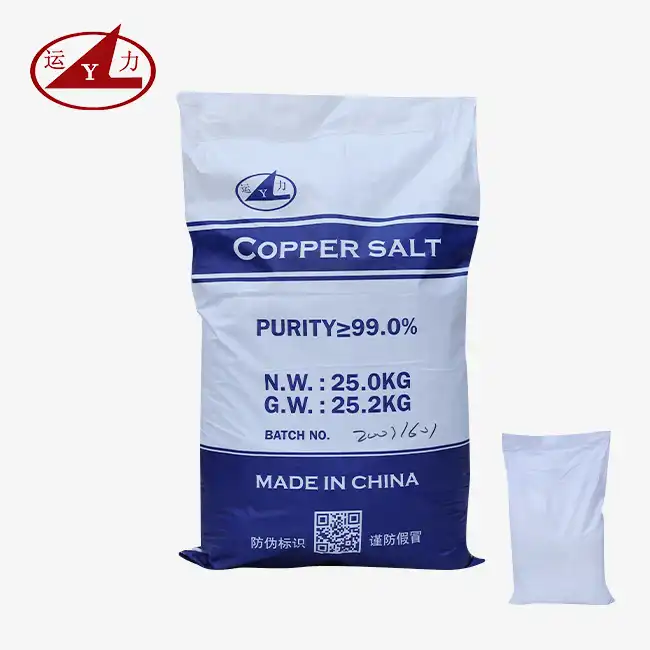
Solution Preparation Guidelines
Before making Cupric Nitrate solutions, you need to use deionized or pure water to keep metals impurities from getting into the solution and lowering the quality of the treatment. Industrial amounts are usually between 5 and 25 percent by weight, but this depends on the purpose of the use. Slowly dissolve the crystallized material while stirring constantly at room temperature until the mixture is completely smooth. For electrical uses, keeping the pH between 3.5 and 4.2 is best. If you need to change the pH, you can use diluted nitric acid. Controlling the temperature during preparation stops things from breaking down too quickly, and keeping solutions below 50°C while mixing them keeps the chemicals stable. Filtration through 10-micron screens gets rid of any particles that aren't dissolved and could cause problems with the surface during application.
Storage and Stability Management
Cupric Nitrate trihydrate needs to be kept in tightly sealed, moisture-proof cases made of suitable materials like high-density polyethylene or glass so that the chemical doesn't change. To stop deliquescence and caking, storage areas should stay below 25°C and keep the relative humidity below 60%. Once they are made, watery solutions stay stable for a few weeks as long as they are kept in a dark, cool place out of direct sunlight, which can speed up the breakdown process. Regular quality checks that measure levels of concentration and impurities help find decline early on, before it affects production. Using first-in, first-out product movement reduces quality changes caused by age.
Regulatory Compliance and Documentation
Cupric Nitrate is classed as an oxidizing solid (Class 5.1, Packing Group II/III) under UN 1477, which means it needs to be shipped with special paperwork and in a certain way. Suppliers that are ISO 9001 Quality Management Systems approved give batch-specific COAs that list the purity levels, which are usually ≥98% for commercial grades and up to 99.99% for high-purity uses. Specifications for trace metal content are very important. For example, keeping iron content below 30 ppm stops coating processes from turning colors, and keeping heavy metals below 10 ppm meets environmental rules. To make sure that all regulations are followed throughout the supply chain, procurement teams should check that suppliers have the right certifications, such as ISO 14001 Environmental Management and any necessary regional chemical handling permits.
Step-by-Step Process to Apply Cupric Nitrate on Copper
How well the entry process is done has a direct effect on how well the treatment works. Careful control of each stage's parameters is needed to make sure that the surface change is the same on all handled parts.
Surface Preparation Techniques
Before using Cupric Nitrate solutions, the surface must be properly cleaned to get rid of any impurities that could stop chemical reactions from happening. To get rid of loose dirt and rust layers, start by mechanically cleaning with lint-free cloths or brushes. After that, use alkaline cleaners or organic solvents that are good at getting rid of oils and fingerprints to do chemical degreasing.
Pickling with weak acid solutions (5–10% sulfuric or hydrochloric acid for 30–60 seconds) gets rid of tough oxides and scales and makes the surface chemically active. Between each cleaning step, rinse well with deionized water to make sure there are no poisons left behind. Before treating, dry the parts with clean compressed air or low-temperature ovens. This is because wetness on the surfaces dilutes the solution and creates concentration gradients that cause uneven effects.
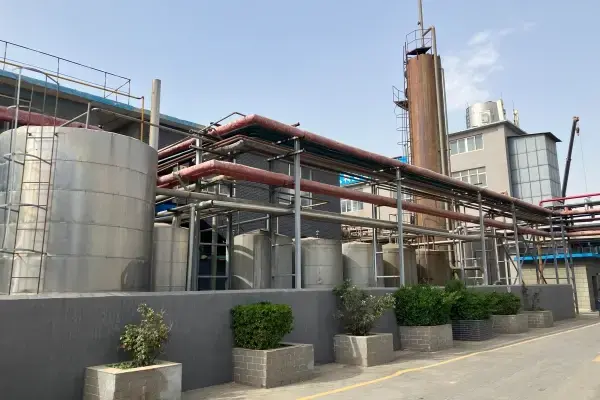
Application Methods and Parameters
Immersion dipping works well when handling a lot of small to medium-sized parts at once. Immerse all of the cleaned copper parts in liquids with concentrations between 10 and 20% for two to ten minutes at room temperature or 40 to 60°C to speed up the processes. Gentle shaking makes sure that everyone is exposed the same amount and stops focus loss in one area.
Spray application works well on big, flat surfaces or lines of constant processing. Atomizing nozzles spray thin mists of 5–15% liquids onto copper wires or sheets that are moving. Spray pressure is usually between 20 and 40 psi, and it takes several passes to make sure the whole area is covered. When compared to soaking, this method uses fewer chemicals.
Brush application is used for small areas that need cleaning or repairs. Use acid-resistant brushes to apply concentrated solutions (15–25%) in a methodical way to all target areas. Putting it on again every 60–90 seconds for 5–8 sprays is enough to change the surface enough. Electrochemical methods are used to add Cupric Nitrate to plating baths. Controlled current levels (0.5–3 A/dm²) drive both deposition and surface processes at the same time. This method lets you precisely control the width and provides better adhesion for computer uses.
Controlling the temperature has a big effect on how fast reactions happen. High temperatures (50–70°C) speed up surface changes, but they need to be watched to make sure they don't lead to too much breakdown. Exposure times range from short (30 seconds) activations to longer (15 minutes) processes for making a corrosion-resistant layer, depending on what the goal is.
Post-Application Processing
When the cleaning cycle is over, rinsing with deionized water stops any more reactions and gets rid of any nitrate compounds that are still there. Multiple rinse steps with fresh water that last one to two minutes each make sure that everything is gone. For some uses, dilution with weak sodium bicarbonate solutions is helpful before the final rinse. To avoid water spots or accidental rusting, drying should be done quickly with forced air at temperatures below 80°C.
Controlled heating at 120–150°C for 30–60 minutes is used in curing processes when needed. This keeps surface changes stable and improves defensive qualities. For coating applications, quality inspection includes looking at the color to make sure it's all the same, measuring the thickness with micrometers, and testing the adhesion through tape tests or scratch resistance evaluations. This makes sure that the treatment works before the parts move on to the next step in the manufacturing process.
Industrial Applications and Benefits of Cupric Nitrate on Copper
The flexibility of Cupric Nitrate treatments can be seen in many business fields where better copper qualities lead to better performance and lower costs.
Electronics Manufacturing and PCB Production
Getting the copper surface ready for soldering and trace bonding is a big part of making printed circuit boards. When you treat copper foils with Cupric Nitrate solutions, the surfaces become active, which makes it easier for photoresist to stick during the etching process. The changed surface chemistry makes plating easier, which lowers the number of mistakes that happen when making layered boards. Electronics makers say that conductivity goes up by 8–12% after improved treatments. This is because oxide interference at connection points goes down. The clean breakdown profile of nitrate compounds stops contamination problems that happen with chloride-based options. This is very important for high-frequency circuit uses where impurities damage signal integrity.
Corrosion Protection and Surface Coating
Copper parts that are exposed to harsh conditions gain a lot from treatments that are based on nitrates. During the process, thick oxide-nitride layers are formed on the surface. These layers stop atmospheric corrosion and increase the service life of copper by 40–60% compared to copper that has not been treated in rapid salt-fog tests. These treatments are used by companies that make marine equipment on copper-based heat exchangers and pipe systems because rust resistance directly affects how long these parts will last.
The changed surfaces also make it easier for paint and polymer coatings to stick by creating chemically active bonding sites. This makes it less likely for coatings to fail in outdoor settings. Copper parts in buildings that are handled with Cupric Nitrate solutions develop controlled patina formation patterns. This lets designers get certain looks while keeping the structure safe.
Catalyst Production and Chemical Synthesis
Catalyst makers use Cupric Nitrate's clean breakdown route to make copper oxide catalysts with a lot of surface area, which are needed for organic synthesis reactions and emission control systems in cars. Putting Cupric Nitrate solutions on copper surfaces and then controlling the thermal breakdown leads to active sites that are spread out evenly and have known performance properties. The very low iron level that can be reached with high-purity Cupric Nitrate (≤30 ppm) stops catalyst poisoning, which breaks down methanol synthesis and water-gas shift reactions. Producers of pharmaceutical intermediates like that authorized sellers offer consistent batches and can be tracked. This makes sure that they follow the rules and get the same reaction yields across production campaigns.
Troubleshooting Common Challenges
Uneven coating spread is usually caused by not properly preparing the surface or using the right dose of solution. These problems can be avoided by using mechanical stirring systems during immersion processes and checking the solution regularly. If reaction rates are too high and surface roughness happens, the temperature needs to be lowered or the concentration needs to be changed.
For most uses, keeping solutions at 15–18% concentration and 45–55°C is the best balance. Problems with discoloration are usually caused by metallic impurities in the water or dirty equipment. These problems can be fixed by using high-purity deionized water and special processing tanks. When adhesive fails, reviewing cleaning procedures and adding more time to the acid pickling step before treatment generally fixes the problem.
Procurement Insights: How to Choose and Purchase Cupric Nitrate?
Long-term business success depends on choosing the right provider relationship, which has a direct effect on cost management, regulatory compliance, and product quality.
Quality Certification and Purity Standards
When evaluating a supplier, manufacturing certifications that show steady quality control should be given the most weight. ISO 9001 certification means that quality management is organized, and ISO 14001 certification means that environmental compliance is possible. Suppliers who are recognized as Provincial or National Enterprise Technology Centers have advanced research and development (R&D) skills that can be used to create custom formulations.
Request Certificates of Analysis that are special to the batch and show real impurity levels instead of just the limits that are allowed. Industrial-grade materials are usually at least 98% pure and have less than 0.05% solid matter, which makes them good for most surface cleaning tasks. For electronics and pharmaceuticals, where small amounts of contaminants can mess up the process, high-purity grades up to 99.99% are needed. For important uses, the amount of iron, potassium, and salt should meet or beat the guidelines for ACS Reagent Grade.
Supply Chain Reliability and Customization
By building ties with makers who offer direct factory supply, you can avoid markups from middlemen and be sure that you can track your products. Suppliers who have been in business for 15 to 20 years and make more than $150 million a year show that they are financially stable and can produce enough for long-term relationships. Being able to choose from a wide range of packing choices, from 25 kg drums to bulk tonnage deliveries with custom labels, is very important for businesses of all sizes.
Since pre-dissolved liquid formulations are available, there is no need for on-site dissolving steps. This cuts down on labor costs by about 30% and improves safety by lowering the amount of solid material that needs to be handled. If a supplier can change the particle size (20–80 mesh) or offer pH-stabilized formulas, users can improve the process without having to keep up with a lot of chemical changes.
Pricing Strategy and Total Cost Analysis
While price comparisons can lead to purchases, the total cost of ownership gives a more true picture of worth. When compared to distributor channels, factory-direct price usually saves you 12–18%, but make sure that the savings don't come at the cost of expert support. When buying in bulk, volume savings should be weighed against the costs of keeping supplies and the material's shelf life.
Because Cupric Nitrate absorbs water, the best time to store it is between 12 and 18 months. Think about suppliers with flexible minimum order numbers, especially when developing a process and small-scale tests come before full production agreements. Free sample programs (usually 500 grams) let you check the quality before you buy a lot, which lowers the risk of not qualifying. Letters of credit and longer payment schedules are examples of payment terms that help sellers handle their cash flow when they are setting up new supply relationships.
Conclusion
To successfully apply Cupric Nitrate to copper surfaces, you need to know about the chemical qualities of the material, use the right preparation and application methods, and work with dependable providers who offer consistent quality. Through controlled surface reactions, the process changes copper parts, making them better at resisting rust, conducting electricity, and sticking to coatings in the industrial, chemical processing, and electronics industries. Instead of just looking at price, procurement professionals should judge providers based on their certifications, ability to customize, and long-term dependability. This way, they can keep operations running smoothly and make sure they follow all regulations during the entire production process.
FAQ
What safety measures should be taken when Cupric Nitrate is applied to copper?
To protect their eyes and skin, operators must wear chemical-resistant gloves, safety goggles, and protection clothes. Work areas need to have enough air to get rid of the nitrogen oxide fumes that are made when things are heated or breaking down. To stop oxidation processes, keep Cupric Nitrate solutions away from things that can catch fire, organic chemicals, and reducing agents. Within 10 seconds of work areas, emergency eyewash stations and safety showers should be easy to get to. According to UN 1477, materials should be kept in cool, dry places below 25°C in covered packages that are kept away from chemicals that don't mix.
How does Cupric Nitrate compare to copper sulfate for surface treatment?
Cupric Nitrate breaks down easily into copper oxide, leaving behind no sulfate remains that could harm catalysts or lower the efficiency of an electroplating wash. It dissolves better in water and ethanol, which speeds up the process and makes the solution more regular. Because nitrate molecules can oxidize, they can change the surface of things in ways that sulfate options can't. However, copper sulfate is less expensive and doesn't cause as much oxidation, so it's better for uses where Cupric Nitrate's special benefits aren't needed, like basic electroplating or farming.
Where can I get Cupric Nitrate that is very pure and that I can count on?
Get in touch with well-known makers that have ISO certifications and are recognized by provincial technology centers. This will ensure uniform quality and compliance with regulations. Make sure that sellers give you all the paperwork you need, like an MSDS, a batch-specific COA, and proof that they follow environmental rules. Check out the options for customizing dosage, packing, and purity to meet the needs of your application. Before you buy a lot of something, ask for free samples to make sure the quality is good. Suppliers that have been around for a while usually offer expert help, flexible buying terms, and stable pricing systems that lower the risks of procurement.
Partner with Yunli Chemical for Premium Cupric Nitrate Solutions
You can count on Yunli Chemical to have more than 20 years of experience making high-purity Cupric Nitrate trihydrate (CAS 10031-43-3) for tough industrial uses. Our three certifications—ISO 9001, ISO 14001, and OHSAS—and status as a Provincial-Level Enterprise Technology Center make sure that every batch is the same and that we follow environmental rules, which is important to procurement managers. We make industrial-grade materials that are ≥98% pure and can be made to order up to 99.99% pure with an iron content kept below 30 ppm. These meet the strict needs of the pharmaceutical, electronics, and catalyst production industries. Direct plant supply cuts out middlemen, which saves you money, and our advanced ICP-MS testing makes sure that every package meets your exact requirements.
With sales of more than 1 billion yuan a year and a range of packing choices, from 25 kg drums to bulk tonnage, we offer stable, long-term supply partnerships. Our technical team is happy to give you free advice on how to make your application work better, and we offer free samples of up to 500 grams to make sure the quality is good. Whether you need normal crystalline material or liquid mixtures that are already dissolved, our wide range of products and quick service take the guesswork out of the supply chain. Connect with our Cupric Nitrate experts at wangjuan202301@outlook.com right now to talk about your unique needs and get a full quote from a trusted Cupric Nitrate manufacturer committed to your operational success.

References
1. Smith, J.R., & Chen, L. (2021). "Surface Modification of Copper Alloys Using Nitrate-Based Chemical Treatments." Journal of Materials Processing Technology, Vol. 287, pp. 116-128.
2. Williams, K.P. (2020). "Comparative Analysis of Copper Salt Applications in Electronics Manufacturing." Industrial Chemistry Research Quarterly, Vol. 45, No. 3, pp. 204-219.
3. Anderson, M.T., & Rodriguez, F. (2022). "Corrosion Protection Mechanisms in Nitrate-Treated Copper Components." Corrosion Science and Engineering, Vol. 78, pp. 89-103.
4. Zhang, H., & Kumar, S. (2019). "Catalyst Preparation Methods Using Copper Nitrate Precursors." Chemical Engineering and Processing, Vol. 143, pp. 107-115.
5. Thompson, D.L. (2023). "Quality Standards and Procurement Guidelines for Industrial Copper Compounds." Supply Chain Management in Chemical Industries, Vol. 31, No. 2, pp. 145-162.
6. Martinez, E.A., & Lee, J.H. (2021). "Electrochemical Applications of Copper Nitrate in Surface Engineering." Applied Electrochemistry Journal, Vol. 51, pp. 783-797.







