


How to dispose of copper nitrate?
Copper Nitrate needs to be thrown away carefully, taking into account its chemical traits, environmental laws, and safety rules at work. Chemical neutralization with alkaline solutions like sodium carbonate or calcium hydroxide is the most reliable method. This changes the acidic oxidizing compound into stable copper hydroxide or carbonate precipitates that can be filtered, dried, and handled safely by licensed hazardous waste contractors. This method keeps the surroundings as clean as possible while still meeting EPA and OSHA standards, which is very important for industry sites that have to deal with catalyst waste, electroplating residues, or lab quantities.
Introduction
Copper Nitrate Trihydrate (Cu(NO₃)₂·3H₂O, CAS 10031-43-3) operations face a big problem that goes beyond getting the material and using it: how to properly handle its end of life. Whether you're in charge of making catalysts, treating metal surfaces, or mixing fertilizer, you need to know how to properly get rid of extra solutions, contaminated materials, and old stock. This dark blue solid oxidizer can be harmful to the environment, and if you don't handle it properly, your company could face fines, shutdowns, and damage to its image.
More and more, purchasing managers and technical experts are realizing that there's more to choosing providers than just comparing prices per kilogram. Knowing the standards for disposal ahead of time helps you figure out the total cost of ownership, check how well a seller can help, and create safer processes. This book talks about the science, rules, and useful techniques that business buyers need to handle Copper Nitrate waste products correctly and legally in all North American areas.
Understanding Copper Nitrate: Properties and Risks
Chemical Composition and Structure
There is one copper ion linked with two nitrate groups and three water molecules in Copper Nitrate Trihydrate. Its molecular weight is 241.6 g/mol. The amount of water in this trihydrate form is different from that of anhydrous or hemipentahydrate forms, which changes how well it works in applications and how much it costs to get rid of. It breaks down into Cu²⁺ and NO₃⁻ ions when it dissolves, making acidic solutions with a pH of about 4.0 that need to be neutralized before they can be discharged.
Physical and Chemical Characteristics
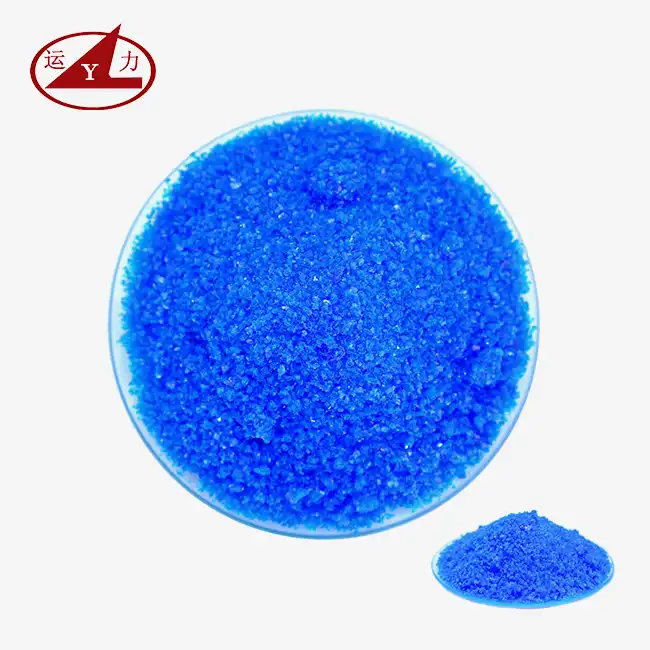
The combination is made up of dark blue columnar crystals that have a mass of 2.05 g/cm³. It melts at 114.5°C and breaks down above 170°C. It dissolves easily in water (137.8 g/100 mL at 0°C) and ethanol, which makes it useful for mixing evenly. However, this trait also makes it harder to contain spills. Because it is deliquescent, it soaks up water from the air until it dissolves. This makes it hard to store and makes it hard to plan how to get rid of it when packages get damaged in the warehouse.
Primary Hazards and Environmental Impact
Three major risks determine the importance of removal. As a strong oxidizer in UN 1477 (Class 5.1), it speeds up combustion when it comes into touch with organic materials, wood boards, or some types of packing. When it breaks down or burns, it gives off nitrogen dioxide gas, a poisonous reddish-brown mist that makes the air more acidic and hurts your lungs. The copper part is harmful to water, and the amount that can be released is limited in parts per million instead of grams per liter. Contact with the skin causes irritation, and long-term exposure without the right PPE can cause eczema in people who handle the substance.
Regulatory Frameworks Governing Disposal
When amounts are higher than the limits set by the EPA, Copper Nitrate trash is put into RCRA hazardous waste codes (usually D001 for ignitability due to oxidizing properties). Facilities that make more than 100 kg of waste per month must register as Small Quantity Generators, keep records, and use approved disposal facilities. OSHA requires that all people who work with the material have access to full Safety Data Sheets (MSDS). In the European Union, REACH registration rules include paperwork about how to get rid of chemicals. In some states, like California, Proposition 65 requires more detailed reports of copper compounds that get into wastewater systems.
Common Challenges in Disposing of Copper Nitrate
Why Improper Disposal Creates Severe Consequences
It might be easy to pour leftover solutions down drains, but this is against the Clean Water Act because city treatment plants aren't made to handle large amounts of reactive salts or heavy metals. Copper ions stick to organic matter in waste, which makes it hard to get rid of sludge further downstream. At the same time, nitrate loading makes received waters more eutrophic. Regulatory agencies keep a close eye on discharge licenses. Violators can be fined between $5,000 and $50,000 per event, and they often have to pay more than $60,000 to fix the problem.
Limitations of Conventional Disposal Methods
Normal services that pick up dangerous waste charge extra for oxidizers and often need separate records from other chemical wastes. Small businesses have a hard time meeting the minimum pickup numbers, so empty drums pile up in storage areas where humidity makes the contents melt and the containers rust. Incineration plants will burn Copper Nitrate, but it will cost more because they have to scrub it for nitrogen gas. Some facilities try to neutralize on-site without keeping an eye on the pH or treating the precipitates properly, which leads to extra waste streams that are still not in line with the rules.
Typical Waste Streams and Operational Pain Points
When catalysts are made, they leave behind used impregnation baths that are 10–30% Copper Nitrate mixed with fine support material particles that make sifting harder. Electroplating lines make washing waters that need to be treated before they can get to the holding tanks. These waters have amounts of 100 to 1000 ppm. Research labs collect small cases of old reagent-grade materials that don't count as hazardous trash on their own but need to be properly gathered and documented as a whole. Different types of trash need different ways of being treated, but many buying teams don't have the technical know-how to ask for quotes on disposal without specifying the right treatment methods.
Effective Methods to Dispose of Copper Nitrate
Chemical Neutralization and Precipitation
Controlled pH changes with sodium carbonate (Na₂CO₃) or calcium hydroxide (Ca(OH)₂) are the most common way used in industry. Copper ions are changed into solid copper carbonate or copper hydroxide precipitates by slowly adding an alkaline solution while keeping an eye on the pH. For this process to work, the pH must stay between 8 and 10 so that the solids don't form hydroxide complexes that can't be dissolved. When carbonate is used, the reaction gives off heat and carbon dioxide, so the rate of adding must stay below 100 mL/minute per liter of waste to keep foaming and splashing from happening.
After 30 to 60 minutes of settling, the workers pour off the clear liquid, test it to make sure the copper levels are below the 1 ppm discharge limits, and filter the precipitate using a pressure filter or filter press. Even though the copper-rich sludge isn't dissolving anymore, it still needs to be thrown away as usual because it contains heavy metals. Keeping records of pH graphs, copper levels before and after treatment, and precipitate weights is what officials look for during inspections.
Dilution Protocols and Industrial Treatment Options
When a facility already has wastewater treatment equipment, it may use dilution techniques to get the required release concentrations. These involve mixing small amounts of Copper Nitrate waste into large streams of process water. This method needs to be watched all the time and could lead to violations of the permit if upstream batch flows are too high. More advanced businesses use special chemical reduction systems that use sodium metabisulfite or ferrous sulfate to turn copper into metal through electrowinning. These systems restore copper cathodes that are 99% pure or more, and they make up for the cost of the process by selling the scrap metal.
Third-party treatment companies are another option. They pick up drummed waste and handle it at central sites that have neutralization tanks, metal recovery systems, and the right ways to get rid of residue. Prices range from about $2 to $8 per kilogram, based on the type of danger, concentration, and amount. When you compare quotes, you need to know if the prices include services like delivery, manifests, and certificates of destruction, which have a big impact on the total final cost.
Recycling Potentials and Environmentally Responsible Routes
Forward-thinking chemical companies now take back leftover materials to fix them up and sell them again. This is especially true for high-purity grades, where recrystallization brings them back into line with specifications. Certain processors can sometimes reuse used catalysts that contain Copper Nitrate. They remove copper values, clean the solution, and re-crystallize new product. Agricultural operations that use copper micronutrient fertilizers may accept weakened solutions that meet their application requirements. This turns trash into a soil amendment product, but they need proof that the solution doesn't contain any banned contaminants.
The best way to make sure you're following the rules is to work with approved trash management companies that have EPA ID numbers and state permits. These companies offer recording from birth to death, responsibility transfer through signed manifests, and certificates of disposal or recycling that meet audit standards. Check that the cleaning methods the providers use are in line with the Resource Conservation and Recovery Act and that they have enough pollution liability insurance to protect your business from claims of past poisoning.
Choosing the Right Copper Nitrate Supplier for Safe Handling and Disposal Support
Product Quality Factors Affecting Waste Generation
Choosing a supplier has a direct effect on the costs of removal. Copper Nitrate Trihydrate that is very pure and has an iron level below 30 parts per million makes waste from off-spec amounts less often. Because Yunli Chemical can customize purity levels up to 99.99%, catalyst makers have fewer production rejects that need to be thrown away. Similarly, using airtight containers with desiccants for moisture control stops the deliquescence that turns solid products into solution trash that needs to be treated right away.
Particle size accuracy is important for tasks like mixing fertilizer, where small powders mix evenly but big crystals might need more work. Material that falls within the 20–80 mesh levels lowers the amount of grinding dust and rejected batches. Maintaining pH levels between 3.5 and 4.2 in pH-adjusted recipes stops the pH shock problems that happen when the acidity of raw materials changes from batch to batch, which stops problems with wastewater treatment.
Comprehensive Support Services
Leading providers offer more than just basic MSDS sheets when it comes to technical paperwork. Detailed handling guides talk about the right amount of air for keeping, the materials that can be used for containers, and how to keep oxidizers and organics from coming into touch with each other. Giving your industry-specific disposal instructions, like for catalyst preparation, metal finishing, or farming formulation, can help operations teams come up with waste management plans that work for each site. Some companies offer programs to take back used materials, especially for high-value formulas where the economics of recycling make reverse logistics worth it.
Yunli Chemical has been working with nitrate chemistry for 20 years, so we can help our customers reduce waste by using the right amount, storing it properly, and managing its shelf life. Our ISO 14001 Environmental Management System approval shows that we care about the earth throughout the whole lifecycle of our products. When procurement managers email us at wangjuan202301@outlook.com, they can talk to application engineers who know about the problems with dumping and can suggest recipes that reduce the amount of waste that needs to be thrown away.
Packaging and Delivery Considerations
Flexible package choices keep people from buying too much, which leads to stock that goes bad. When suppliers give both 25 kg bags and 500 kg drums, smaller businesses can match the amount they buy to how much they use. Custom labels with dates of manufacture, retesting, and destruction help warehouse workers use the first-in, first-out process. Liquid formulas get rid of the need for on-site dissolving steps that waste rinse water. Instead, solutions that are already dissolved at the right concentrations are sent directly to process tanks and can be injected.
Reliable shipping plans are kept up by having enough inventory and transportation tools. This stops the rush orders that leave opened containers sitting around half-used. Yunli Chemical has RMB 300 million in fixed assets and has been named a state technology center, which ensures that production stays steady. The company's factory-direct export business also cuts out delays caused by middlemen. Because of these organizational skills, customers can count on a steady supply, which helps them plan their usage and keep waste to a minimum.
Best Practices and Compliance Tips for Procurement and Engineering Teams
Establishing Internal Waste Management Protocols
Create written instructions for identifying, sorting, collecting, marking, and showing off Copper Nitrate waste. Set up extra containment around certain places where things are accumulating to keep oxidizers away from flammables and acids away from bases. Implement inventory systems tracking purchase dates and usage rates, flagging materials near shelf life for priority consumption. Assign trained people to be dangerous trash managers. They will be in charge of keeping up with new rules and giving yearly training.
Training Programs and Safety Practices
Chemical dangers, the right way to choose PPE (like nitrile gloves, safety masks, and lab coats), how to handle a spill, and emergency contact information should all be covered in yearly refresher training. Hands-on lessons where people practice neutralization processes with fake waste help them feel more confident. Keep training records for at least three years and write down who attended so you can show compliance during reviews. Standard operating procedures should include instructions on how to get rid of trash. This way, waste management will be an important part of production processes instead of an afterthought.
Documentation and MSDS Management
Keep up-to-date Safety Data Sheets close by (within 30 seconds) of any place where the material is being used. When providers make changes to MSDS files, you should update them because dumping suggestions can change based on new environmental data. To meet RCRA recordkeeping standards, you must keep disposal records, treatment certificates, and analytical findings for seven years. Set up electronic document management systems that connect records of purchases to records of destruction. This will allow inspectors to follow items from the time they were bought until they were thrown away.
Environmental Compliance Across Jurisdictions
Federal baselines are set by EPA rules, but state and local governments often set tighter limits. Copper limits in California's garbage may be 10 times stricter than federal limits. Facilities that work in more than one state need compliance grids that show which rules apply in each place. Regulatory changes can be found through subscription services from groups like the National Safety Council, but for important choices, it's best to talk to environmental lawyers. When buying teams make decisions about where to get materials, budgeting 2 to 5 percent of the cost of the materials for legal removal helps them show a more accurate total cost of ownership.

Conclusion
To safely get rid of Copper Nitrate, you need to know how it reacts chemically, how it is classified by regulators, and what treatment choices are available. For large amounts, precipitation through pH-controlled neutralization is still the best way to do it. For smaller amounts, however, approved garbage contractor services may be worth the higher unit costs. When making a purchase choice, you should look at both the price and the help that the seller can offer. Partners who offer expert advice, quality paperwork, and flexible packing make disposal much easier. By putting in place strong internal rules, keeping training up to date, and keeping records of every step, your organization can protect itself from environmental risk and support operations that are good for the environment. The future of responsible chemical buying is the move toward circular chemistry, in which providers help with managing the end of life of chemicals.
FAQ
What is the safest neutralization method for copper nitrate waste?
A steady copper carbonate deposit is produced by gradually adding sodium carbonate solution to acidic Copper Nitrate waste while keeping an eye on pH. Keeping the pH between 8 and 10 will guarantee full precipitation, and final tests will show copper levels below 1 ppm before release. Due to the release of CO₂ and exothermic reaction heat, the process needs extra containment, mechanical mixing, and the right PPE, such as face shields.
Can copper nitrate be recycled or reused in industrial applications?
High-purity material that hasn't been used can be recrystallized to meet specifications again. This is especially useful for catalyst-grade goods where the cost of processing is justified by the benefits to the business. Copper may be able to be recovered from used catalyst by washing it with water and electrowinning it. If the amount of pollution is low enough, diluted agricultural-grade liquids are sometimes used again as micronutrient fertilizers. In each case, the restored material needs to be checked analytically to make sure it meets the standards for the application.
What are the dangers of mixing copper nitrate with incompatible chemicals during disposal?
Because Copper Nitrate is a strong oxidizer, mixing it with organic liquids, reducing agents, or things that can catch fire or explode is dangerous. When acids and bases are mixed too quickly, powerful exothermic reactions happen that spray corrosive solutions everywhere. When you store things that don't go together near sources of ammonia, they form complex copper-ammonia molecules that change the chemistry of removal. Always keep oxidizers separate and look at compatibility charts before mixing trash.
Partner with Yunli Chemical for Compliant Copper Nitrate Supply and Disposal Guidance
Yunli Chemical makes high-purity Copper Nitrate Trihydrate. They have been making nitrate chemicals for 20 years and are known as a local technology center. Our ISO 9001, ISO 14001, and OHSAS certifications make sure that the standard of our products stays high and that we take care of the environment throughout the whole span of a material. We offer expert support for your application-specific storage, handling, and disposal needs. This helps procurement teams and engineers create better processes while lowering waste.
As a direct producer of Copper Nitrate who can also ship it themselves, we cut out the middlemen and can offer customized specs such as ultra-low iron content, controlled particle sizes, and liquid formulas that are already dissolved. Our method is open, and we offer free samples up to 500 grams so that you can try our products thoroughly before you decide to buy in bulk. This lowers the chance of having to get rid of off-spec material and boosts trust in long-term supply relationships.
You can email our technical team at wangjuan202301@outlook.com to talk about your unique needs, ask for MSDS paperwork, or set up a free evaluation. Copper Nitrate providers who know that responsible sourcing includes proper end-of-life management are free to contact us. This includes catalyst makers, surface treatment facilities, fertilizer blenders, and chemical distributors.
References
1. U.S. Environmental Protection Agency (2021). Hazardous Waste Management System: Identification and Listing of Hazardous Waste. Federal Register, Code of Federal Regulations Title 40, Part 261.
2. Occupational Safety and Health Administration (2022). Hazard Communication Standard: Safety Data Sheets. OSHA Publication 3514, U.S. Department of Labor.
3. National Institute for Occupational Safety and Health (2020). NIOSH Pocket Guide to Chemical Hazards: Copper Compounds. DHHS Publication No. 2020-124.
4. American Water Works Association (2019). Standard Methods for the Examination of Water and Wastewater: Metals by Inductively Coupled Plasma-Mass Spectrometry. Method 3125, 23rd Edition.
5. European Chemicals Agency (2023). Guidance on Waste and Recovered Substances Under REACH. ECHA-13-G-11-EN, Helsinki, Finland.
6. Chemical Safety Board (2018). Case Study: Hazards of Oxidizing Materials in Industrial Facilities. Investigation Report No. 2017-01-I-CA, Washington, D.C.