


How to Check Calcium Nitrite Powder Quality Before Purchasing
Checking calcium nitrite powder quality before purchasing is a non-negotiable step for procurement managers, formulation engineers, and industrial buyers. A reliable Ca(NO₂)₂ product must meet strict purity thresholds (≥99.5% for industrial-grade applications), controlled particle size distribution, and low moisture content to perform effectively as a corrosion inhibitor, dry-mix mortar additive, or antifreeze component in concrete. Skipping this verification step exposes your supply chain to inconsistent batch performance, premature rebar corrosion, and costly reformulation. This guide walks you through every checkpoint you need before committing to a bulk order.

Understanding the Key Quality Indicators of Calcium Nitrite Powder
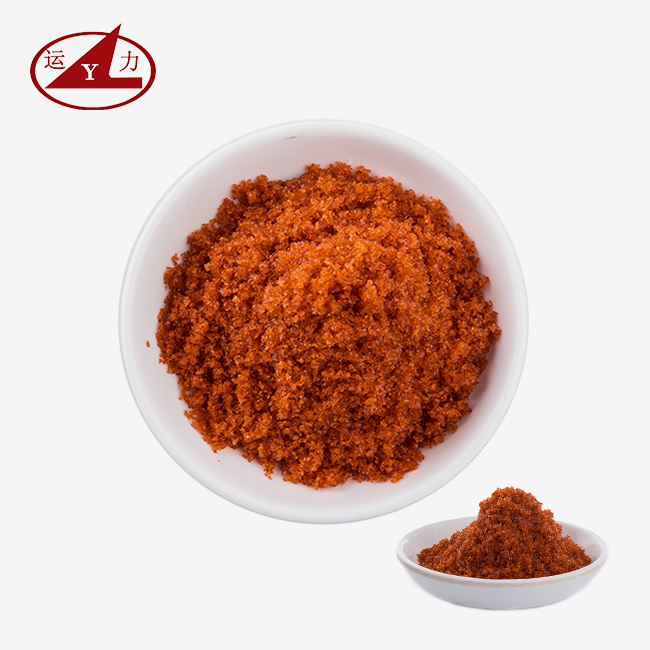
To get good quality, you need to know what to look for on a technical data sheet. The molecular weight of Ca(NO₂)₂ is 132 g/mol, and it is a colorless to pale yellow powder that has a density of 2.23 to 2.53 g/cm³ and a melting point of 100°C. When you are looking for suppliers, these basic physical traits are the first thing you look at.
Purity and Active Content
Material for industry should be at least 99.5% pure, with no more than 30 parts per million (ppm) of iron, 50 parts per million (ppm) of sodium, and 10 parts per million (ppm) of heavy metals like lead and mercury. Low-quality goods that have a lot of chloride contamination are especially bad because the extra chloride ions work against the additive's purpose of stopping rusting. Always ask for a Certificate of Analysis (COA) and compare it to the standards in ASTM C494 (Types C and CI).
Physical Characteristics That Affect Processing
The amount of moisture in powdered nitrite is likely the most operationally sensitive factor. It is important for companies that make dry-mix mortar and powder admixtures to keep the wetness level below 2.0% because calcium nitrite powder is hygroscopic, which means it easily dissolves in water. Particle size distribution is also important. Granulometry that isn't uniform can cause uneven mixing and concentration spikes in mortar matrices, which makes corrosion defense less effective where it's needed the most.
Step-by-Step Process to Test Quality Before Purchase
Instead of just depending on stated specs, when looking for a new calcium nitrite powder supplier, you should follow a structured process.
Supplier Qualification and Documentation Review
First, ask for the complete set of paperwork, which includes the COA, SDS, TDS, and any necessary compliance certificates, such as ISO 9001, ISO 14001, or ASTM compliance. Check to see what the provider can produce and how they handle quality control. A trustworthy manufacturer has an in-house lab with tools like ICP-MS or atomic absorption spectrometers for checking trace metals. This is the kind of gear that sets rigorous quality control apart from claims made on paper.
Laboratory Testing Protocol
Before giving a seller the green light, buyers should do the following basic tests on every sample they receive:
- Redox titration (nitrite assay): This checks the amount of active Ca(NO₂)₂ and is the main way to make sure the numbers are correct. The reading should be within ±0.5% of the purity mark.
- Chloride ion content test: Chloride must stay below 0.1% by mass. Any extra damages the anodic passivation system that guards the steel support.
- Moisture and water-insoluble matter: Moisture levels above 2% mean that the storage or processing failed. Above low levels, water-insoluble residue can clog spray nozzles or make it hard for dry-mix mixes to spread out.
- Particle size distribution (PSD) analysis: Make sure the D50 and D90 values are in the same range as the granulometry range given for your formulation.
Having these tests done by a recognized third-party laboratory adds extra security and makes the purchase paperwork stronger for internal or external checks. Once the lab results are confirmed, formulation engineers can run bench-scale fit tests with a small order of 1 to 5 metric tons before committing to the full-scale project.

Comparing Calcium Nitrite Powder Options in the Market
Calcium nitrite powder competes with sodium nitrite and calcium nitrate as an ingredient that stops rusting. Each has different pros and cons that affect how you decide what to buy.
Sodium nitrite is less expensive per kilogram, but it adds sodium ions to cementitious systems, which can speed up the reaction between alkali and silica in reacting materials. Calcium nitrate speeds up the setting time but doesn't stop chloride-induced corrosion at the anodic level. Calcium nitrite powder accelerates early strength and forms a strong passivating film on rebar surfaces. This makes it the better choice for marine buildings, bridge decks, and cold-weather concrete places at temperatures as low as -20°C.
Prices should be compared based on purity, not just the top cost, when comparing providers. If a product is 10% less expensive but only delivers 94% purity instead of 99.5%, it may need a higher dosage rate (2–4% by weight of cementitious material), which takes away from the obvious cost benefit. Also think about minimum order quantities, lead times, and packaging requirements, especially when buying things to send abroad, where you need to use moisture-proof packaging and labeling that meets the requirements.
Storage and Handling Best Practices to Maintain Quality
Buying doesn't end when the goods are delivered. Because Ca(NO₂)₂ naturally absorbs water, how the product is stored after delivery directly affects how well it performs during its shelf life.
Optimal Storage Conditions
Calcium nitrite powder should be kept in a warehouse that is cool, dry, and has good ventilation. It should stay below 30°C and the relative humidity should stay below 60%. The item needs to be kept in its original, waterproof packaging. For 25 kg units, multi-layer kraft bags with an inner PE lining are the standard. As soon as a bag is opened, it should be put back in its place or moved to a container that won't let air in. Even short exposure to wet air can cause deliquescence, which hardens the powder so that it can't be used again without being worked by hand.
Safety and Regulatory Compliance
Calcium nitrite powder is an oxidizing agent that needs to be handled in a way that follows OSHA, REACH, and local laws about dangerous chemicals. Suppliers should give a fully compliant SDS that includes how to handle an emergency, what PPE is needed, and how to properly dispose of the material. Before you place a large order, make sure that your supplier's documentation package meets the import-compliance standards of the country you want to ship to.
Final Checklist Before Confirming Your Purchase
Before you send out a buy order, write down all of the quality criteria on a list. Cover the level of purity (≥99.5%), the amount of salt (<0.1%), the amount of moisture (<2.0%), PSD conformance, and the standards for Fe, Na, and heavy metals. Check the supplier's credentials and audit history. Make sure you know the labeling and moisture-proof packing standards. Check the COA against data from your own third-party lab. Set up written rules for technical help after the purchase, including how batch-specific COAs will be sent with each shipment. The safest way to go from qualifying a supplier to forming a long-term partnership is to do a pilot order with full analytical validation.
Conclusion
Checking the quality of calcium nitrite powder before buying it is an organized, evidence-based process, not just something that you have to do. Each step protects the performance of your formulation and the results of your project further down the line. These include checking the active ingredient and chloride levels, as well as the hygroscopic behavior and stability of the packing. When procurement teams work with a manufacturer that offers strict quality control, analytical data that can be tracked, and quick technical support, they can confidently place larger orders. Putting money into a thorough pre-purchase evaluation pays off in every stage of a project.

FAQ
What purity level should I require for industrial-grade calcium nitrite?
There should be no more than 99.5% Fe in industrial-grade Ca(NO₂)₂ and no more than 10 ppm of heavy metals. For very sensitive uses like electronics or uses close to pharmaceuticals, higher-grade specs with Fe levels as low as 20 ppm are available from companies that can refine their products in more advanced ways.
How do I prevent caking during storage?
It is best to keep the item sealed in its original, watertight packaging at a temperature and humidity below 60%. Reseal right away after each use. Caking means that water has gotten in, which speeds up the process of nitrite ions turning into nitrate and lowers the active content.
Is calcium nitrite powder compatible with polycarboxylate superplasticizers?
Yes, but it is strongly suggested that you test for compatibility first. Because calcium nitrite powder can shorten the time it takes for something to set, you may need to change the amount of PCE you use to keep your mix working the way you want it to.
What documentation should I request from a supplier?
Ask for a batch-specific COA, SDS, TDS, an ISO 9001 certificate, and proof that the product meets ASTM C494 standards. For overseas purchases, you should also ask for proof of REACH compliance and packaging certificates.
How does powder form compare to liquid solution for dry-mix applications?
For dry-mix mortar production, adding liquids doesn't work with the dry-blending process, so the mortar has to be in powder form. Powder is also easier to ship because it is lighter, stays stable on the shelf longer, and is less likely to freeze during transport in cold weather.
Source Your Calcium Nitrite Powder Supplier from Yunli Chemical
Since 2005, Yunli Chemical has been manufacturing Ca(NO₂)₂. The company has over RMB 1 billion in annual sales, ISO 9001, ISO 14001, and OHSAS certifications, and it has a technology center at the provincial level. Our calcium nitrite powder is ≥99.5% pure, and we offer free samples up to 500 g, ICP-MS-verified impurity control, and 25 kg packing that keeps out moisture. There is also no minimum order size for initial approval. You can email our technical team at wangjuan202301@outlook.com to ask for a COA and begin your evaluation right away.
References
1. Berke, N. S., & Hicks, M. C. (1992). Corrosion of Steel in Concrete. ASTM International.
2. ASTM International. (2017). ASTM C494/C494M: Standard Specification for Chemical Admixtures for Concrete. ASTM International.
3. ACI Committee 212. (2010). ACI 212.3R-10: Report on Chemical Admixtures for Concrete. American Concrete Institute.
4. Söylev, T. A., & Richardson, M. G. (2008). Corrosion inhibitors for steel in concrete: State-of-the-art report. Construction and Building Materials, 22(4), 609–622.
5. Page, C. L., & Treadaway, K. W. J. (1982). Aspects of the electrochemistry of steel in concrete. Nature, 297(5862), 109–115.
6. Hansson, C. M., Poursaee, A., & Laurent, A. (2006). Macrocell and microcell corrosion of steel in ordinary Portland cement and high performance concretes. Cement and Concrete Research, 36(11), 2098–2102.