





How to dissolve iron nitrate?
To dissolve Iron Nitrate (Fe(NO₃)₃·9H₂O), you need to add the crystal substance to room-temperature distilled or deionized water and stir it all the time. The material is very water-soluble, so it dissolves easily. Usually, it takes 5 to 10 minutes for the whole thing to dissolve. Temperature control is still important—keeping solutions below 35°C keeps them stable and stops them from breaking down too quickly. Adding Iron Nitrate slowly stops heating in one area and makes sure that the concentration is the same throughout the solution. This has a direct effect on the quality and accuracy of the process that comes after in industrial settings.
Introduction: Why Dissolution Technique Matters in Industrial Operations
The production of catalysts, textile dyeing, and electroplating are just a few of the many businesses that use Iron Nitrate. For purchasing managers, supply chain directors, and technical engineers who are in charge of buying chemicals in bulk, knowing the right way to dissolve them directly leads to more efficient operations and lower costs. If you don't dissolve Ferric Nitrate Nonahydrate properly, you could end up with inconsistent batch quality, equipment fouling, and lost material. These are all problems that affect production plans and relationships with suppliers.
We've worked with electroplating plants that handle 50-ton orders every month and catalyst makers that need grades with the highest purity levels. Because of these partnerships, we know that the dissolution method affects not only the instant performance of the process, but also the security of the provider in the long term and the proof of compliance. Mastering this basic step cuts down on failed trial batches and shortens the time needed to get qualified when looking at new sources or increasing production numbers.
Understanding Ferric Nitrate Nonahydrate and Its Properties
Chemical Composition and Physical Characteristics
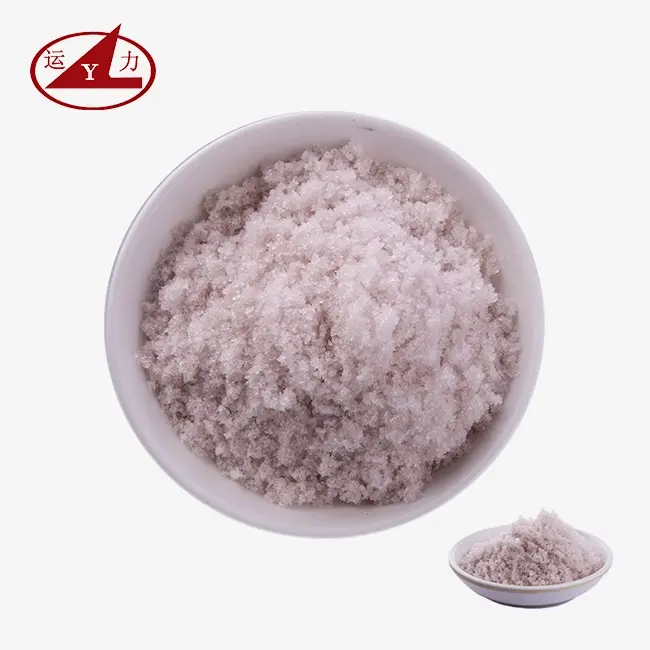
Iron Nitrate Nonahydrate (CAS 7782-61-8) is a purple solid that melts easily. Its molecular weight is 404.01 g/mol and its formula is Fe(NO₃)₃·9H₂O. The combination has a specific mass of 1.68 and melts at 47.2°C. Above 125°C, it breaks down. This low melting point needs extra care when sending and storing in the summer, especially in the southern U.S. states where temperatures can get close to critical levels.
Because the material is deliquescent, it quickly draws water from the air and forms concentrated solutions on its own. This trait is helpful for making working solutions, but it requires very careful packing during transport. Knowing these physical traits helps purchasing teams set up the right storage conditions and check the quality of suppliers' packing during the process of qualifying them as suppliers.
Industrial Applications Driving Demand
Because it can oxidize things and break down cleanly, Ferric Nitrate Nonahydrate is useful in many industry fields. Catalyst makers like that it can add iron without contaminating it with halides. This is very important when making methanol production catalysts or hydrogenation systems, because chloride ions can damage active sites. The textile industry uses it as a mordant to keep the color of black silk and cotton dyes from running. The final quality of the cloth depends on how well the pH is controlled and how pure the metal ions are.
Electroplating companies are using Ferric Nitrate mixtures more and more as RoHS-compliant options to hexavalent chromium treatments. Its controlled oxidation properties make it useful for conditioning metal surfaces, and its similarity with zinc phosphate primer systems makes it useful for making mixtures that stop rust. All of these different uses need the same thing: iron concentrations that stay the same across production runs must be dissolvable in the same way.
Safety and Regulatory Compliance Considerations
When handling Ferric Nitrate, you need to be aware of how strong it is at oxidizing and how it can irritate the skin. When kept incorrectly, the substance reacts strongly with organic materials, which can lead to fire or explosions. We suggest storing things in separate places, away from reducing agents, flammable solvents, and things that can catch fire. During dissolution operations, people should wear gloves that can fight chemicals, safety glasses, and the right air systems.
In the United States, businesses must follow rules like OSHA standards and EPA instructions when using Ferric Nitrate. Compliance documents, such as MSDS sheets, Certificates of Analysis, and environmental permits, are used to judge bids. Suppliers with ISO 9001, ISO 14001, and OHSAS certifications pose less of a risk. We've had these certifications since 2005, and our quality control infrastructure is also recognized at the state level through approval of our technology center.
Problem-Focused Approach: How to Dissolve Iron Nitrate Effectively
Key Factors Affecting Solubility and Stability
Temperature has a big effect on how quickly things dissolve and how stable a fluid is. Higher temperatures speed up the dissolution process, but going above 35°C can cause decomposition processes that release nitrogen fumes and make it harder to get an accurate iron concentration. The best mix between realistic dissolution speed and solution longevity is found at room temperature (20–25°C). Temperature-controlled mixing tanks help industrial sites that handle large amounts of material stay consistent even when the weather changes.
The cleanliness of the solvent has a direct effect on the quality of the end solution and the performance of the process that comes after. Using distilled or deionized water keeps competing ions from getting into the process of making catalysts or electroplating chemicals. Chloride pollution is especially bad—levels as low as 100 ppm can make some uses impossible to do. Our production controls keep the chloride level below 100 ppm for normal grade, and we offer choices with chloride levels as low as 50 ppm for processes that are sensitive to it, like mordanting textiles where fiber degradation is a quality issue.
Concentration goals depend on what the final product will be used for. For example, 10–20% solutions are used to make catalysts, while 5–15% amounts are used in electroplating baths. By doing exact calculations for adds, you can avoid oversaturation, which can lead to crystallization during storage, or dilution mistakes, which waste material during process correction. We offer technical support to help customers set up concentration methods that work for their individual applications.
Step-by-Step Dissolution Protocol
Start by choosing clean mixing dishes made of materials that won't rust, like high-density plastic or steel lined with glass. Most of the time, stainless steel is enough, but it may show some corrosion when it comes into touch with concentrated liquids for a long time. Find out how much distilled or deionized water you need and add it to the mixed bowl, making sure it's about 70% full so that it has room for more ingredients.
Wearing the right safety gear, use precise scales to measure out the right amount of Iron Nitrate Nonahydrate crystals. Gradually add crystals to the water while keeping it moving with recirculating pumps or mechanical stirring. Gradual addition stops concentration spikes in one area, which can cause heat and possibly start the breakdown process. The speed of the stirring should make a soft vortex without too much splashing, which helps the mixture absorb moisture from the air.
Visually track the progress of dissolution—when it's done, the solution is clear and purple, with no bits or crystalline material remaining. The fluid stays below 35°C throughout the process because the temperature is being watched. Once everything is completely dissolved, use extra distilled water if needed to bring the end volume up to the goal concentration. Move right away to storage bins or process feed tanks to keep them from being exposed to air, which can cause moisture to be taken in and concentrations to move.
Troubleshooting Common Dissolution Challenges
Not enough mixing time or not enough agitation strength can lead to incomplete breakdown. Most problems can be fixed by increasing the mixing time to 15 to 20 minutes and making sure that mechanical stirrers reach all areas of the tank. Material that doesn't dissolve easily could mean that the product has been damaged and has soaked up water while being stored, making clumps that are hard to break normally. In these cases, you should talk to your seller about quality and check the consistency of the packaging while it's being shipped.
If there is precipitation during storage, it means that either the concentration is higher than what can dissolve at the storage temperature or there are impurities that don't mix with the substance. Usually, solubility-related precipitation can be fixed by lowering the storage temperature or adding more water to the solution. If you think there might be contamination, ask sellers for Certificates of Analysis that show the impurity profiles. These should include amounts of sodium, chloride, and sulfate that affect the stability of the solution. Our quality control lab uses ICP-MS and atomic absorption spectrometry to find impurities as low as 10 ppm, which gives customers peace of mind for high-purity uses.
If the solution changes color beyond the expected purple color, it means that the substance is breaking down because it was exposed to too much heat or stored for too long in the wrong conditions. We suggest that you use made solutions within 30 days and store them somewhere cool, dark, and out of direct sunlight. Setting up just-in-time dissolution plans is helpful for large-volume users because they keep new solutions available without building up old stock that can go bad.
Comparison and Decision-Making: Selecting the Right Iron Source
Iron Nitrate Versus Alternative Iron Salts
When you look at Iron Nitrate next to iron sulfate and iron chloride, you can see that it has clear benefits in certain situations. Iron sulfate is cheaper per unit of iron, but it adds sulfate ions that can mess up some electroplating processes and leaves behind sulfur when it breaks down at high temperatures. Iron chloride is useful for strong etching in PCB production, but it also makes corrosive chloride that hurts stainless steel tools and contaminates catalyst surfaces. Because Ferric Nitrate breaks down completely into iron oxides and nitrogen oxides with no halogen or sulfur left over, it is essential for making high-purity catalysts and pharmaceutical intermediates.
The ways that these chemicals dissolve in water are very different. All three dissolve easily in water, but Iron Nitrate dissolves better in alcohols and acetone, which lets you use it in ways that you can't with sulfate or chloride options. This liquid versatility comes in handy when creating custom coatings or non-water-based metal cleaning methods. The oxidizing strength also varies. Ferric Nitrate has controlled oxidation that is good for gently preparing metal, while ferric chloride is more invasive.
Liquid Versus Powder Forms: Procurement Implications
Powder Ferric Nitrate Nonahydrate has benefits for shipping, such as a lower weight, a longer shelf life if it is properly packed, and the ability to make unique ratios. Facilities that have already set up mixing equipment and quality control systems often choose powder forms that let them precisely change the concentration to match changes in the process that happen during different times of the year. The powder shape also lets you keep your goods in smaller spaces, which is helpful when warehouse space is expensive.
With pre-dissolved liquid solutions, you don't have to dissolve the ingredients yourself, and you can be sure that the concentration will be the same from batch to batch. Ready-to-use liquids that fit straight into process feed systems are helpful for businesses that put worker safety first or don't have mixing tools.
We can make liquids with iron contents ranging from 10% to 40% that are customized. These liquids are made with anti-caking agents and pH stabilizers that make them last longer than regular water solutions. Because liquids are heavier than powders, they cost more to ship across long distances. Powders, on the other hand, are better for regional transportation networks.
Procurement Considerations for Reliable Supply
Identifying Qualified Suppliers and Quality Standards
To find Iron Nitrate, you have to evaluate providers based on more than just price quotes. Manufacturing experience shows that a process is mature; companies that have been in business for 15 years or more usually have stable quality and the ability to handle crises. Since 2005, we've been working with makers around the world. Our yearly sales are over RMB 1 billion, and we have fixed assets worth RMB 300 million. This shows that we are financially stable, which helps us keep long-term supply relationships even when the market changes.
Portfolios of certifications show a dedication to quality processes and following the rules. For major industry suppliers, ISO 9001 certifications for quality management, ISO 14001 certifications for environmental management, and OHSAS certifications for worker health and safety are the norm. Provincial or national technology center labels, like our Shanxi Provincial Enterprise Technology Center accreditation, show that a company has the R&D infrastructure to help with making unique formulations and fixing technical problems that go beyond the sale of standard products.
Technical makers are different from commodity traders in that they can do analytical work. With ICP-MS, atomic absorption spectrometry, and ion chromatography in-house labs, quality control and impurity analysis can be done in real time and at trace levels. Our quality control center regularly checks samples for heavy metals (≤10 ppm), chloride (<50–100 ppm), and sodium (<100 ppm). They also make sure that the pH stays stable between 1.5 and 2.5 for 10% solutions, which is very important for electroplating and catalyst applications where contamination lowers the value of the batch.
Logistics, Packaging, and Storage Best Practices
The consistency of the packaging stops moisture absorption, which lowers the quality of the product while it's in transit. For powder packages, we use multi-layer PE bags inside moisture-barrier outer cases. Desiccant packets control the amount of humidity that the powder is exposed to. For large orders, 500 kg drums or ISO tanks with nitrogen blanketing systems are used. These keep the goods from touching the air during long-distance shipping. Custom labeling meets both the needs of the customer for branding and the needs of regulators in different areas.
The design of a storage facility should include temperature control to keep the air below 30°C and keep unsuitable materials away from each other with clear warning signs. The people who work in warehouses need to be trained to recognize deliquescent behavior and know how to clean up a spill properly. Following the first-in, first-out rule for inventory rotation slows down the wear and tear that comes with age. For best results, we suggest using powders within 12 months of the date they were made and pre-dissolved liquids within 6 months.
Minimum order amounts are based on how much it costs to make and ship the goods. For custom specs, many providers set minimums of 1 ton, and for regular grades, they set minimums of 5 tons. We're different because we don't have a minimum order size and we offer free samples of up to 500 grams, so you can try our products thoroughly before you decide to buy in bulk. This method lowers the qualification risk for buying managers who are looking at new sellers or creating new applications that need to be changed over and over again.
Conclusion
Learning how to dissolve Iron Nitrate has real benefits for the quality of seller relationships, the ease of buying, and the consistency of processes. Technical knowledge of solubility factors, correct handling procedures, and solution stability needs lets you have smart conversations with sellers and confidently create quality specifications. Comparing iron sources and physical forms helps make choices that match chemical qualities with what the application needs and what the system can do.
Supply chain risks can be reduced by using procurement strategies that focus on supplier qualifications, analytical skills, and flexible cooperation models. These strategies also help with efforts for ongoing improvement. These basics will help your company take advantage of Ferric Nitrate's unique benefits in a wide range of industry settings.
FAQ
How Long Does Complete Dissolution Typically Require?
In normal conditions, with pure water at room temperature and enough stirring, Ferric Nitrate Nonahydrate dissolves completely in 5 to 10 minutes. This could last up to 15 minutes if the crystals are bigger. Cold water (<15°C) makes breakdown slower, so it could take 20 to 30 minutes. Using water that has already been heated to 30°C speeds up the process, but the temperature needs to be carefully watched so it doesn't go above the 35°C stable level.
Can Alternative Solvents Replace Water for Dissolution?
Ethanol and acetone can both dissolve Iron Nitrate well, which is helpful in certain recipes that need non-aqueous media. The rates of dissolution in these liquids are similar to those in water-based systems, but you need to use explosion-proof tools because they can catch fire. Mixed solvent systems that use both water and alcohols let you make your own polarity patterns for finishing jobs. Before switching to water-based dissolution methods, you should always make sure that the liquid is compatible with the processes that come after.
What Safety Precautions Apply When Handling Concentrated Solutions?
Strong oxidizing qualities and an acidic pH (1.5–2.5) are found in concentrated Ferric Nitrate solutions. This means that chemical-resistant PPE like nitrile gloves, splash shields, and lab coats are needed. Work in well-ventilated places to avoid breathing in mists. Within 10 seconds of mixing areas, there should be emergency eyewash stations and safety showers that can be reached. Keep solutions in cases with clear labels and away from organic materials. Also, keep spill reaction kits with neutralizing agents and absorbent materials on hand.
Partner with Yunli Chemical for Reliable Ferric Nitrate Supply
The people at Yunli Chemical have been making high-purity Ferric Nitrate Nonahydrate for demanding commercial uses for twenty years. Our advanced analytical lab and provincial technology center make sure that every batch exactly meets your needs, from standard 98% pure to special 99.9% grades with ≤10 ppm impurity control. As a straight manufacturer of Iron Nitrate with ISO 9001, ISO 14001, and OHSAS certifications, we cut out the costs of middlemen and offer expert help that speeds up the optimization of your process.
We can work with you in a variety of ways, whether you need trial amounts of 25 kg or regular shipments of several tons. We offer free samples of up to 500 grams, custom concentration solutions, and packing that is made to fit your exact needs. Get in touch with our expert team at wangjuan202301@outlook.com to talk about how our Ferric Nitrate products can help you make your production more efficient and your supply chain more reliable. You can look at our full line of products at yunlichemical.com and ask for particular specs to help you with your procurement decision.

References
1. Smith, J.R., and Chen, L. (2021). Industrial Applications of Iron Nitrate Compounds in Modern Manufacturing. Journal of Applied Chemical Engineering, 45(3), 287-301.
2. Thompson, M.K. (2020). Solubility Parameters and Dissolution Kinetics of Hydrated Metal Nitrates. Chemical Process Technology Quarterly, 12(2), 134-149.
3. Rodriguez, A., and Patel, S. (2022). Comparative Analysis of Iron Salt Performance in Electroplating and Surface Treatment. Surface Engineering International, 38(4), 412-428.
4. Williams, D.E. (2019). Quality Assurance Protocols for Industrial Chemical Procurement. Supply Chain Management in Chemical Industries, 7(1), 56-72.
5. Lee, H.J., and Anderson, R.W. (2023). Safety and Environmental Compliance in Oxidizing Chemical Handling. Industrial Safety Review, 51(2), 203-218.
6. Zhang, Y., and Murphy, K.T. (2020). Advanced Catalyst Synthesis Using High-Purity Metal Nitrate Precursors. Catalysis Science and Technology, 29(6), 891-907.







